The Battle of 'Series 9' SUVs: No One Can Afford to Act Like a Sure Winner
 03/18 2026
 464
464
Lead-in
Introduction
The true battle among the top four has begun, and a true red ocean has arrived.
"Everyone should thank Li Auto. If this new energy vehicle manufacturer hadn't launched the L9, we wouldn't have seen the booming prosperity of large six-seater SUVs in recent years."
Recently, while chatting with a friend, he shared this viewpoint with me at the beginning of our conversation. I deeply agree. To a certain extent, the Li Auto L9 is indeed the undisputed 'pioneer' in this segment.
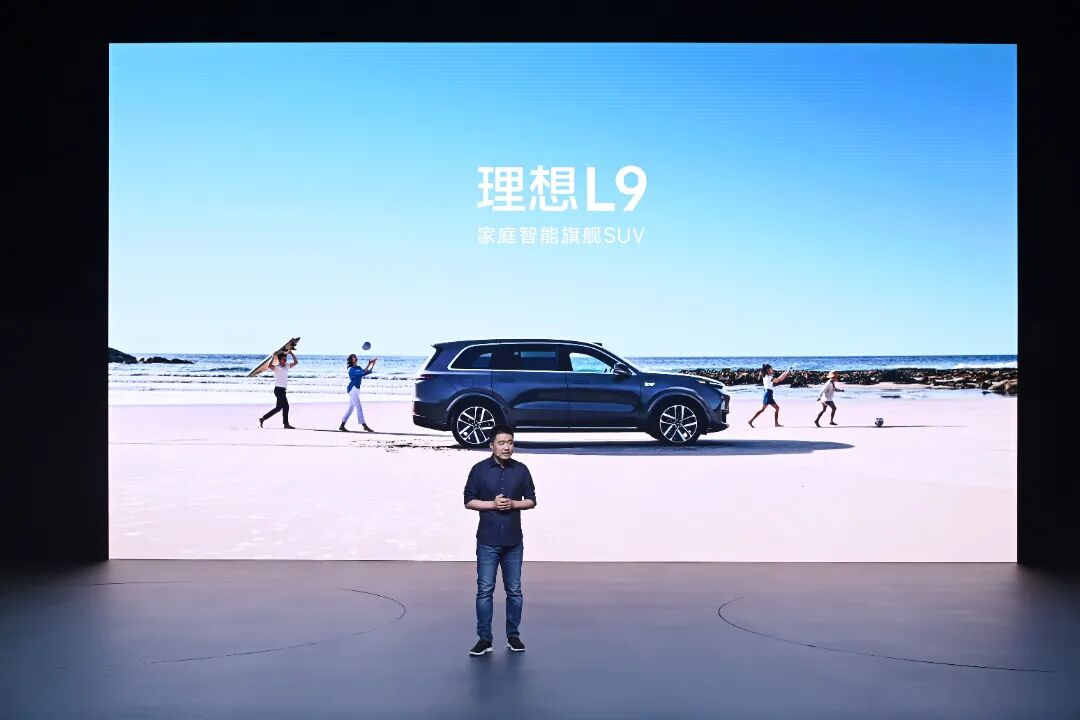
Its resounding success has pointed everyone in the right direction, transforming large six-seater SUVs into an absolute 'hot cake' in the Chinese auto market.
Riding the wave of electrification, many Chinese automakers have seized the opportunity and reaped substantial profits. Just last year, according to incomplete statistics, no fewer than 20 models entered this segment.
This year, the competition at the retail level has intensified even further. With a continuous influx of new players, nearly every automaker is eyeing the seemingly attractive yet perilous 'cake' of large six-seater SUVs.
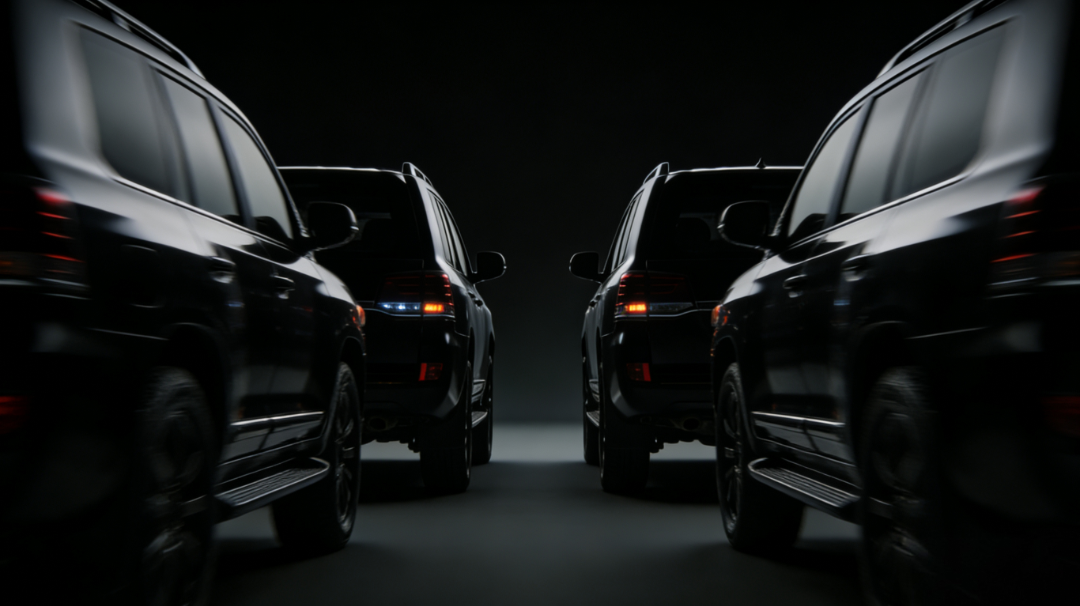
Against this backdrop, a never-before-seen heavyweight clash is drawing close attention from the entire industry—the 'Series 9' battle.
In the era of traditional fuel vehicles, within the naming systems of joint-venture brands, 'Series 9' represented the family flagship, signifying absolute premium status and embodying top-tier technology and ultimate configurations. In the era of intelligent electric vehicles, similar product definition rules apply.
The industry has also reached a consensus that only by excelling in the 'Series 9' can the remaining siblings in the family better spread out and shine.
However, in the past Chinese auto market, there have been too many half-hearted 'pseudo-Series 9' models. Now, the purest 'Series 9' battle among Chinese brands has begun.
01 Battle Among the Top Four: Who Will Dominate?
I believe many readers are curious about my criteria for judging a true 'Series 9'. The answer is straightforward: First, it must be a full-size SUV. Second, it must be equipped with a host of cutting-edge technologies. Third, the price of the main version must be at least 500,000 yuan or even higher.
Only by meeting these three conditions can one qualify to participate in this battle.
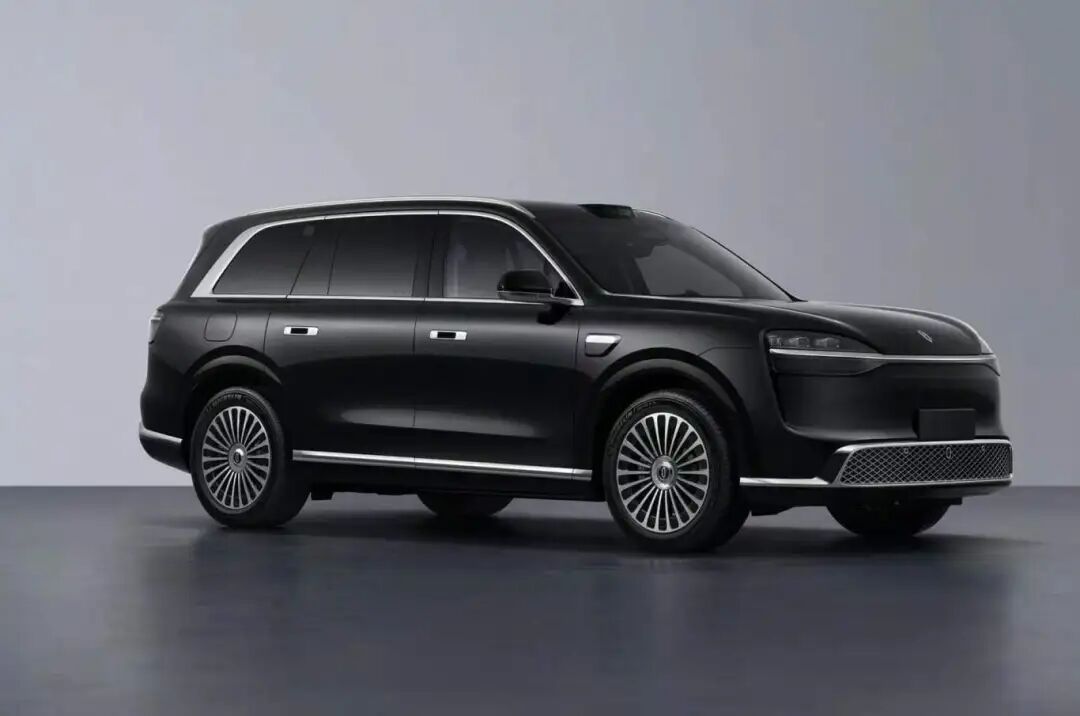
A week ago, the Ministry of Industry and Information Technology released another batch of new vehicle approval directories, and the all-new AITO M9 was prominently listed. Objectively speaking, it is a strong contender in this year's 'Series 9' battle.
Speaking of this flagship large six-seater SUV backed by Huawei's halo, it can be said to have single-handedly dethroned the Li Auto L9 and set numerous sales records for Chinese automakers in the luxury market.
Undoubtedly, the most critical task for the all-new AITO M9 this year is to continue consolidating its position and serve as the so-called 'defender'.
From the currently known product upgrades, in addition to minor adjustments to the exterior, the overall vehicle dimensions have been increased, it is equipped with Huawei's latest 896-line LiDAR, and both the pure electric and extended-range versions have expanded battery capacities to increase range.
Facing the 'Series 9' battle, the all-new AITO M9 appears fully prepared. However, even so, no one dares to say it will win for sure this year.
Because its competitors are also heavily armed.
Focusing on the all-new Li Auto L9, as early as before the Spring Festival holiday, Li Xiang, the helm, couldn't wait to reveal much information about its top-tier Livis version.
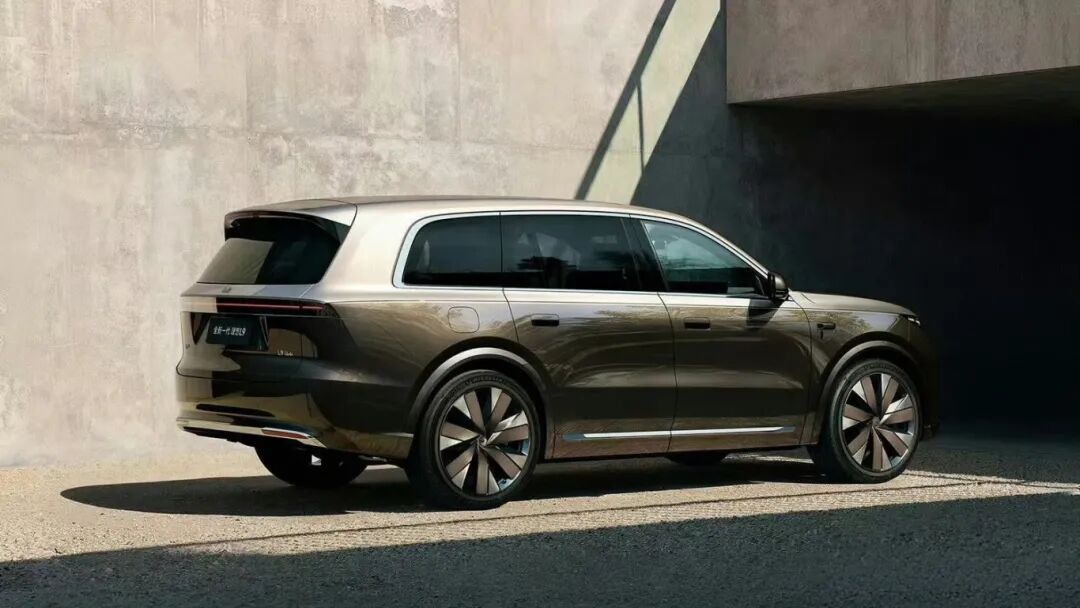
Similarly, compared to the previous model, the exterior has been fully refreshed, the overall vehicle dimensions have been further increased, and more importantly, it is equipped with active suspension, steer-by-wire, and a self-developed intelligent driving chip, with a combined computing power reaching 2560TOPS.
It also upgrades to an 800V high-voltage electronic electrical architecture, and after battery expansion, the pure electric range exceeds 400 kilometers, coupled with a pre-sale price of 559,800 yuan.
The all-new Li Auto L9 Livis version has become Li Xiang's 'masterpiece'.
Its core mission is not only to recover the lost ground for this new energy vehicle manufacturer in the 'family flagship SUV' market but also to re-establish a technologically leading brand perception through its self-developed and integrated capabilities in core areas such as suspension, chassis, chips, and intelligent driving, responding to overwhelming doubts.
For Li Auto, this crucial launch cannot afford to lose. However, unlike the blue ocean when the first-generation Li Auto L9 entered the market, the pioneering pressure it faces now has multiplied several times.
For example, the NIO ES9 is an unavoidable rival.
At last week's earnings call, Li Bin personally announced that this pure electric flagship SUV is scheduled to hold a technical launch event on April 9. In an interview after the 1 millionth new car rollout ceremony earlier this year, Li Bin confidently stated, 'The ES9 will achieve the same success as the ES8.'
As we all know, the latter was the biggest contributor to this new energy vehicle manufacturer's ability to achieve single-quarter profitability, with cumulative deliveries about to surpass 80,000 units. Such a strong performance suggests that the former also aims for 'volume and price to soar together.'
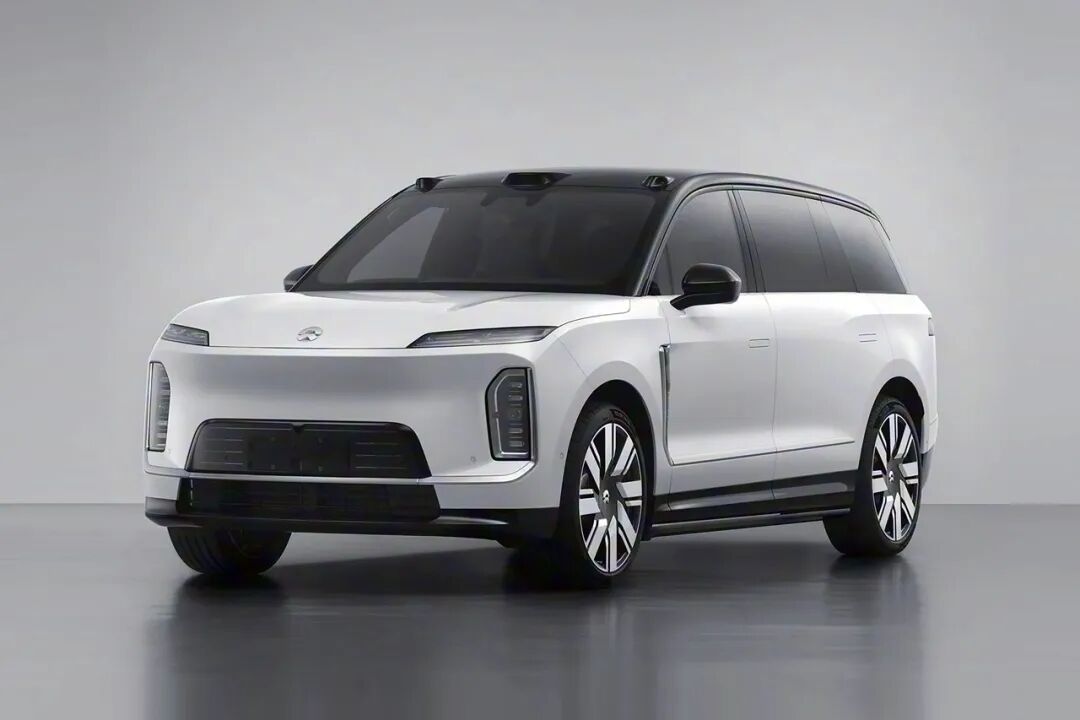
Li Bin clearly knows that it will be key to touching the annual profitability threshold this year.
Combining the known information, the product strength of the NIO ES9 can be described as 'formidable,' representing this new energy vehicle manufacturer's strongest technical reserves to date, with active suspension, steer-by-wire, and self-developed chips all present.
Additionally, in terms of aesthetics, tone, and luxury, you can always trust NIO to deliver and not disappoint. Coupled with another trump card, the Battery as a Service (BaaS) vehicle-battery separation scheme.
Gradually, I understand why Li Bin is so confident about this pure electric flagship SUV.
Of course, if it had entered the market last year, I believe the NIO ES9 would have dominated with its strength. However, entering the market this year, the outcome is uncertain.
After all, in addition to being besieged by the all-new AITO M9 and Li Auto L9, the Zeekr 9X, which has already proven itself in retail sales, cannot be ignored.
Just concluded in February, even during the off-season, it still delivered nearly 5,000 units, demonstrating strong risk resistance. Its sufficiently imposing appearance and excellent driving and riding texture are its biggest strengths.
This year, facing the true 'Series 9' battle, who will dominate among the top four? It is destined to become one of the biggest highlights in the Chinese auto market.
The segment of new energy flagship SUVs priced above 500,000 yuan has never been so turbulent.
02 Only by Making Cars Larger Can There Be Opportunities
Seeing this, I believe there will again be doubts about why other contenders' names were not mentioned when discussing the 'Series 9' battle.
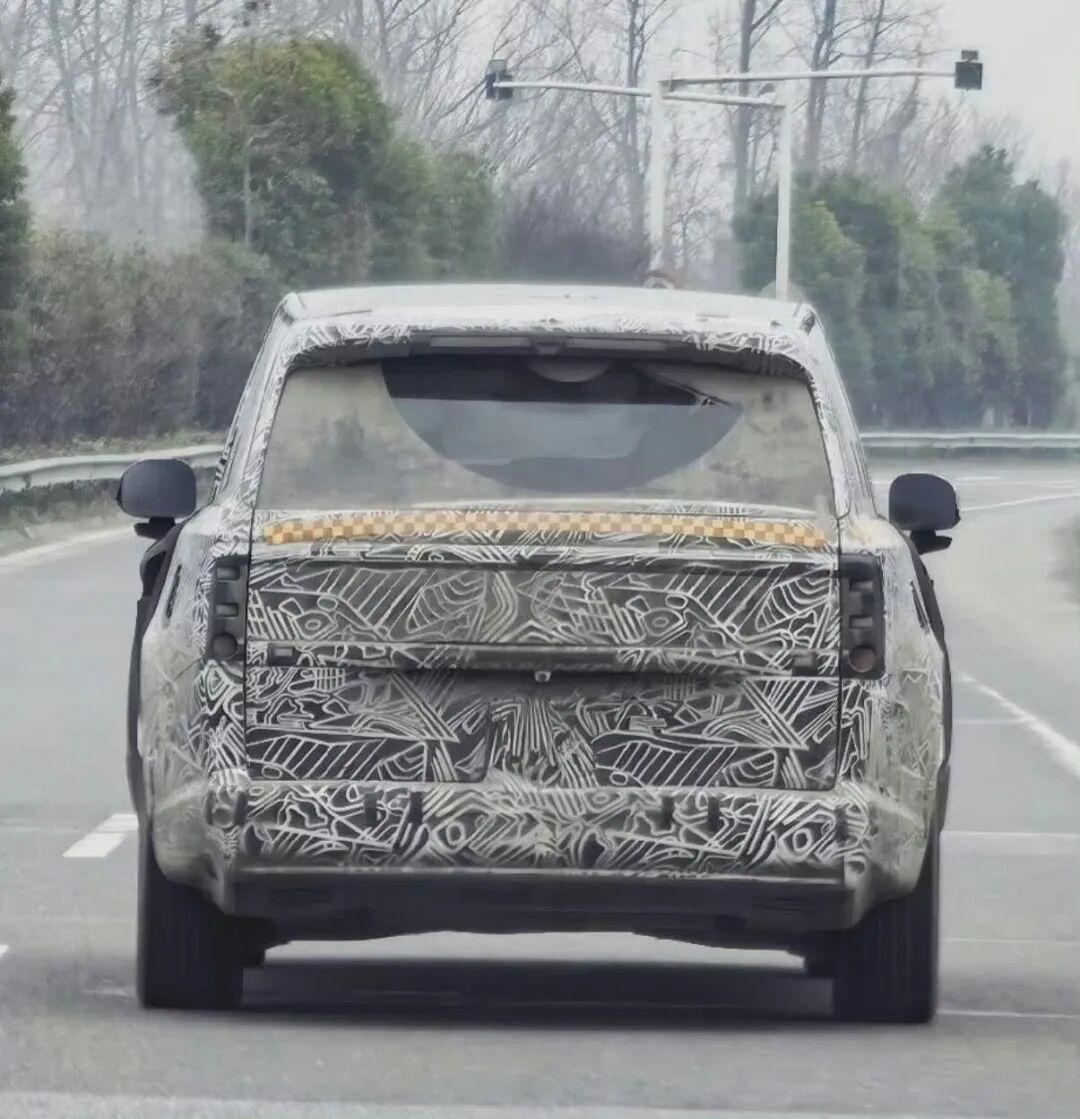
For example, the well-known 'X factor' Xiaomi YU9? And the long-launched Tengshi N9, Lynk & Co 900, Leitao L90, Galaxy M9, including the imminent Volkswagen ID. ERA 9X, Leapmotor D19, and Wey V9X?
The fundamental reason, as stated at the beginning of the article, is that they are more like cutting into the relatively broader mid-to-high-end segment under the 'Series 9' name without directly entering the market priced above 500,000 yuan.
Taking the Xiaomi YU9 as an example, it is unlikely to actively participate in a flagship battle like the 'top four.' Instead, it will avoid the edge and make its debut in the extended-range track at a relatively attractive price.
Honestly, such a choice is neither right nor wrong; it just aligns with its development logic. Not blindly pursuing higher prices essentially suits the situation of most Chinese automakers.
As an observer, on the one hand, I clearly know that this year's true 'Series 9' battle is slowly unfolding; on the other hand, I can't help but marvel again that this year's large six-seater SUV market offers no respite, only suffocation, with all participants facing a turbulent red ocean.
In terms of quantity alone, a rough statistics shows over 30 models densely covering the price range of 150,000 to 600,000 yuan. The underlying logic points to: 'Only by making cars larger can there be opportunities.'
Recently, I came across this viewpoint: 'With rising income levels, gradually relaxed birth policies, and China's vast land area, car-buying habits in China will infinitely approach those of the North American market.'
In other words, large vehicles will dominate, especially SUVs over 5 meters in length, which will gradually take center stage. In the future, the Chinese auto market is destined to be 'he who owns large vehicles, owns the world.'
No matter who it is, they must have one or several large six-seater SUVs that can 'uphold the facade' so that other lower-tier products can spread out from there.
Behind this phenomenon lies the same principle: 'For Chinese consumers, the pursuit of large vehicles is the same as the pursuit of large houses. It is both self-proof and meets demand, representing consumption upgrading.'
Of course, while the opportunity is clearly there, it doesn't mean everyone can grab a piece of the 'cake.' Now, let me pour cold water on all participants.
Last year, the overall sales of large six-seater SUVs remained around 1 million units. Apart from a few leading players who tasted success, most contenders became 'cannon fodder.'
The results prove that building large six-seater SUVs requires a threshold.
To sell them well while maintaining prices and profits, in addition to having no significant flaws or shortcomings at the product level, corresponding support must be provided at the marketing, service, energy replenishment, and delivery levels. Meanwhile, the brand image often influences consumers' final decisions.
In comparison, if there is no significant advantage in brand strength, then another difficult path must be taken: lowering expectations and using low-price and low-profit methods to exchange for sales volume.
In any case, large six-seater SUVs, while appearing promising, are actually filled with various unspoken rules. Blindly entering the market without adequate preparation and failing to find suitable industry anchors will ultimately result in being shattered.
This year, the segment's share is destined to continue increasing on last year's 1 million-unit plate.
But whether one can get a piece of the pie truly depends on their capabilities.
Especially in this era of increasingly homogeneous product experiences, where brands overlap more and more in model configurations, marketing rhetoric, technical strengths, and even target customer groups,
Selling a large six-seater SUV well will increasingly test an automaker's systemic capabilities.
Of course, it is both a profit battle concerning survival and a positioning battle concerning the future industry hierarchy.
This week, it is also worth noting that with the Zeekr 8X opening pre-sales, this year's large five-seater SUV segment is also becoming increasingly turbulent.
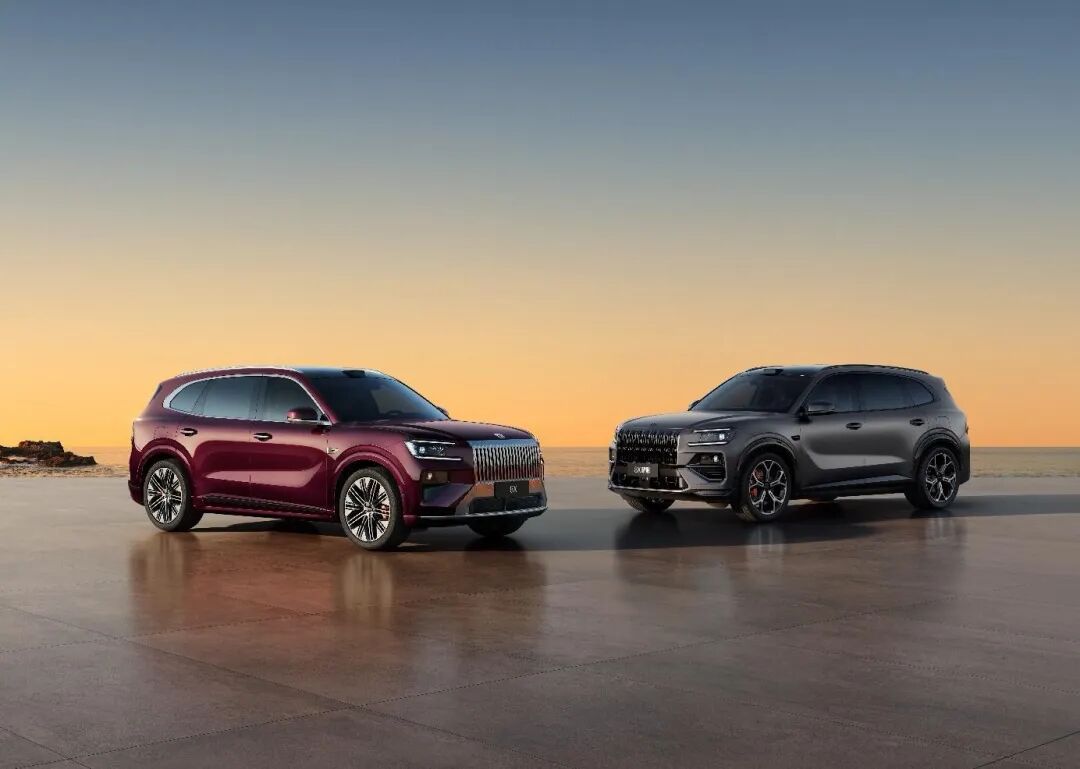
Later, the continuous entry of new players like the Leitao L80, NIO ES7, IM LS8, and AITO M6 is bound to significantly impact and squeeze the share of large six-seater SUVs.
The retail battle is becoming increasingly unpredictable.
Against this backdrop, it also fully tests whether each automaker's strategic choices are firm and whether their troop deployments are reasonable.
At the end of the article, I attempt to share another warning from Li Bin about this year's Chinese auto market.
"First, the total volume of the passenger vehicle market will not increase and may even decline slightly. In the coming years, everyone should not have a fluke mentality. Second, technology is iterating too fast, and now no one dares to say they can lead others by even half a year. Third, marketing paradigms have changed, and new car effects have a death valley—sales are prone to plummet after the initial launch period. This is an industry rule that must be respected."
In the competition of the large six-seater SUV segment and the true 'Series 9' battle, this warning seems particularly fitting.
At this moment, I believe no one dares to say they will win for sure. To escape this red ocean unscathed, everyone will have to shed a layer of skin.
Oh, and by the way, losing is the norm.
Editor-in-Chief: Cui Liwen Editor: He Zengrong
THE END
-
![]()
The Unstoppable Rise of 'Optical Progress and Copper Decline': Sunny Optical’s Strategic Vision for the Next Decade
-
![]()
AI + Going Global in the Second Half: No Intermission for Robot Vacuum Cleaners
-
![]()
The Suffering Endured in E-commerce, Walmart Doesn't Want to Repeat in AI
-
![]()
What Does the Doubling of New Energy Vehicle Exports Mean?
-
![]()
Ghosn: 'Only I Can Save Nissan'
-
![]()
Volkswagen Lays Off 100,000 Employees, The Elephant Sits Down
-
![]()
Expanding Production Capacity! Yutong Optics Acquires Approximately 1.5 Hectares of Industrial Land in Chang'an, Dongguan
-
![]()
Why Is Nokia Making a Comeback in the AI Era?