Hybrid Evolution in F1 and Beyond: The Resurgence of HEVs
 03/18 2026
 565
565
The Fuel Vehicle Market Battle: Beyond Just New Energy
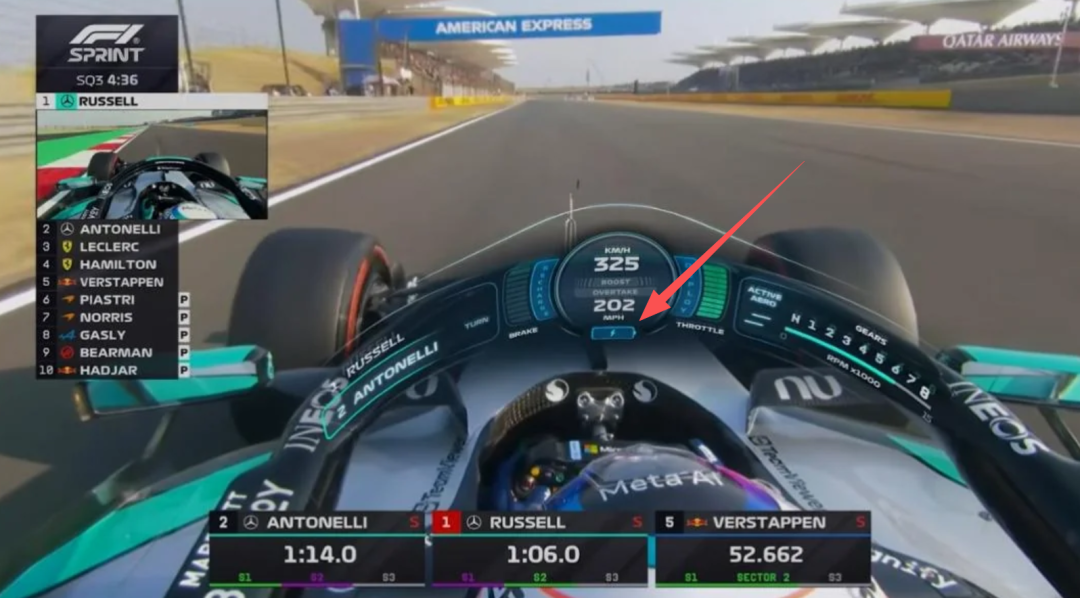
With the conclusion of the F1 Shanghai Grand Prix, two races have unfolded under new regulations, sparking discontent among numerous drivers regarding the current rules. Even Formula E has subtly ridiculed F1 for straying from its traditional path.
Four-time champion driver Max Verstappen expressed his dissatisfaction, saying, "It's no fun at all. It's like playing Mario Kart. This is definitely not real racing."
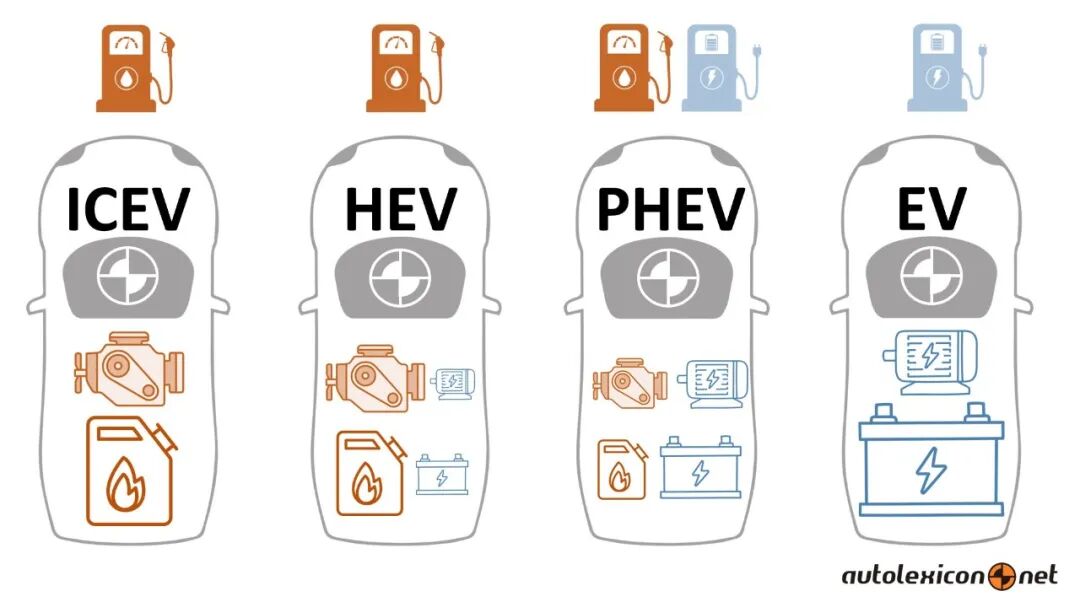
This sentiment stems from the significant overhaul of power units planned for the 2026 season. F1, widely regarded as the pinnacle of fuel vehicle racing, is set to allocate half of its total power to electric motors, with batteries chargeable solely through the engine and kinetic energy recovery systems. Consequently, F1 cars are evolving into high-performance HEV (Hybrid Electric Vehicle) race cars.
Such transformations are disastrous for drivers seeking pure racing thrills, but for everyday family cars, HEVs represent the future of fuel vehicles.
As emission regulations tighten globally, achieving a balance between internal combustion engine emissions and power has become crucial. However, significant breakthroughs in internal combustion engine technology come with prohibitively high marginal costs.
Electrification has thus become an inevitable trend. Yet, constrained by current technological limitations, new energy products still face various challenges. Especially in China's complex driving environment, the convenience of fuel vehicles remains unmatched, making HEV models a well-balanced choice for fuel vehicle users.
Current State of HEVs
In terms of market size, amid the expansion of new energy vehicles, HEVs' market share in China remains relatively small. Statistics indicate that HEVs accounted for only 4% of the market in 2025, nationwide.
However, in third- and fourth-tier cities and county-level markets where fuel vehicles dominate, HEV penetration has surged to 48% and continues to grow. In contrast, new energy vehicle penetration only reached 18.7% in 2025.
Several factors contribute to this trend.
Firstly, price plays a pivotal role in determining market base. Unlike the wide price range of new energy vehicles, existing HEV models are predominantly concentrated in the 100,000-200,000 yuan range, serving as a transitional option between traditional fuel and new energy vehicles. Especially under the 2026 national subsidy policy, full subsidies require purchasing new energy vehicles priced above 180,000 yuan.
Secondly, energy replenishment needs explain why new energy vehicles have lower penetration in third- and fourth-tier cities. Unlike first- and second-tier cities, charging infrastructure in these areas heavily relies on financial subsidies and faces inherent disadvantages in home charging setups.
Ultimately, consumer mindset differences play a decisive role. Unlike users in big cities, those in lower-tier markets prioritize long-term vehicle attributes. New energy vehicles, often in the spotlight, frequently attract negative news, especially amplified by the internet. For risk-averse users, choosing HEV models is a "low-risk" option.
Meanwhile, the market has validated the reliability of this technological route. Despite slow progress in electrification, Toyota has dominated the HEV market. In 2025, Toyota sold 4.43 million HEV models globally, up 7% year-on-year, accounting for 88.8% of its sales and becoming a core product.
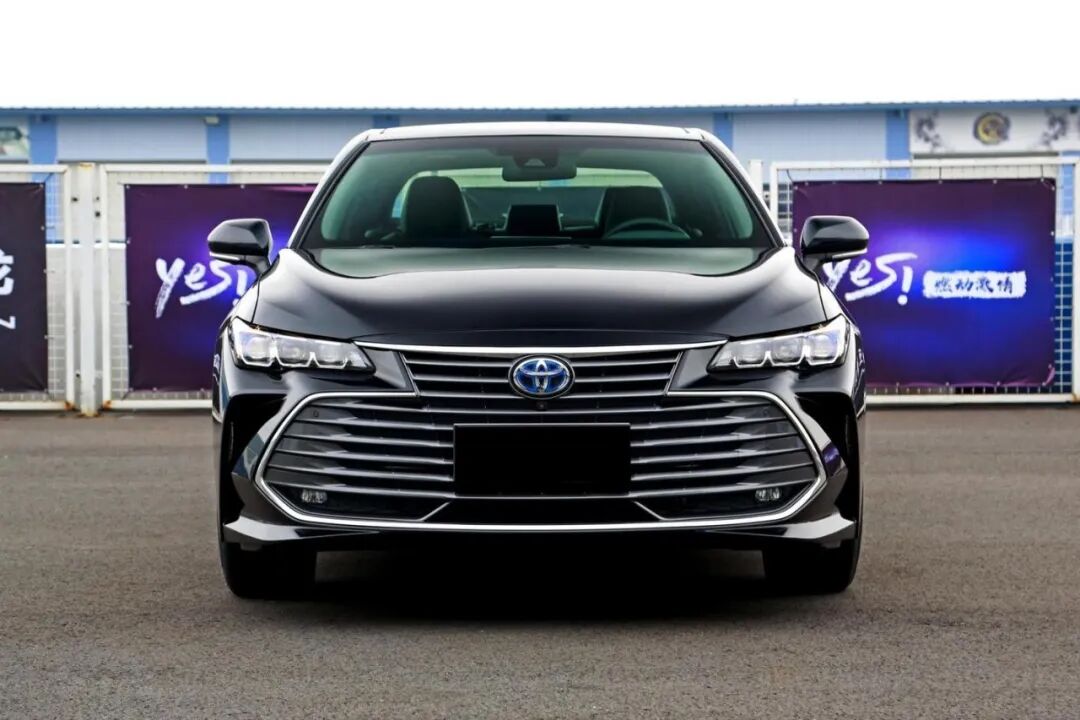
Even in China, where new energy penetration is high, Toyota sold 623,000 HEV models, helping Toyota China maintain slight sales growth, especially as mainstream joint-venture brands generally declined. Toyota was the only Japanese brand to achieve positive growth.
Since new energy penetration surpassed 50%, growth in both pure electric and PHEV (Plug-in Hybrid Electric Vehicle) models has slowed significantly, while the fuel vehicle market remains stable. More importantly, amid widespread losses among new energy automakers, fuel vehicles still maintain profitability despite price wars.
Policies have also adjusted to accommodate HEV models. The "Energy-Saving and New Energy Vehicle Technology Roadmap 3.0" explicitly states that by 2035, energy-efficient vehicles and new energy vehicles will each account for 50% of the market, with energy-efficient vehicles primarily referring to HEVs.
It also introduces integral support (credit support) for developing low-fuel-consumption models, calculating credits at 0.1 times for qualifying models.
Transitioning to HEVs
Recognizing the market potential of HEVs, early this year, Great Wall, Geely, and Changan Automobile shifted their focus towards HEV R&D, replacing fuel vehicle production lines with lower fuel consumption data.
This reflects how Chinese automakers are leveraging technological advantages accumulated in new energy vehicles to enhance fuel vehicles. In the early stages of new energy development, Toyota led in hybrid technology with its THS system and maintained a technological gap through patent protection.
However, this advantage made Toyota reluctant to adopt hybrid technologies with larger batteries and stronger electric motors, which domestic new energy automakers have prioritized, especially in PHEV technology, enabling them to catch up.

In January, Great Wall Motors launched the "Guiyuan Platform," the first to achieve full compatibility across architectures, synchronizing high-voltage technology, high-power motors, and battery technology from new energy vehicles to HEV models.
Geely Automobile also released its i-HEV intelligent hybrid technology early this year, achieving a fuel consumption of 3.15L per 100km under battery depletion, far lower than traditional fuel vehicles and early HEV technology. More importantly, this technology integrates with the existing e-CMA architecture, enabling co-production of fuel and HEV models and reducing production line modification costs.
After the Spring Festival, Changan Automobile unveiled its new-generation HEV technology, "Blue Whale Super Engine Hybrid," achieving a remarkable urban fuel consumption of 2.98L per 100km, even lower than some PHEV models.
Technologies released by these three automakers share commonalities: adopting more efficient internal combustion engines and high-power drive motors, elevating electric drive from Toyota's auxiliary role to a more prominent position, similar to F1's regulatory changes.
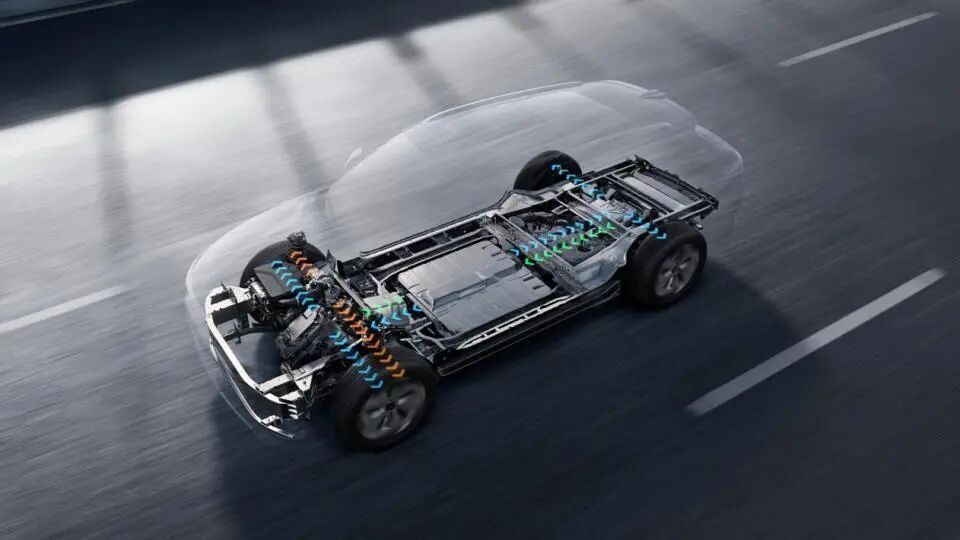
This reflects technological feedback from the supply chain. Rapid advancements in new energy technologies have thoroughly validated battery and hybrid technologies in the market, especially in high-power electric drive technology, where Chinese brands have achieved full independence.
Moreover, with the rise of domestic supply chains, HEV hardware costs are shrinking. When Toyota's hybrid models first entered China, they had a 30,000 yuan price gap with comparable models, with fuel savings taking over 10 years to recoup.
However, with the rise of domestic new energy vehicles, many Toyota hybrid models now match or even undercut their fuel counterparts in price.
Chinese brands' shift towards HEVs is also preparation for market competition. Under new subsidy policies, PHEV pure electric range increased from 43km to 100km, raising vehicle costs, primarily due to increased battery expenses, which automakers cannot fully pass on to consumers.
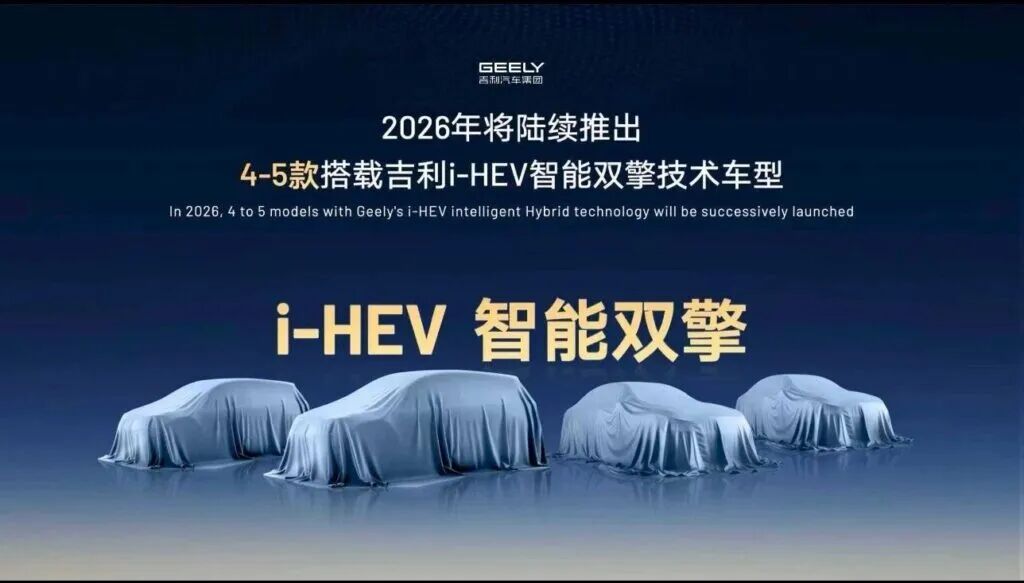
Instead of letting battery manufacturers profit, automakers can switch to HEV models, reducing battery costs and eliminating charging modules and other components, achieving cost reductions in manufacturing.
Except for Great Wall's explicit use of large batteries in its HEV platform, Geely and Changan adopt small battery solutions. A single PHEV battery can produce 10 HEV models, and HEVs can utilize 400V and slow-charging products "phased out" by new energy vehicles, helping automakers avoid being overly reliant on battery manufacturers.
Geely's official data shows that this platform strategy reduces vehicle purchase costs by about 5% compared to comparable models and is expected to lower maintenance costs by about 15%, while improving production and resource utilization efficiency.
More importantly, besides replacing fuel vehicles in the domestic market, HEV models will also shoulder the responsibility of expanding overseas. Statistics show that in the first three quarters of 2025, HEV exports surged by 94.1% year-on-year, with export value increasing by 64.7%.
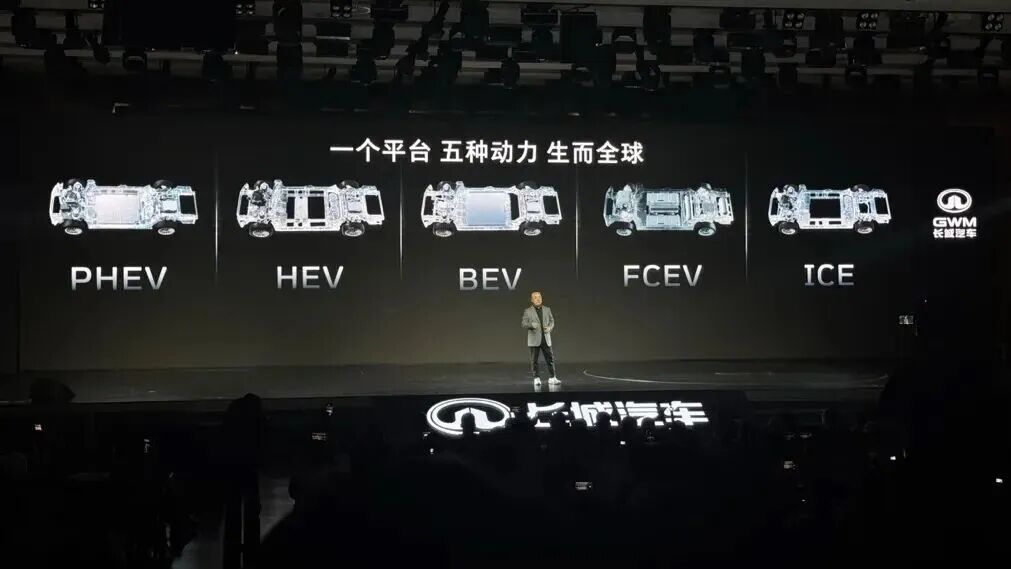
It can be said that Chinese brands' increased focus on HEVs in 2026 is not a "technological regression" but rather the construction of a more resilient "diversified powertrain technology system."
From a market development perspective, while pure electric represents the future, the transition period will be lengthy. The fuel vehicle market still boasts a scale of tens of millions. By integrating new energy three-electric technologies, overall industry efficiency can be enhanced.
As consumers become more rational, HEVs, with their "anxiety-free energy-saving experience," may become the optimal bridge for fuel vehicle users transitioning to electrification.
Automakers' HEV strategies represent a precise battle based on existing technological strengths, targeting specific user growth segments while cleverly avoiding policy and market red ocean competition.
It's not just about current sales and price wars but also about long-term strategic layout in powertrain diversification and full supply chain value exploration.
Note: Image sources are from the internet. If infringement occurs, please contact for removal.
-END-
-
![]()
The Unstoppable Rise of 'Optical Progress and Copper Decline': Sunny Optical’s Strategic Vision for the Next Decade
-
![]()
AI + Going Global in the Second Half: No Intermission for Robot Vacuum Cleaners
-
![]()
The Suffering Endured in E-commerce, Walmart Doesn't Want to Repeat in AI
-
![]()
What Does the Doubling of New Energy Vehicle Exports Mean?
-
![]()
Ghosn: 'Only I Can Save Nissan'
-
![]()
Volkswagen Lays Off 100,000 Employees, The Elephant Sits Down
-
![]()
Expanding Production Capacity! Yutong Optics Acquires Approximately 1.5 Hectares of Industrial Land in Chang'an, Dongguan
-
![]()
Why Is Nokia Making a Comeback in the AI Era?