Automakers Unite in Embracing Extended-Range Tech: The Executive Rally Continues
 03/19 2026
 540
540

Lead-in
Introduction
Ultimately, when it comes to determining superiority or making a choice, the decision should rest with the users.
The debate over extended-range technology routes has never truly subsided, with online discussions persisting. Recently, this conversation has intensified once more, largely fueled by a collective shift among major automakers towards the extended-range vehicle market.
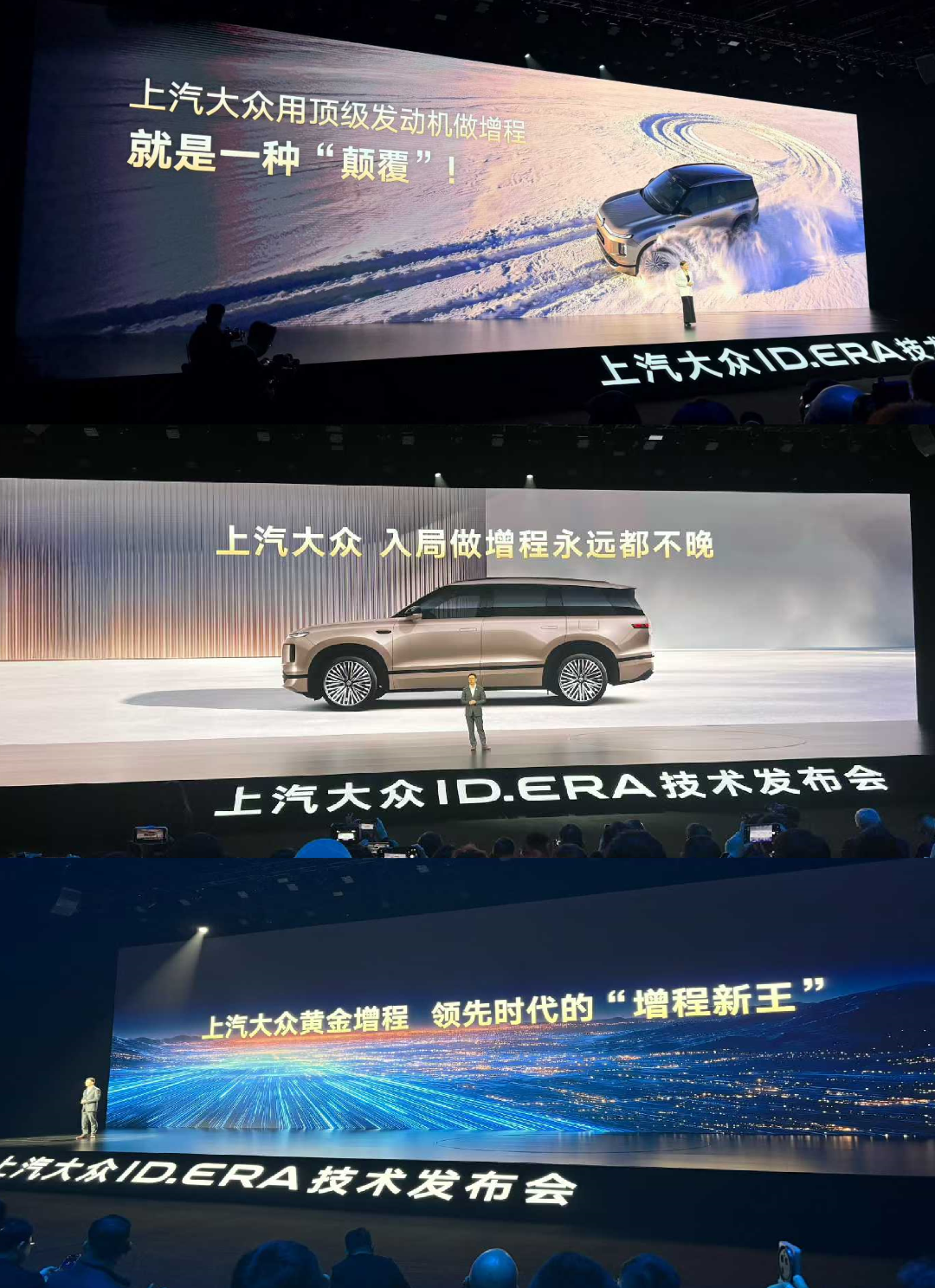
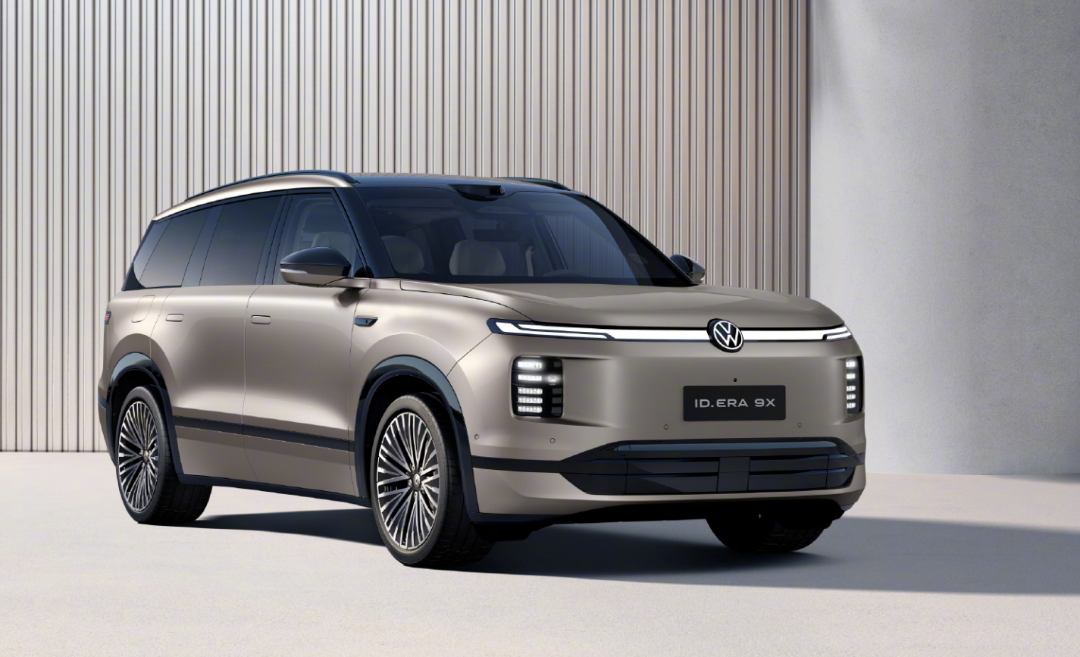
SAIC Volkswagen has repurposed its EA211 engine into an extended-range powertrain, launching the 'Golden Extended-Range Powertrain' and declaring, 'It's never too late to enter the extended-range market.' This new powertrain is featured in its flagship new energy SUV, the ID.ERA 9X, marking a significant strategic move for Volkswagen's new energy vehicles in China and underscoring the company's commitment to this technology.
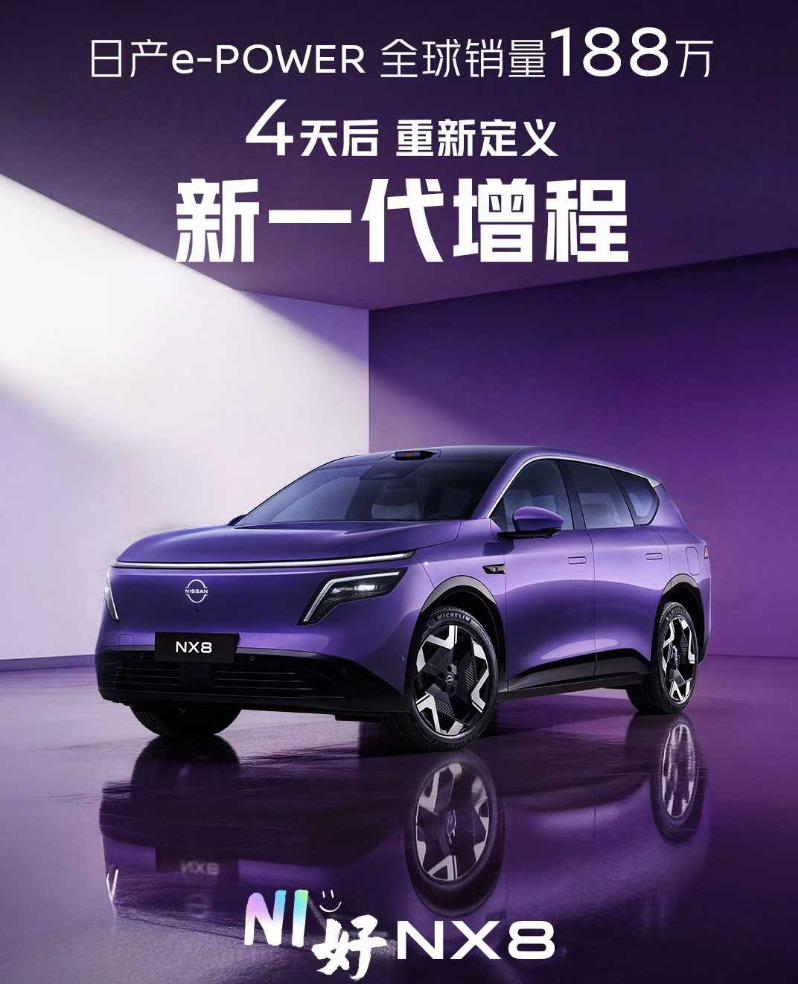
Shortly thereafter, Nissan announced plans to launch its first long-range extended-range vehicle, the NX8, aiming to redefine the next generation of extended-range technology. It also noted that Li Auto's pioneering of the large-battery extended-range route in China was inspired by Nissan's e-POWER extended-range concept.
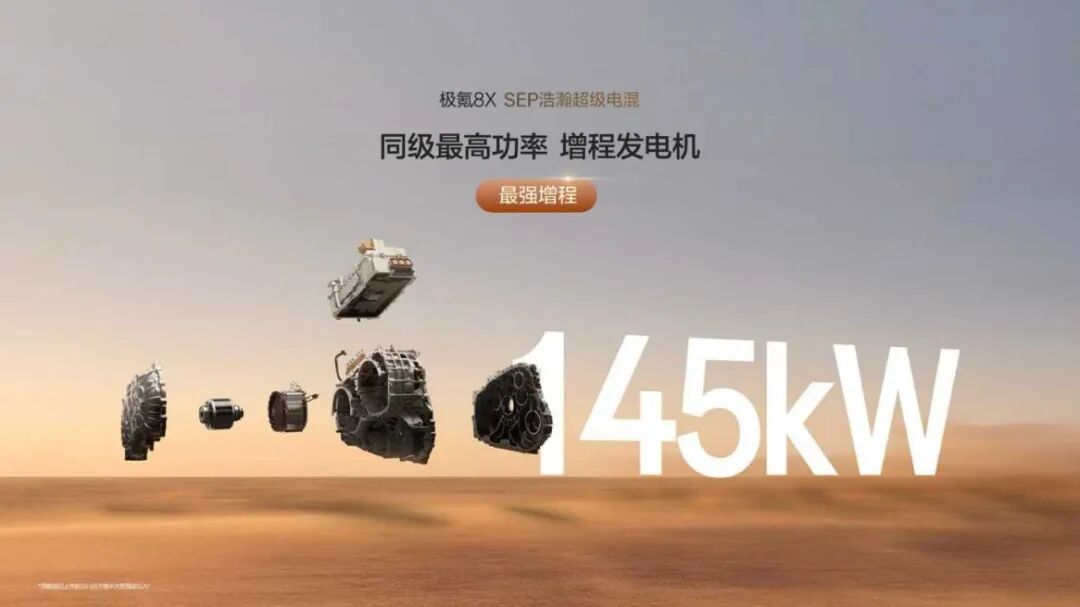
Geely, known for its multi-path plug-in hybrid technology, is following up its first extended-range vehicle, the Galaxy V900, with its first extended-range SUV, the Boyue REV, set to debut soon. It promotes its 'Super Platinum' new-generation long-range extended-range technology, swiftly joining the extended-range race. Even Zeekr, which follows a super hybrid route, showcased at its launch event that the 8X is equipped with a 145kW extended-range generator, the highest power in its class, further fueling the debate with a major extended-range showdown.
In fact, numerous other automakers have also joined the extended-range fray. In 2024, Mazda took the lead in adopting Chang'an's extended-range technology, initiating a joint venture extended-range trend. In 2025, the Buick 'True Dragon' extended-range system-equipped Zhi Jing L7 and the Jiangling Ford Bronco extended-range version made their debuts. Beijing Hyundai also outlined its extended-range product plans for 2026-2027, and even Toyota, deeply entrenched in hybrid technology, plans to launch extended-range versions of the Highlander and Sienna in 2026.
This trend includes several new players who once believed pure electric was the future, from Arcfox to XPENG, from Aion to Xiaomi, all now switching to the extended-range race. Extended-range technology has transformed from a questioned and criticized option to a highly sought-after solution. With more technical models flooding this path, there will undoubtedly be no shortage of debates ahead.
While the discussion is no longer about whether extended-range technology is outdated, it is undeniable that the upcoming extended-range showdowns have shifted from 'whether to do it' to 'how to do it' and 'whose is better'.
01 A Unique Consumer Environment Spurs New Technological Routes
The popularity of the extended-range race is not without reason; it is driven by real market demand and reflects past competition over technological routes.
Initially, after entering the new energy vehicle sector, automakers divided into different technological camps. Those betting on pure electric naturally viewed extended-range as a transitional technology, while the plug-in hybrid camp criticized extended-range for lacking a direct drive mode and having relatively high fuel consumption when the battery is depleted.
The arguments back then were essentially market struggles between different technological routes, with the pure electric and plug-in hybrid camps attempting to consolidate their technological advantages by highlighting the shortcomings of extended-range technology.
Initially, the industry's perception of extended-range systems was based on Nissan's e-POWER or Chevrolet's Volt, which converted fuel into electricity and then used an electric motor to drive the vehicle. This strategy was derided by outsiders as 'pointless complexity,' but in reality, this view overlooked the poor fuel economy of gasoline vehicles at low speeds. Extended-range technology precisely compensates for this major drawback of gasoline vehicles through energy conversion.
However, for domestic consumers, such extended-range vehicles, due to their small battery design, could not provide a pure electric driving experience. Additionally, the explosion in battery technology and industry in China significantly reduced the market acceptance of such extended-range vehicles.
It was not until Li Auto, building on the e-POWER logic, increased battery capacity to give extended-range vehicles both the quiet experience of pure electric vehicles and the advantage of no range anxiety, that a new path for extended-range hybrids was truly opened, providing a solid market foundation for this technological route.
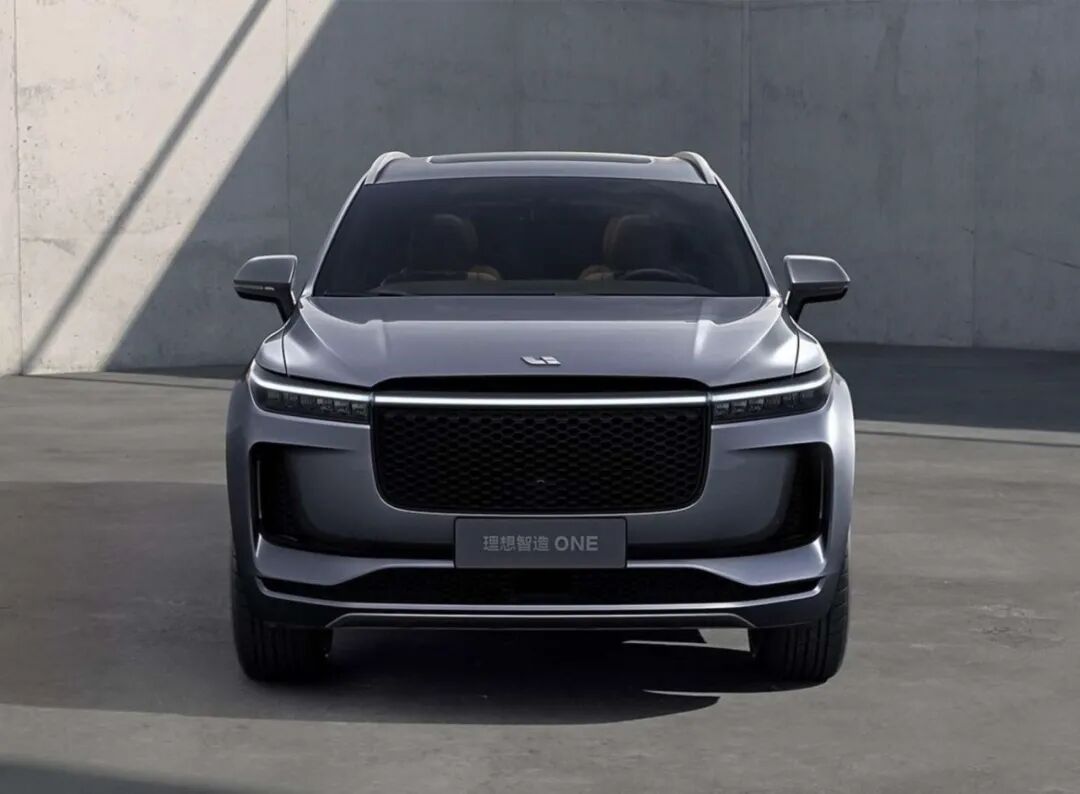
Especially in 2025, with extended-range vehicle sales totaling around 1.2 million units, the industry has re-evaluated extended-range technology based on this figure. Now, with the penetration rate of the new energy market exceeding 50%, market demand for new energy vehicle models has become increasingly diverse, and doubts about extended-range technology have dissipated.
The collective entry of automakers into this sector further confirms the feasibility of the extended-range technological route. It cannot be considered a substitute for plug-in hybrids or pure electric vehicles; rather, it fills the market gap for 'those who demand pure electric range but also want to completely eliminate charging anxiety.' It has also made major automakers realize that in the vast Chinese market, consumer demands vary greatly, and extended-range technology will inevitably become a necessary choice for mature automakers to improve their new energy product matrices.
02 Extended-Range Technology: Still Room for Competition
With the debate over routes settled, the core of extended-range competition now focuses on the technical essence of 'how to excel in extended-range solutions.' Is it easier for automakers with engine technology to develop extended-range vehicles, or do automakers like Li Auto, with experience from the first two generations of the market and feedback from users, have an advantage with their third-generation extended-range technology? It is difficult for outsiders to make an accurate judgment at this time.
In the view of some automakers, the core of extended-range vehicles is engine thermal efficiency. The higher the thermal efficiency, the more electricity generated per unit of fuel, resulting in longer range and more economical vehicle use for consumers. Therefore, some automakers pursue higher thermal efficiency, such as Geely, which has achieved an industry-leading thermal efficiency of 47.26% for its extended-range unit.
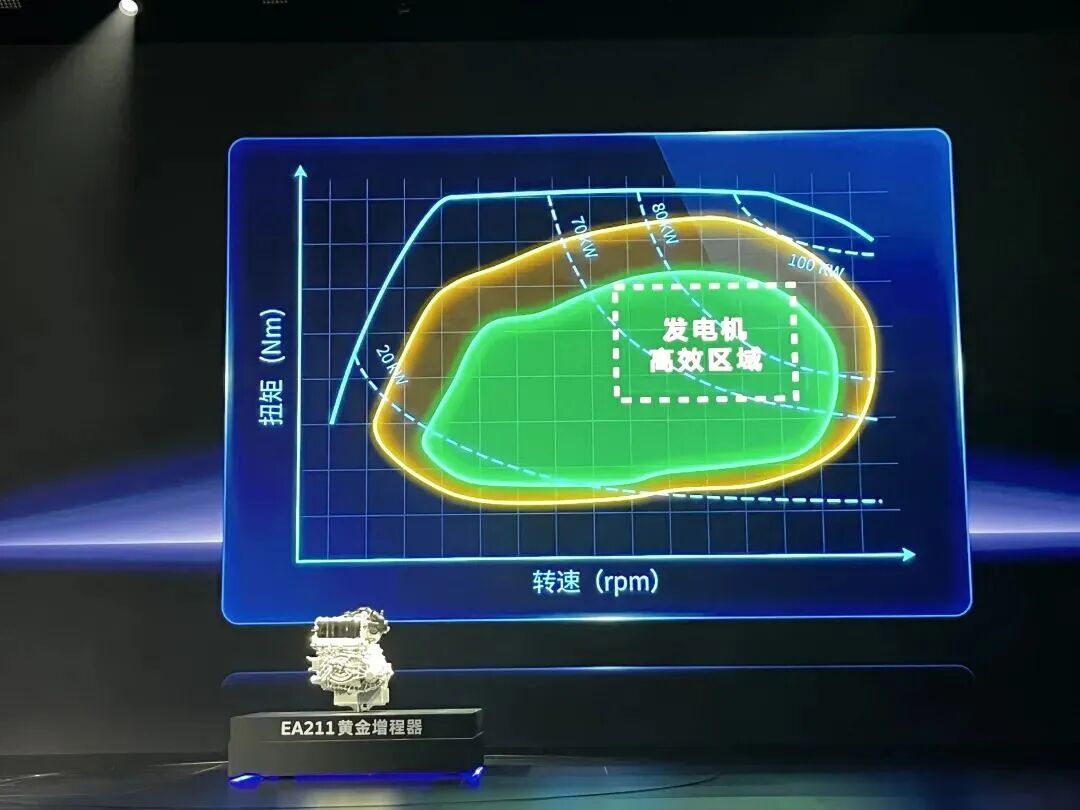
However, for joint venture automakers like Volkswagen, although the thermal efficiency of the Volkswagen EA211 extended-range unit is only 40%, it features a VTG variable geometry turbocharger that optimizes low-speed response, improves charging power, maintains performance even when the battery is depleted, and reduces fuel consumption under depleted conditions. Additionally, Volkswagen believes its advantages lie in a broad and stable high-efficiency operating range, as well as long-term market verification with over 20 million units installed, ensuring robust performance and long-term usability.
According to Zhang Guiqiang, head of extended-range technology at Li Auto, an extended-range unit is never a simple modification of a traditional engine; the research and development priorities of the two are fundamentally different. In other words, automakers with engine technology and experience may not necessarily excel in developing new energy extended-range units.
He stated that traditional engines prioritize power, torque, and fuel economy, with NVH (noise, vibration, and harshness) and size being secondary considerations. However, the core requirements for extended-range units are completely reversed. Since extended-range vehicles mostly operate in pure electric mode, NVH quietness is the top priority, followed by fuel economy brought by power, long-term maintenance, and size optimization.
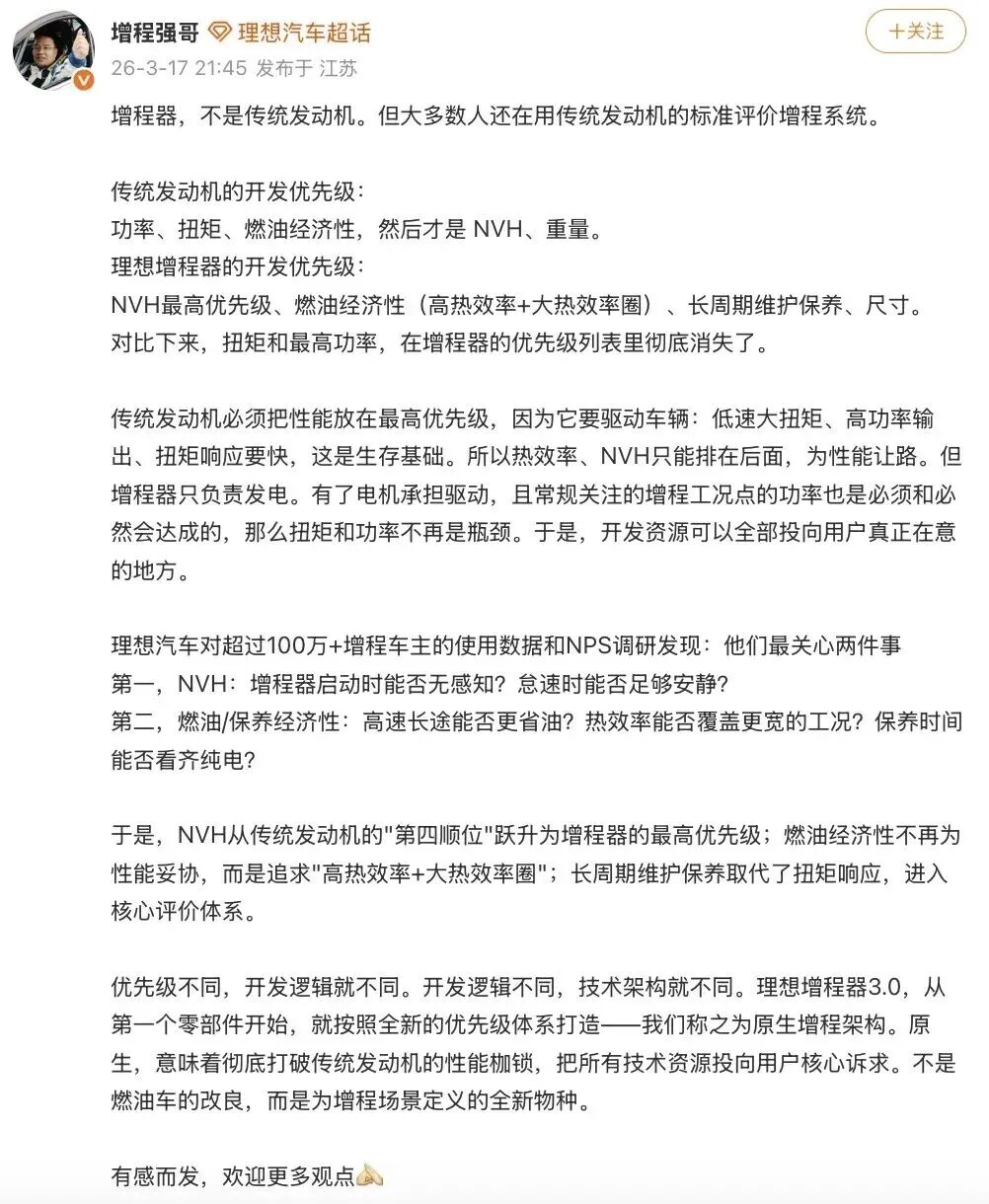
Especially in terms of maintenance economy, the maintenance of two systems in hybrids increases costs for consumers compared to pure electric vehicles. Therefore, optimizing maintenance cycles and reducing costs has become an important direction for extended-range technology iteration. For example, most extended-range vehicle owners start their extended-range units very infrequently throughout the year. Could the maintenance cycle for extended-range units be extended to, say, three years?
In fact, each automaker's expressed pain points are valid, and they have different technical stances. As for why Volkswagen and Li Auto have different approaches to solving extended-range vehicle issues, the author believes the core issue lies in the differences between Volkswagen's and Li Auto's user bases. Perhaps Volkswagen focuses more on performance, while Li Auto cares more about the user experience.
But at least, as more and more automakers join the extended-range competition, later consumers will benefit from better extended-range technology and a better experience.
03 User-Centric, Diverse Coexistence
As more automakers eagerly enter the extended-range vehicle sector, market conditions have dealt them a harsh blow. Since the second half of last year, the growth rate of the extended-range market has shown signs of slowing compared to pure electric and plug-in hybrids, leading to some new doubts in the market.
However, the author believes that short-term sales declines are more influenced by the sales pace and layout of certain automakers, rather than a decline in the value of the sector itself. The extended-range market has now formed a vibrant landscape where new forces compete with traditional automakers and plug-in hybrid automakers cross over into the sector. The technological explorations of different companies continue to enhance the product strength of this sector.
Driven by both policy and market forces, the development of extended-range technology has embarked on an upgrade path towards native platformization and efficiency. For example, policy-wise, stricter fuel consumption requirements for extended-range vehicles have forced automakers to abandon simple 'gas-to-electric' extended-range solutions and invest in deeper technological research and development. Market competition has also prompted automakers to explore more possibilities for extended-range technology.
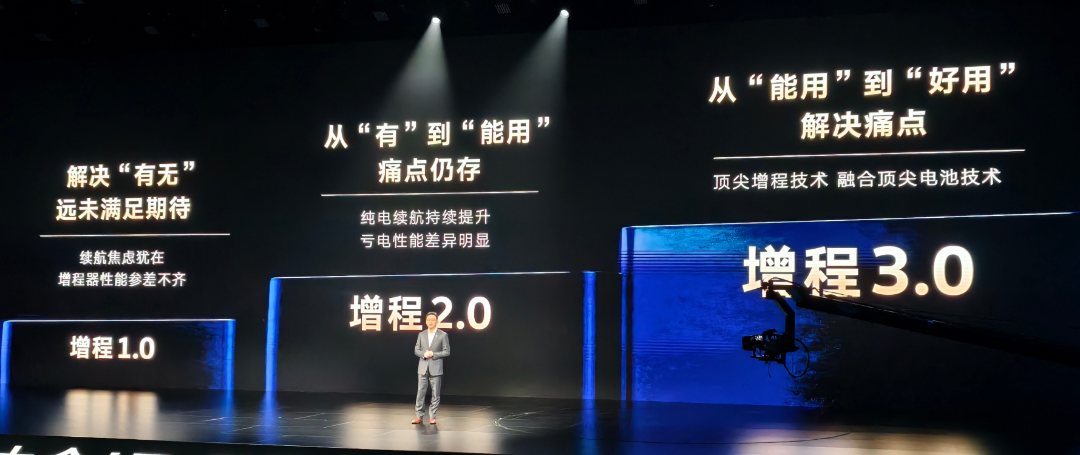
Just as Li Auto adheres to the core needs of quietness, efficiency, and maintenance economy, IM Motors' 'Stellar Super Extended-Range Unit' focuses on super-fast charging, Leapmotor offers an 80-degree large battery for an electric feel, while SAIC Volkswagen and Nissan leverage their traditional engine technology accumulations to optimize the fuel efficiency of extended-range units. The future of extended-range technology is no longer a one-size-fits-all solution but rather an opportunity to leverage its strengths in precise segments, complementing pure electric and plug-in hybrid technologies.
From the perspective of vehicle adaptability, extended-range technology has particular advantages in the large SUV segment. The user base for large SUVs is relatively less sensitive to price and maintenance costs, with their core needs being spaciousness, long range, and a comfortable driving experience. The dual power systems of extended-range vehicles perfectly meet these demands, and the high pricing of such vehicles can also absorb the costs of extended-range units and large batteries.
For entry-level A-segment or B-segment family cars, extended-range technology seems somewhat 'out of place.' Users of these vehicles are highly sensitive to price and usage costs. The dual systems of extended-range vehicles would drive up the vehicle's price and maintenance costs, making them less attractive than pure electric vehicles or most plug-in hybrid vehicles that rely more heavily on gasoline.
Undoubtedly, the journey of extended-range technology from being questioned to widely accepted, and from route debates to experience competitions, is essentially a positive guidance of market demand on technological development. The future new energy market will not be dominated by a single technological route; pure electric, plug-in hybrid, and extended-range technologies will each find their place and showcase their strengths. So, ultimately, when it comes to determining superiority or making a choice, the decision should rest with the users.
However, it is certain that the various arguments about extended-range technology will not cease. Ultimately, the market will return to the core logic of the automotive industry: there is no absolutely advanced technology, only technology that fits the market and strategies that fit the enterprise. For example, NIO does not produce extended-range vehicles due to the constraints of its battery swap system, and Tesla does not pursue extended-range technology because Musk's focus is not solely on vehicle sales volume.
It remains to be seen when Great Wall Motors, which 'will never make extended-range vehicles,' will hold firm to its bottom line.
Editor-in-Chief: Cui Liwen Editor: He Zengrong
THE END
-
![]()
The Unstoppable Rise of 'Optical Progress and Copper Decline': Sunny Optical’s Strategic Vision for the Next Decade
-
![]()
AI + Going Global in the Second Half: No Intermission for Robot Vacuum Cleaners
-
![]()
The Suffering Endured in E-commerce, Walmart Doesn't Want to Repeat in AI
-
![]()
What Does the Doubling of New Energy Vehicle Exports Mean?
-
![]()
Ghosn: 'Only I Can Save Nissan'
-
![]()
Volkswagen Lays Off 100,000 Employees, The Elephant Sits Down
-
![]()
Expanding Production Capacity! Yutong Optics Acquires Approximately 1.5 Hectares of Industrial Land in Chang'an, Dongguan
-
![]()
Why Is Nokia Making a Comeback in the AI Era?