Anniversary of the Broken Merger: Honda in Tears, Nissan Smiling
 03/19 2026
 588
588
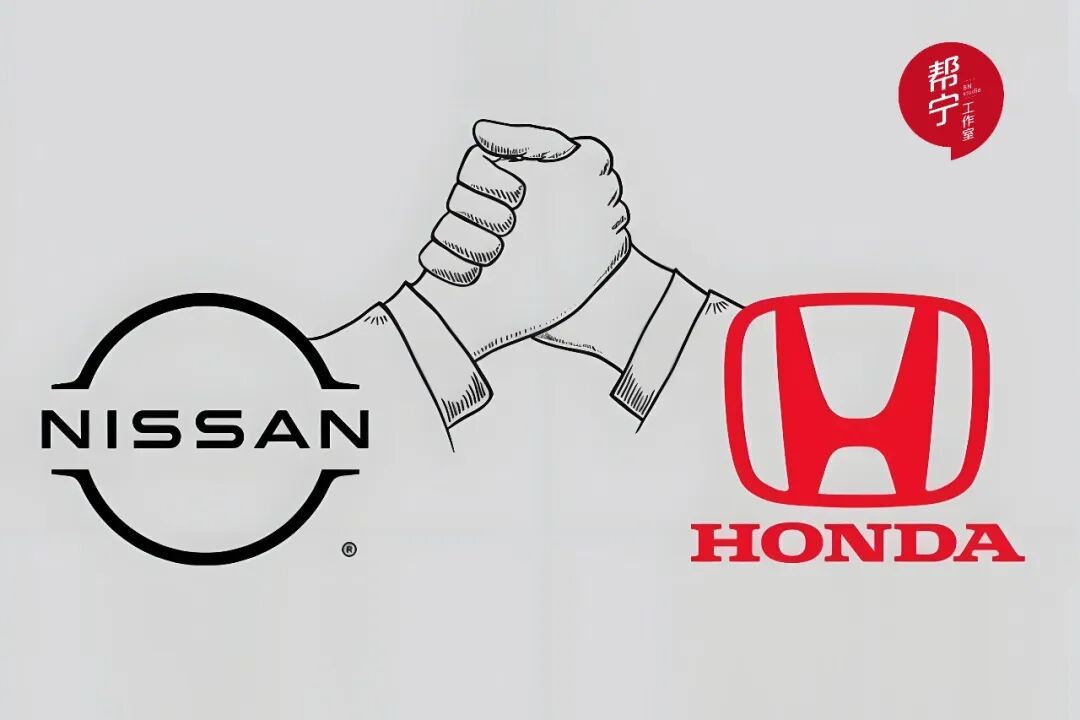
"Honda Records $15.7 Billion Loss, Cancels Three EV Models"
Compiled by | Yang Yuke Edited by | Li Guozheng Produced by | Bangning Studio (gbngzs)
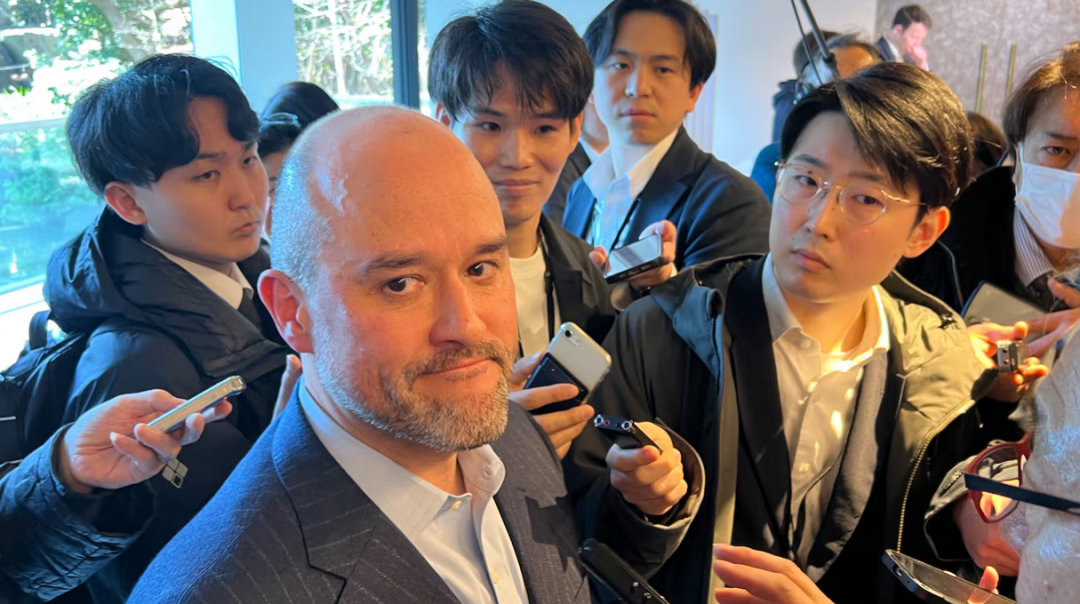
A year ago, Honda CEO Toshihiro Mibe cautioned Nissan's management about the need for "quick, decisive, and painful decisions." At that time, Mibe doubted Nissan's ability to turn a profit, going so far as to boldly propose an "all-in" acquisition plan for Honda to fully acquire Nissan. This proposal disrupted the originally envisioned merger of equals between the two Japanese automakers.
Now, a year later, as Honda finds itself in a precarious financial situation, Nissan seems to have had the last laugh.
When discussing the "merger" last year, Nissan was mired in deficits, declining sales, and excess capacity, while a financially healthy Honda held the upper hand. Today, Nissan is putting its problems behind it, while Honda is struggling deeply.
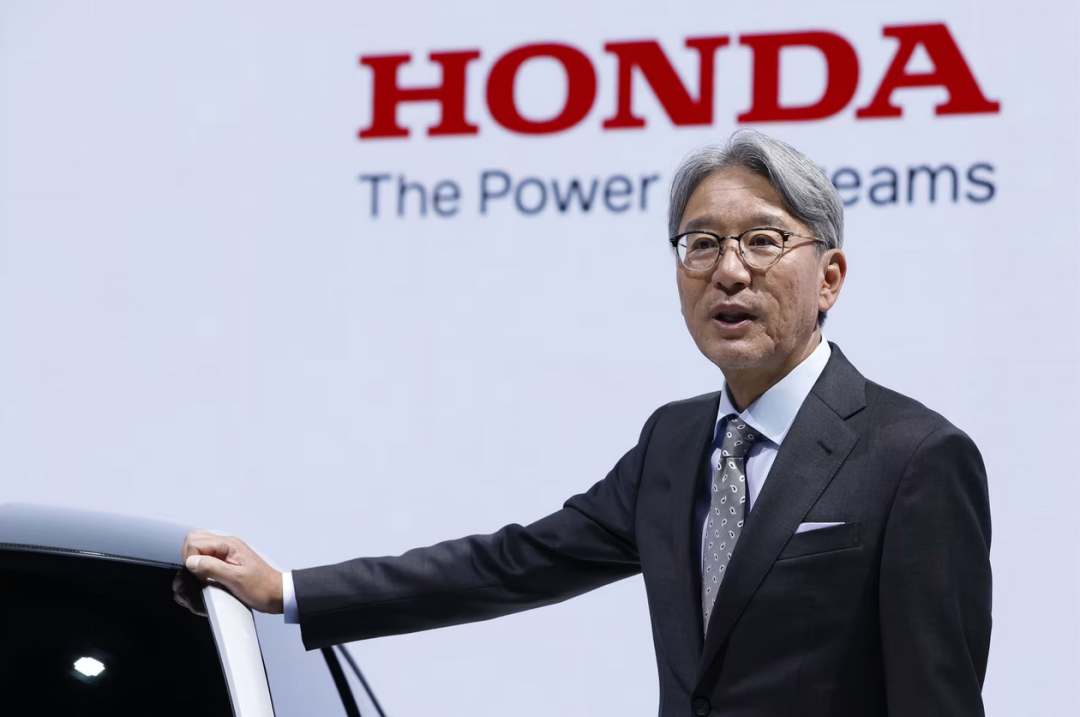
Last week, Mibe had to make a difficult decision. He admitted that his previous incorrect bets on electric vehicles had led to a 2.5 trillion yen ($15.7 billion) loss for Honda. As a result, Japan's second-largest automaker will cancel at least three electric vehicle models planned for production in the U.S. and will announce its first-ever annual net loss.
"Fundamentally, the responsibility lies with me. For this reason, I made this painful decision to avoid leaving a heavy burden for the future," Mibe said bluntly at a press conference.
However, Nissan's situation is broadly similar to Honda's, with both companies expected to face losses and declining sales this fiscal year.
▍01 A Tale of Two Struggling Companies
Rewind to February 2025, when a dramatic reversal of fortune occurred—the ambitious plan to merge Nissan and Honda and create the world's third-largest automotive group collapsed that month. At the time, Nissan hesitated over Honda's aggressive merger approach, which would have made Nissan a subsidiary.
Since then, Nissan has entered crisis mode. The company removed Makoto Uchida as CEO and promoted the younger Ivan Espinosa as the new leader, who initiated a tough three-year recovery plan.
Less than a year into his tenure, Espinosa announced that Nissan would close seven factories, lay off 20,000 employees, and cut fixed and variable costs by 500 billion yen.
Just last month, Espinosa narrowed Nissan's projected operating loss for the current fiscal year.
Currently, Nissan expects an operating loss of just 60 billion yen ($375.7 million) for the fiscal year ending March 31, 2026, far better than its November forecast of 275 billion yen ($1.72 billion).
Nissan anticipates a net loss of 650 billion yen ($4.07 billion) for the fiscal year. In comparison, the previous fiscal year saw a net loss of 670.9 billion yen ($4.2 billion).
Honda's prospects once seemed more optimistic than Nissan's. However, it now finds itself in no better shape than Nissan.
After adjusting its electric vehicle roadmap, Honda expects an operating loss for the 2025 fiscal year that is at least four times that of Nissan's. Honda places this loss between 270 billion and 570 billion yen ($1.69 billion to $3.57 billion). The company also anticipates a net loss for the fiscal year between 420 billion and 690 billion yen ($2.63 billion to $4.32 billion).
Bernstein analyst Masahiro Akita said in a report titled "The Bad News Continues" that Honda's revision was "a massive negative surprise for the market, given the enormous scale of the expected losses."
In terms of raw production volume, Honda still leads Nissan, but neither company looks particularly healthy. Nissan expects global sales to decline by 4.4% this fiscal year to 3.2 million units, while Honda anticipates a 10% drop in global deliveries to 3.4 million units.
Honda's difficulties largely stem from Mibe's blind optimism about electric vehicles. After taking the helm in 2021, Mibe embarked on a complete overhaul of Honda. He pledged to transform one of the world's largest internal combustion engine manufacturers into a company that would completely abandon internal combustion engines by 2040.
Honda was the first and only Japanese automaker to set a timeline for phasing out internal combustion engine products. In stark contrast, other companies in the Japanese automotive industry attempted to hedge their bets by adopting a multi-path approach using different powertrain systems.
Even Nissan, a former pioneer in electric vehicles, believed it was best not to go all-in.
▍02 Toshihiro Mibe's Fate
Honda's failed electric vehicle strategy has weakened its business in the crucial Chinese market.
Honda now admits that its e:N series of electric vehicles, developed specifically for the Chinese market, has failed to make a splash and cannot compete with technologically more advanced and lower-cost local Chinese competitors.
To absorb excess capacity in China, the world's largest market, Honda is trying a new desperate move.
It will repackage the China-made e:NS2 crossover as the fourth-generation Insight and import it to Japan, where the electric vehicle market share is just 1.3%.
In contrast, Nissan has humbled itself in China. The company relies on electric vehicles designed by its Chinese joint venture, Dongfeng Nissan, which delivers products specifically tailored to Chinese demands.
Unlike Honda, Nissan's strategy is curbing its sales decline in China and supporting a nascent rebound. According to data from the global automotive research portal MarkLines Co., Nissan's passenger vehicle sales in China have fallen by 18% since 2023 to 601,132 units.
During the same period, Honda's sales in China plummeted by 46% to 677,724 units.
Nissan's young CEO, who took office just a year ago, is implementing a bold and painful recovery plan that is gaining support. Nissan will soon announce its next mid-term plan.
Honda CEO Toshihiro Mibe has adopted similarly bold but ultimately misguided strategies over nearly five years, resulting in approximately $16 billion in wasted spending and leading to Honda's first net loss since going public.
In announcing this "painful" decision, Mibe said he would reduce his salary by 30% for three months and forgo performance-linked compensation. Now, it is up to investors and board members to decide whether these measures are sufficient to atone for Honda's significant missteps.
▍03 Problems Existed Before the EV Gamble
Honda invested too much too late in the brief electric vehicle boom and now finds itself burdened with an outdated product lineup and doubts about its future.
Last week, the Japanese company dropped a $15.7 billion impairment charge bombshell that shocked investors, primarily due to ill-timed bets on electric vehicles—some of which were abandoned just months before launch. This could be a precursor to the company's first-ever annual loss.
But Honda's problems are not limited to its failure to catch up with pure electric market leaders BYD and Tesla.
Long known for its distinctive and innovative models, Honda has struggled to live up to this reputation in recent years, most notably in the United States, its largest revenue source by far. Last year, Honda's sales in the U.S. grew by just 0.5%, below average. Honda's once-promising business in China has also stagnated in recent years.
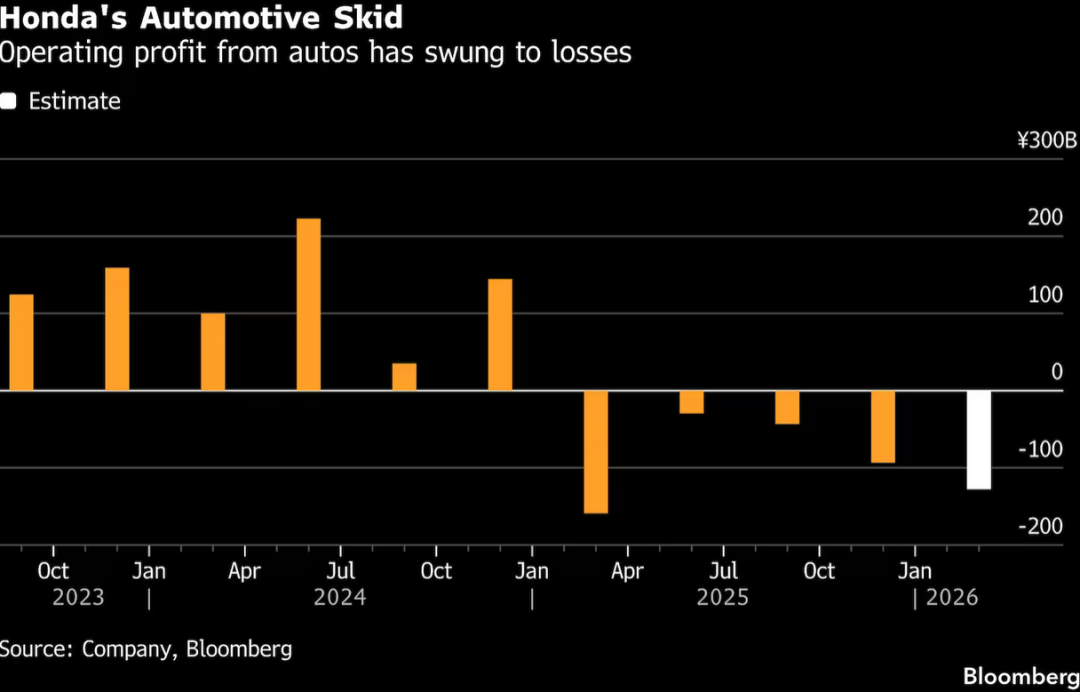
As a result, Honda's automotive business has suffered losses for four consecutive quarters, marking its longest decline since the 2011 Fukushima earthquake and tsunami. Honda's saving grace lies in other business lines, such as motorcycles, which remain highly profitable.
Tatsuo Yoshida, a senior automotive analyst at Bloomberg Intelligence, pointed out that the weak performance of Honda's core automotive business predates its electric vehicle woes. "The reason the company recorded such a massive overall loss this time is that the losses from electric vehicles were too large to offset," he said.
In fact, Honda was the first automaker to sell gasoline-electric hybrid vehicles in the United States, with its earliest Insight model launching seven months before Toyota's Prius. However, Honda currently offers only four hybrid models in the U.S., compared to Toyota's 29. Although Honda aims to double hybrid vehicle sales by 2030, the company said it will cut hybrid vehicle production in the U.S. this year.
Toyota acted swiftly to add hybrid options to most of its models, even going all-in on hybrids for several key models like the sedan Camry, minivan Sienna, and full-size SUV Sequoia. Hybrid versions of the RAV4 and other models are among Toyota's best-sellers.
Meanwhile, Ford created a hot new segment with its compact hybrid pickup Maverick and plans to offer the option on nearly all its models. Hybrid vehicles account for about one-third of Ford's F-150 full-size pickup sales.
In contrast, Honda offers no hybrid options for its pickups, minivans, or large SUVs. Late last year, the company reintroduced the purely hybrid Prelude sports coupe, but demand has been lackluster, with only 299 units sold last month.
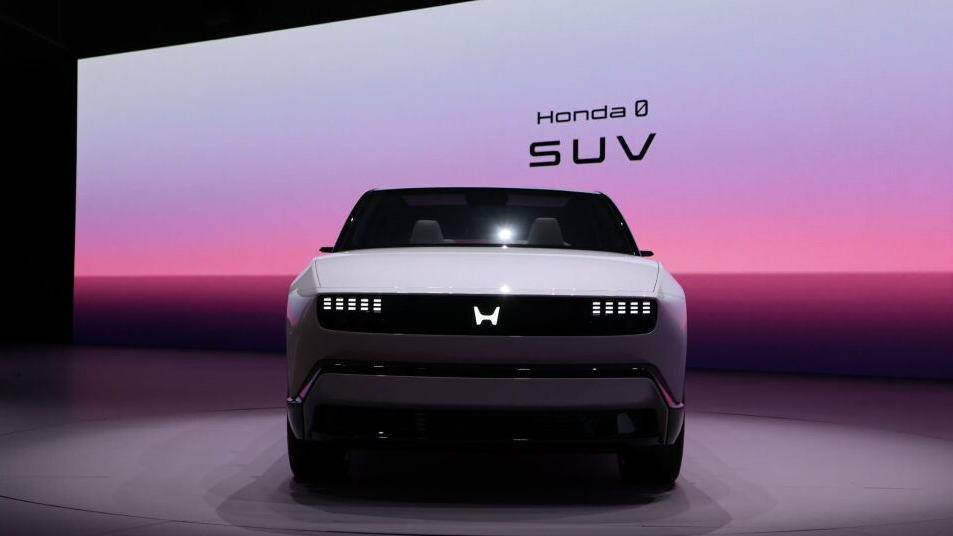
To a large extent, Honda is relying on the success of its latest software-defined vehicles: two Series 0 electric vehicles and the all-electric Acura RSX, slated to debut in the U.S. next year. However, all three projects were canceled in this strategic shift.
"Given that the Honda Series 0 was positioned as the core model of Honda's software-defined vehicle strategy, this decision was unexpected," Masahiro Akita wrote in a research note.
▍04 Hidden Risks Stemmed from Obsession with Volume and Variety
Toshihiro Mibe broke Honda's long history as an internal combustion engine specialist—in automobiles, motorcycles, boats, lawnmowers, and generators. He aimed to reshape the company into an electric motor empire by 2040. The initial vision was for electric vehicles to account for 40% of total sales by 2030, later revised down to 20%, but now even that goal has faltered.
Long after most of Honda's peers changed direction, Mibe remained optimistic about electric vehicles.
In 2021, General Motors became one of the first legacy automakers to commit to an all-electric future. But it was also one of the first to hit the brakes as demand slowed.
During the termination of its partnership with General Motors, Honda early on sensed tepid demand for electric vehicles in the U.S. market. Honda launched the Prologue electric vehicle in 2024, which was produced at a General Motors factory using GM's battery technology.
Sales of the model stood at 1,067 units last month, down 64% year-on-year, mainly due to the cancellation of U.S. federal electric vehicle subsidies in September last year.
Yet this year, Honda doubled down on batteries, spending $4.4 billion to acquire a stake in partner LG Energy Solution's new factory in Ohio. This comes as Ford and Stellantis are exiting similar joint ventures.
Although Honda's commitment to electric vehicles came too late, it has begun to rethink its approach to the automotive business.
In February, Honda quietly announced it would reverse an organizational structure implemented six years ago by Takahiro Hachigo (Mibe's predecessor), which separated automotive development from advanced research and development modules—a sign of broader restructuring at the company. This restructuring move returns automotive development under the control of its R&D department, effectively admitting that Honda is no longer focused on delivering innovative sedans and pickups.
"Through this change, the R&D department will further develop into an R&D organization capable of continuing to create compelling products, through which Honda will further enhance its competitiveness," Honda said.
Honda's slow decline in its automotive business can be traced back more than a decade, when management focused on volume and variety rather than product quality or capital efficiency.
In 2012, then-CEO Takanobu Ito set a bold goal to double annual sales to 6 million units within five years. The company subsequently built factories in China, Indonesia, and Thailand and accelerated production development to achieve the target.
However, such aggressive goals put pressure on its engineers and led to recalls and poorly executed model launches.
Although Takahiro Hachigo, who succeeded Ito as CEO, shifted the focus away from chasing sales targets, Honda never truly recovered as competitors like Hyundai and BYD began to seize market share. The Tokyo-based company's global sales peaked at 5.3 million units in 2019 and have declined annually since then. The company expects sales to fall to 3.3 million units in the 2025 fiscal year from 3.7 million units last year.
This leaves Honda in a weaker position to withstand other blows, including U.S. President Donald Trump's tariffs on cars imported into the United States, as well as China's automotive oversupply and price deflation. Bernstein noted that Honda's sales in China have declined for 24 consecutive months.
Mibe told reporters that Honda will make other changes as part of its electric vehicle reset. The board will detail plans for broader reforms in a revised business plan expected to be released in May alongside the announcement of full-year financial results.
(Some contents of this article are synthesized from reports by Automotive News and Bloomberg, and some images are sourced from the internet)

-
![]()
The Unstoppable Rise of 'Optical Progress and Copper Decline': Sunny Optical’s Strategic Vision for the Next Decade
-
![]()
AI + Going Global in the Second Half: No Intermission for Robot Vacuum Cleaners
-
![]()
The Suffering Endured in E-commerce, Walmart Doesn't Want to Repeat in AI
-
![]()
What Does the Doubling of New Energy Vehicle Exports Mean?
-
![]()
Ghosn: 'Only I Can Save Nissan'
-
![]()
Volkswagen Lays Off 100,000 Employees, The Elephant Sits Down
-
![]()
Expanding Production Capacity! Yutong Optics Acquires Approximately 1.5 Hectares of Industrial Land in Chang'an, Dongguan
-
![]()
Why Is Nokia Making a Comeback in the AI Era?