Honda's First Annual Loss in 70 Years of Listing: Profound Implications and the Future of Its Joint Venture System in China
 03/19 2026
 608
608
A financial "earthquake," triggered by strategic miscalculations, has catapulted Honda Motor—a company with nearly 70 years of listing history—into an unprecedented crisis.
On March 12, Honda Motor issued a performance warning, projecting a staggering net loss of JPY 420-690 billion for the fiscal year 2025 (ending March 2026). This marks Honda's first annual loss since its listing in the 1950s, representing a dramatic shortfall of nearly JPY 1 trillion compared to its previous profit forecast of JPY 300 billion.
Faced with this historic loss, Honda CEO Toshihiro Mibe candidly stated at an online press conference: "Demand for electric vehicles has plummeted, and despite various measures, profitability remains severely challenged. Continuing production and sales under these conditions will only exacerbate our losses." Consequently, Mibe announced that he would voluntarily forgo 30% of his monthly salary for the next three months, with other executives also taking corresponding pay cuts.
The root cause of this crisis lies in Honda's reassessment of its electric vehicle (EV) strategy, leading to provisions for fees and losses of up to JPY 2.5 trillion. On the same day, Honda announced a "shocking" adjustment to its North American EV strategy, canceling the development and market launch of three planned EV models in the region.
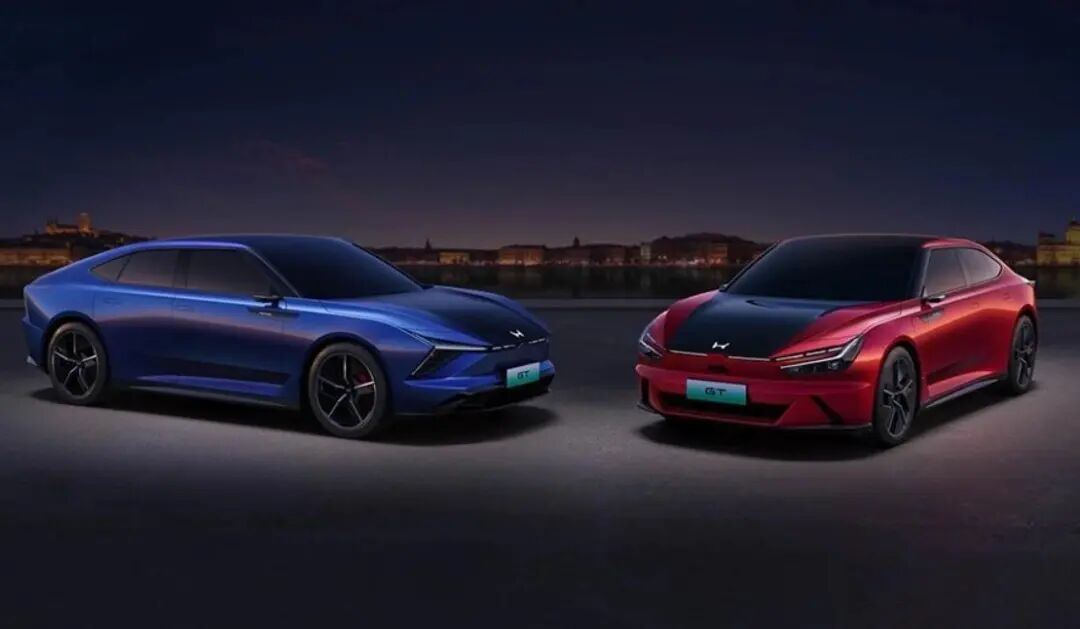
However, the suspension extends beyond U.S. EV projects. In China, Honda's newly launched EV brand "Ye" has seen its related new vehicle launches halted due to poor sales. The financial losses from idle capacity at newly built new energy vehicle factories in China are expected to be substantial. Amid a collective adjustment in the global automotive industry's electrification pace, Honda has emerged as the most severely impacted "rapid marcher."
From All-in EV to a Return to Hybrids
Honda's performance "blowout" manifests as accounting impairments from strategic contraction but, in essence, reflects dual imbalances in its global market deployment.
First, there has been a dual reversal of policies and demand in the North American market. The U.S. government's abolition of EV purchase tax incentives and relaxation of fossil fuel regulations have significantly slowed the growth of the North American EV market. According to Kelly Blue Book data, U.S. pure EV sales declined by 2% year-on-year in 2025, marking the first annual decline in nearly a decade.
Honda overallocated resources to pure EV development, inadvertently harming its profit pillars—fuel and hybrid vehicle businesses—due to adverse U.S. tariff policies. Honda admitted in its statement: "The profitability of our automotive business is declining, primarily due to increased resource allocation to pure EV development, which has weakened product competitiveness in the Asian market."
Second, China's market has delivered a "dimensionality reduction blow." If North America represents a strategic misjudgment, China signifies a competitive defeat. In 2025, Honda's sales in China plummeted to 645,000 units, down 24% year-on-year, marking the fifth consecutive year of decline. Honda officially reflected: "In China, customers' focus is shifting from hardware attributes like fuel efficiency and interior space to software functions that can be continuously upgraded based on user needs. Honda has failed to launch products with better cost-performance than emerging pure EV automakers."
This statement hits the nail on the head: While domestic brands have pushed intelligent driving into the RMB 100,000 price range and new forces reshape user experiences with "monthly" OTA updates, Honda continues to market products at the pace of the fuel car era.
Faced with massive losses, Honda's response strategy exhibits clear characteristics of "strategic contraction."
At the technological level, Honda is shifting from aggressive pure EVs to a pragmatic dual approach. The company explicitly stated it would reassess resource allocation and further strengthen hybrid models. According to plans, Honda will launch 13 new-generation hybrid models globally from 2027 to 2030, with the global pure EV sales share falling below the previously set 30% target by 2030.
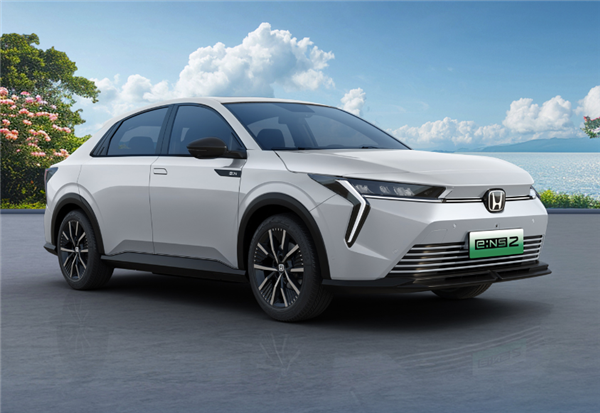
At the cost control level, Honda is restructuring its global supply chain. A notable signal: Dongfeng Honda's pure EV model e:NS2 will be exported to Japan, with sales starting as early as spring 2026 under the tentative name INSIGHT. Insiders revealed that the model, produced at Dongfeng Honda's first factory, will have an initial limited run of 3,000 units.
This "Made in China, Re-exported to Parent Country" model is extremely rare in Honda's history, reflecting both the competitiveness of Chinese manufacturing costs and Honda's global capacity utilization challenges.
How to Sustain Two Joint Ventures?
If North America's strategic adjustment represents a proactive "surgical operation" by Honda, its situation in China resembles a "chronic disease" worsening due to mismatched treatments.
In the first two months of 2026, Honda's two joint ventures in China showed subtle divergences. Dongfeng Honda's official data revealed January and February sales of 12,576 and 18,025 units, respectively. While February saw a rebound, cumulative sales still fell 18.6% year-on-year.
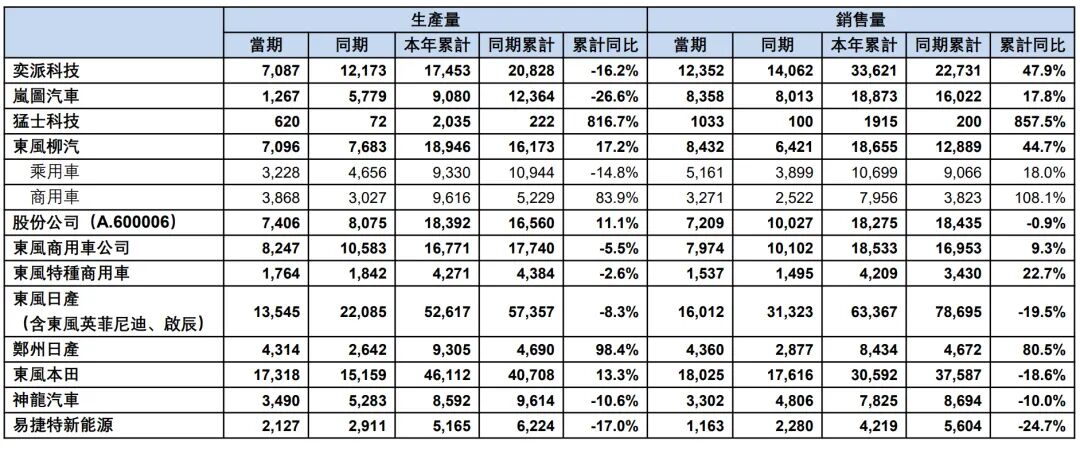
GAC Honda performed even weaker. According to GAC Group data, January sales reached only 4,558 units, with February remaining below 10,000 units. Cumulative sales for the first two months plummeted nearly 70%, showing signs of collapse. Combined sales of Honda's two joint ventures now lag behind Dongfeng Nissan, with the gap widening.
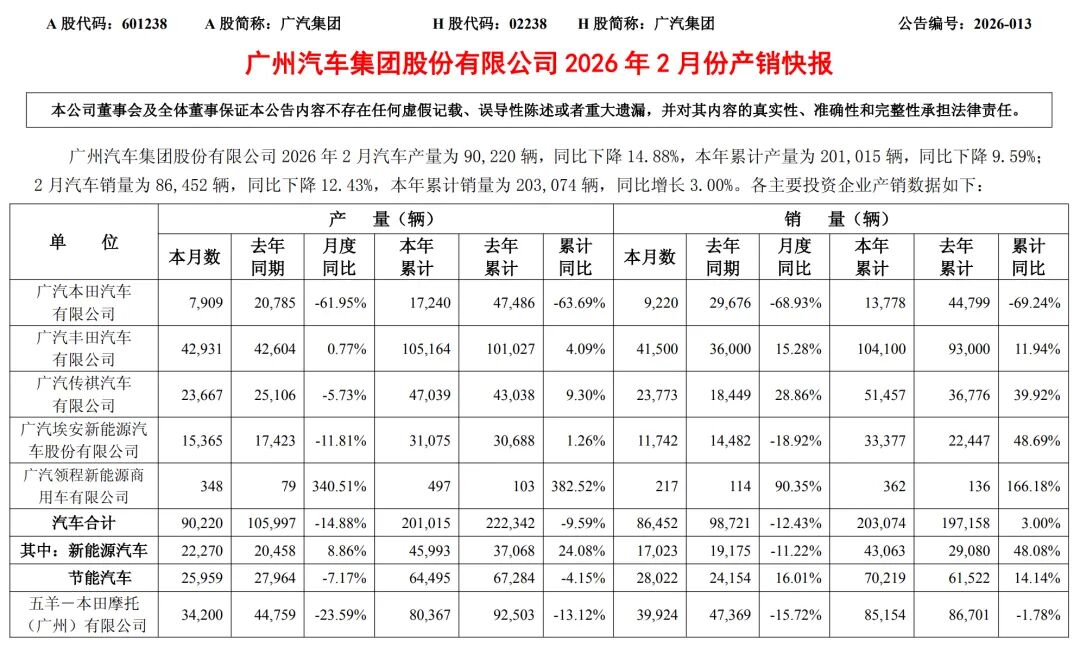
This contrast reveals deep-seated contradictions in the joint venture system: Fuel vehicles retain residual value, but EVs lack incremental capacity. Dongfeng Honda's rebound relies on the nostalgic appeal of the "iconic" CR-V fuel model, while GAC Honda's Accord and Breeze still generate volume. However, these "cash cows" are being encircled by Chinese brands' new energy products. As an industry commentator noted: "Model collapse is just the surface; stubbornness in electrification is Honda's fatal flaw."
Honda's sales in China have plummeted from a peak of 1.5 million units annually to 645,000 units, making it difficult to sustain the independent operations of two joint ventures at this scale. At the dealer level, some GAC Honda stores face operational pressures, with after-sales service standards rapidly declining. While Dongfeng Honda has rebounded, it is far from recovering. From a market perspective, integration may be inevitable. However, Honda faces several major obstacles, making integration far more challenging than for Ford and Toyota.
"Ford could integrate because Ford China held stronger sway in its two joint ventures and could dominate channels through a wholly-owned sales company," an anonymous industry analyst said. "Toyota's integration was gradual, relying on its robust lean management system and supplier control. However, Honda's joint venture structure in China is more balanced, with Dongfeng and GAC being powerful local SOEs. Honda's 'power grab' will not be easy."
On one hand, Honda's two Chinese joint ventures operate on a 50:50 equity basis, requiring high consensus with Dongfeng and GAC for any channel integration or model division adjustments. In the era of stock competition, both sides aim to retain advantageous resources, making benefit coordination extremely difficult.
Additionally, the product layouts of the two joint ventures overlap significantly. GAC Honda's Accord and Dongfeng Honda's Inspire, GAC Honda's Breeze and Dongfeng Honda's CR-V, GAC Honda's Integra and Dongfeng Honda's Civic are virtually "sister models." The top-selling models are limited, raising questions about which models to retain or phase out in the event of integration.
New Energy R&D Model Takes Center Stage
Facing severely weakened brand strength among young users in China, Honda must prioritize attractive new energy vehicle R&D in China. On one hand, Dongfeng Honda's e:NS2 export attempt to Japan warrants expansion. Chinese factories offer significant advantages in cost control and battery supply chains, and Honda should increase China-made production to support global markets. This would boost capacity utilization at Chinese plants and offset domestic price war pressures through "export tax rebates."
On the other hand, Honda should follow Toyota and Nissan's lead by fully empowering its Chinese R&D teams. Leveraging the new energy platforms and supply chain advantages within Dongfeng and GAC, combined with Honda's quality control and professional tuning expertise, the two joint ventures could create globally competitive products.
For the Chinese market, Honda needs more than mild improvements—it requires a profound restructuring of its joint venture system. Notably, the joint venture agreement between GAC and Honda expires in 2028. Whether GAC Honda renews or extends the partnership is not only a critical and urgent issue for Honda and GAC but also a significant statement on Honda's future in China.
In May 2026, Honda plans to unveil its new medium- to long-term business strategy. Whether this nearly 80-year-old automaker can deliver a truly compelling answer for the Chinese market will determine its ultimate fate in the world's largest automotive arena.
-
![]()
The Unstoppable Rise of 'Optical Progress and Copper Decline': Sunny Optical’s Strategic Vision for the Next Decade
-
![]()
AI + Going Global in the Second Half: No Intermission for Robot Vacuum Cleaners
-
![]()
The Suffering Endured in E-commerce, Walmart Doesn't Want to Repeat in AI
-
![]()
What Does the Doubling of New Energy Vehicle Exports Mean?
-
![]()
Ghosn: 'Only I Can Save Nissan'
-
![]()
Volkswagen Lays Off 100,000 Employees, The Elephant Sits Down
-
![]()
Expanding Production Capacity! Yutong Optics Acquires Approximately 1.5 Hectares of Industrial Land in Chang'an, Dongguan
-
![]()
Why Is Nokia Making a Comeback in the AI Era?