NIO Just Announced Profitability, While Honda Posts Its First-Ever Loss: The Clock Is Ticking for Joint Venture Vehicles
 03/19 2026
 462
462
By: Tan Qing Talks AI
Recently, a significant event has rocked the automotive industry: Honda is struggling to stay afloat.
Honda unveiled its earnings forecast for the 2025 fiscal year (spanning from April 2025 to March 2026), and the outcome is an annual net loss.
On March 12, Honda announced that it anticipates an operating loss ranging from RMB 11.6 billion to RMB 24.7 billion and a net loss between RMB 18.2 billion and RMB 29.9 billion.
This is no minor setback. It marks Honda's first annual net loss since going public in 1957. A seasoned automotive titan, established nearly 80 years ago and listed for nearly 70 years, has hit a major roadblock at this crucial juncture.
Previously, Honda's annual profits typically hovered around $5 billion (approximately RMB 35 billion). Now, those profits have vanished, and the company is operating at a loss.
Many may be puzzled: Wait, I still see a plethora of Honda cars on the streets near my building—Accords and CR-Vs are still a common sight. How did this sudden downturn occur?
Don't fret; let's delve into the details.
//What's Behind Honda's Troubles?
First, it's crucial to clarify one aspect: Honda's current predicament isn't solely the result of external competition; it's also a self-inflicted wound, for the following two reasons.
The first factor is strategic miscalculation.
You might assume that Honda has neglected electrification and is merely stubbornly clinging to the fuel-powered vehicle (internal combustion engine vehicle) market.

However, the reality is that Honda has made substantial—even aggressive—strides in electrification in recent years. It once planned to completely halt sales of internal combustion engine vehicles by 2040 and invested heavily in electric vehicle (EV) research and development.
The issue is that the market isn't responding as expected.
In North America and Europe, Honda's primary markets, consumer enthusiasm for EVs is tepid. North Americans still favor big-displacement internal combustion engine vehicles and pickup trucks—gasoline is inexpensive, the land is vast and sparsely populated, and charging stations are scarce. In Europe, infrastructure is lacking, electricity prices are exorbitant, and acceptance of pure EVs is low.
This creates an awkward scenario: You invest heavily in developing pure EV models, only to find that there's little demand for them.
To make matters worse, U.S. government subsidy policies keep shifting, leaving automakers at a loss.
In the end, Honda reluctantly canceled three planned pure EV models for North American production (including the Honda 0 Series SUV, sedan, and Acura RSX).
Its pure EV van development plan for Europe was also scrapped.
This decision not only slashed its future prospects but also triggered massive asset write-downs—about 2.5 trillion yen, or RMB 108.2 billion.
What does this imply? It's akin to spending over RMB 100 billion to learn a lesson: Overreaching can indeed backfire.
The second reason, and the most painful for Honda, is its collapse in the Chinese market.
In 2025, Honda's global sales reached 3.5219 million units, down 7.5% year-on-year. But in China, production fell by 16.4%, and sales plummeted by 24.2%—more than halving.
Why? Simply put, domestic Chinese brands are too formidable.
Brands like NIO, Xpeng, and Li Auto each possess unique strengths.
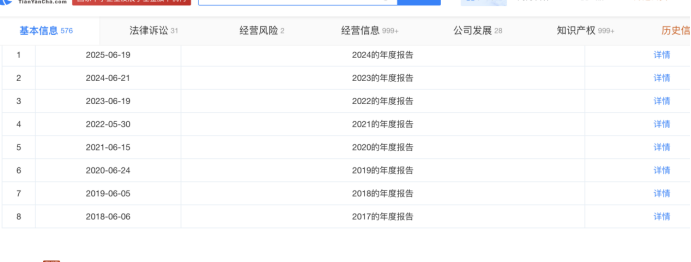
Notably, according to data from the Tianyancha App, NIO just announced profitability in the fourth quarter a few days ago.
Honda's sales in China dropped from a peak of 1.56 million units in 2021 to just about 650,000 last year. Once a regular in the top 10 sales rankings, it's now nowhere to be seen.
That's the wheel of progress—if you don't keep up, it'll leave you behind.
In fact, Honda isn't alone; all three Japanese automotive giants are facing difficulties.
Honda isn't fighting this battle solo—Nissan collapsed earlier.
What did Nissan do? It sold its 16-year-old headquarters building in Yokohama.
This wasn't just a sale—it sold the building and then leased it back, transitioning from landlord to tenant. At this point, it's just trying to survive.
Nissan's finances began to collapse in fiscal 2024. It earned 400 billion yen the previous fiscal year but lost 670 billion yen the next—its first loss in a decade. For fiscal 2025, it expects another 650 billion yen loss.
What does this mean? The losses over two years could fund several new EV startups.
Over a year ago, Nissan executives revealed that cash flow could only sustain 12-14 months of operations. Without new funding, bankruptcy isn't out of the question.
Among the three Japanese giants, only Toyota can still compete.
In 2025, Toyota's global sales once again exceeded 11.3 million units, securing its sixth consecutive year as the world's top-selling automaker. In China, it was the only Japanese automaker to achieve positive growth, selling 1.78 million units, up a slight 0.23%.
But bizarrely, in the fourth quarter of 2025, Toyota delivered its strangest earnings report ever: Profits didn't rise with sales—they plunged 43%.
Good sales but poor profits—that's the classic trade-off of prioritizing volume over margin.
In short, Toyota is also hanging on by a thread, relying on price cuts to maintain market share at the expense of profits.
//What Lessons Can We Learn from the Collapse of Japanese Vehicles?
Many might think, If Japanese vehicles are failing, isn't that great news for Chinese brands?
Indeed, according to data from the China Association of Automobile Manufacturers (CAAM), in February 2026, China exported 282,000 new energy vehicles, up 110% year-on-year. The numbers are impressive.
But I want to emphasize another point.
The collapse of Japanese vehicles essentially marks the end of path dependency.
Honda, Toyota, and Nissan built their empires over decades in the internal combustion engine era—engines, transmissions, supply chains, distribution networks, brand recognition. These barriers were once impenetrable, intimidating latecomers.
But when the era shifted to electrification and intelligence, these barriers suddenly became burdens.
You cling to the profitable cash cows of internal combustion engines, unwilling to slaughter them; you invest heavily in electrification only to find the market rejects it; you try to defend traditional market share but get blindsided by tariffs and geopolitics; you attempt to dominate China but get outcompeted by local brands.
This teaches businesses a valuable lesson: The scariest part of being on a sinking ship is that you don't know when it started taking on water.
The problem with Japanese vehicles isn't that they didn't try—it's that they tried in the wrong direction. Or more precisely, their past success became today's shackles.
Meanwhile, CAAM's impressive 110% growth means Chinese automakers are filling the void left by Japanese brands.
But I caution against celebrating too soon.
The collapse of Japanese vehicles does create opportunities for Chinese automakers. But opportunity doesn't guarantee victory.
Today, Chinese automakers face intensifying internal competition and a shrinking domestic market. Everyone is rushing overseas, where they must contend not only with traditional giants fighting back but also with complex geopolitical risks.
The issues Japanese vehicles face today could confront Chinese automakers tomorrow, just in different forms: tariffs, subsidy phase-outs, localization failures, or strategic missteps.
So instead of gloating, we should ask: What can we learn from the collapse of Japanese vehicles?
In this ever-changing world, the most important thing isn't how high you can soar—it's how long you can endure.
Honda has been around for nearly 80 years, Nissan for over 70, and Toyota even longer. Their current predicament isn't due to a lack of excellence—it's because the era has changed.
Chinese automakers are still young, with a long road ahead. Today's success doesn't guarantee tomorrow's safety. Only by staying humble and clear-headed can they truly navigate the cycles of change.
-
![]()
The Unstoppable Rise of 'Optical Progress and Copper Decline': Sunny Optical’s Strategic Vision for the Next Decade
-
![]()
AI + Going Global in the Second Half: No Intermission for Robot Vacuum Cleaners
-
![]()
The Suffering Endured in E-commerce, Walmart Doesn't Want to Repeat in AI
-
![]()
What Does the Doubling of New Energy Vehicle Exports Mean?
-
![]()
Ghosn: 'Only I Can Save Nissan'
-
![]()
Volkswagen Lays Off 100,000 Employees, The Elephant Sits Down
-
![]()
Expanding Production Capacity! Yutong Optics Acquires Approximately 1.5 Hectares of Industrial Land in Chang'an, Dongguan
-
![]()
Why Is Nokia Making a Comeback in the AI Era?