"Lobster" in Vehicles: A Boon or a Bane?
 03/23 2026
 416
416
Recently, whether you're deeply entrenched in the tech world or just a casual observer, you've likely been inundated with discussions about "raising lobsters." Here, "lobster" is a colloquial term for the open-source agent framework OpenClaw. Its sudden rise to fame isn't due to a dramatic improvement in model capabilities but rather because AI has started to exhibit executive abilities—it can now invoke tools, manage systems, and autonomously complete tasks.
The scenarios where agents can expand their influence are quite unique. If agents can manipulate software, it's a natural progression for them to handle hardware as well. Previously, "Leading the Way in Intelligent Driving" dedicated a segment to this very topic (Related Reading: Is OpenClaw a Passing Fad or a Genuine Necessity?).
Initially, it was assumed that agents would mainly be deployed on devices like smartphones and computers. However, recently, some automakers have started experimenting with integrating agents into vehicles. Given that cars are high-speed, mobile entities with implications for public safety, the question arises: Is integrating agents into vehicles a step forward or a potential hazard?
From "Talking" to "Doing": Is the Car's Role Evolving?
Over the past few years, the capabilities of large AI models have primarily centered around understanding and generating content. Whether it's voice assistants or smart cockpits, the core functionality has been to clearly comprehend human speech and then provide feedback.
However, the logic behind agents is different—they introduce a layer of "execution." The core strength of systems like OpenClaw lies in their ability to automatically break down tasks, invoke tools, and continuously operate to achieve goals after receiving instructions.
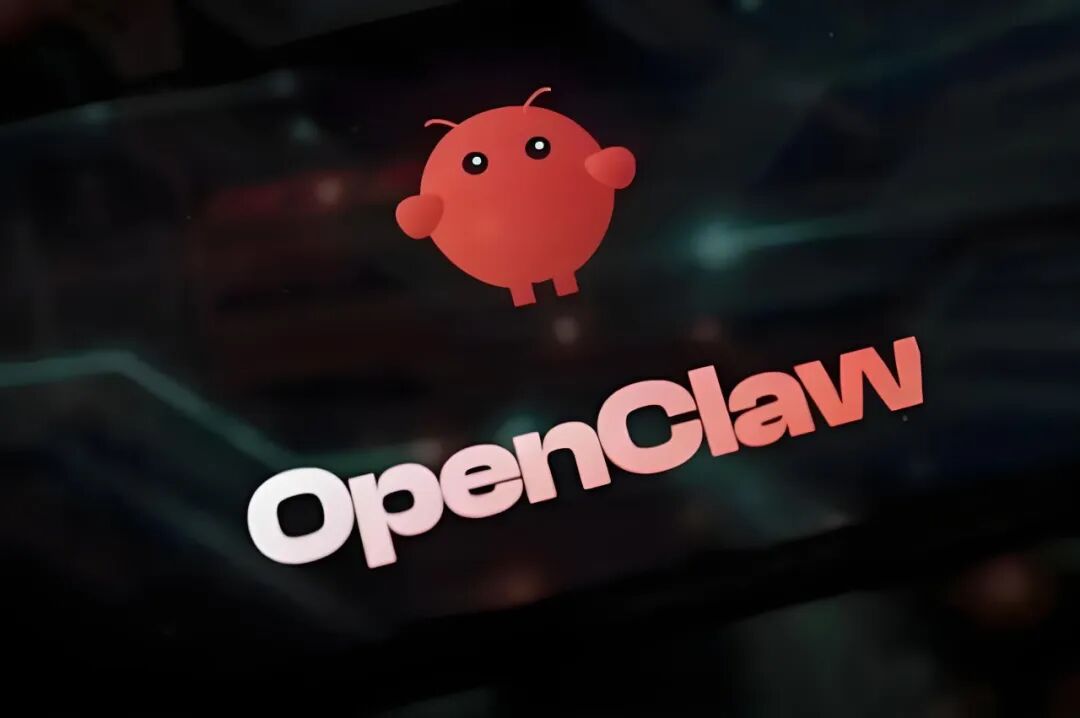
Image Source: Internet
When this capability is applied to cars, interactions may extend beyond simple voice exchanges and could influence the overall behavior of the vehicle.
At this juncture, the car's role undergoes a transformation. It's no longer just a mechanical system executing control commands but a system capable of understanding intentions and making proactive decisions. For instance, with the same phrase "I'm in a hurry," a traditional system would merely adjust the navigation, whereas an agent might modify the following distance, acceleration strategy, or even the route. Similarly, if "someone is sleeping in the car," it could proactively reduce driving aggressiveness to ensure a smooth ride.
The essence of these capabilities is the ability to directly map "semantics" to "driving behavior"—a feat beyond the reach of traditional architectures.
Agents vs. Traditional Large Models: More Than Just Enhanced Capabilities
Many people perceive agents as an "upgraded version of large models," but this perception is misleading.
Large models tackle cognitive problems, outputting information such as text or judgments. Agents, on the other hand, address execution problems, outputting actions.
In a computer, an agent's tangible manifestation is its ability to directly manipulate the system. In a car, if granted full permissions, it could potentially control the steering wheel, accelerator, and brakes.
This raises a pertinent issue: the system's risk profile undergoes a change.
Existing research indicates that agents with tool-calling capabilities, when faced with ambiguous instructions or complex tasks, are prone to amplification effects due to misunderstandings. Small misjudgments can escalate through the execution chain, leading to high-impact behaviors. Moreover, given their continuous operation capabilities and high system permissions, the impact of attacks or misguidance far surpasses that of ordinary conversational models.
In high-safety scenarios like automobiles, the concern isn't about user experience but safety.
Why Are Automakers Embracing Agents?
For automakers, integrating agents into vehicles isn't about "experimenting with something new" but about choosing a viable path forward.
In autonomous driving, the core challenge now lies not in perception but in decision-making. Rule-based systems can handle deterministic scenarios but become rigid or overly cautious in complex, ambiguous situations requiring semantic understanding, falling short of human-driver capabilities.
Large models were introduced to address the "understanding problem," but they cannot directly participate in control. Agents bridge this gap by translating understanding into behavioral strategies, linking perception to control.
In essence, agents aren't replacing autonomous driving but redefining its upper-level logic.
This is why automakers are beginning to explore this route at this stage. Without it, existing architectures will struggle to progress further, and driverless technology will remain elusive.
The Real Debate: Not About Technology, But Boundaries
From a capability standpoint, integrating agents into vehicles seems inevitable—they can indeed make cars more "human-aware" and flexible. However, the decisive factor isn't capability but control boundaries.
The primary distinction between cars and other devices is the need for determinism and safety (guaranteed safety) under all circumstances. Traditional control systems are complex because every action must be verifiable and constrainable.
Agent decision-making, in contrast, is probability-driven. While it can make reasonable choices most of the time, it cannot guarantee compliance in all situations.
This raises a direct question: How much control should agents have?
If agents only participate in high-level decisions like understanding user intent and adjusting strategies, risks can be managed through rule-based systems. However, if they directly engage in low-level controls like trajectory generation or even direct execution, we must confront the issue: What happens when AI's unpredictable behaviors infiltrate a car's safety loop?
Currently, there is no mature answer to this question.
Perhaps, in the short term, agent integration in cars will present a state where capabilities are showcased aggressively but actual usage remains conservative.
You might witness impressive demonstrations where agents perform lane changes or automatically select driving strategies based on a single phrase. However, in mass-produced environments, a hierarchical structure is more likely to be adopted.
For example, the agent handles understanding and decision-making recommendations, while the low-level execution remains with traditional control systems under strict constraints. This structure essentially places the agent within a safety shell. Once control permissions are loosened, system verification difficulty rises exponentially.
"Leading the Way in Intelligent Driving" believes that whether integrating agents into vehicles is beneficial or detrimental depends on how they're utilized.
Simply labeling it as "good or bad" is inaccurate. The value agents bring is clear—they can make cars more aligned with human needs, enhance decision-making flexibility, and potentially reduce reliance on complex rules. In the long run, this is a necessary step toward higher-level autonomous driving capabilities.
However, agents also introduce a decision-making mechanism that is not fully explainable or predictable—a significant issue for a system like automobiles, which demands high determinism and still prioritizes "safety" as the most critical evaluation metric.
Thus, the real key isn't whether agents should be integrated but to what extent they participate and whether the safety system is restructured accordingly.
Simply overlaying agents onto existing architectures without redesigning safety boundaries will introduce far more uncertainty than benefits.
Final Thoughts
The viral popularity of "lobster" highlights that AI's value is shifting from "information processing" to "actionable capabilities." When this capability enters the automotive realm, things change.
Cars are no longer just execution systems but carriers with a degree of autonomous decision-making. This step represents not just an experience upgrade but a fundamental system transformation. From this perspective, integrating agents into vehicles is neither purely progressive nor simply risky—it represents a structural turning point.
For agent integration in cars, the real consideration should be: How intelligent can we allow a system to be when it must operate with absolute safety?
-- END --
-
![]()
The Unstoppable Rise of 'Optical Progress and Copper Decline': Sunny Optical’s Strategic Vision for the Next Decade
-
![]()
AI + Going Global in the Second Half: No Intermission for Robot Vacuum Cleaners
-
![]()
The Suffering Endured in E-commerce, Walmart Doesn't Want to Repeat in AI
-
![]()
What Does the Doubling of New Energy Vehicle Exports Mean?
-
![]()
Ghosn: 'Only I Can Save Nissan'
-
![]()
Volkswagen Lays Off 100,000 Employees, The Elephant Sits Down
-
![]()
Expanding Production Capacity! Yutong Optics Acquires Approximately 1.5 Hectares of Industrial Land in Chang'an, Dongguan
-
![]()
Why Is Nokia Making a Comeback in the AI Era?