Will the Auto Industry See a Surge in Technological Competition by 2026?
 03/23 2026
 414
414
Lead
Introduction
Following a period of inefficient and exhausting price wars, technological innovation has unmistakably emerged as the cornerstone for automakers aiming to break through and achieve sustainable, high-quality growth.
Driven by mandatory policy interventions and fervent calls from within the industry, China's automotive sector is finally showing signs of a paradigm shift, gearing up to embark on a healthy trajectory of technological competition.
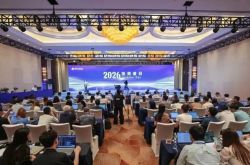
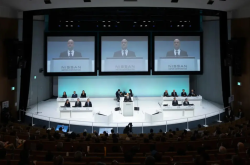
This spring has witnessed an unprecedented surge in automotive technology launch events. According to incomplete statistics from Automobile Commune, in March alone, over ten automakers, including XPeng, Lotus, HiMode, BYD, Galaxy, SAIC Volkswagen, Zeekr, Changan, VOYAH, and Chery, held intensive technology launch events.
Unlike traditional new car launches that focus on models, configurations, and prices, technology launch events place a greater emphasis on showcasing cutting-edge R&D achievements, core technological layouts, and foundational innovation capabilities. This transition from product competition to technological breakthroughs signifies a profound transformation in China's auto market, shifting from price wars to technological races.
On one hand, sustained and fierce price wars have severely disrupted the industry's normal development rhythm, exerting continuous pressure on automakers' profit margins and causing distress throughout the supply chain. On the other hand, continuously declining prices have shattered consumer expectations, and low-level, homogeneous competition has left both buyers and sellers drained, indicating that price wars have reached their limits.
While price wars are no longer sustainable, competition in the automotive industry remains inevitable, especially at this critical juncture of electrification and intelligent transformation. After rounds of inefficient internal competition and market share battles, technological innovation has undoubtedly become the key focus for automakers to break through and achieve high-quality development.
01 Technology Takes Center Stage in This Year's Auto Industry
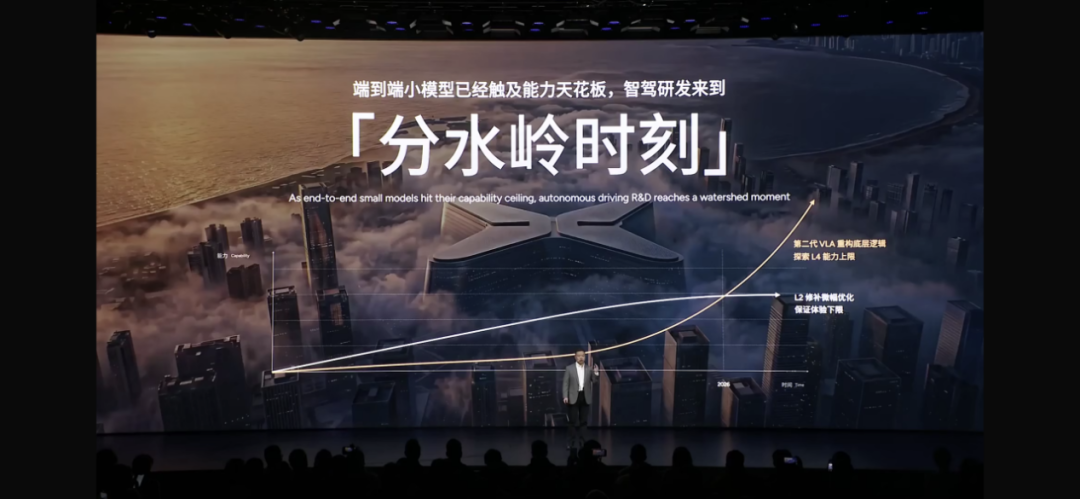
On the evening of the 2nd, XPeng kicked off March's technology launch events with its second-generation VLA intelligent driving system.
Despite claims of being "nearly five times more advanced than the industry's top performer" and possibly "China's most leading intelligent driving system," which echo the sentiment of an "arms race," XPeng's second-generation VLA launch was relatively pragmatic overall. Whether it was handling all-scenario road conditions, navigating cities without maps, or comparing the intelligent driving experience to an elevator—where pressing a button ensures a smooth arrival at the destination, even for middle-aged users unfamiliar with complex operations—the technology was made more user-friendly and practical.
To the market's surprise, Lotus followed suit. On March 4th, Lotus held its global technology launch event, officially unveiling the LTS "Lotus Engineering Exclusive Tuning" and introducing a new model, For Me, built on the LTS standard. According to Lotus, "This is not a launch event filled with parameter stacking but a declaration of the return of driving sovereignty."
Like the inherent high-performance genes of Lotus sports cars, this technology launch event was equally distinctive.
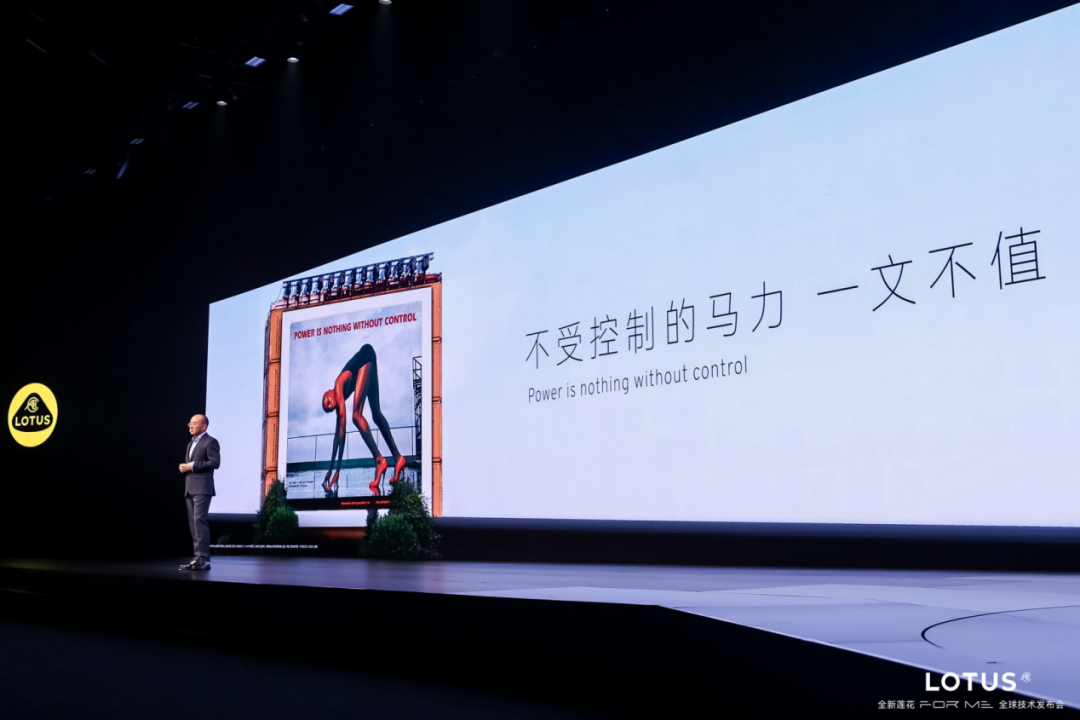
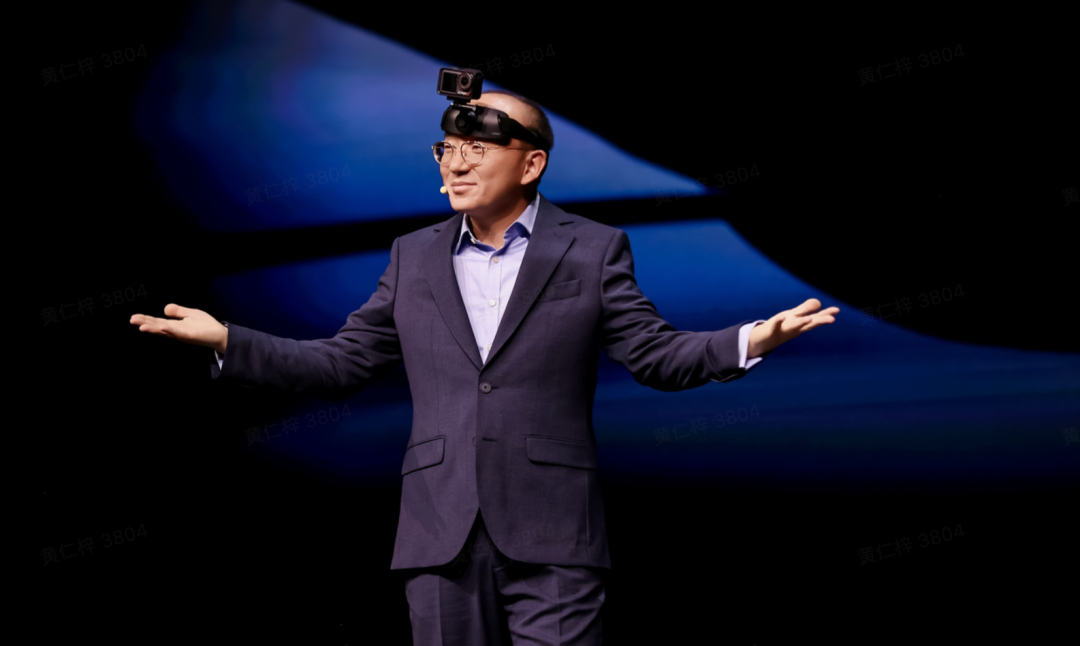
When explaining the power and handling of the hyper-hybrid architecture, Lotus Group CEO Feng Qingfeng displayed a striking old poster and quoted its famous line: "Uncontrolled horsepower is worthless." After presenting the viewpoint that "true intelligence should not sacrifice beauty," Feng humorously put on a head-mounted camera, satirizing how roof-mounted lasers severely detract from a vehicle's aesthetics. When showcasing aerodynamics, he directly addressed industry pain points: "No 'aerodynamic decoration'—real air ducts, not false eyelashes."
While these viewpoints may be controversial, their straightforward and relatable expressions made technical concepts like power, cooling, handling, and aerodynamics—which can be obscure to ordinary consumers—more understandable, reducing the cognitive barrier to technology.
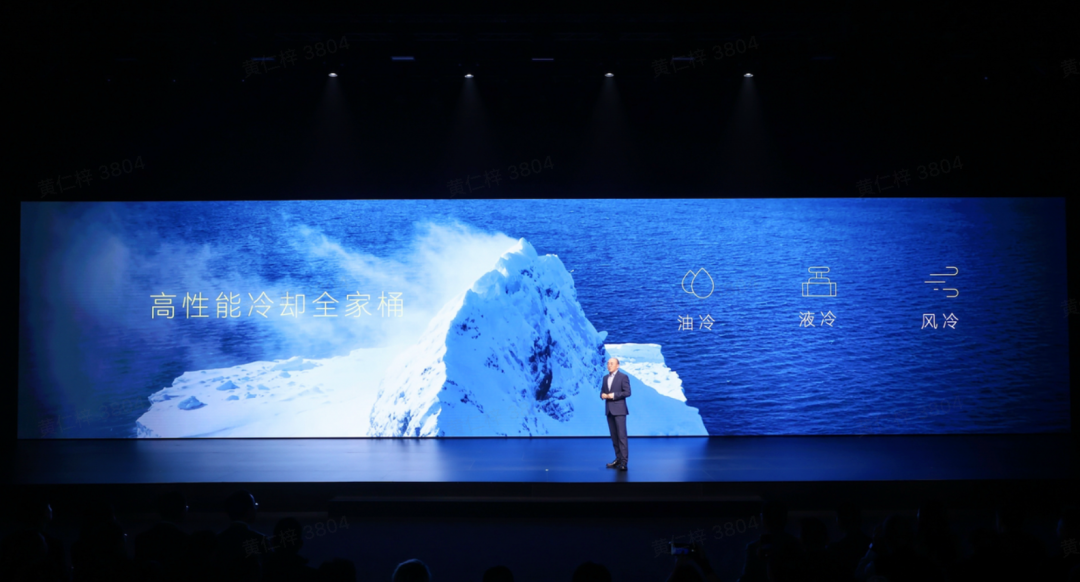
Today's technology launch events are no longer "closed-door meetings" solely for the industry but are increasingly geared toward communicating with ordinary consumers.
Early new car launches were more industry-oriented, focusing on technological iterations themselves. However, with the infiltration of internet communication logic, coupled with rapid industry iteration and intensified homogeneous competition, content filled with professional jargon and exaggerated marketing rhetoric has become more likely to go viral. Some launch events, for promotional effect, overpackage technologies, using polished data and obscure terminology to make ordinary technologies appear "high-end," inadvertently creating a disconnect with ordinary consumers.
For ordinary consumers, perceiving the qualitative changes in experience brought about by technological progress is equally important. Especially when intelligence has become a crucial factor in car-buying decisions, understanding foundational technological architectures and cutting-edge technological changes enables consumers to gain a deeper understanding of models, brands, and even the market. This not only helps them choose models they prefer but also provides a greater sense of security and knowledge.
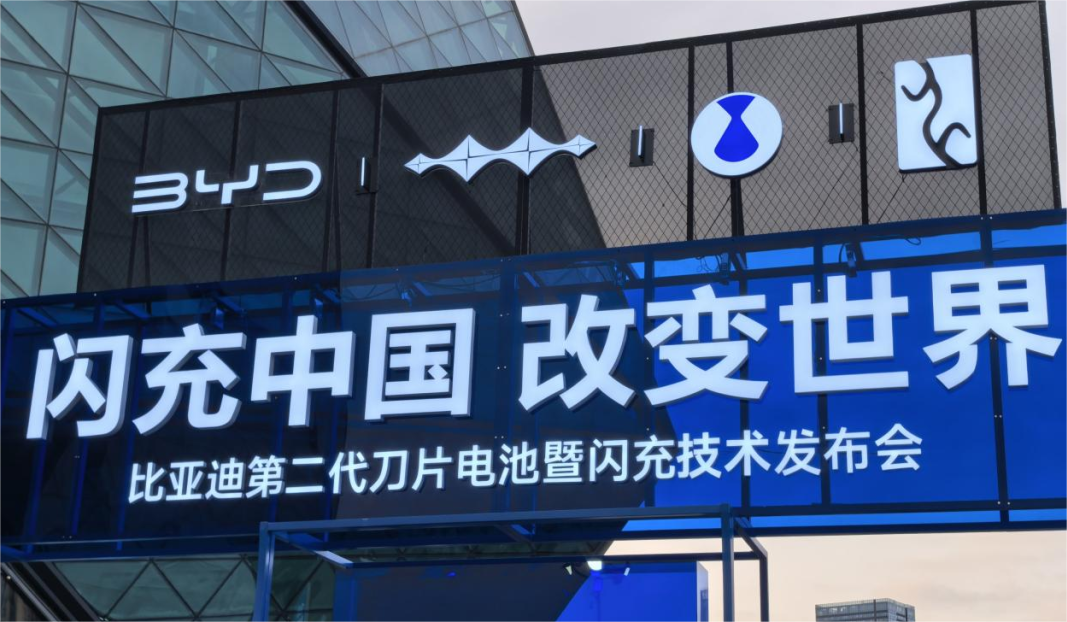
Among the consumer-oriented technology launch events, BYD's event themed "Flash Charging China Changes the World" undoubtedly represented the most hardcore technological innovation and the strongest user perception.
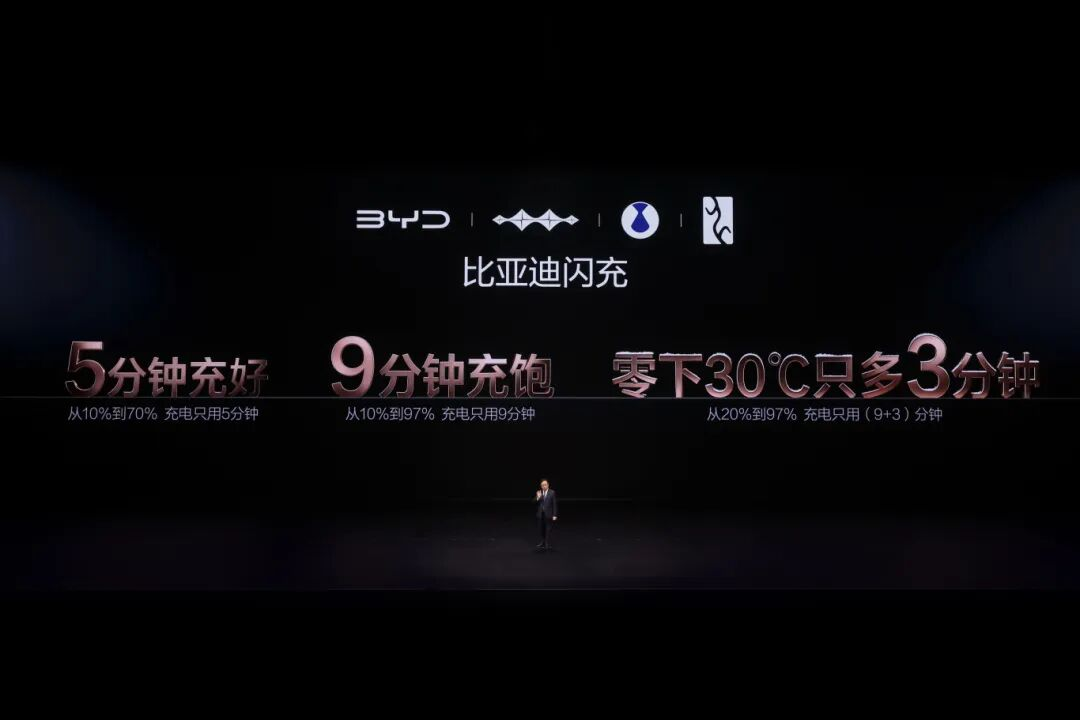
BYD's second-generation Blade Battery spoke directly through the most straightforward real-world test data: charging from 10% to 70% takes just 5 minutes, and from 10% to 97% takes only 9 minutes. The catchy rhyme "5 minutes to charge, 9 minutes to full, just 3 extra minutes at minus 30°C" is easy to remember and deeply resonates.
More practically valuable is that the second-generation Blade Battery is not only compatible with BYD's flash charging stations but also with the existing 4.8 million public charging piles nationwide, with charging speeds further improved over the previous generation. To address power reduction when multiple vehicles charge simultaneously, BYD also protects the grid through energy storage systems, ensuring efficiency in high-power charging scenarios remains unaffected.
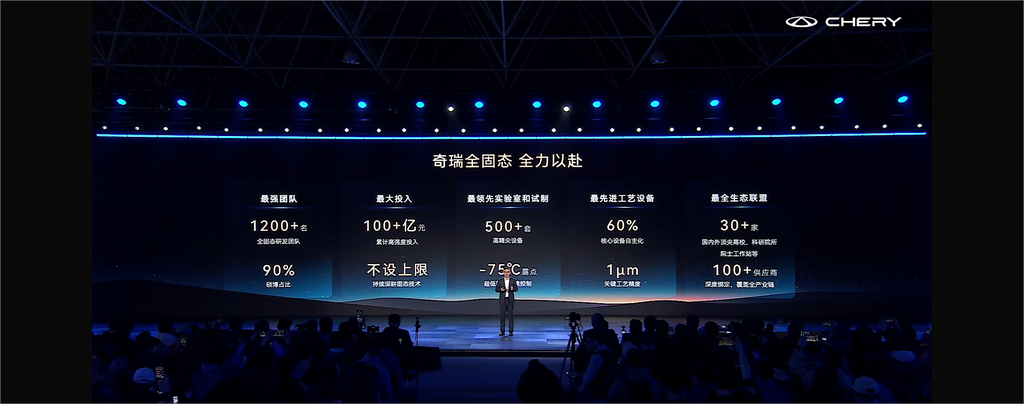
Similarly focusing on batteries, Chery presented its own solutions at the subsequent "Battery Night." Its newly launched Rhino Battery can add 500 kilometers of range with just an 8-minute charge. In the highly anticipated field of solid-state batteries, Chery also signaled new progress, having developed cells with different energy density levels currently undergoing experimental validation.
Compared to BYD and Chery's electrification-focused launches, Changan's technology launch event was slightly "unconventional." Amid the dominance of pure electric vehicles, Changan boldly entered the HEV hybrid market. At the event, Changan Auto Executive Vice President Yang Dayong announced plans to empower traditional fuel vehicles with electric technology, launching HEV models with urban fuel consumption as low as 2.98L.
At this fuel consumption level, fuel costs are nearly on par with electricity costs. For consumers who meticulously calculate fuel expenses daily, this achievement is undoubtedly highly disruptive.
At Xiaomi's recently concluded spring launch event for the new-generation SU7, Xiaomi dedicated significant time to introducing core technologies such as the Xiaomi MiMo-V2-Pro and the XLA Cognitive Large Model. Since 2026, the automotive intelligence process has noticeably accelerated, with embodied large models that bridge cognition and decision-making becoming a strategic focus for more automakers. Whether it's the concentrated debut at CES earlier this year or the upwardly revised annual targets by major manufacturers, all indicate that this trend is accelerating.
02 Using Technology as a Guise for Product Promotion?
However, not all launch events branded as "technology-focused" can deliver hardcore content like BYD and Changan. Beneath this seemingly vibrant wave of technological enthusiasm, many events still use the guise of technology to promote products. Even when labeled as "technology launch events," both the agenda and communication focus ultimately revert to promoting new cars, with technology becoming a supporting actor for the products.
Geely Galaxy M7's product technology debut blended product introduction with technological showcase, featuring both an introduction to the Galaxy M7 and the Shendun Brick Battery technology.
In comparison, SAIC Volkswagen's technology launch systematically elaborated on nine core technologies of the D.ERA series but felt more like a warm-up for the upcoming ID.ERA 9X, essentially remaining a product launch event serving the model's debut.
Zeekr 8X's technology launch event was no different. Despite nominally focusing on technology, the communication emphasis remained on the model. "Today, let's talk about what kind of car the 8X is." The first sentence from the speaker set a product-oriented tone. In subsequent communications, vehicle pricing, pre-sale benefits, and order data remained the promotional focus, with technology serving merely as a supporting element for sales.
In contrast, XPeng's technology launch event remained tightly focused on technology. Even the launch of the heavyweight 2026 XPeng X9 pure electric version took a backseat to technology, not occupying much time.
A noteworthy and somewhat paradoxical phenomenon is that when searching for content related to "technology launch events," what often goes viral are catchy phrases, new models, design aesthetics, or even critiques of industry "malpractices." In contrast, the core technologies that should be at the forefront are quietly marginalized.
Take Lotus's technology launch event as an example. Even in official communications, the focus was primarily on suppliers and catchy phrases, with core technologies relegated to a secondary position, presented in a folded sliding screen format with minimal weight. After reading the promotional copy, users would struggle to form a clear, profound memory of the technological essence. During the event, excessive emphasis on viewpoints and deliberate creation of catchy phrases also significantly diverted attention from automotive technologies.
Additionally, some brands' technology launch events, even when focusing on the technological segment, generally lack surprise: either they repeat interpretations of existing technologies, resembling "reheating leftovers," or they merely offer minor optimizations and iterations, lacking truly eye-catching, disruptive breakthroughs.
For instance, at Zeekr 8X's technology launch event, apart from the debut of the Super Intelligent Agent or minor upgrades and applications to new models, the event mainly introduced technologies like the SEA-S Super Electric Hybrid Architecture, SEA AI Digital Chassis, and SEA Safety Armor, most of which were already featured in models like the Zeekr 9X and simply applied to new models.
HiMode's technology renewal launch event focused on Huawei's Qiankun next-generation dual-optical-path image-grade LiDAR, with improvements in detection range, precision, and imaging capabilities. However, compared to Huawei's previous information-dense technology launches, this event's content felt somewhat thin, with limited overall impact.
The underlying reason why many automakers are eager to label product launches or optimization iteration events as "technology launch events" is not hard to understand: price wars have reached their limits, necessitating a shift in the competitive arena to technology. Meanwhile, policies and the industry are continuously calling for increased R&D and a move toward high-quality development.
The issue, however, is that many automakers lack disruptive core technologies like BYD's second-generation Blade Battery but feel compelled to respond to trends and keep pace. Ultimately, they resort to "named technology launches"—nominally shifting toward technology but remaining stuck at the product marketing level.
This also echoes the judgment at the beginning of the article: China's auto market is indeed beginning to shift toward technological competition. However, this transition is more of a passive response and superficial following rather than a thorough, proactive transformation.
What brands truly need is to dedicate themselves to foundational R&D and deliver truly competitive core technologies. Only by shifting from "passive following" to "proactive breakthroughs" and from "marketing-style technology" to "hardcore innovation" can they stand out in fierce competition and embark on a long-term, healthy, and high-quality development path.
Editor-in-Chief: Cui Liwen Editor: Wang Yue
THE END
-
![]()
The Unstoppable Rise of 'Optical Progress and Copper Decline': Sunny Optical’s Strategic Vision for the Next Decade
-
![]()
AI + Going Global in the Second Half: No Intermission for Robot Vacuum Cleaners
-
![]()
The Suffering Endured in E-commerce, Walmart Doesn't Want to Repeat in AI
-
![]()
What Does the Doubling of New Energy Vehicle Exports Mean?
-
![]()
Ghosn: 'Only I Can Save Nissan'
-
![]()
Volkswagen Lays Off 100,000 Employees, The Elephant Sits Down
-
![]()
Expanding Production Capacity! Yutong Optics Acquires Approximately 1.5 Hectares of Industrial Land in Chang'an, Dongguan
-
![]()
Why Is Nokia Making a Comeback in the AI Era?