Self-Driving Ride-Hailing Vehicles: A Threat to Veteran Drivers
 03/23 2026
 605
605
Technology operates with precision and logic, whereas humans often struggle to keep pace.
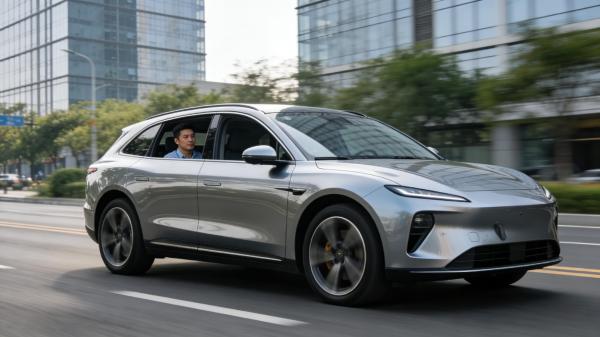
What should one do after being laid off and becoming a ride-hailing driver, only to find themselves competing with self-driving cars?
Recently, an increasing number of netizens hailing rides via Gaode and Baidu Maps are being picked up by self-driving ride-hailing vehicles. The affordability and seamless service of these rides have left many passengers eager for more after just one trip.
However, the expanding self-driving services still face passenger reservations due to issues like the last-mile problem, unpredictable route planning, and the challenge of maintaining real-time in-car hygiene. These concerns trouble a significant portion of passengers.
Despite their current imperfections, ride-hailing platforms are aggressively promoting self-driving vehicles. This push is driven not only by the declining service quality of veteran drivers amid fierce industry competition but also by the cost advantages self-driving cars hold over human drivers.
As technology advances, the impact of self-driving cars on veteran drivers is likely to intensify. Simultaneously, the development of AI and related technologies is rendering more and more jobs vulnerable to replacement.
Faced with this technological tidal wave, how should ordinary individuals respond? The answer may lie in waiting and observing for the time being.
Why is there no driver in the car?
If you hail a ride-hailing vehicle on Gaode or Baidu Maps and find it driverless, don't be alarmed. This is not a supernatural occurrence but rather a trial of self-driving ride-hailing services on these platforms.
Xiaoming recently took a business trip to Shenzhen. As it was too late for the subway, he hailed a ride-hailing vehicle on Gaode Maps. When the car arrived, he found himself unable to open the door and knocked on the window for assistance.
After several unanswered knocks, Xiaoming grew impatient. Looking through the window, he realized there was no one in the driver's seat.
Hailing a ride-hailing vehicle late at night and finding it driverless can be unsettling. Feeling uneasy, Xiaoming immediately checked Gaode Maps and understood the situation.
It turned out that Xiaoming had inadvertently selected the self-driving option when hailing a ride on Gaode Maps and was picked up by a Pony.ai vehicle. He later unlocked the car with his phone and was driven to his hotel at an average speed of 60 mph.
While some netizens have smoothly reached their destinations in self-driving ride-hailing vehicles, others have experienced delays due to the cars' strict adherence to traffic rules.
Xiaoxia recently hailed an Apollo Go vehicle on Baidu Maps. He recounted, "This car waits for the car behind to stop before changing lanes. If no one yields, it just keeps waiting."
Xiaoxia also mentioned, "When parking, if there's a car blocking the roadside, it doesn't dare to squeeze past and stops right in the middle of the road, causing a traffic jam. There are also motorcycles whizzing by. In the end, I had to force the door open and carefully exit."
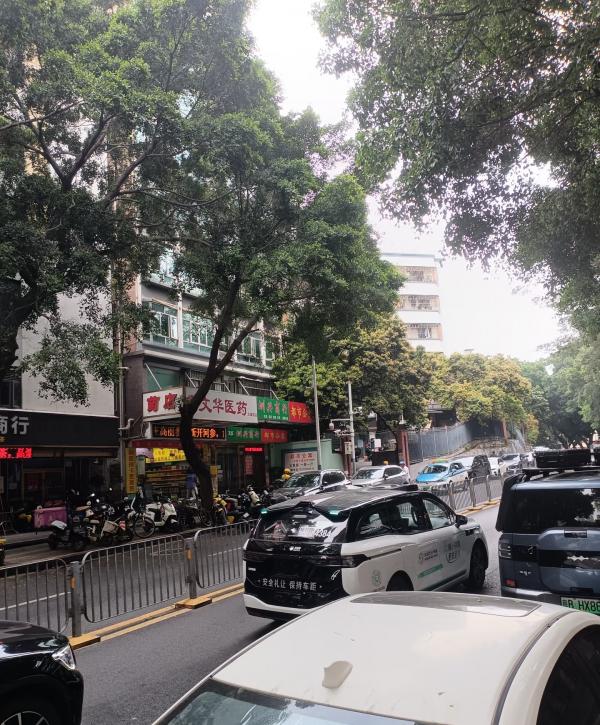
Although self-driving ride-hailing vehicles often find themselves at a disadvantage in complex traffic conditions due to their strict adherence to rules, they offer a welcome respite for socially anxious individuals who appreciate the lack of interaction during the ride.
On the other hand, self-driving cars are also competitive in terms of pricing compared to most ordinary ride-hailing vehicles.
Pange searched for the route from Shenzhen Nanshan Museum to Shenzhen Bay Park on Gaode Maps and found that Pony.ai's self-driving service estimated a fare of 13 yuan.
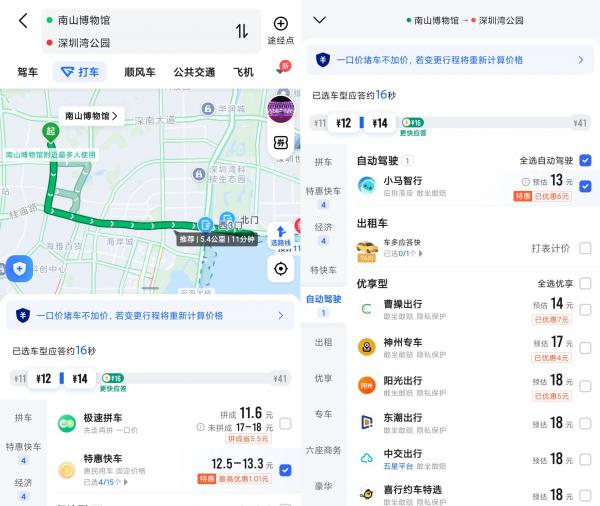
The estimated price for a discounted ride-hailing vehicle on the same route ranged from 12.5 to 13.3 yuan, while an economy ride-hailing vehicle ranged from 13 to 18 yuan. A premium vehicle's estimated price was around 25 yuan.
Meanwhile, Xiaoxia told Pange, "My Apollo Go ride from Xili to Shekou in Shenzhen covered 9 kilometers and cost 16 yuan, about one-third cheaper than an ordinary ride-hailing vehicle."
Self-Driving Isn't Perfect
Despite their attractive pricing and experience, some passengers remain hesitant about self-driving ride-hailing vehicles for three main reasons:
Firstly, self-driving ride-hailing vehicles struggle with precise drop-offs, failing to meet the last-mile demand.
Xiaohei told Pange, "I hailed an Apollo Go vehicle on Baidu Maps at night. The pickup point wasn't where I was, so I walked there in the rain. The drop-off point was under an overpass, and the road was under construction, so I had to walk a long way."
On the other hand, Aze also shared, "I hailed a Pony.ai vehicle on Gaode Maps in Shenzhen and was dropped off a street away from my destination. I had to walk almost another kilometer."
Secondly, route planning during the ride may go awry, resulting in longer travel times than ordinary vehicles.
One morning, Maomao hailed an Apollo Go vehicle on Baidu Maps for work. The app estimated a 17-minute ride, but after she got in, Apollo changed the route on its own, choosing a longer and more congested path, with the estimated time showing 42 minutes.
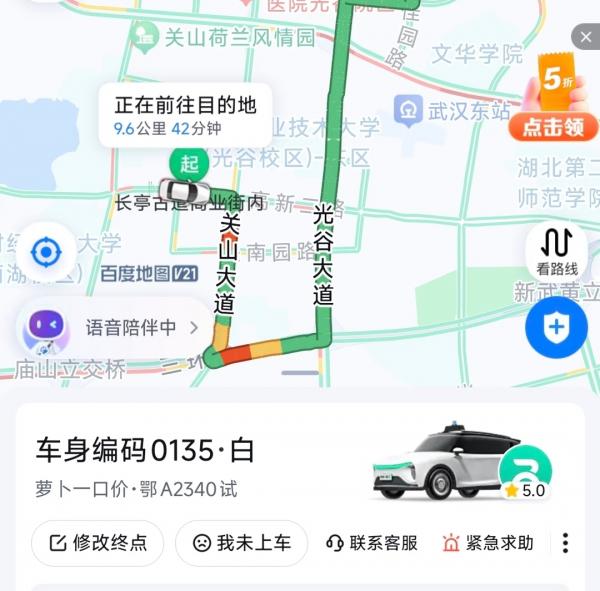
At that point, Maomao, already on the "ride," couldn't change the destination or open the door to exit. She had to call customer service to request an early end to the ride.
After some operations, Maomao managed to escape from the vehicle and arrived at the company after an hour, earning her first tardiness of the month.
Finally, the lack of drivers in self-driving vehicles can lead to hygiene issues due to the casual behavior of some passengers.
Without a driver present, passengers may treat the vehicle as their personal space, eating and littering freely, which can be unpleasant for subsequent passengers.
For example, a netizen hailed a self-driving ride-hailing vehicle on Gaode Maps, expecting a refreshing experience, but found multiple footprints on the backrest, used tissue paper in the seat pocket, and scattered sunflower seed shells in the corner.
Veteran Drivers Bear the Brunt
Although the aforementioned drawbacks limit the expansion of self-driving ride-hailing vehicles, their presence is growing among both passengers and ride-hailing platforms, leaving veteran drivers at a disadvantage.
For passengers, the appeal of trying self-driving vehicles stems not only from novelty but also from the increasingly poor experience with traditional ride-hailing services.
For instance, the issue of smelly ride-hailing vehicles has become widespread. Many passengers feel like they're stepping into a driver's personal space after boarding.
The smell of cigarettes, foot odor, bad breath... A mix of dozens of odors can make even non-car-sick passengers feel nauseous.
On the other hand, behaviors like taking detours, refusing orders, and not turning on the air conditioning often occur during rides, especially with low-cost ride-hailing vehicles that offer transportation without service. Passengers feel more like cargo being transported than customers.
The prevalence of smelly vehicles and declining service quality among ride-hailing platforms may stem from industry competition.
Data from Quest Mobile in July 2025 shows that over 29 million drivers work on ride-hailing apps. Although there may be duplicate counts, it still reflects the large number of practitioners.
Additionally, data from the China New Employment Research Center in September 2025 shows that the average age of ride-hailing drivers is 40, with a monthly income of 7,623 yuan. Sixty percent of ride-hailing drivers rely solely on this income for their families.
On one hand, there are many ride-hailing drivers under high pressure, while on the other hand, ride-hailing orders have been gradually declining in recent years.
Data from the Ministry of Transport shows that in September 2025, there were 758 million ride-hailing orders nationwide, a 23% decrease from 989 million orders during the same period last year.
Meanwhile, from the pricing perspective of various ride-hailing platforms, taking Tianjin as an example, a ride within 10 kilometers costs about 1 yuan per kilometer, with some periods reaching 0.9 yuan per kilometer.
From the above data, it appears that the increasingly competitive ride-hailing market forces drivers to extend their working hours. However, this long-term state of exhaustion affects their service quality, deterring some passengers and creating a vicious cycle.
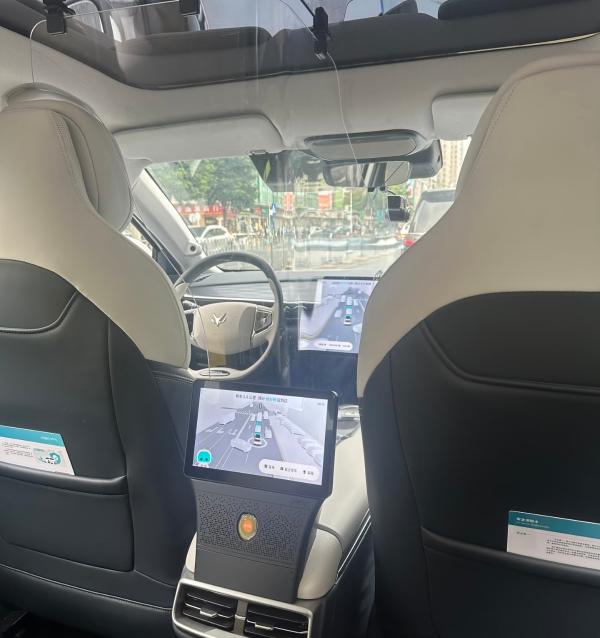
On the other hand, from the perspective of ride-hailing platforms, self-driving vehicles are cheaper and offer a better experience, naturally replacing more and more human drivers.
Perhaps, just as recent news frequently reports layoffs of coders at major internet companies, the increasing advancement of self-driving technology is impacting the profession of drivers.
Faced with the overwhelming wave of technologies like AI, how should ordinary workers defend against the impact?
-
![]()
The Unstoppable Rise of 'Optical Progress and Copper Decline': Sunny Optical’s Strategic Vision for the Next Decade
-
![]()
AI + Going Global in the Second Half: No Intermission for Robot Vacuum Cleaners
-
![]()
The Suffering Endured in E-commerce, Walmart Doesn't Want to Repeat in AI
-
![]()
What Does the Doubling of New Energy Vehicle Exports Mean?
-
![]()
Ghosn: 'Only I Can Save Nissan'
-
![]()
Volkswagen Lays Off 100,000 Employees, The Elephant Sits Down
-
![]()
Expanding Production Capacity! Yutong Optics Acquires Approximately 1.5 Hectares of Industrial Land in Chang'an, Dongguan
-
![]()
Why Is Nokia Making a Comeback in the AI Era?