China's Global Auto Sales Surpass Japan for the First Time: Which Companies Made the Greatest Contribution?
 03/24 2026
 617
617
Author / Liu Wei
Produced by / Insight Auto
In March, the global automotive industry witnessed a historic shift in its landscape.
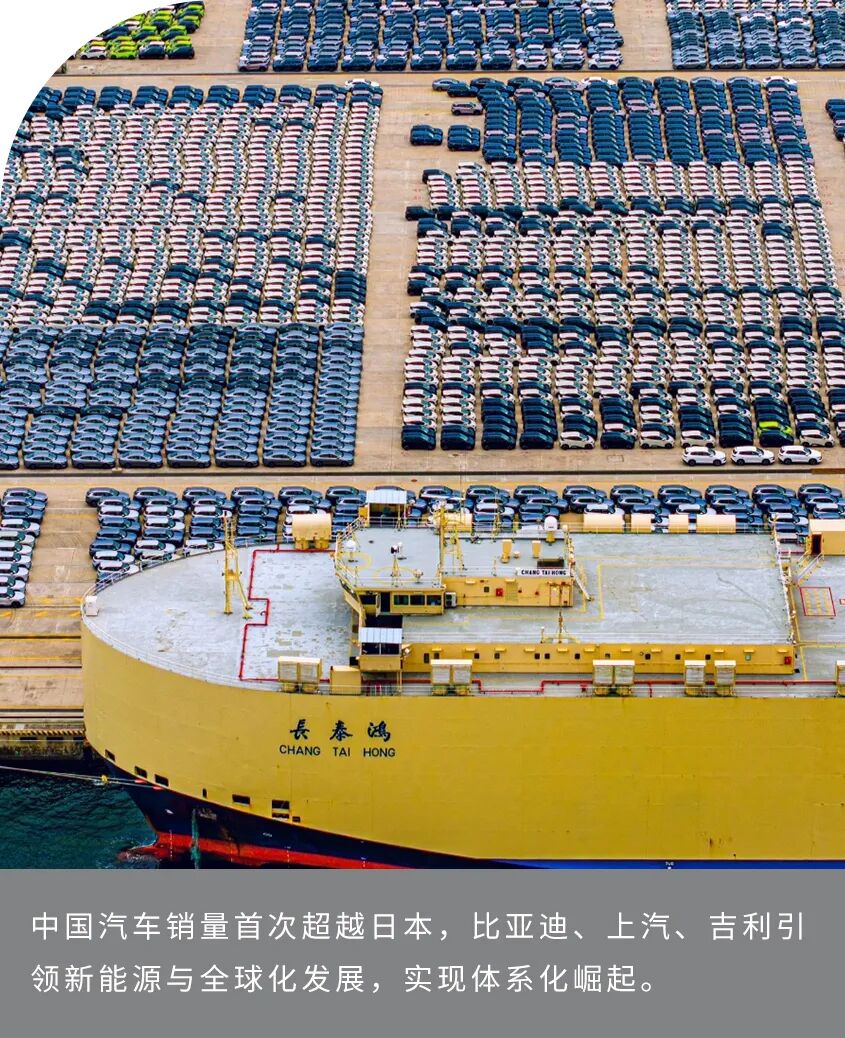
According to Japanese media statistics, Chinese automakers' total global sales surpassed Japan for the first time, officially claiming the top spot in global auto sales.
This milestone not only marks a turning point in China's automotive industry but also represents the first time in over a century of global automotive history that an emerging Asian market has overtaken traditional automotive powers in total sales volume.
From trading market access for technology to breaking through with independent innovation, and from relying on joint ventures to collective brand expansion overseas, Chinese automakers have achieved a leap from catching up to parallel competition, and then to partial leadership over several decades.
BYD, SAIC Motor, and Geely Holding Group form the most critical "troika," jointly supporting China's ascent in the global auto market through their distinct development paths, resource endowments, and strategic choices.
Each excels in different areas, creating a mutually supportive ecosystem that ensures China's automotive rise is not a isolated breakthrough but a systematic, scalable, and sustainable collective advancement.

BYD Leads the New Energy Era
Amid the global shift toward automotive electrification, BYD stands as the most representative Chinese force. As the earliest and most committed player in the new energy vehicle (NEV) sector, BYD has forged a path of technological, product, and supply chain independence through vertically integrated industrial chain layout (layout), becoming an iconic Chinese automaker in the global NEV arena.
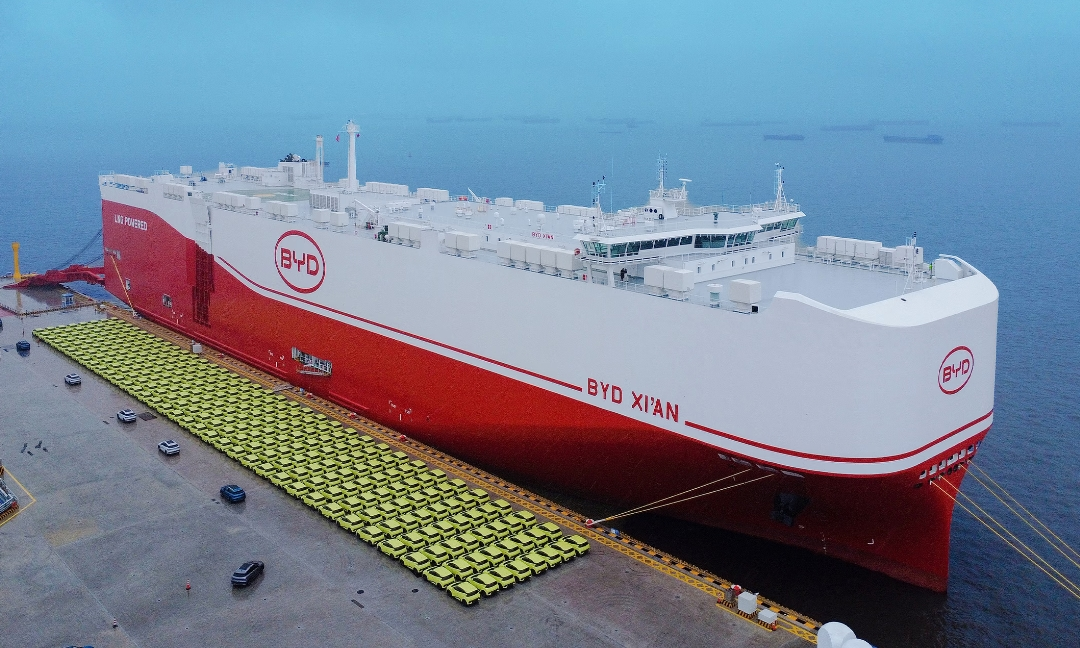
In 2025, BYD maintained steady growth, remaining at the forefront of Chinese automakers in global sales, with NEV models dominating its portfolio.
From batteries, motors, and electronic controls to vehicle architecture and intelligent driving systems, BYD has achieved independent R&D and scaling (scaled) application of core components, significantly reducing costs while gaining unique advantages in safety, stability, and adaptability.
With a complete product matrix, BYD leads the domestic market while steadily expanding overseas. Its products have entered key regions such as Europe, Southeast Asia, Latin America, and the Middle East, gradually establishing a global brand presence and distribution network.
Unlike traditional price-driven overseas expansion models, BYD's globalization emphasizes technology and standards export. By establishing overseas production bases and supply chain networks, BYD promotes China's NEV ecosystem globally, making its electrified and intelligent Chinese solutions widely accepted.

SAIC Motor: The Stabilizing Anchor for Global Expansion
If BYD represents the future direction of China's automotive industry, then SAIC Motor serves as its stabilizing anchor and ballast in global markets.
As China's largest automotive group by scale, SAIC leverages its manufacturing capabilities, supply chain systems, global channels, and joint venture experience to form an irreplaceable volume advantage and foundation for overseas expansion.
In 2025, SAIC Motor continued to provide critical support for China's global auto sales through its massive production and sales scale.
In the domestic market, SAIC's joint venture and independent brands worked synergistically to maintain stable market share. Overseas, SAIC-led independent brands like MG have completed layout (layout) in major global markets, establishing mature sales and service networks in Southeast Asia, Australia, South America, and the Middle East, making it one of China's most globally operationally mature and systematically complete automakers.
SAIC's contribution extends beyond sales figures; it lies in the mature system it has built for Chinese automakers' overseas expansion. From vehicle exports to overseas KD factories, from localized marketing to supply chain support, SAIC has developed a replicable and sustainable globalization model, providing experience and references for the entire Chinese automotive industry to "go global."
In electrification, SAIC maintains a dual-track approach, stabilizing its traditional fuel and hybrid vehicle base while continuously investing in pure electric and intelligent connected vehicle technologies, achieving a steady transformation. SAIC's robust performance as a "heavyweight" provides the most solid volume support for China's automotive ascent.

Geely Holding Accelerates Globalization
Beyond BYD's technological leadership and SAIC's scale-based support, Geely Holding Group has emerged as a key growth driver in China's global auto sales surpassing Japan, thanks to its agility, diversity, and strong growth potential.
Geely Holding's full-scope statistics include brands such as Geely, Lynk & Co, Zeekr, Volvo, smart, and Farizon New Energy Commercial Vehicles, forming a complete layout (layout) covering passenger vehicles, commercial vehicles, fuel, hybrid, and pure electric powertrains, with ample growth momentum.
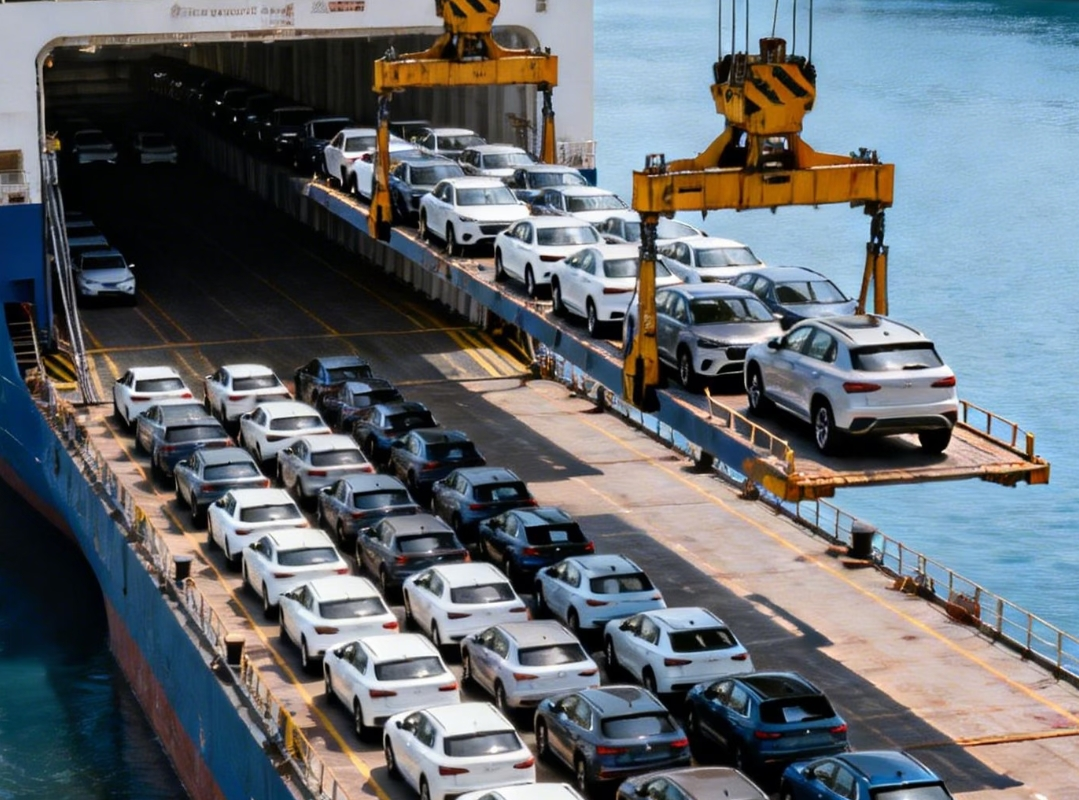
In 2025, Geely Holding Group maintained rapid growth in global sales, remaining a leader among private automakers and a major force driving China's total auto sales upward.
Through global M&A and technological cooperation, Geely swiftly enhanced its capabilities in high-end manufacturing, safety technologies, and global operations, achieving technological feedback to upgrade its brands simultaneously.
In globalization, Geely Holding has pioneered a path combining brand, technology, and manufacturing overseas expansion. In markets like Europe, Southeast Asia, the Middle East, and South America, Geely and its brands have achieved localized operations, effectively bypassing trade barriers and boosting brand recognition.
In new energy transformation, Geely maintains a multi-track approach, advancing pure electric, hybrid, and plug-in hybrid technologies simultaneously, with high-end and mass-market brands working in tandem to balance structural optimization and sales growth.
As a representative of China's private automotive industry, Geely Holding's open, flexible, and efficient development model has contributed the most dynamic growth momentum to China's automotive sector.
China's global auto sales surpassing Japan for the first time is not a by chance (coincidental) outbreak but an inevitable result of long-term accumulation; it is not a victory for a single company but for the entire industrial ecosystem. BYD, SAIC Motor, and Geely Holding, each with their unique strengths, jointly form the core pillars of China's automotive ascent.
Chinese automakers, represented by BYD, SAIC, and Geely, have proven to the world that China's automotive industry can not only grow in scale but also in strength; it can not only "go global" but also do so steadily and sustainably. A new era for China's automotive industry is truly arriving.
END
-
![]()
The Unstoppable Rise of 'Optical Progress and Copper Decline': Sunny Optical’s Strategic Vision for the Next Decade
-
![]()
AI + Going Global in the Second Half: No Intermission for Robot Vacuum Cleaners
-
![]()
The Suffering Endured in E-commerce, Walmart Doesn't Want to Repeat in AI
-
![]()
What Does the Doubling of New Energy Vehicle Exports Mean?
-
![]()
Ghosn: 'Only I Can Save Nissan'
-
![]()
Volkswagen Lays Off 100,000 Employees, The Elephant Sits Down
-
![]()
Expanding Production Capacity! Yutong Optics Acquires Approximately 1.5 Hectares of Industrial Land in Chang'an, Dongguan
-
![]()
Why Is Nokia Making a Comeback in the AI Era?