NIO Hits Single-Quarter Operating Profit Milestone
 03/24 2026
 649
649
Profitability Turning Point Still Requires Further Confirmation
Recently, NIO Group unveiled its financial results for the fourth quarter and full year of 2025, marking a pivotal moment for the EV startup, which has been in operation for over a decade, with a "record-breaking" performance. Financial data revealed that NIO achieved an operating profit of RMB 807 million and an adjusted operating profit of RMB 1.251 billion in the fourth quarter of 2025, marking its first-ever single-quarter operating profit. The net profit for the same period reached RMB 283 million, officially ending its streak of losses. For NIO, which has long been plagued by "cash-burning" skepticism, these results serve as a significant confidence booster.
Scale Expansion and Cost Management
From an operational standpoint, NIO's performance in the fourth quarter of 2025 was remarkable. During this period, the company delivered 124,800 new vehicles, representing a 71.7% year-over-year (YoY) increase and a 43.3% quarter-over-quarter (QoQ) rise. Revenue soared to RMB 34.65 billion, up 75.9% YoY and 59% QoQ. Total gross profit reached RMB 6.074 billion, marking a 163.1% YoY and 100.8% QoQ surge. This growth was primarily fueled by sales scale, as quarterly deliveries exceeded 120,000 units for the first time, providing a solid foundation for fixed cost amortization.
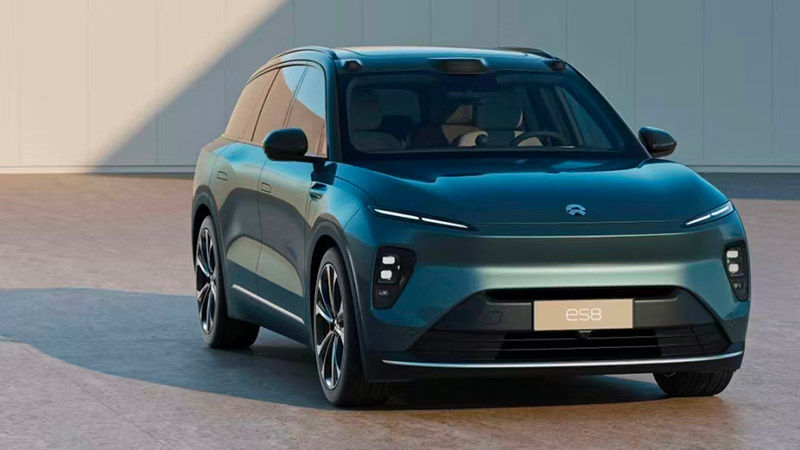
More notably, gross margins witnessed substantial improvement. In the fourth quarter, NIO's consolidated gross margin reached 17.5%, the highest since 2022, while the vehicle gross margin hit 18.1%, peaking in three years. This margin expansion was not solely driven by sales; product mix optimization played a pivotal role. Data indicated that the high-priced NIO ES8 performed exceptionally well in the fourth quarter, with a per-unit gross margin exceeding 20%, and its share in NIO's brand sales increased significantly. Meanwhile, the more affordable L60 model under the ONVO brand, tasked with driving volume growth, maintained a reasonable gross margin of 15%-20%, avoiding excessive profit erosion from market penetration.
From a cost perspective, NIO's profitability improvement in the fourth quarter was bolstered by decisive cost management. Financial results showed that R&D expenses in the fourth quarter were RMB 2.026 billion, down 44.3% YoY and 15.3% QoQ. Selling and administrative expenses amounted to RMB 3.537 billion, down 27.5% YoY and 15.5% QoQ. Compared to the quarterly R&D investment of around RMB 3 billion since 2022, this cost reduction is substantial. Objectively, this contraction reflects NIO's strategic shift from "expansion-first" to "efficiency-first."
Brand Strategy and In-House R&D Drive Cost Reductions
NIO's quarterly profitability was not attributable to a single factor but rather the synergistic effects of its product matrix, in-house R&D, and cost management.
Firstly, the multi-brand strategy began to yield synergies. Financial disclosures revealed that in the fourth quarter of 2025, NIO, ONVO, and Firefly brands delivered 67,400, 38,300, and 19,100 units, respectively, all setting quarterly delivery records. The three-tier structure—NIO for premium, ONVO for family mainstream, and Firefly for compact segments—expanded sales coverage while avoiding internal price competition through brand differentiation. Notably, the strong sales of high-margin models like the NIO ES8 directly boosted overall profitability.
Secondly, cost reductions from in-house R&D started to materialize. NIO President Qin Lihong revealed that the in-house "Shenji NX9031" chip delivers computing power equivalent to four industry-leading chips, reducing per-vehicle costs by over RMB 10,000. In the fourth quarter of 2025, Shenji, the subsidiary responsible for intelligent driving chips, raised RMB 2.257 billion from external investors, with NIO retaining a 62.7% stake post-transaction. This not only validated capital market recognition of NIO's technological assets but also alleviated parent company investment pressure through external capital.
Additionally, the profit contribution from services and community businesses cannot be overlooked. In the fourth quarter, NIO's other sales gross margin reached 11.9%, with related businesses remaining profitable for three consecutive quarters. For the full year of 2025, NIO's service and community business revenue exceeded RMB 10 billion and achieved profitability. Businesses once seen as "cost centers," such as battery swapping and after-sales services, are gradually transforming into profit drivers, positively impacting NIO's overall profit structure.
From Single-Quarter Profit to Full-Year Profitability
NIO's management divides the company's development into three phases, stating that it entered the "third phase"—a new cycle of high-speed growth—starting in the second half of 2025. Strategically, 2026 will be a critical year to validate this judgment.
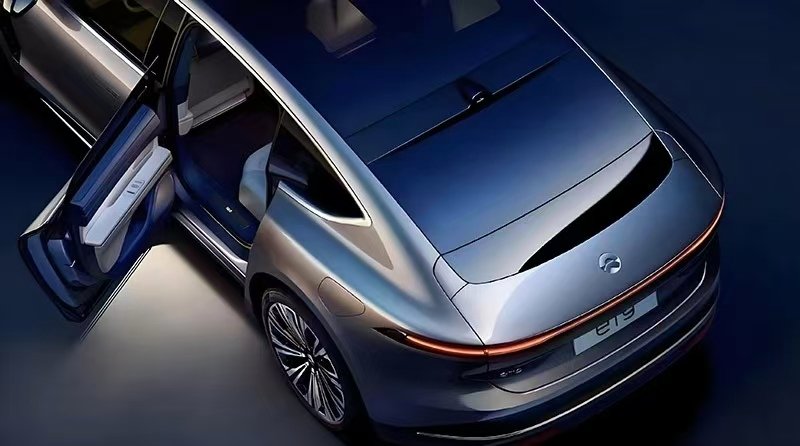
On the product front, NIO plans to launch three new models, including the ES9 and ONVO L80 in the second quarter and a large five-seat SUV in the third quarter. Combined with the ONVO L90 and all-new ES8, five mid-to-large SUVs will drive sales growth in 2026. William Li expressed "strong confidence" in achieving 40%-50% annual sales growth, but this hinges on whether new models can stand out in the fiercely competitive SUV market.
On the channel front, NIO, ONVO, and Firefly will jointly expand into lower-tier markets, covering more prefecture-level cities through SKY stores. Key expansion provinces include Hubei, Shandong, Henan, Sichuan, and Hunan, targeting markets with significant growth potential compared to BBA (BMW, Mercedes-Benz, Audi). Industry experts believe that if this market penetration strategy is effectively implemented, it could bring substantial new users to NIO.
In terms of technology investment, NIO stated it will maintain quarterly R&D spending of RMB 2-2.5 billion while improving R&D efficiency through the CBU (Central Business Unit) operating mechanism. Balancing necessary technological investment with full-year profitability will test management's operational acumen.

Conclusion
NIO's first single-quarter profit in the fourth quarter of 2025 marks a significant milestone in its development. It proves the commercial viability of NIO's long-held technological roadmap, product positioning, and business model, signaling initial success in its transition from "scale expansion" to "quality growth."
However, extending the focus from the fourth quarter to the full year, NIO's path to profitability remains challenging. In 2025, the company reported a net loss of RMB 14.943 billion, a 33.3% YoY reduction but still a substantial absolute loss. This means NIO has only achieved "single-quarter profitability," not "annual profitability," and the sustainability of its profits requires further quarterly validation.
Moreover, single-quarter profitability does not mean NIO has fully escaped financial pressure. Its current liability structure, the sustainability of sales growth, and evolving industry technology trends will all pose future challenges. William Li stated in the financial report that "the company has officially entered the third phase of development," and the capital market expects to see consistent, stable, and sustainable profitability in this phase.
END
-
![]()
The Unstoppable Rise of 'Optical Progress and Copper Decline': Sunny Optical’s Strategic Vision for the Next Decade
-
![]()
AI + Going Global in the Second Half: No Intermission for Robot Vacuum Cleaners
-
![]()
The Suffering Endured in E-commerce, Walmart Doesn't Want to Repeat in AI
-
![]()
What Does the Doubling of New Energy Vehicle Exports Mean?
-
![]()
Ghosn: 'Only I Can Save Nissan'
-
![]()
Volkswagen Lays Off 100,000 Employees, The Elephant Sits Down
-
![]()
Expanding Production Capacity! Yutong Optics Acquires Approximately 1.5 Hectares of Industrial Land in Chang'an, Dongguan
-
![]()
Why Is Nokia Making a Comeback in the AI Era?