The Ultimate Destination for New Energy Vehicles: MPV
 03/24 2026
 637
637
Lead-in
Introduction
Even if MPVs are not the ultimate destination for new energy vehicle competition, they will undoubtedly be a crucial battleground.
It is often said that Chinese automotive brands have achieved a significant leap forward by leveraging the new energy vehicle sector. However, after this 'leap,' what awaits players is not a period of tranquility but rather an even more intense form of competition and a fierce market struggle.
Reflecting on the period since 2016, when new entrant brands began to emerge like mushrooms after rain, within just a few years, various market segments have witnessed fierce close-quarters combat. From entry-level models to mid-to-high-end markets, and from sedans to SUVs, every segment has become crowded with competitors. This has led to escalating price wars, technological battles, and feature competitions, pushing automotive market competition to new heights.
As participants in the automotive industry, especially after witnessing this transformation firsthand, we cannot help but ponder the ultimate destination of this competition—where will the focus of new energy vehicle competition lie?
Take, for example, the recent fierce competition in the large six-seater SUV segment in 2025. Not only did its sales exceed one million units, but it also captured a significant share of other market segments. With the rise of large six-seater SUVs in 2025, a new question began to spread within the industry: Could the ultimate destination for new energy vehicle competition be MPVs?
Reviewing the development trajectory of new energy vehicles, the competitive path has been both brutal and clear. Nearly every market segment has experienced a cycle from blue ocean exploration to an influx of players, followed by red ocean Fight and kill (fierce competition). From the initial A00-class micro electric vehicles to A0-class small electric vehicles, then to A-class and B-class vehicles, and the aforementioned large six-seater SUVs that surged in popularity in 2025...
The competitive logic in each segment has been highly similar: early entrants seize market opportunities, followed by leading automakers jumping on the bandwagon, leading to price reductions, feature upgrades, and technological iterations. Ultimately, the blue ocean is thoroughly transformed into a red ocean, forcing small and medium-sized players to exit. Subsequently, a new market segment is opened up as a Phased main battlefield (phased main battleground) for continued competition.
As the 'behemoth' among passenger vehicles, MPVs represent the 'endpoint' in terms of vehicle size. Therefore, many believe that the ultimate destination for new energy vehicle competition will be a future automotive market filled with a variety of MPVs vying for attention. But will this be the case?
01 Fierce Competition Across Various Market Segments
From a vehicle size perspective, the competition among new energy vehicles began with the most entry-level A00-class micro electric vehicles, which was also the earliest segment where Chinese brands achieved a breakthrough.
In the early days, the Hongguang MINIEV took the lead, opening up the blue ocean market for micro electric vehicles with its affordable price and agile body. Positioned as a 'commuting artifact (commuting essential),' it quickly gained popularity and consistently topped the sales charts for micro vehicles.
Upon seeing the market opportunities, automakers such as Changan, Chery, and Geely entered the fray, launching multiple micro electric vehicle models. Suddenly, the A00-class market was crowded with players, and the once blue ocean quickly turned red. Some model prices dropped to the 30,000-yuan range, squeezing profit margins to the extreme. Small and medium-sized automakers were gradually eliminated, and market concentration continued to rise.
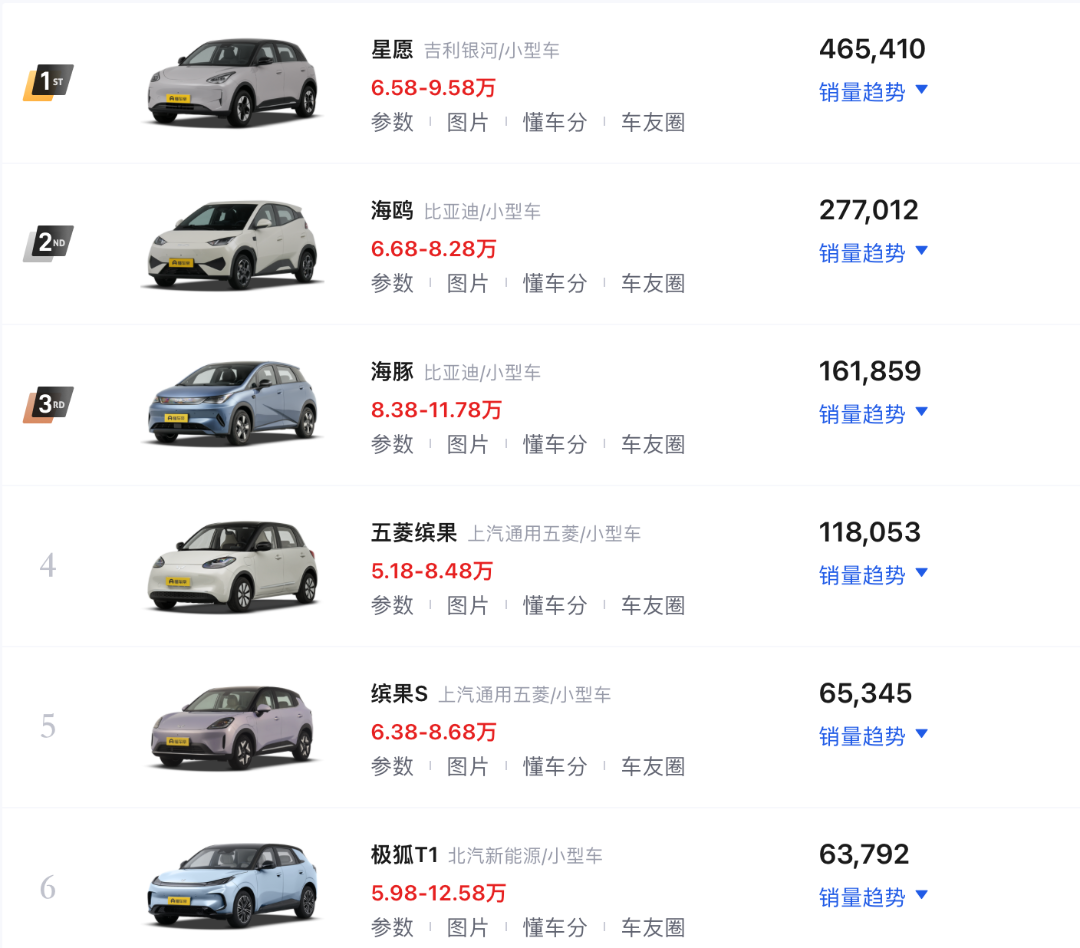
While the competition in the A00-class market was still raging, the A0-class small electric vehicle market had already opened up for competition. BYD took the lead, launching two blockbuster models, the Dolphin and the Seagull. The Seagull's sales exceeded 450,000 units in 2024, representing an 89.6% year-on-year increase, and it claimed the annual sales championship for small vehicles. The Dolphin, meanwhile, surpassed one million cumulative sales within four years of its launch, becoming the fastest A0-class sedan in China to reach this milestone. In 2025, its sales reached 160,500 units, showing a slight 0.01% year-on-year increase.
Following closely behind, the Geely Xingyuan and Wuling Binguo entered the market, forming a tripartite competitive landscape. In 2025, the Geely Xingyuan led the pure electric vehicle sales charts with 459,500 units sold, further intensifying competition in the A0-class market. Model configurations continued to upgrade, transitioning from basic commuting to premium and intelligent offerings, completely replacing the market position of traditional fuel-powered small vehicles.
If A00-class/A0-class vehicles are the stepping stones to the new energy market, then A-class sedans represent the main battleground determining the survival of automakers.
As the saying goes, 'He who conquers the A-class sedan market conquers the world.' This market segment has always had the broadest audience and the strongest demand, and it was once a stronghold for joint-venture vehicles. However, with the advancement of new energy transformation, models such as the BYD Qin, Xiaomi M03, AION S, and Seal 06 have made significant strides. Leveraging lower usage costs, richer configurations, and smarter experiences, they have gradually squeezed the market space of joint-venture vehicles.
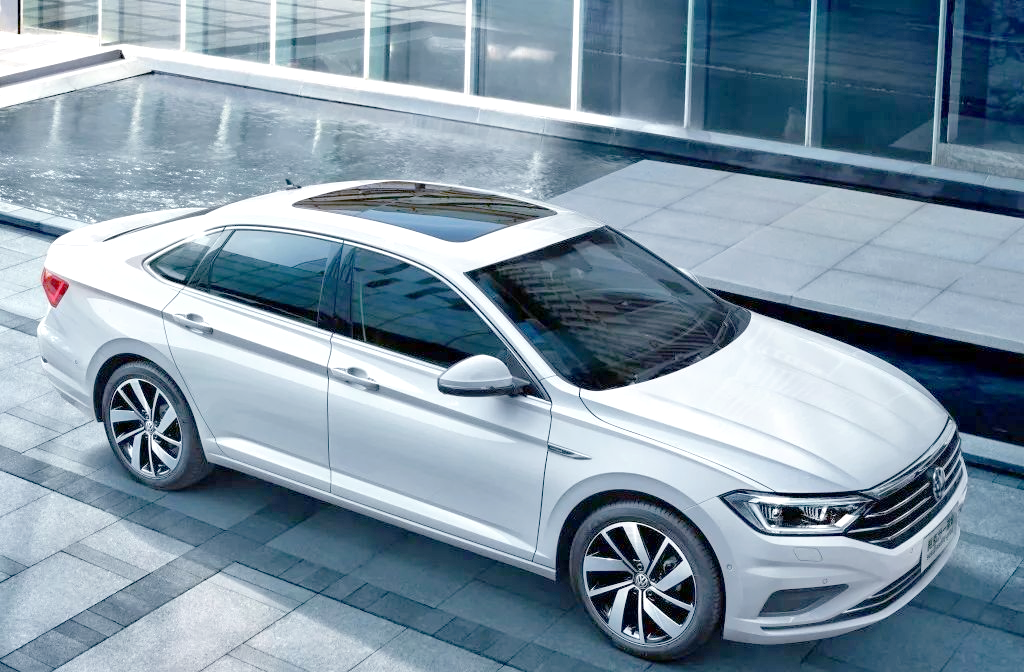
Today, the market share of A-class new energy sedans continues to rise, and Chinese brands have thoroughly overtaken joint-venture vehicles, forming a competitive landscape dominated by Chinese brands. Price wars, technological battles, and service wars have comprehensively escalated. Every iteration of a model is accompanied by configuration upgrades and price optimizations, making the level of intense competition unparalleled in the industry.
As competition in the A-class market reaches a fever pitch, the mid-to-large and large sedan markets have become must-win territories for automakers aiming to Impact high-end (break into the premium segment).
Models such as the BYD Han EV, Xiaomi SU7, Galaxy Starshine 8 PHEV, and Xiaomi P7+ have successively entered the market, forming an encirclement around the Tesla Model 3. Data from 2025 shows that the Xiaomi SU7 topped the sales charts for pure electric sedans priced above 200,000 yuan, surpassing the Tesla Model 3. The competitiveness of Chinese brands in the premium sedan market has become evident, breaking Tesla's monopoly and successfully transitioning Chinese new energy vehicles from cost-effectiveness to high quality.
Entering 2025, large six-seater SUVs have become the new trend in the new energy market, becoming an unignorable option on family users' car-buying lists. Covering a comprehensive price range from 100,000-yuan family models to 500,000-yuan premium models, blockbuster models such as the Geely Galaxy M9, NIO ES8, and Denza N9 have emerged one after another. Among them, the NIO ES8's sales reached 46,700 units in 2025, representing a 408.6% year-on-year increase, and it claimed the top spot for pure electric models priced above 300,000 yuan.
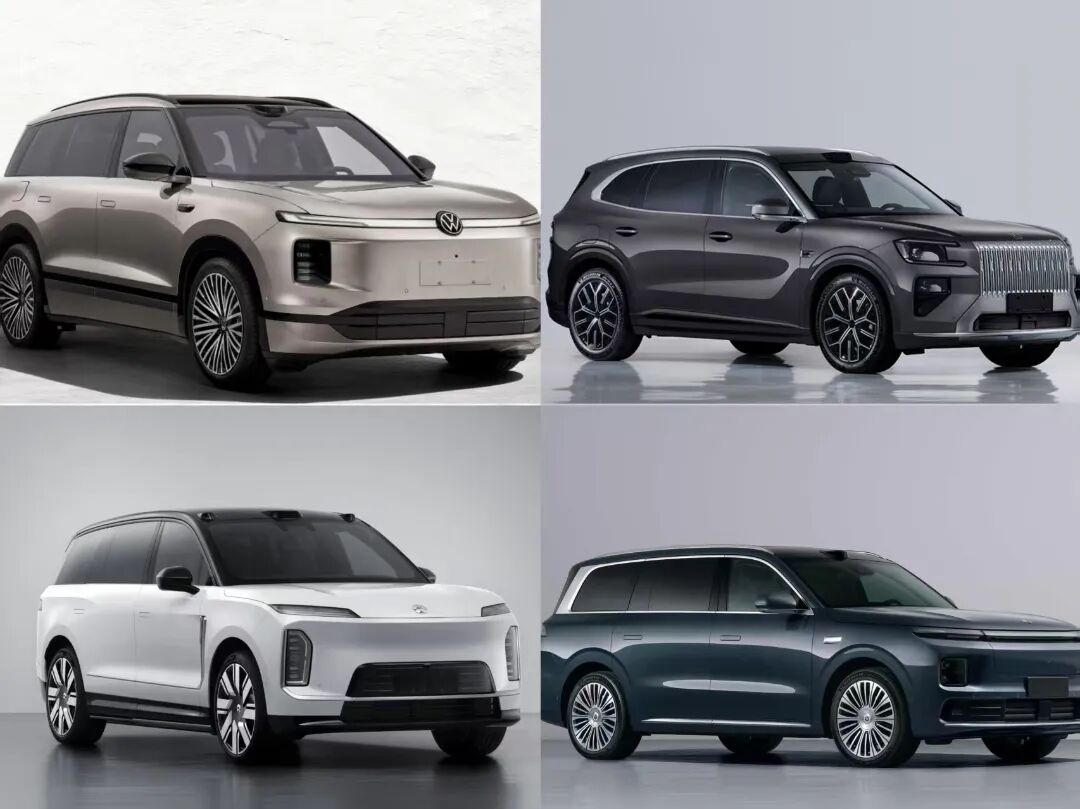
Large six-seater SUVs, with their flexible spatial layouts and comfortable riding experiences, cater to both family travel and premium needs, once capturing a portion of the MPV market share and becoming one of the preferred vehicle types for family users.
However, even so, MPVs, as a market segment with larger sizes and more extreme positioning, still possess irreplaceable advantages. As the market further develops, the competitive potential of MPVs is gradually being unleashed, providing more empirical evidence for the conjecture that 'the ultimate destination for new energy vehicles is MPVs.' After all, when all markets become saturated, MPVs may represent the ultimate battleground for competition.
02 The Ultimate Destination for New Energy Vehicle Competition
So, the question arises: Could MPVs truly be the ultimate destination for new energy vehicle competition?
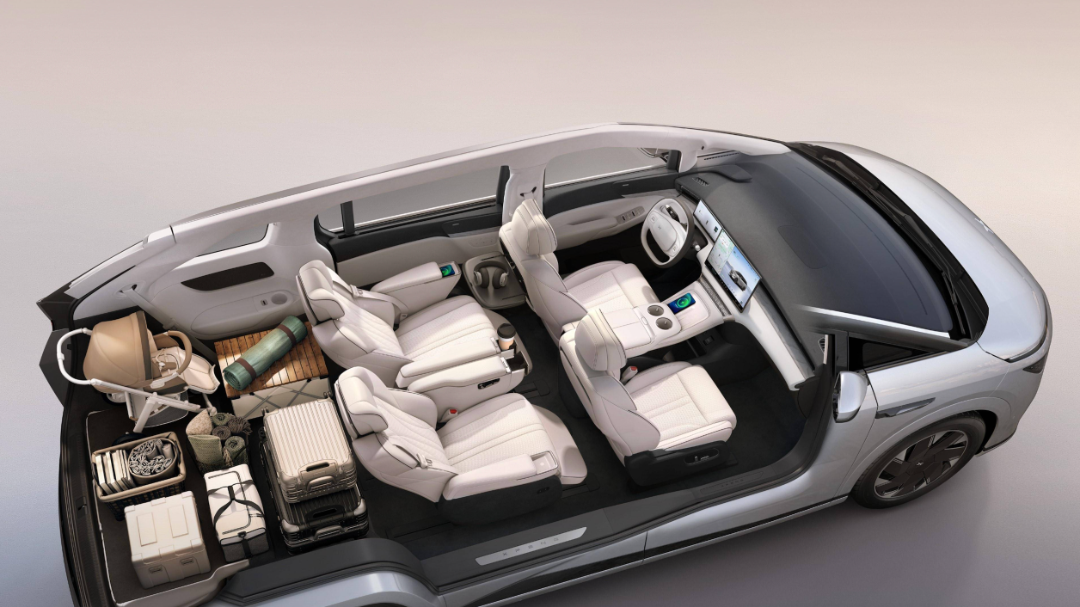
This conjecture is not unfounded. The current MPV market has already bid farewell to the era of utility vehicles and entered a new cycle of value competition centered around technology, brand, and service. The level of intense competition is no less than that in the sedan and SUV segments. From the youthful and sporty exterior designs that break away from the traditional business feel of MPVs to the luxurious and refined interiors, features such as aircraft seats, panoramic sunroofs, and rear-seat entertainment screens have become standard in mid-to-high-end MPVs. From the widespread adoption of sliding doors to comprehensive intelligentization (intelligent) upgrades, with functions such as voice control and autonomous driving assistance gradually being implemented, MPVs are shedding their 'commercial-exclusive' labels and transforming towards family-oriented and diversified offerings.
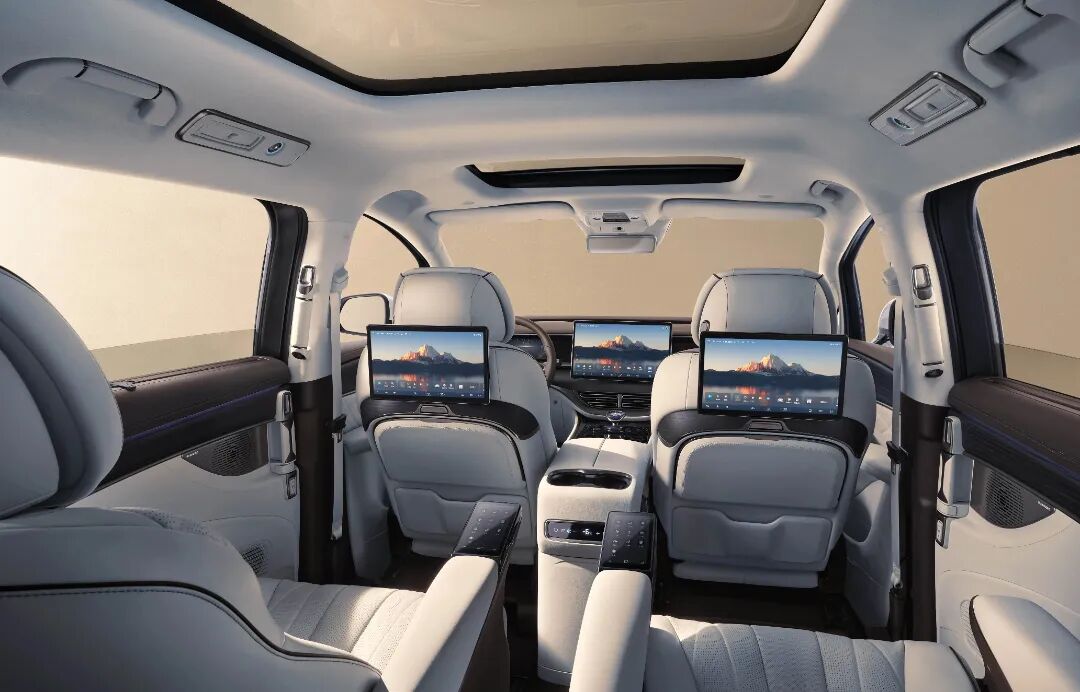
More critically, changes in user demographics are injecting new vitality into MPVs. Once dominated by business professionals, MPV users now primarily consist of young families. User profiles for many MPV models show an increasing proportion of post-90s users, with a continue to rise (continuously rising) share of individual user deliveries. These young users value both space and comfort, as well as intelligence and personalization, and the product characteristics of MPVs precisely meet these needs.
At the same time, technological breakthroughs are further propelling MPVs towards becoming the ultimate track (segment).
In December 2025, the Ministry of Industry and Information Technology officially issued China's first batch of L3-level autonomous driving vehicle access permits, indicating that 2026 will usher in a wave of L3 vehicle mass production. Many automakers have already planned to launch flagship MPVs equipped with L3-level autonomous driving hardware, further strengthening their product advantages. Additionally, MPVs inherently possess spatial advantages, offering riding comfort far exceeding that of sedans and SUVs. Once L3-level autonomous driving is fully implemented, MPVs will further unleash the potential of mobile spaces.
More notably, in 2026, multiple new MPV models have been unveiled, covering various price ranges from 100,000 yuan to 500,000 yuan. Domestic, joint-venture, and new entrant brands are all entering the market, initiating a comprehensive multi-dimensional competition. As intense competition continues to deepen, the supply in the MPV market will become more diversified and premium. The penetration of new energy technologies has also addressed the pain points of traditional fuel-powered MPVs, such as high fuel consumption and low intelligence, further amplifying the advantages of MPVs.
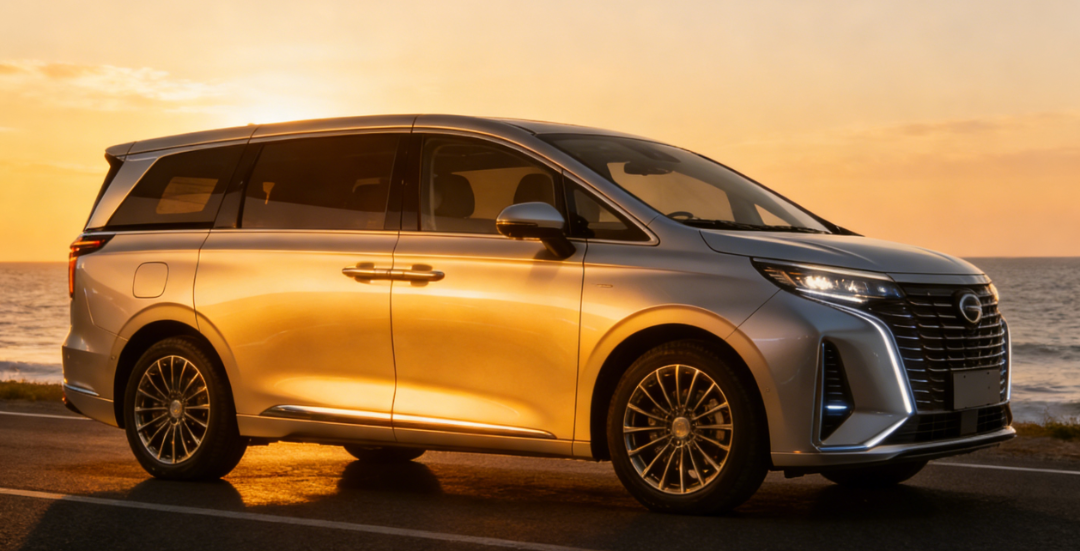
From A00-class micro vehicles to MPVs, the intense competition among Chinese new energy vehicles is essentially an iterative battle to meet higher user demands. Today, as various segments of sedans and SUVs become saturated and competition reaches a bottleneck, MPVs, with their larger sizes and greater potential, are coming into the industry's spotlight.
Among them, some conjecture that with the continuous evolution of MPV models, coupled with technological advancements and upgrades in consumer demand, this segment, once primarily commercial, may become the ultimate battleground for new energy vehicle competition and the next strategic highland (stronghold) for all automakers. Currently, this competition from small to large vehicle sizes seems to be progressing towards MPVs.
Perhaps it won't be long before we see MPVs becoming the final destination for intense competition within the new energy vehicle sector. Even if not the final destination, they will undoubtedly become an important battleground for a new round of competition.
Editor-in-Chief: Li Sijia Editor: He Zengrong
THE END
-
![]()
The Unstoppable Rise of 'Optical Progress and Copper Decline': Sunny Optical’s Strategic Vision for the Next Decade
-
![]()
AI + Going Global in the Second Half: No Intermission for Robot Vacuum Cleaners
-
![]()
The Suffering Endured in E-commerce, Walmart Doesn't Want to Repeat in AI
-
![]()
What Does the Doubling of New Energy Vehicle Exports Mean?
-
![]()
Ghosn: 'Only I Can Save Nissan'
-
![]()
Volkswagen Lays Off 100,000 Employees, The Elephant Sits Down
-
![]()
Expanding Production Capacity! Yutong Optics Acquires Approximately 1.5 Hectares of Industrial Land in Chang'an, Dongguan
-
![]()
Why Is Nokia Making a Comeback in the AI Era?