For the First Time in 69 Years! Japan's Honda Suffers Massive ¥30 Billion Loss—Who Toppled the 'Tech Geek'?
 03/24 2026
 425
425

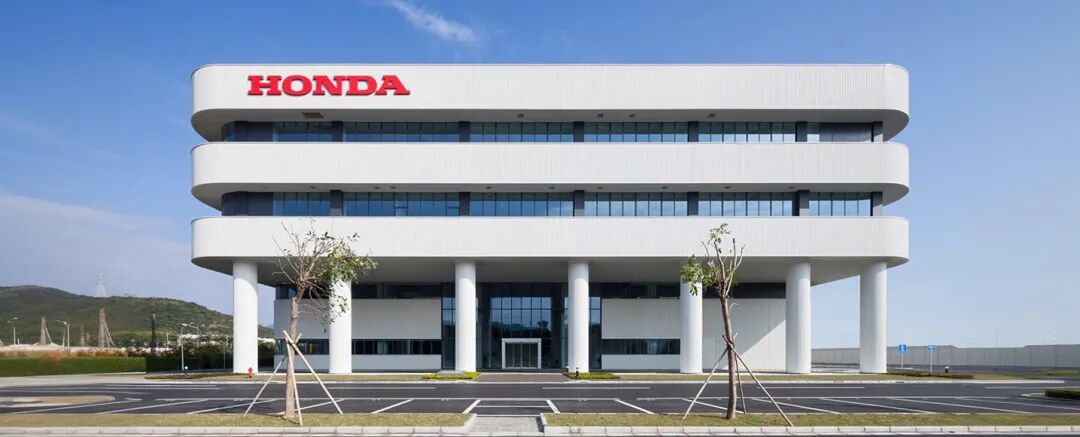
Source | Home Appliance Tribune (jiadpai) Author | Xiaoxiao
In March 2026, Japanese automaker Honda dropped a bombshell.
Earnings forecasts revealed that for FY2025 (April 2025–March 2026), Honda expects a maximum net loss of ¥690 billion, approximately RMB 30 billion.
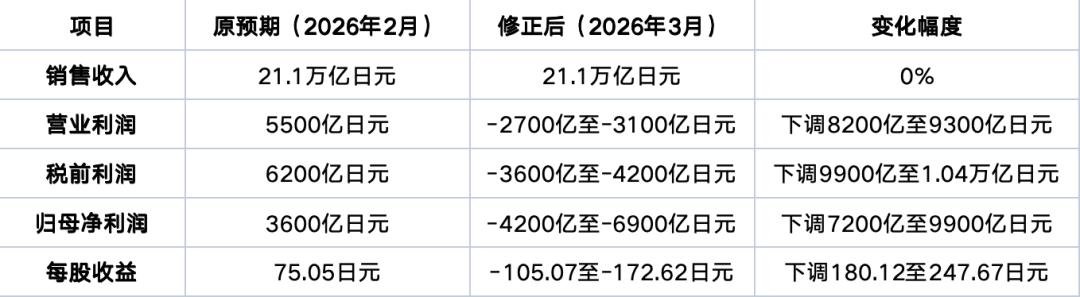
How staggering is this figure?
This marks Honda's first annual loss in 69 years since its 1957 listing. Even the 2008 financial crisis and the 2011 Great East Japan Earthquake failed to topple this 'engine-selling tech geek.'
Why did it stumble so badly this time?
Many blame external factors—high U.S. tariffs, brutal Chinese price wars. Let's not jump to conclusions and first dissect this ¥690 billion loss.

North American Project Cancellations, Chinese Market Hemorrhage
Honda's boldest move was axing three core pure EV models developed in North America: Honda 0 SUV, Honda 0 Sedan, and Acura RSX. Why? Because the U.S. EV market suddenly 'shifted gears.'
In September 2025, the U.S. government terminated a 17-year federal EV tax credit policy, eliminating the $7,500 subsidy for new EVs. U.S. EV demand plummeted to less than half of earlier projections, with penetration rates briefly falling to single digits.
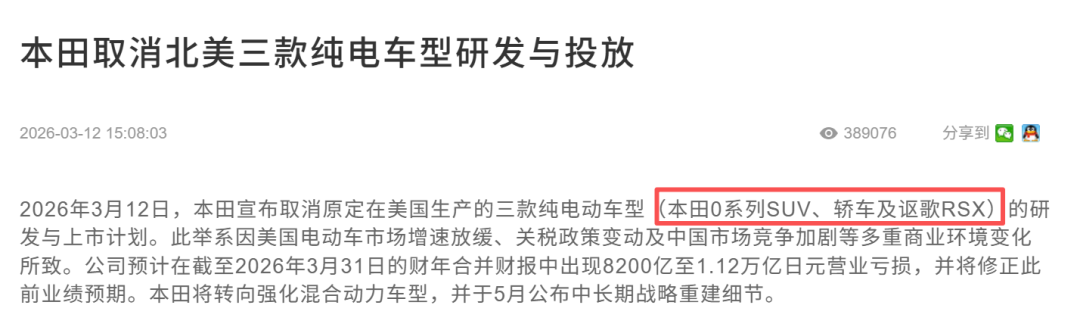
If Honda had pushed these models to market, it would have been jumping into a fire pit, incurring billions in annual losses. Thus, Honda opted for 'short-term pain over long-term agony,' writing down a staggering ¥2.5 trillion in asset impairments. R&D investments, factory retrofits, and supply chain builds all became sunk costs.
How dominant was Honda in China once?
Customers once paid premiums for CR-Vs and queued for Accords. But now?
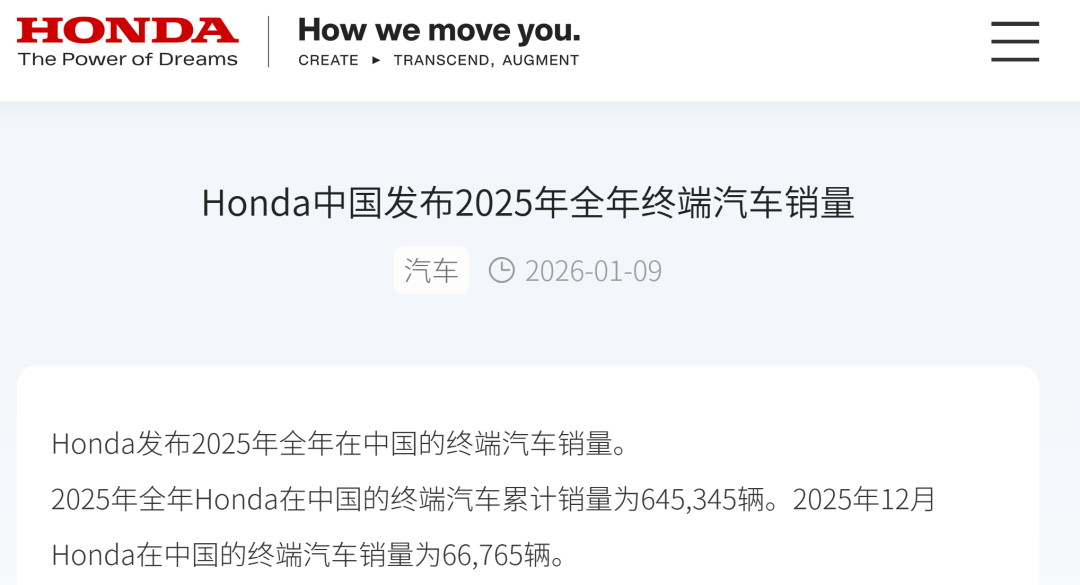
Honda's 2025 China sales hit just 645,000 units, a 24% YoY plunge and fifth consecutive annual decline. From a 2020 peak of 1.627 million units, sales halved twice in five years.
Market share has been devoured by BYD, Geely, and other domestic brands. A case in point: the 11th-gen Accord PHEV. Despite strong hybrid tech, its design failed to allocate sufficient battery space, raising the rear floor and earning net friend (netizens') derision as the 'step-style trunk.' Such 'anti-human' design directly repelled consumers.
Honda was forced to write down massive assets from Chinese market investments. Its former profit cow had become a loss black hole.

Radicalism, Misjudgment, and Path Dependency
After crunching the numbers, let's examine how Honda reached this point.
Honda was the most 'radical' among Japanese automakers. It early proclaimed a '2040 fossil fuel vehicle phaseout' and pledged ¥10 trillion for electrification. This 'all-in' stance initially excited investors. But reality bit back—the global EV market didn't follow Honda's script.

CEO Toshihiro Mibe admitted at a press conference: 'We overestimated global EV demand and failed to adapt flexibly to business environment changes.' Flooring the accelerator only to find a cliff ahead forced an abrupt brake.
Honda, renowned as a 'tech geek,' assumed EV success hinged solely on mechanical prowess. It overlooked that modern EVs compete on intelligence, not engines.
While Chinese automakers raced with 8295 chips, advanced autonomous driving, and giant screens, Honda clung to its 'engine-selling' logic. Worse, its R&D cycles dragged at 5 years versus Chinese rivals' 18–24 months. One delay begot another.
Even more awkward was strategic dependency.
Honda's North American electrification plan initially relied on GM's Ultium platform. But when GM halted cooperation in late 2024, it yanked the rug from under Honda. Outsourcing its North American EV fate to others proved a reckless calculation.
Honda mastered fuel vehicle supply chains with razor-thin cost control. But EV supply chains baffled it. Its pure EV costs remained prohibitive, leaving it trapped in price wars—priced high, no buyers; priced low, losses mounted. This exemplifies 'finding no new continent with old maps.'
Honda, clutching its fuel vehicle maps, lost its way in EV territory.

Traditional Automakers Teeter on the Precipice
Honda's crisis is no isolated incident but a warning signal. The entire traditional auto industry now stands on the edge.
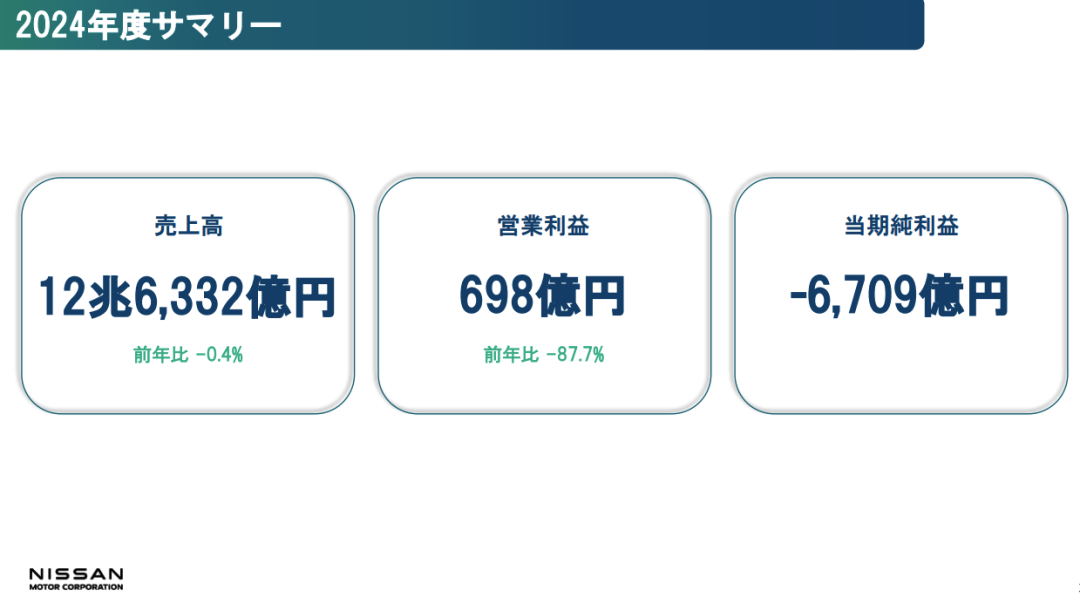
Nissan had already sounded 'financial distress' alarms, projecting a ¥650 billion net loss for FY2025 and forced to shut global plants and lay off 20,000. Toyota clings to hybrids for meager profits, but U.S. tariffs inflicted ¥1.45 trillion in damage, causing North American operating losses.

European giants shiver too. Ford wrote down $19.5 billion in EV-related charges, GM $7.6 billion, and Stellantis €22.2 billion. Even Porsche, once selling millions, wrote down €1.8 billion after canceling battery self-production.
According to Yicai Global's incomplete tally, cross-border automakers' cumulative electrification transformation (transition)-related losses exceeded RMB 500 billion in 2025.

Can Honda Bounce Back?
Facing massive losses, Honda responded with 'Japanese-style' accountability: executive pay cuts.
CEO Toshihiro Mibe and Executive Vice President voluntarily reduced salaries by 30%, with some executives taking 20% cuts. But observers know this gesture is a drop in the ¥30 billion bucket.
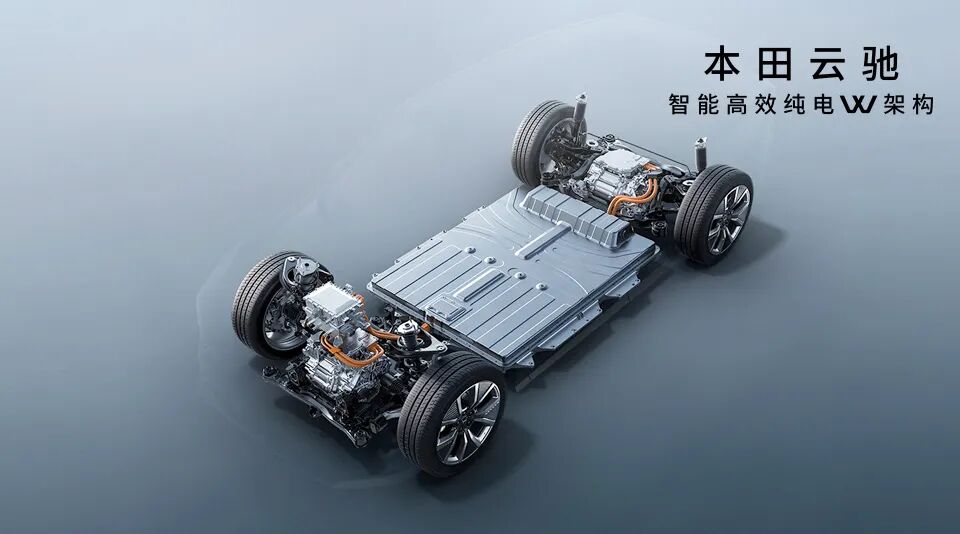
Strategically, Honda is 'retrenching for survival,' shifting from aggressive pure EVs to pragmatic hybrids.
Its 2030 global pure EV sales target was slashed from 2 million to 700,000–750,000 units.
Meanwhile, Honda plans to re-export China-made pure EVs to Japan—an admission that China leads in EV manufacturing.
Amid this once-in-a-century automotive upheaval, the longer a brand's history, the heavier its technological baggage.
Electrification demands not just a track (track) change but holistic reinvention of organizational, decision-making, supply chain, and user understanding capabilities. Any strategy bypassing core competency building and relying on external 'shortcuts'—no matter how efficient short-term—harbors uncontrollable fragility at its foundation.
Next to fall could be slow-reacting, hesitant second-tier luxury brands or traditional joint ventures lagging in software.
Honda still holds the world's top motorcycle business and ample cash. But time is running out.
END
-
![]()
The Unstoppable Rise of 'Optical Progress and Copper Decline': Sunny Optical’s Strategic Vision for the Next Decade
-
![]()
AI + Going Global in the Second Half: No Intermission for Robot Vacuum Cleaners
-
![]()
The Suffering Endured in E-commerce, Walmart Doesn't Want to Repeat in AI
-
![]()
What Does the Doubling of New Energy Vehicle Exports Mean?
-
![]()
Ghosn: 'Only I Can Save Nissan'
-
![]()
Volkswagen Lays Off 100,000 Employees, The Elephant Sits Down
-
![]()
Expanding Production Capacity! Yutong Optics Acquires Approximately 1.5 Hectares of Industrial Land in Chang'an, Dongguan
-
![]()
Why Is Nokia Making a Comeback in the AI Era?