From World Model to IPO Shock, Momenta Reaches a Critical Point
 03/24 2026
 650
650
Can Momenta R7 Support Cao Xudong's 'Ambition?'
'The Momenta R7 reinforcement learning world model is no less impressive than Tesla's FSD!'
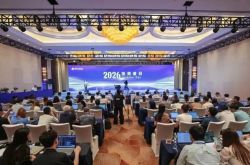
On March 16, at the launch event hosted by SAIC Volkswagen, this statement by Momenta's founder and CEO, Cao Xudong, drew significant attention in the advanced driver-assistance systems (ADAS) industry. On the same day, he officially announced that the Momenta R7 reinforcement learning world model would soon be launched and would make its global debut in SAIC Volkswagen's new flagship SUV, the ID. ERA 9X.
Meanwhile, another piece of news quietly spread in the market: Media reports indicated that Momenta had confidentially submitted an IPO application to the Hong Kong Stock Exchange.
As technological advancements and capital strategies progress simultaneously, Momenta is playing a much bigger game. On the one hand, through the R7 reinforcement learning world model, it aims to strengthen its influence in the next-generation intelligent driving architecture. On the other hand, it seeks to leverage the capital market to secure resources for subsequent research, development, and large-scale implementation. At this critical stage of mass production competition in ADAS, the company is vying not only for technological leadership but also for a position in the next phase of the industry landscape.
01. Betting on the World Model
From the disclosed information, the core of Momenta's newly launched R7 reinforcement learning world model lies in further integrating the 'world model' and 'reinforcement learning' into the ADAS framework.
The former emphasizes dynamic modeling capabilities of the real world, constructing a predictable 'virtual world' by learning the behavioral patterns of various participants in the environment. The latter optimizes decision-making strategies through continuous trial and error and feedback, enabling the system to make better choices in complex and ever-changing scenarios. The combination of the two essentially aims to transition autonomous driving systems from mere perception and reaction to understanding and prediction, thereby enhancing generalization capabilities and stability in long-tail scenarios.
This direction is also regarded as one of the important pathways for the industry to advance toward higher-level intelligent driving.
Over the past year, nearly all leading players in the industry have converged toward the paths of 'unified models' and 'data-driven' approaches. Tesla continues to strengthen its end-to-end FSD system, driving model iteration through massive amounts of real-world data. Companies like Li Auto, XPENG, and DeepRoute.ai are accelerating the development of VLA (Vision-Language-Action) models, attempting to establish a unified representation between perception, decision-making, and control. NVIDIA is also promoting an overall framework for 'Physical AI' through its foundational models and toolchains.
Against this industry backdrop, Momenta's claim of being 'no less impressive' is both an endorsement of its own technological capabilities and a proactive stance in participating in a new round of competition for technological influence. Notably, at SAIC Volkswagen's ID.ERA technology launch event, when asked about the differences between the VLA model and the world model approaches, Cao Xudong provided a thought-provoking response: 'VLA adds icing on the cake for autonomous driving but is hardly a lifesaver.'
In his view, VLA training originates from LLMs, with foundational models typically having around 100 billion parameters. Subsequent training first aligns vision and language before aligning actions with the vision-language combination. This means that throughout VLA training, semantics take priority over driving itself, and a significant portion of model parameters do not truly serve the core driving tasks, falling into the dilemma of 'not using the best steel on the cutting edge.'
Amid the current popularity of VLA as a technological concept, Momenta's choice to adopt 'world model + reinforcement learning' as the core pillar of its next-generation architecture aims to avoid technological homogenization and seek new differentiation high ground. However, an unavoidable issue is that the technical threshold for world models is extremely high, with requirements for computing power, data, and algorithmic architecture far exceeding existing systems.
Therefore, leaving aside the unresolved debate over whether VLA models or world models are superior—after all, the validity of technological narratives ultimately depends on product-level validation—reinforcement learning and world models have shown strong potential in simulated environments. However, their effectiveness in real-world driving scenarios is still constrained by multiple factors.
On the one hand, the complexity of the real world far exceeds that of simulated environments, with endless extreme cases and long-tail scenarios. Whether models possess sufficient safety redundancy and fallback capabilities remains to be tested. On the other hand, the 'black box' nature of reinforcement learning decision-making processes makes system interpretability a focus of regulatory and user concerns. As the industry transitions from 'usable' to 'dare to use' and 'easy to use,' relying solely on model capability improvements can no longer fully meet market demands for safety and reliability.
At the same time, increased model complexity also places higher demands on a company's data capabilities, computing infrastructure, and engineering implementation capabilities. How to efficiently transfer model capabilities to mass production platforms and achieve stable deployment across different vehicle models and computing conditions will directly affect whether technological advantages can be truly converted into commercial value.
02. Ambition Emerges
Beyond the R7 reinforcement learning world model, Momenta's progress in the chip sector is also noteworthy. Through its collaborative chip company, Newchip Navigation, it is accelerating the acquisition of key capabilities.
From its establishment in late 2023 to the successful tape-out of its first chip and securing automotive OEM commitments, Newchip Navigation achieved a breakthrough from 0 to 1 in less than two years—a rare feat in the automotive-grade chip sector—indicating that its strategic boundaries are extending deeper into the underlying technology.
From its inception, Newchip Navigation recruited a group of core members from OPPO's Zeku, including technical experts with experience in SoC architecture design and system optimization. This team, which had previously participated in mobile chip development, enabled Newchip Navigation to start with a high foundation in automotive chip development, quickly forming capabilities in heterogeneous computing, low-power design, and software-hardware collaboration (software-hardware collaboration). Meanwhile, Newchip Navigation completed multiple rounds of financing in a short period, attracting industrial capital from SAIC, Chery, and NIO Capital, among others. This not only provided financial support for research and development but also laid a customer foundation for subsequent mass production.
From a product perspective, the positioning of the first chip, BMC X7, is quite clear—it is not for verification purposes but directly targets mass production demand for urban NOA. With a computing power of 272 TOPS, it competes with NVIDIA's Orin X, adopting a single-core high-computing-power architecture and featuring a dedicated NPU unit customized for end-to-end large models.
More critically, chip collaboration is reshaping Momenta's overall competitive approach. When Newchip Navigation's chips are integrated with Momenta's R6 and R7 reinforcement learning models into a unified solution, their collaboration (synergistic) capabilities at the system level will significantly enhance. From computing power scheduling and model adaptation to power optimization, all can be completed within a unified system, which not only helps improve system efficiency but also directly relates to cost structure optimization.
According to the plan, Momenta hopes to reduce the cost of its complete high-level ADAS solution to be lower than current mainstream solutions. Against the backdrop of accelerated adoption of ADAS, achieving this goal would directly impact the industry's pricing system.
From a broader perspective, Momenta's collaboration with Newchip Navigation reflects changes in the competitive dimensions of the autonomous driving industry. As the industry evolves from 'algorithmic capability competition' to 'system capability competition,' the coupling between chips, models, and data becomes increasingly tight. Tesla strengthens its FSD system through self-developed chips, Huawei and Horizon Robotics build ecological barriers through software-hardware integration, and new forces like NIO, XPENG, and Li Auto are also accelerating chip integration. Essentially, these efforts are all about competing for control over the entire system. In this process, possessing chip capabilities not only means optimization space for performance but also active control over the data flywheel and cost structure.
Of course, this path also comes with higher investments and more complex organizational challenges. Automotive-grade chip development involves long cycles and high validation thresholds. Once product timelines or mass production progress fluctuate, their impact will also be quickly amplified. For Momenta, transitioning from an algorithm company to a provider of 'software-hardware integrated' solutions is not just an expansion of capability boundaries but also a long-term test of resource investment, pacing, and strategic resolve.
03. The Commercialization Test Arrives
If the advancements in world models and collaborative chip efforts represent Momenta's proactive technological moves, then the market rumors surrounding its IPO resemble another equally critical hidden thread.
According to media reports, Momenta has confidentially submitted an IPO application to the Hong Kong Stock Exchange, planning to raise at least $1 billion in funds and has already engaged with institutions such as CICC and Deutsche Bank, with plans to involve more underwriters later. However, Momenta responded by stating, 'No news at this time.'
In fact, as early as the end of 2025, rumors emerged that Momenta had 'abandoned plans for a U.S. listing in favor of a Hong Kong IPO.' Now, with renewed IPO rumors, industry insiders believe the urgency and practical significance behind them have significantly increased.
However, unlike most startups, Momenta's capital structure inherently possesses distinct industrial characteristics. Its investor lineup covers nearly all core forces in the global automotive industry, including mainstream automakers and Tier 1 suppliers such as Mercedes-Benz, SAIC Motor, General Motors, Toyota, and Bosch, as well as technology and top-tier investment institutions like Tencent, Shunwei Capital, Temasek, and YF Capital, founded by Jack Ma. Since its establishment in 2016, Momenta has completed seven rounds of financing, raising over $1.2 billion in total, with its latest valuation exceeding $5 billion.
More critically, these investors are not merely financial backers but deeply bonded industrial partners. For example, Mercedes-Benz has continuously increased its investment and driven mass production across multiple models. SAIC Motor is not only a major shareholder but also collaborates on mobility services and Robotaxi operations. Toyota, General Motors, and Bosch, among others, directly promote the application of Momenta's technology in global vehicle models through their investments. To date, Momenta's partners cover mainstream automakers worldwide, with cumulative model commitments exceeding 170, nearly 70 models delivered, and vehicle installations surpassing 700,000 units.
This 'investors as customers' structure provides Momenta with certain first-mover advantages in commercial implementation and constructs a unique path that distinguishes it from other players.
However, this path also entails higher delivery pressures. As the number of collaborative models increases, system adaptation and maintenance costs rise simultaneously. Against the backdrop of continuous price reductions by automakers and rapidly declining prices for intelligent driving solutions, profit margins are being continuously squeezed. In other words, Momenta has already completed the stage of 'getting a seat at the table,' but whether it can establish a healthy profit structure amid scale expansion remains to be validated by the market.
From a strategic perspective, listing in Hong Kong is gradually becoming a realistic option for autonomous driving companies. The '18C Rules' have opened a pathway for unprofitable technology companies, while southbound capital's sustained interest in AI and intelligent driving sectors has also improved the market environment to some extent.
A deeper change lies in the shifting evaluation logic of capital markets. In the past, investors were more willing to pay for technological imagination, but now they focus more on 'certainty': whether there are stable orders, whether continuous mass production is feasible, and whether there is a clear path to profitability. An IPO is no longer just a financing move but a concentrated test of the business model.
In a sense, the emergence of IPO rumors may not only reflect financing needs but also signal Momenta's entry into a new phase: It is transitioning from a technology-driven company to a scale- and efficiency-driven company. In this transformation, the capital market serves as both a booster and a mirror, amplifying growth potential while also exposing structural issues.
-
![]()
The Unstoppable Rise of 'Optical Progress and Copper Decline': Sunny Optical’s Strategic Vision for the Next Decade
-
![]()
AI + Going Global in the Second Half: No Intermission for Robot Vacuum Cleaners
-
![]()
The Suffering Endured in E-commerce, Walmart Doesn't Want to Repeat in AI
-
![]()
What Does the Doubling of New Energy Vehicle Exports Mean?
-
![]()
Ghosn: 'Only I Can Save Nissan'
-
![]()
Volkswagen Lays Off 100,000 Employees, The Elephant Sits Down
-
![]()
Expanding Production Capacity! Yutong Optics Acquires Approximately 1.5 Hectares of Industrial Land in Chang'an, Dongguan
-
![]()
Why Is Nokia Making a Comeback in the AI Era?