Xiaopeng Motors Achieves First-Ever Quarterly Profit, as Physical AI Starts to Pay Off | Earnings Insight
 03/24 2026
 503
503
We don't just repeat data; we act as a microscope for the truth. We strip away the 'financial report filters' of industry giants to dissect their real profit-making formulas and growth anxieties.
LingTai LT proudly presents its financial report analysis column, Earnings Insight, dedicated to an in-depth analysis of financial reports from the world's leading technology companies. By filtering out the noise and focusing on value, we explore long-term trends and the essence of business. Amidst the ocean of information, we capture decisive signals to help you understand the next era.
This article focuses on Xiaopeng Motors' financial results for the fourth quarter and full year of 2025.
Author | Zhang Yao
Editor | Hu Zhanjia
Operations | Chen Jiahui
Produced by | LingTai LT (ID: LingTai_LT)
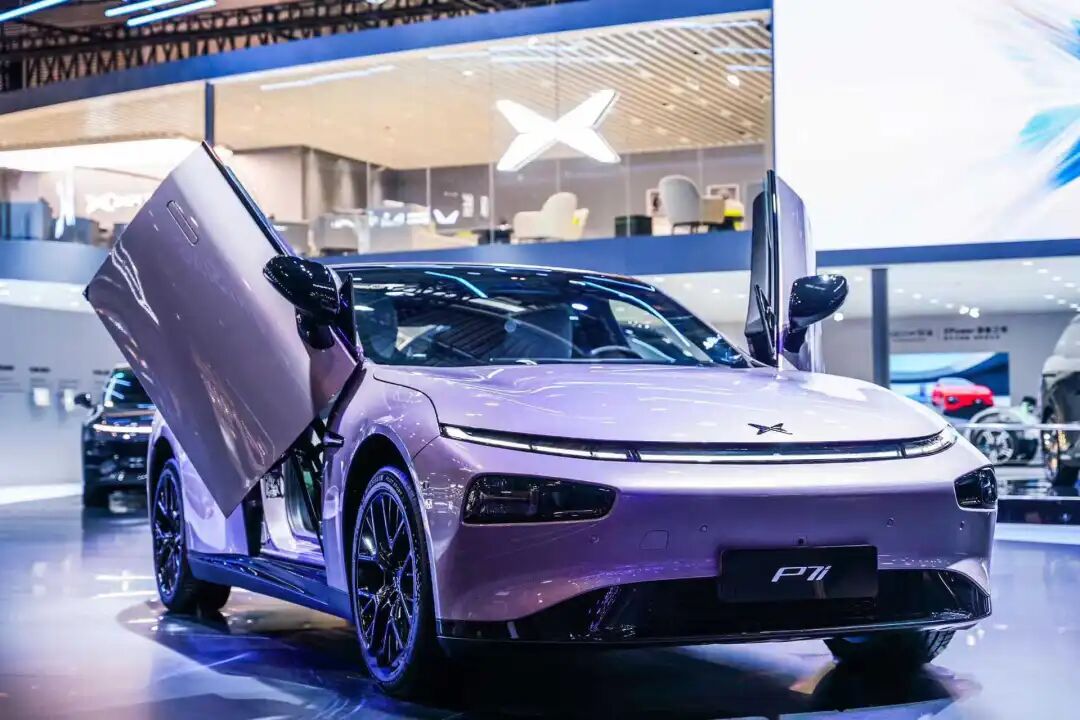
Header Image | Publicly available online image
This moment has been a long time coming for He Xiaopeng and his team.
On March 20, Xiaopeng Motors (09868.HK) released its financial results for the fourth quarter and full year of 2025. He Xiaopeng has achieved the quarterly profitability target set for 2025. Financial data showed that in the fourth quarter of 2025, Xiaopeng Motors' total revenue reached RMB 22.25 billion, up 38.2% year-on-year; net profit was RMB 380 million, achieving single-quarter profitability.
This marks the first time Xiaopeng Motors has achieved quarterly profitability since its inception.
With this, NIO (09866.HK), Li Auto (02015.HK), and Xiaopeng have all achieved single-quarter profitability for the first time in the same financial reporting season. Note, it's single-quarter, not full-year.
To some extent, Xiaopeng has proven that 'profitability is achievable.' Now, the focus shifts to seeing who can transition from 'surviving' to 'thriving.'

Sales Scale Effect Drives Xiaopeng's Profitability
In the fourth quarter of 2025, Xiaopeng Motors' gross margin reached 21.3%, a record high, up 6.9% year-on-year; the full-year gross margin improved to 18.9%, an increase of 4.6% year-on-year. Meanwhile, Xiaopeng Motors delivered 116,249 new vehicles in the fourth quarter, up 27% year-on-year; full-year deliveries reached a record high of 429,445 units, more than doubling year-on-year with a 125.9% increase.
The significant growth in sales served as the foundation for Xiaopeng Motors' improved gross margin and profitability.
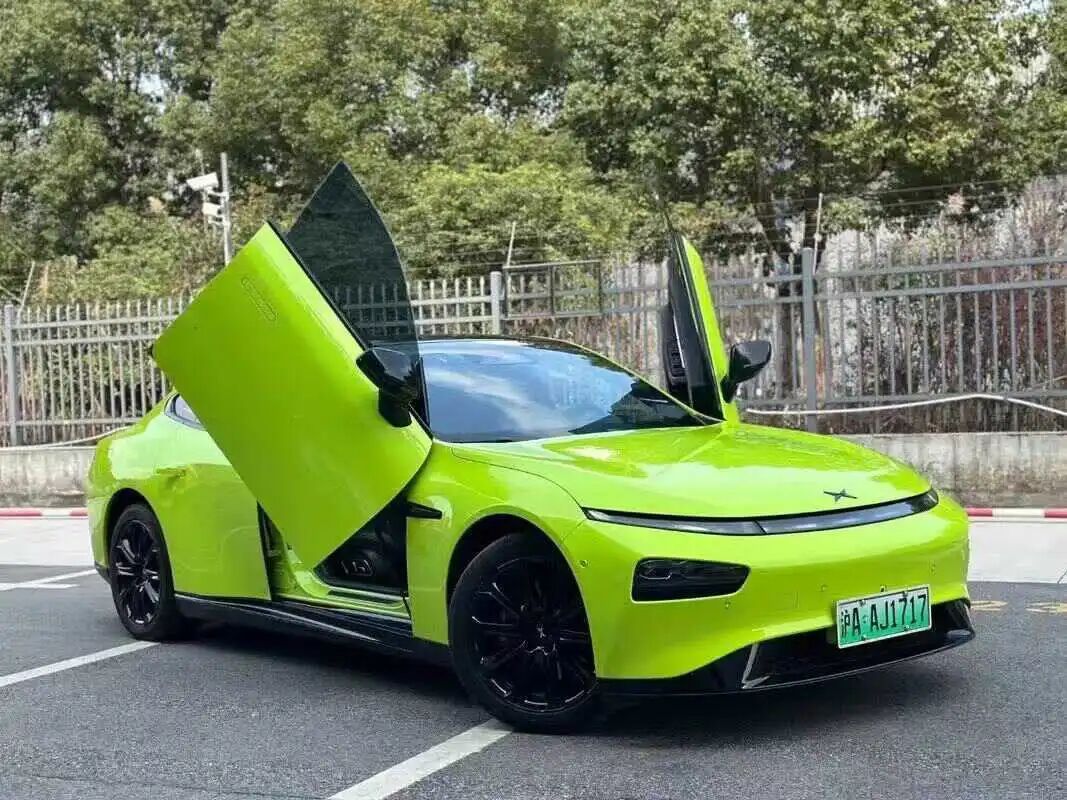
Specifically, Xiaopeng Motors' models on sale include MONA M03, P7+, P7, G6, G7, X9, and G9. Among them, MONA M03 is the main sales contributor for Xiaopeng Motors, with 175,300 units delivered in 2025; P7+ delivered 75,700 units; G6 delivered 47,900 units; G7, P7, G9, and X9 also achieved cumulative sales in the tens of thousands.
Models like MONA M03 and P7+, which can achieve high volumes while maintaining gross margins, have given Xiaopeng its own blockbuster models. They form a combination of low-end volume and mid-end profitability.
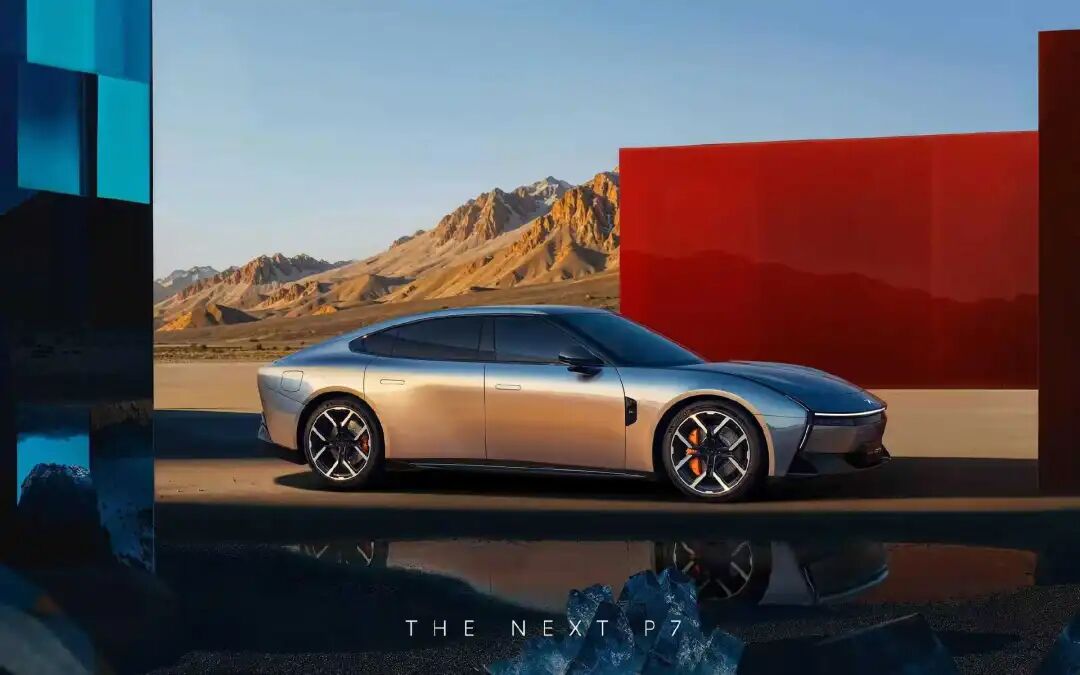
According to comprehensive media information from Tianyancha, MONA M03 quickly penetrated the mass market with its affordable price range of RMB 100,000 to RMB 150,000, becoming the foundation for Xiaopeng's scale growth; P7+ maintained its mid-end profit position with a price range of RMB 180,000 to RMB 210,000. Although MONA M03's high volumes somewhat lowered the overall average selling price per vehicle, the synergistic efforts of P7+, G6, X9, and other mid-to-high-end models still allowed Xiaopeng to steadily increase its automotive gross margin to 12.8% while rapidly expanding its scale.
However, Xiaopeng is also aware of the challenges behind becoming a 'blockbuster.' Xiaopeng's guidance for the first quarter of 2026 is only 61,000 to 66,000 units in deliveries and RMB 12.2 billion to RMB 13.28 billion in revenue. In January and February, Xiaopeng delivered 20,000 and 15,300 units, respectively, totaling 35,300 units, which is still half short of the target, meaning Xiaopeng needs to sell aggressively in March.
This may be the harshest reality of the new energy vehicle industry in 2026. In the past, the competition was about who lost less money; now, it's about who can make money even in the off-season.

Betting on Physical AI is Propelling Xiaopeng Further
Xiaopeng was once known as the 'most cash-burning' new energy vehicle startup. Over the past few years, the company has invested tens of billions of yuan in R&D and has been in a loss-making position for a long time.
Since its inception, Xiaopeng Motors has built a full-stack, self-developed Physical AI system covering multiple fields such as chips, operating systems (large models), and intelligent hardware. Centered around the 'Physical AI' system, Xiaopeng launched the second-generation VLA (Visual-Language-Action, a visual-language-action large model that is Xiaopeng's full-stack, self-developed intelligent driving underlying architecture), Xiaopeng Robotaxi, a new generation of IRON, and two sets of Xpeng Aeroht flight systems.
Just one day before the financial results release, Xiaopeng Motors gradually began rolling out the second-generation VLA.
He Xiaopeng once said in a livestream, 'For over ten consecutive months, Xiaopeng Motors has invested RMB 300 million each month, betting decisively on the second-generation VLA and adhering to a single technological route.' 'Physical AI' is seen as Xiaopeng Motors' actively pursued second growth curve.
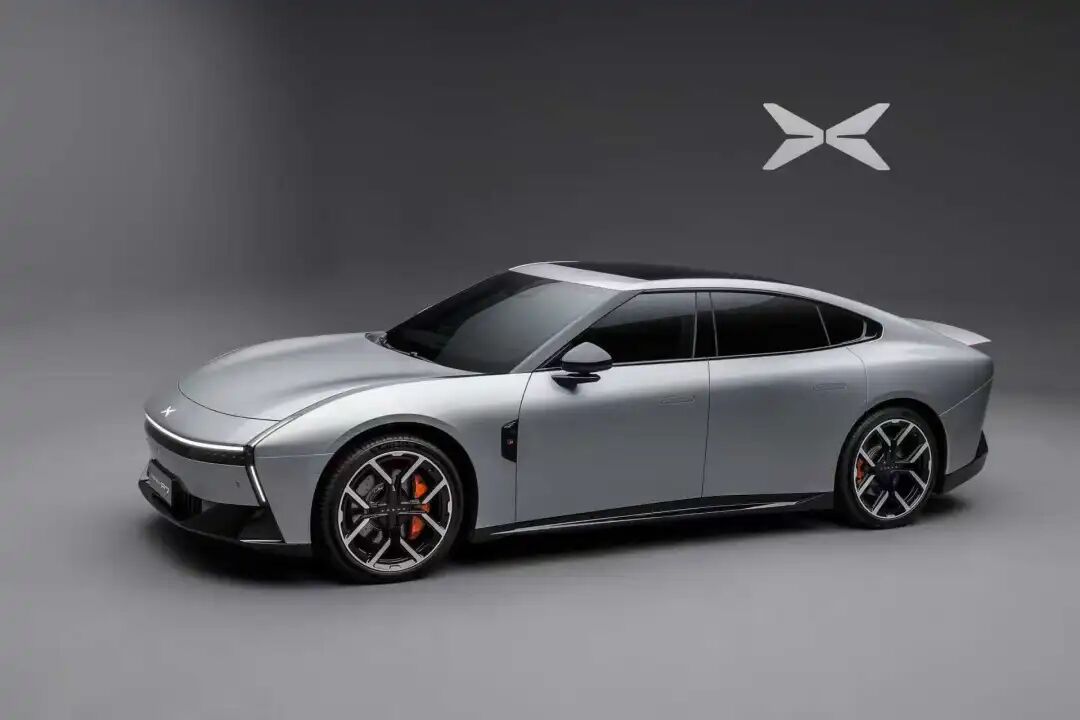
He Xiaopeng shared his user experience during the earnings call: 'After using the second-generation VLA, when I switch to other intelligent driving versions or, because I travel frequently and often need drivers, I find that no matter the autonomous driving capabilities of other models or the driving skills of professional drivers, they cannot compare to the smoothness and peace of mind of the VLA.' In terms of technological iteration, Xiaopeng plans to upgrade its in-vehicle large model from the billions to over 20 billion parameters in 2026, with a target to increase the safety handover mileage by 5 to 10 times.
The increasingly fierce competition in the new energy vehicle market has become an industry consensus. As hardware comparisons such as battery capacity, motor power, and zero-to-100 km/h acceleration gradually reach their limits, industry competition is shifting from stacking physical parameters to seeking a second growth curve through intelligent driving and software ecosystems. Whether it's increasing investments in embodied intelligence or AI+ related businesses like intelligent driving, it is becoming a common choice for new car brands.
Recently, NIO's automotive-grade chip subsidiary, Anhui Shenji Technology, completed its first round of financing worth RMB 2.257 billion, further laying out its core computing power for intelligent driving. Li Auto also recently released its next-generation autonomous driving foundation model, MindVLA-o1. On March 19, the new generation Xiaomi SU7 was officially launched. Besides its more stunning appearance, the new SU7 has also undergone a comprehensive upgrade in terms of assisted driving hardware and software.
Xiaopeng Motors' bet on AI is even more avant-garde.
In addition to the previously mentioned investment of RMB 300 million per month for over ten consecutive months, He Xiaopeng also mentioned during the call the plan to take the second-generation VLA overseas and achieve mass production of high-level humanoid robots. This means that besides automobiles, Xiaopeng is also laying out in humanoid robots.

Future Car Companies Will Be Robot Companies
In 2026, Xiaopeng plans to launch four new models and also introduce humanoid robots. He Xiaopeng revealed that Xiaopeng's VLA 2.0 technology stack has been successfully implemented on robots, and the IRON humanoid robot will officially enter mass production by the end of 2026, with a monthly production capacity target exceeding 1,000 units.
He Xiaopeng's judgment is: 'Future car companies will all be robot companies.' He has set a goal to sell over 1 million Xiaopeng robots annually by 2030. Perhaps the day Xiaopeng truly achieves profitability will be the day it declares it is no longer just a pure automotive company.
Betting on Physical AI requires substantial and continuous financial investment, and funding pressure remains a constant concern. According to comprehensive information from Tianyancha and financial data, in the fourth quarter of 2025, Xiaopeng Motors' R&D investment reached RMB 2.87 billion, up 43.2% year-on-year and 18.3% quarter-on-quarter; full-year R&D investment climbed to RMB 9.49 billion, a significant 47.0% increase year-on-year. Although Xiaopeng Motors had RMB 47.66 billion in cash on hand as of December 31, 2025, up from RMB 41.96 billion at the end of 2024, it showed a quarter-on-quarter decline from RMB 48.33 billion at the end of the third quarter of 2025, reflecting the continuous consumption of cash flow due to high-intensity R&D investment.
However, emphasizing AI at this time is also in line with the trend. Because these future-oriented AI layouts can bring greater imagination space for consumers and the capital market, which is crucial for the company's long-term development.
Morgan Stanley has now dissected Xiaopeng's business into four segments—automobiles, AI chips, humanoid robots, and autonomous driving taxis—for separate valuations, believing that its valuation logic is shifting from a 'car company' to an 'AI technology company.'
As He Xiaopeng wrote in the financial report, perhaps this phrase best captures this stage: 'Xiaopeng Motors is at a historic turning point in the application of Physical AI.' After this turning point, Xiaopeng still needs to validate its positioning as an AI technology company through technological implementation, business mass production, and market expansion. The market and time will jointly provide the answer, but at least, this financial report allows us to see the outline of a company 'looking up at the stars.'
-
![]()
The Unstoppable Rise of 'Optical Progress and Copper Decline': Sunny Optical’s Strategic Vision for the Next Decade
-
![]()
AI + Going Global in the Second Half: No Intermission for Robot Vacuum Cleaners
-
![]()
The Suffering Endured in E-commerce, Walmart Doesn't Want to Repeat in AI
-
![]()
What Does the Doubling of New Energy Vehicle Exports Mean?
-
![]()
Ghosn: 'Only I Can Save Nissan'
-
![]()
Volkswagen Lays Off 100,000 Employees, The Elephant Sits Down
-
![]()
Expanding Production Capacity! Yutong Optics Acquires Approximately 1.5 Hectares of Industrial Land in Chang'an, Dongguan
-
![]()
Why Is Nokia Making a Comeback in the AI Era?