Ending the 20-Year Myth of Japanese Cars: Chinese Automakers Surpass Japan in Global Sales for the First Time
 03/24 2026
 583
583
Ending the 20-Year Myth of Japanese Cars: Chinese Automakers Surpass Japan in Global Sales, Completely Rewriting the Global Automotive Landscape
Networld · Original Author Jiang Hong
Core Highlights
POINT 01 Counterattack to the Top, Surpassing Japanese Automakers for the First Time
POINT 02 Leading in Electrification with Comprehensive Technological Advantages
POINT 03 Full-Chain Advantages with the Most Complete Industrial Chain
POINT 04 Global Expansion Covering Over 200 Countries
The global automotive sales landscape, which has remained unchanged for over two decades, was completely disrupted in 2025.
Japanese automakers had held the top spot in global sales since 2000, but their 25-year reign officially came to an end last year.
Multiple authoritative media outlets and data agencies have confirmed that by 2025, Chinese automakers' cumulative global sales will approach 27 million vehicles, while Japanese automakers' sales will decline to around 25 million vehicles. Chinese automakers have achieved a historic breakthrough, claiming the top spot globally for the first time.
This breakthrough is the inevitable result of years of dedication by the Chinese automotive industry. It has completely rewritten the traditional global automotive landscape and holds milestone significance for the overseas expansion and upgrading of China's manufacturing sector as a whole.
01
PART
Chinese Automakers Surpass Japan in Global Sales, Historically Claiming the Top Spot
INDUSTRY · Landscape Disruption
The significance of this achievement requires little embellishment. For over two decades, the top spot in global automotive sales had been exclusively held by Japanese automakers. At their peak, Japanese automakers' global sales approached 30 million vehicles, rivaling American automakers and firmly controlling industry discourse.
In just a few years, Chinese automakers have completed a cross (leapfrogging) from catching up to leading, creating a stark contrast.
A closer look at the data reveals the solidity of this breakthrough. Chinese automakers did not just narrowly win; they have a clear incremental advantage. Among the top 20 global automakers by sales, six are Chinese brands, surpassing Japan's five.
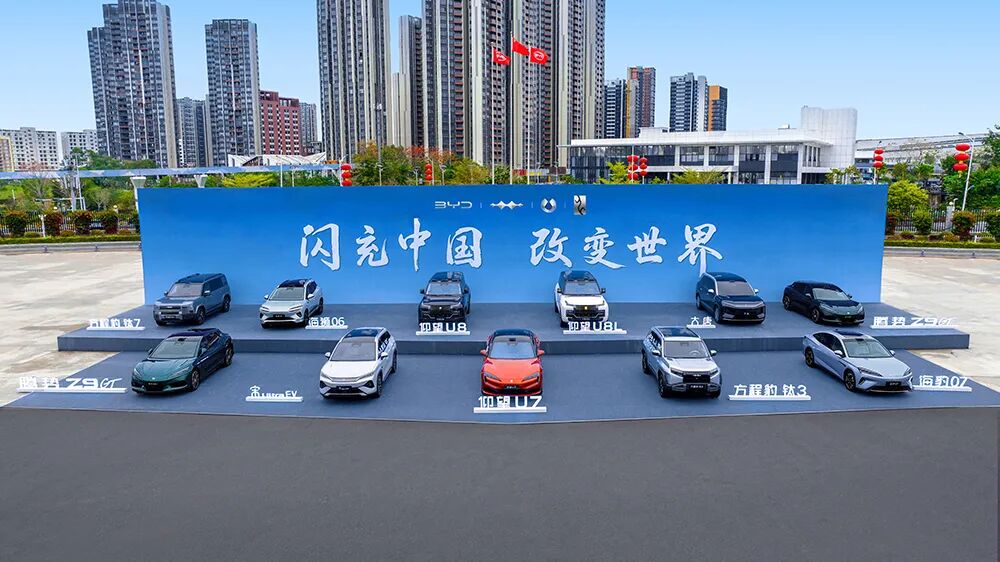
Leading Chinese brands have performed exceptionally well. BYD's overall sales have surpassed Ford, ranking sixth globally, while also claiming the top spot in global pure electric vehicle sales. Geely has also achieved a breakthrough, surpassing Honda in sales to rank eighth globally. Brands like Chery, Changan, SAIC, and Great Wall have also secured spots in the global rankings, forming a collective breakthrough rather than relying on a single brand's efforts. This represents a comprehensive rise of the entire Chinese automotive camp (contingent).
The speed of this counterattack is also remarkable. In 2022, Japanese automakers still held a significant lead over Chinese automakers in global sales. In just three years, Chinese automakers have not only caught up but surpassed them, achieving this amid a generally stable global automotive market.
Chinese automakers' sales have maintained steady growth, while Japanese automakers have experienced a slight decline. This shift has completely flipped the industry landscape, confirming that the market competitiveness of Chinese automobiles has been widely recognized by global consumers.
02
PART
Expanding Advantages in New Energy Technology, Solidifying Core Competitiveness
TECH · Technological Core
The key to Chinese automakers' rise to the top lies in their early layout (layout) and sustained deep cultivation of the new energy sector. They have seized the opportunity of the automotive industry's electrification transformation, using technological advantages to widen the gap with traditional automakers.
Unlike their long-term following in the traditional fuel vehicle sector, Chinese new energy vehicles have taken an independent R&D path from the beginning, gradually gaining control over core technologies. This is the key to surpassing Japanese automakers.
Global Dominance in Power Batteries: China Holds 6 Seats + Over 60% Market Share
As the core component of new energy vehicles, Chinese companies have long dominated the global power battery market. Among the top 10 global power battery installers, six are Chinese companies, collectively holding over 60% of the market share. CATL and BYD's battery products supply more than half of the global new energy vehicle models, with their core patent counts also ranking among the highest globally.
Whether in terms of battery range, safety, or cost control, Chinese power batteries have achieved global leadership, laying a solid foundation for the development of complete vehicles.
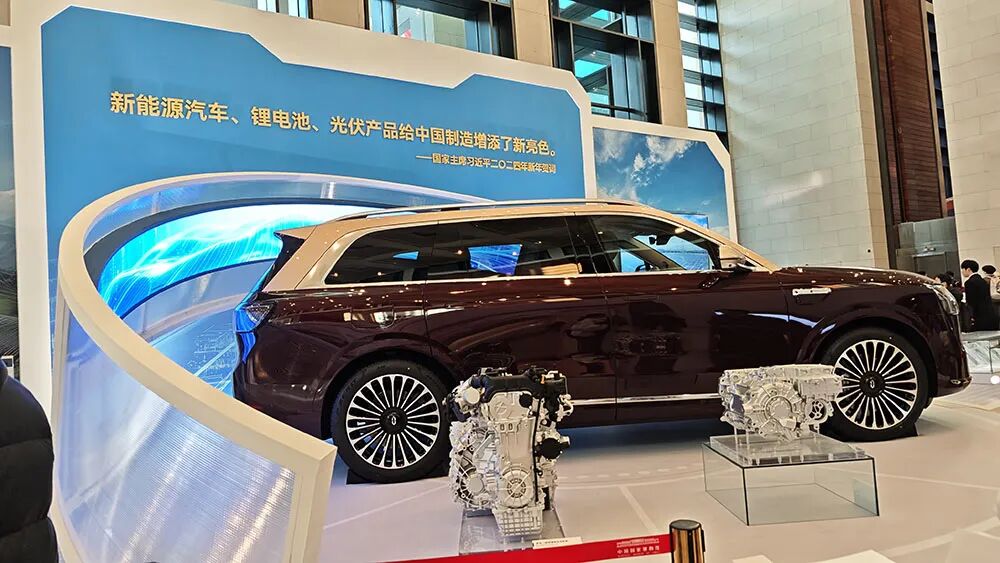
The advantage in the intelligentization domain is even more apparent. Chinese automakers have rapidly commercialized technologies like intelligent cockpits and advanced driver-assistance systems (ADAS), making them core product competitiveness. Many domestically produced new energy vehicle models come standard with high-level ADAS functions, with infotainment systems iterating quickly to adapt to daily use scenarios and meet consumer demands.
In contrast, many overseas traditional automakers have been slow in electrification transformation and lagging in intelligent configuration, gradually weakening their product competitiveness. Japanese automakers previously focused on hybrid technology, delaying their layout (layout) in the pure electric sector. Their technological iteration has failed to keep pace with market rhythms, allowing Chinese automakers to widen the gap. This is also a key reason for the decline in Japanese automakers' sales.
03
PART
A Complete Industrial Chain Supports Scale Growth, Forming Unique Development Advantages
INDUSTRY · Industrial Chain Advantages
Behind the sales surge lies the strong support of China's complete automotive industrial chain, a core advantage difficult for other countries to replicate.
China boasts the world's most complete automotive industry categories, with a full-chain matching (support) from core component production to complete vehicle manufacturing, and from upstream raw materials to downstream sales and services. This forms a strong scale effect and cost advantage, giving Chinese automobiles the confidence to rapidly capture the global market.
A complete industrial chain brings efficient production efficiency and stable supply capabilities. Automakers do not overly rely on overseas components, resulting in shorter production cycles and stronger anti-risk capabilities.
Whether for core components like motors and electronic controls or ordinary automotive accessories, China has a mature supplier system capable of quickly responding to automakers' production needs. This allows for large-scale production while effectively controlling production costs.
This full-chain advantage gives Chinese automobiles a high cost-performance trait in the global market, continuously enhancing product competitiveness.
Meanwhile, China's vast domestic automotive market provides an excellent growth environment for automakers. Domestic consumers have a high acceptance of new energy vehicles, allowing new technologies and products to be quickly tested and implemented. Automakers can rapidly optimize products based on market feedback, forming a virtuous cycle.
Leveraging accumulations in the domestic market, Chinese automakers have steadily advanced their global layout , with products covering over 200 countries and regions worldwide. From emerging markets like Southeast Asia and Latin America to traditional automotive strongholds like Europe, Chinese automobiles are making their presence felt, with overseas sales climbing year after year, further supporting global total sales growth.
///
LAST
Conclusion: Sales Surge is Just the Beginning, the Future of Chinese Automobiles is Promising
FUTURE · Outlook
Chinese automakers surpassing Japan in global sales is not merely a change in rankings but a landmark event reshaping the global automotive landscape. It is also vivid proof of China's transformation from manufacturing to intelligent manufacturing.
From the arduous pursuit in the traditional fuel vehicle sector to the overtaking in the new energy sector, Chinese automobiles have achieved today's historic breakthrough through decades of dedication. This achievement owes much to persistent technological R&D and the support of a complete industrial chain.
The sales surge is just a new starting point. Today's Chinese automobiles have firmly established themselves in the global market, with their technological and industrial chain advantages continuing to amplify.
As automakers continue to deepen their focus on core technologies and refine product quality, Chinese automobiles will not only maintain their sales advantage but also gradually elevate brand value, truly transitioning from a sales powerhouse to an automotive powerhouse.
-
![]()
The Unstoppable Rise of 'Optical Progress and Copper Decline': Sunny Optical’s Strategic Vision for the Next Decade
-
![]()
AI + Going Global in the Second Half: No Intermission for Robot Vacuum Cleaners
-
![]()
The Suffering Endured in E-commerce, Walmart Doesn't Want to Repeat in AI
-
![]()
What Does the Doubling of New Energy Vehicle Exports Mean?
-
![]()
Ghosn: 'Only I Can Save Nissan'
-
![]()
Volkswagen Lays Off 100,000 Employees, The Elephant Sits Down
-
![]()
Expanding Production Capacity! Yutong Optics Acquires Approximately 1.5 Hectares of Industrial Land in Chang'an, Dongguan
-
![]()
Why Is Nokia Making a Comeback in the AI Era?