Oil Prices Skyrocket, Auto Stocks Surge by 3.75%! The Dawn of the Fuel-Powered Vehicle Era Nears Its End
 03/25 2026
 582
582
The fuel tank in a hybrid vehicle is now akin to a 'spare tire'—there but rarely needed.
Oil price regulations are now in effect!
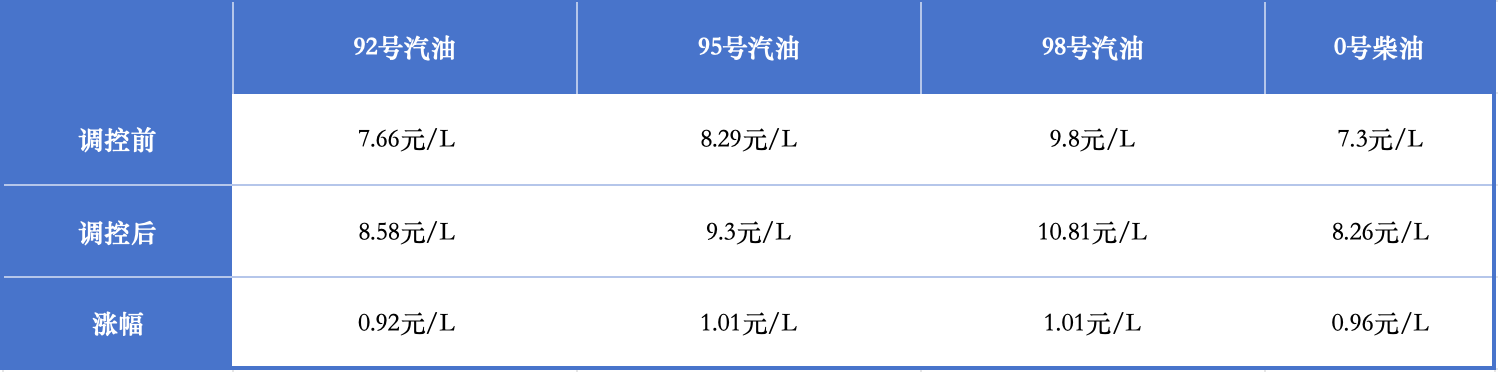
On March 23, the National Development and Reform Commission unveiled the specifics of a new round of oil price adjustments. The price of No. 92 gasoline rose from 7.66 yuan per liter to 8.58 yuan per liter, marking an increase of 0.92 yuan per liter. Similarly, No. 95 gasoline increased from 8.29 yuan per liter to 9.3 yuan per liter, a hike of 1.01 yuan per liter. No. 98 gasoline saw a rise from 9.8 yuan per liter to 10.81 yuan per liter, also up by 1.01 yuan per liter. Meanwhile, No. 0 diesel climbed from 7.3 yuan per liter to 8.26 yuan per liter, an increase of 0.96 yuan per liter.
(Graphic: Dianchetong)
Based on a 50-liter fuel tank capacity, filling up with No. 92 gasoline will now cost an additional 46 yuan. Although retail prices may vary slightly across gas stations, No. 92 gasoline has generally surpassed the 8 yuan per liter mark.
Compared to the previously speculated increase of 1.6 yuan per liter by some media outlets, this adjustment is relatively modest. Nevertheless, oil prices continue their upward trajectory, with the possibility of further increases looming in the next pricing window on April 7.
Turning to electricity prices, residential rates have remained stable for over a decade. New energy vehicles, already enjoying a cost advantage for travel, now have an even greater edge. It appears that new energy vehicles have once again 'effortlessly triumphed' in their competition with fuel-powered counterparts.
Did you manage to fill up your tank with the last round of low-priced fuel?
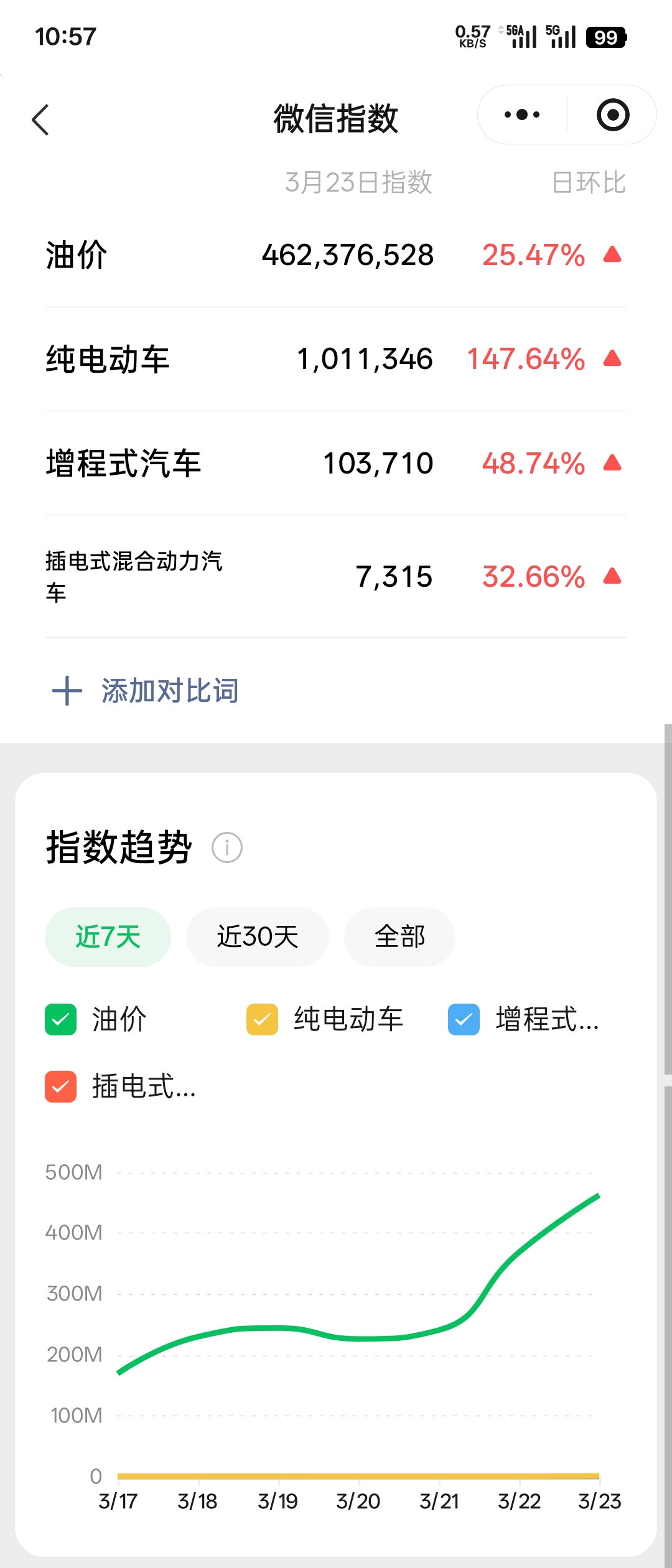
WeChat Index data reveals that on March 23, indices for oil prices, battery electric vehicles (BEVs), extended-range electric vehicles (EREVs), and plug-in hybrid electric vehicles (PHEVs) all experienced significant surges. Notably, the oil price index reached 460 million, with a daily growth rate of 25.47%. The WeChat Index for BEVs soared to 1.01 million, marking a daily growth rate of 147.64%.
It is evident that following the news of the oil price hike, an increasing number of netizens are turning their attention to new energy vehicles.
(Image source: WeChat Index screenshot)
In response to the oil price surge, the stock market reacted swiftly. Since late February, amid international tensions, the entire automotive sector has witnessed rapid heating up, with sustained growth from March 6 to March 24.
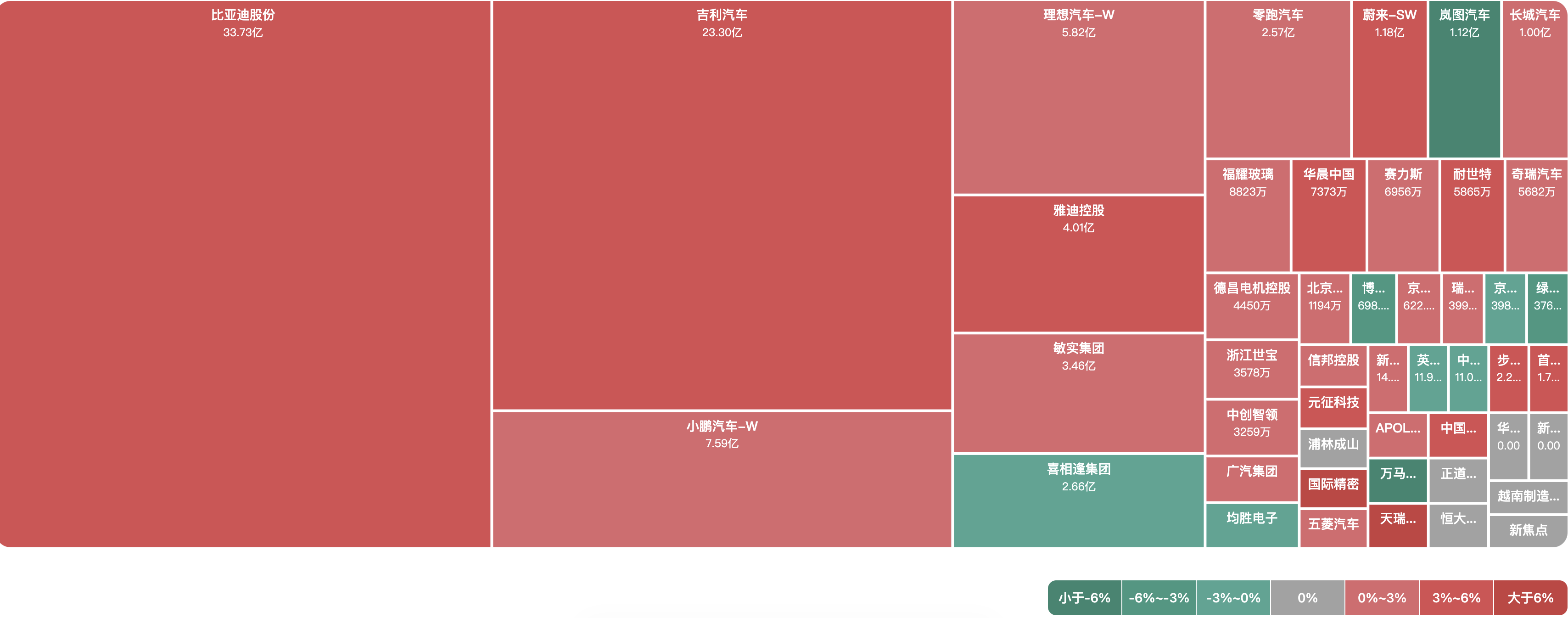
As of the submission of this article, the Hong Kong-listed automotive sector surged by 3.75% today, with stocks of numerous automakers such as BYD, Geely Automobile, XPeng, Li Auto, NIO, Great Wall Motors, and Seres all experiencing significant gains. Several new energy brands entered the top 20 in trading volume within the automotive sector, with BYD leading in trading volume. These data points strongly suggest that investors believe rising oil prices benefit new energy vehicles.
(Image source: Baidu Stock Through screenshot)
Conversely, market sales have yet to show a clear impact from the oil price increase due to factors such as vehicle delivery cycles and statistical timing. Nevertheless, netizens are already advising consumers who have not yet purchased a car to opt for a BEV directly and those planning to replace their car to switch to a BEV. Considering the cost of replacing a vehicle, owners who recently purchased a fuel-powered vehicle or those who only use a couple of tanks of fuel a year may find it more cost-effective to continue using their fuel-powered vehicle.
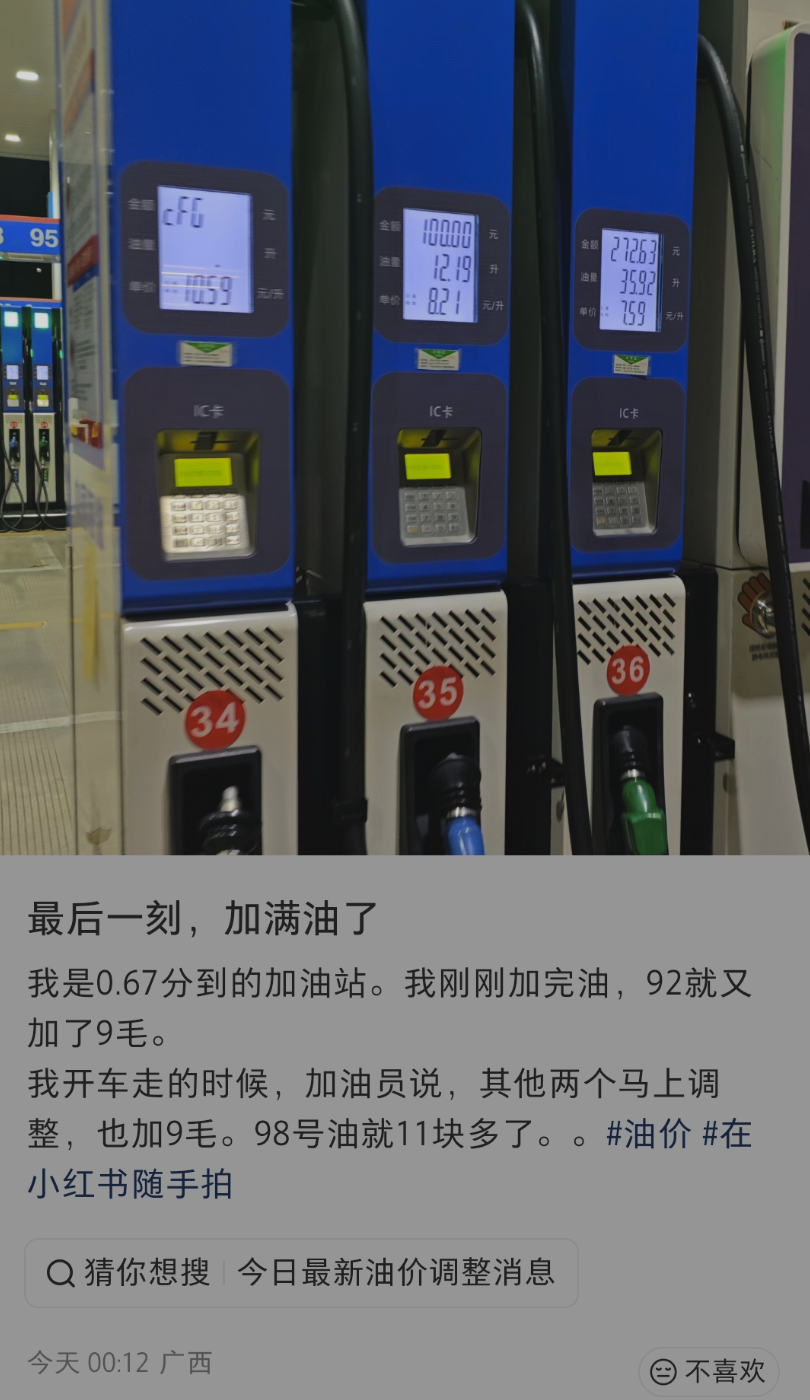
A friend of Dianchetong mentioned that when he went to refuel on March 20, there was a long line at the gas station. Unwilling to wait, he postponed refueling until the next day. Before March 23, a refueling rush occurred in multiple regions across the country, with car owners eager to fill up with low-priced fuel. Some netizens even managed to secure the last wave of low-priced fuel in the early hours of March 24, after which oil prices immediately rose by 0.9 yuan.
Hybrid vehicle owners on Xiaohongshu lamented giving their cars 'one last good meal,' stating that after filling up this tank of fuel, their hybrid vehicles would effectively become BEVs.
(Image source: Xiaohongshu screenshot)
The sharp increase in oil prices has directly spurred a surge in interest among netizens for new energy vehicle models such as BEVs, EREVs, and PHEVs. This has also been swiftly reflected in the stock market, with Hong Kong-listed automotive sector stocks and shares of mainstream automakers collectively rising. Public opinion generally leans towards prioritizing new energy vehicles when purchasing or replacing a car, with rising oil prices becoming a significant driver pushing consumers towards new energy options.
Hybrid vehicles emerge as the biggest beneficiaries
Given that international tensions are unlikely to ease in the short term, high oil prices are likely to persist for an extended period. From the perspective of travel costs, new energy vehicles are undoubtedly a better choice than fuel-powered vehicles. When deciding which type of new energy vehicle to buy, it is still necessary to carefully consider usage scenarios.
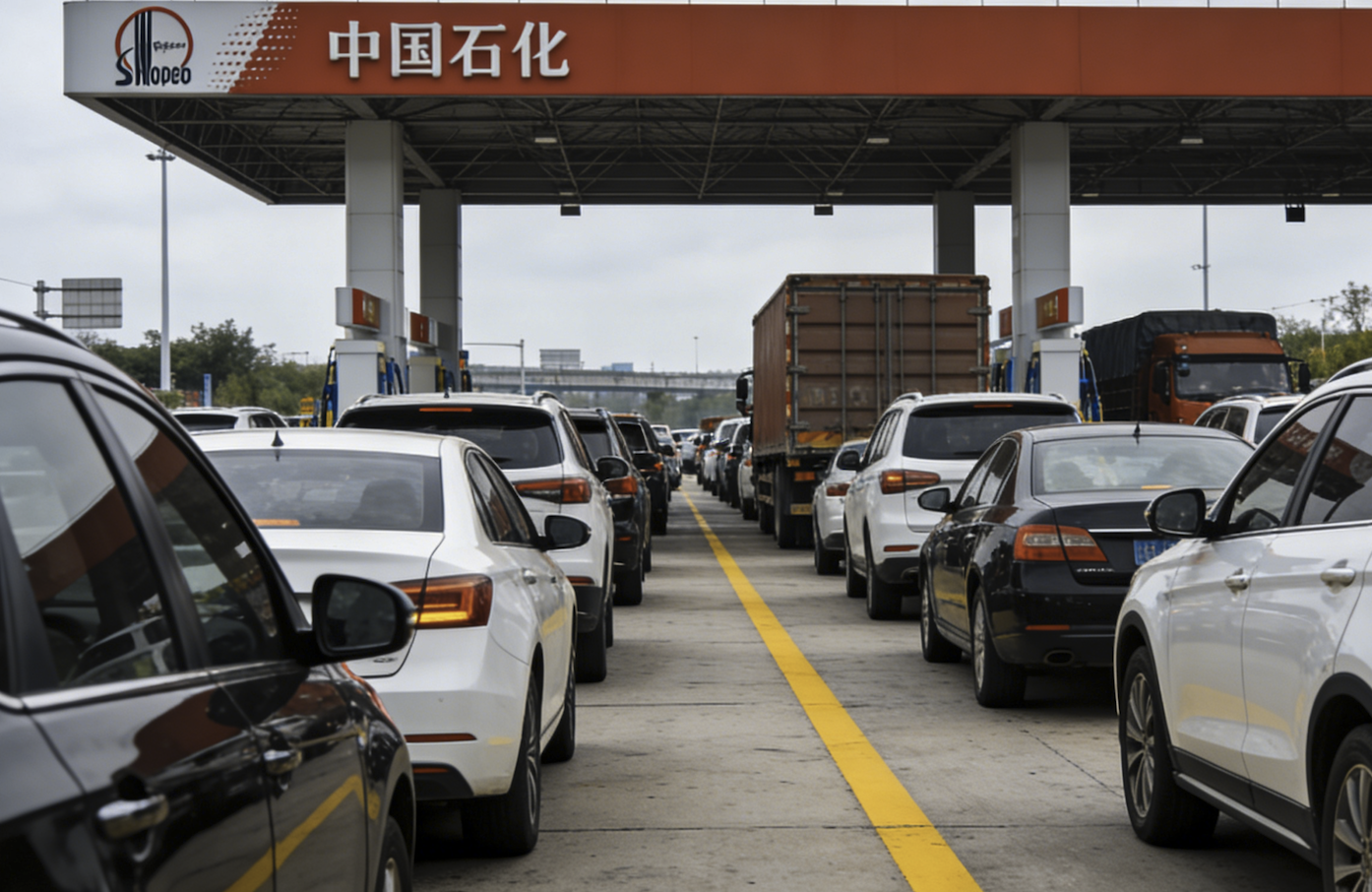
BEVs offer the advantages of large batteries and long pure electric range. However, during long holidays such as the Spring Festival, Labor Day, and National Day, when travel volumes are high, long lines at gas stations are common, and waiting several hours to charge at charging stations, followed by a half-hour charging session, is also typical. The range anxiety of BEVs has not yet been completely resolved, although service area charging stations are generally sufficient for most of the year.
(Image source: Doubao AI-generated)
PHEVs and EREVs, strictly speaking, both fall under the category of 'plug-in hybrids' and can be charged as well as refueled. The difference lies in that narrowly defined PHEV models support direct engine drive, resulting in lower energy consumption at high speeds. However, PHEV structures are more complex, and maintenance costs are typically slightly higher than those of EREVs in the same price range.
EREVs, due to their inability to use direct engine drive, have higher fuel consumption at high speeds but benefit from simpler structures and lower maintenance costs. According to Consumer Reports in the United States, among the three major categories of new energy vehicles, PHEV models have a relatively high failure rate, followed by BEVs, while EREVs have reliability close to that of traditional fuel-powered vehicles.
In previous years, hybrid vehicle models generally had relatively small battery capacities and short pure electric ranges, which were sufficient for daily commutes but somewhat inadequate for long-distance travel. Now, PHEV models priced above 150,000 yuan generally have a pure electric range of around 200 kilometers. Models such as the XPeng P7+ extended-range version and the XPeng G7 extended-range version have a CLTC range of up to 430 kilometers. The upcoming Leapmotor D19, equipped with an 80.3 kWh large battery, has a CLTC pure electric range of up to 500 kilometers.
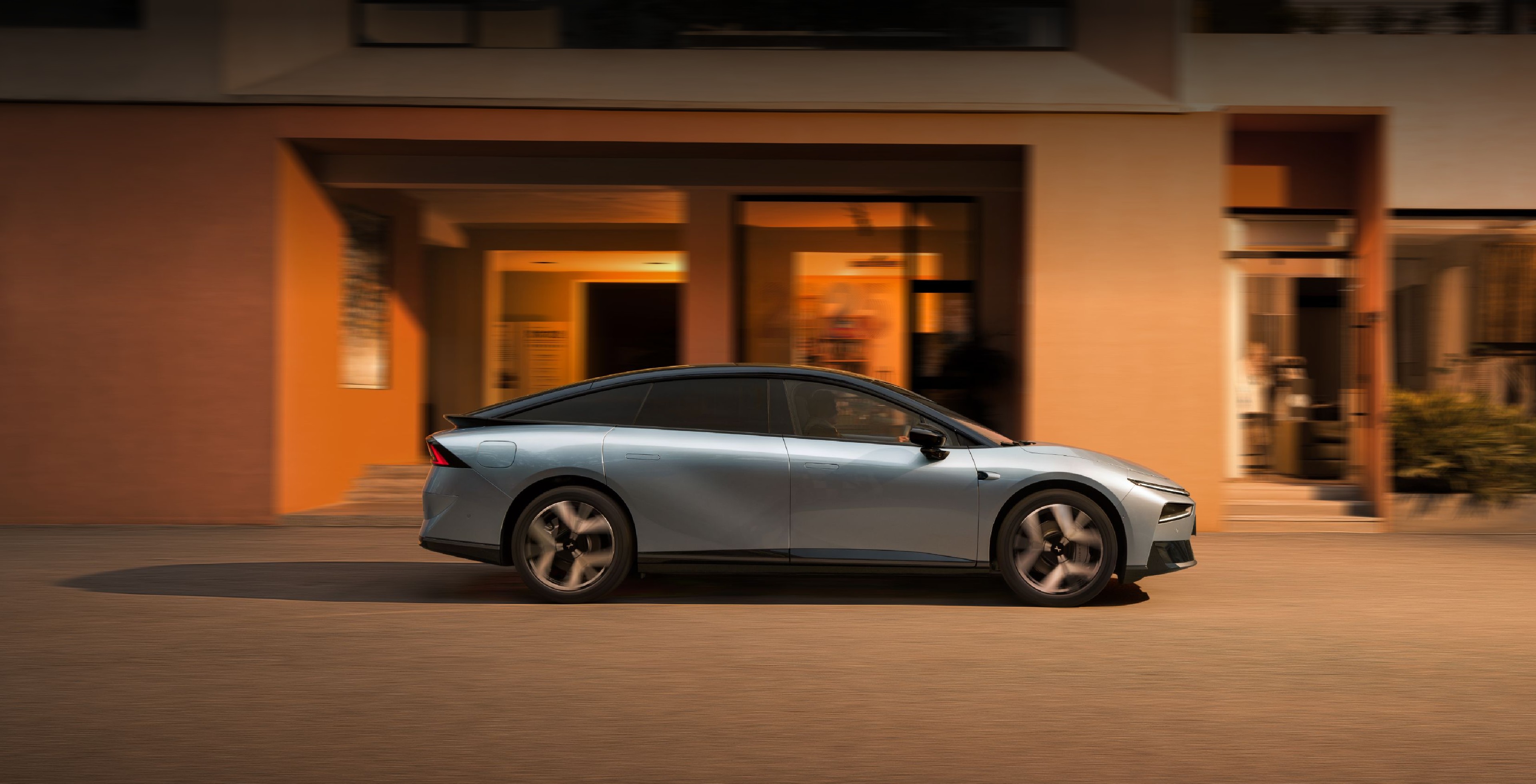
(Image source: XPeng Motors)
Nowadays, some hybrid vehicle models priced around 200,000 yuan have a pure electric range comparable to that of BEVs priced between 100,000 and 150,000 yuan. Even for long-distance travel, with rest stops every two to three hours, there is no need to use the engine for power generation or direct drive, as the pure electric range is sufficient.
It is foreseeable that in the future, the pure electric ranges of PHEVs and EREVs will continue to increase, with 200,000-yuan-class hybrid vehicles generally reaching ranges of 300 to 400 kilometers.
At that point, the fuel tank will serve as an 'emergency backup' for hybrid vehicles, preventing situations where battery power is insufficient due to traffic jams or other unforeseen circumstances.
Against the backdrop of persistently high oil prices, EREVs are indeed worth recommending. These models not only offer long pure electric ranges but also boast advantages such as low failure rates, high smoothness, and low maintenance costs.
PHEV models are more suitable for users with relatively limited budgets who frequently travel long distances at high speeds. Low-priced hybrids have shorter pure electric ranges, making it difficult to complete long-distance travel solely on electric power. The direct engine drive mode of PHEVs can better control fuel consumption at high speeds.
As for BEVs, they are suitable for consumers who do not travel long distances during long holidays or who have a good understanding of road conditions and can reasonably plan charging locations during periods when service areas are likely to be crowded.
Hybrid vehicles are coming to 'compete' for charging stations. Are charging stations ready?
Almost every year during the Spring Festival, Labor Day, and National Day holidays, there are complaints from netizens about hybrid vehicles competing with BEVs for charging stations. However, these incidents are isolated cases. More hybrid vehicle owners, like Dianchetong, treat their hybrid vehicles as fuel-powered vehicles when charging is inconvenient.
However, after this round of significant oil price increases, the situation may change markedly. Higher fuel costs will compel hybrid vehicle owners to choose charging more frequently. The occasional conflicts over charging stations that occurred in the past may become commonplace in the future.
Data from the National Energy Administration shows that as of the end of February 2026, there were 16.176 million private charging stations and 4.834 million public charging stations nationwide. According to statistics from the Ministry of Public Security, the number of new energy vehicles in China has reached 43.97 million, including 30.22 million BEVs.
A rough calculation shows that, on average, there is approximately one public charging station for every six BEVs, which seems manageable. However, charging demand is highly concentrated during morning and evening peaks, holidays, and weekends. Given this temporal mismatch, charging station shortages are already common.
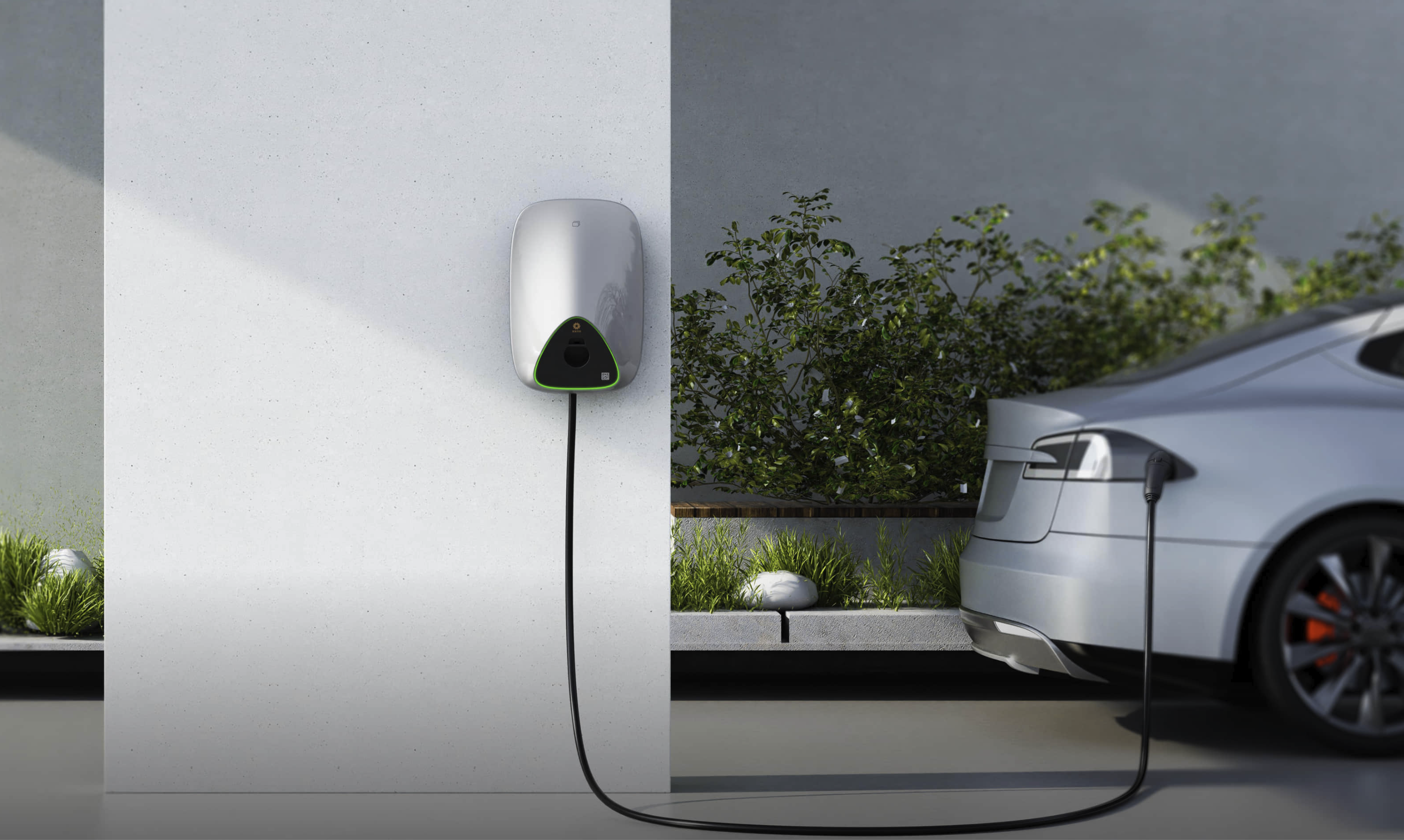
(Image source: Xingxing Charging)
Every winter, news of BEV owners lining up to compete for charging stations in the early morning hours is not uncommon. If a large number of hybrid vehicle owners join the charging queue, public charging resources will become even more strained. For automakers and operating platforms, the concentrated surge in charging demand also represents a new round of operational opportunities.
Moreover, the fact that domestic oil price increases did not reach the 1.6 yuan per liter level predicted by some media outlets is largely attributable to national macroeconomic regulation and China's abundant oil reserves. In other countries that rely on oil imports, oil price increases have been even more dramatic. For example, in Australia, gasoline and diesel prices have recently increased by around 50%.
Goldman Sachs Research's macroeconomic team stated that in recent weeks, stores of several new energy vehicle automakers in Australia, including Tesla, BYD, and GAC Group, have seen significant increases in customer traffic and sales. More and more consumers are seeking new energy vehicles as alternatives to fuel-powered vehicles, and Chinese new energy vehicle exports are expected to rise.
The sharp increase in oil prices presents both challenges and opportunities for the entire automotive industry.
The rising costs of using traditional fuel-powered vehicles are likely to put pressure on their sales. In contrast, new energy vehicles are expected to further increase their market penetration and tap into high-demand overseas markets. Against the backdrop of intense domestic competition and automakers accelerating their overseas expansion, the rise in international oil prices objectively serves as a significant boon for Chinese new energy vehicles.
At the same time, the concentrated release of charging demand from hybrid vehicle owners will also drive the accelerated construction and operational optimization of public charging networks, ultimately improving the charging experience for all new energy vehicle owners.
(Cover image source: Xingxing Charging)
Gasoline, new energy vehicles, extended-range electric vehicles, plug-in hybrid electric vehicles, XPeng Motors
Source: Leikeji
All images in this article are from the 123RF licensed image library. Source: Leikeji
-
![]()
The Unstoppable Rise of 'Optical Progress and Copper Decline': Sunny Optical’s Strategic Vision for the Next Decade
-
![]()
AI + Going Global in the Second Half: No Intermission for Robot Vacuum Cleaners
-
![]()
The Suffering Endured in E-commerce, Walmart Doesn't Want to Repeat in AI
-
![]()
What Does the Doubling of New Energy Vehicle Exports Mean?
-
![]()
Ghosn: 'Only I Can Save Nissan'
-
![]()
Volkswagen Lays Off 100,000 Employees, The Elephant Sits Down
-
![]()
Expanding Production Capacity! Yutong Optics Acquires Approximately 1.5 Hectares of Industrial Land in Chang'an, Dongguan
-
![]()
Why Is Nokia Making a Comeback in the AI Era?