Wealth Anxiety Amidst Oil Price Turmoil: The Ultra-Wealthy Are No Longer Enamored with Ultra-Luxury Cars
 04/08 2026
 588
588
War and taxation, like two powerful forces, are reshaping the global energy and automotive market landscape.
Since the beginning of 2026, the escalating US-Iran conflict has plunged the global energy market into severe turmoil, with international oil prices skyrocketing like a runaway horse.
This conflict has directly struck at the "lifeblood" of global energy transportation.
As the only passage for 20% to 25% of the world's seaborne crude oil trade, the Strait of Hormuz once saw a daily average of 20 million barrels in transit, with a quarter of global oil consumption relying on its unimpeded flow. Following the outbreak of the conflict, Iran's "precision blockade" caused a 90% to 95% plunge in traffic through the strait, stranding hundreds of oil tankers in ports and creating a bizarre predicament of "available production but no transportation."
According to calculations by Macquarie Group, an Australian investment bank, as of the end of March, 13% of global oil production, approximately 16 million barrels per day, has been forced offline, with supply disruptions surpassing the peaks of the previous three oil crises.
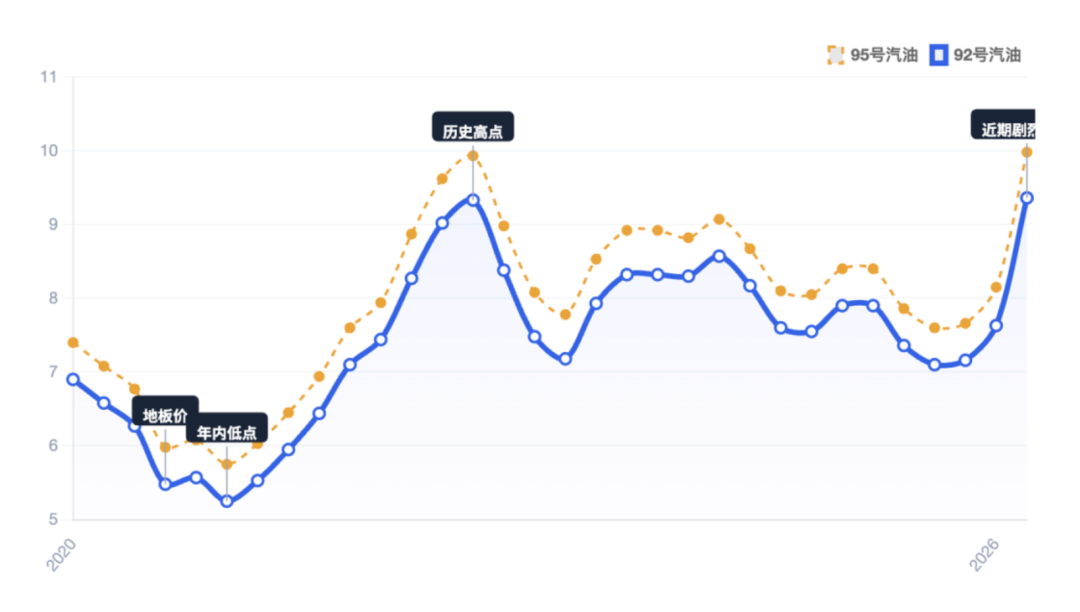
As production plummets, transportation costs have also soared.
Reports indicate that the Bab el-Mandeb Strait is now under threat from Houthi forces, causing shipping insurance premiums to double and the cost of oil tankers rerouting around the Cape of Good Hope to surge by 50%, multiplying the diversion pressure. Even though the International Energy Agency coordinated the release of the largest-ever strategic petroleum reserve of 400 million barrels, it can only cover one-tenth of the daily shortfall.
Chill in the High-End Consumer Market
The supply-demand imbalance has directly triggered a surge in oil prices.
In March this year, the monthly increase in light crude oil futures on the New York market exceeded 50%. On March 31, Brent crude oil futures in London briefly surged past $118 per barrel, with a monthly increase of nearly 60%, even surpassing the increase (Note: ' increase ' should be translated as 'increase' or 'rise' in context, but kept as is here to show it's a term that might need specific context; in a full translation, it would be replaced) during the 1990 Gulf War. The International Energy Agency noted that the speed and magnitude of this oil price surge exceed the impacts of the 2011 Libyan war and the 2022 Russia-Ukraine conflict, representing a sudden supply shock that is difficult to resolve in the short term.
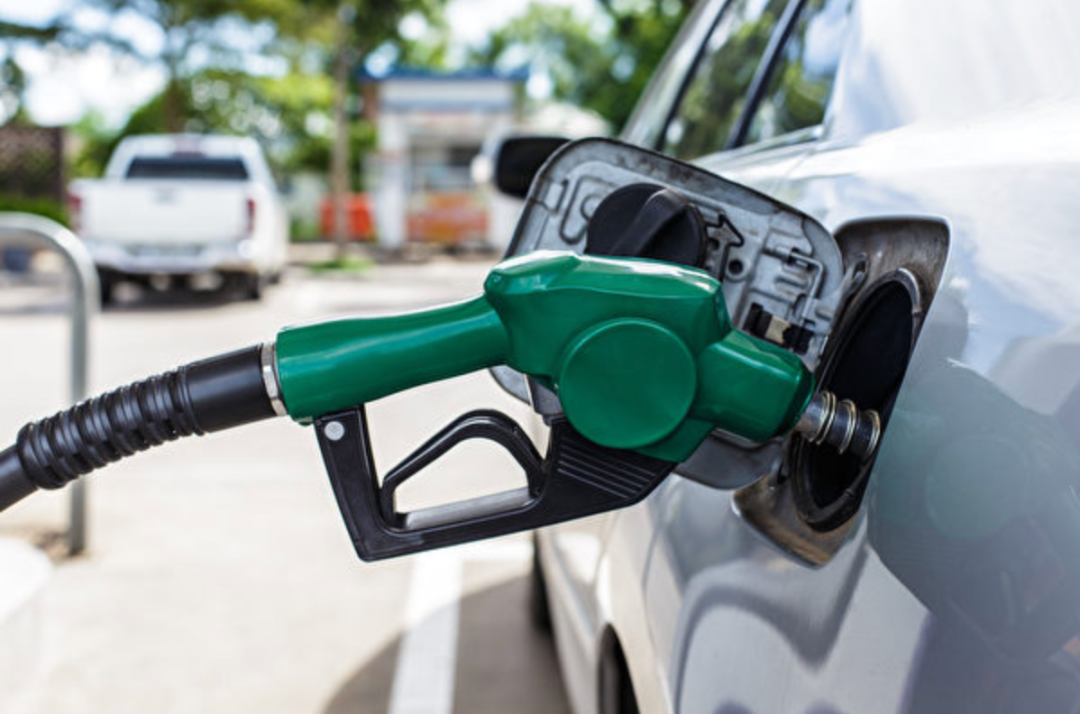
The oil price surge has rapidly spread to major global markets. The average gasoline price in the US has risen to $4.1 per gallon, up 12 cents from last week, and approximately 37% higher since the US and Israel launched strikes against Iran on February 28. The average gasoline price in California has approached $5.92 per gallon, causing significant hardship for local residents.
In Europe, the EU's oil and gas import bill has increased by an additional €6 billion, with Dutch Title Transfer Facility (TTF) gas futures, the benchmark for European natural gas prices, surging nearly 80% in a single month, and Brent crude oil futures in London rising over 40% in the same period.
While ordinary consumers worldwide are grappling with soaring energy prices, the high-end consumer market, which seemingly has a lower correlation with livelihood costs, is also feeling the chill from this oil price storm. As the core global energy production region and a hub of wealth accumulation, the Middle East's turmoil is directly impacting the ultra-luxury car market, which relies on high-net-worth individuals, through multiple channels such as energy price transmission and market confidence fluctuations.
The Middle East has long been a coveted market for ultra-luxury car manufacturers, boasting a large concentration of high-net-worth consumers with a strong demand for top-tier luxury cars and highly profitable margins.
Take Ferrari as an example: in 2025, the brand delivered 626 vehicles to the Middle East, a figure that not only far exceeds the respective performances of traditional luxury car markets like the UK, Switzerland, and France but also underscores the region's pivotal role in its global strategy. However, following the outbreak of the conflict, Ferrari swiftly suspended shipments of most models to the Middle East, causing its stock price to fluctuate sharply, with a decline exceeding 16% over the past month.
Other ultra-luxury car brands have not been spared either.
Rolls-Royce data from 2024 shows that, based on the average value per vehicle, the Middle East was the world's largest market for bespoke Rolls-Royce models. Local consumers' pursuit of ultimate luxury ensures that each bespoke model generates substantial profits for the brand. However, as tensions escalate, foot traffic in local showrooms has significantly decreased, and custom orders that were once in high demand are now being delayed or even canceled.
Brands like Bentley and Lamborghini are also facing similar predicaments, with sales in the Middle East experiencing varying degrees of month-on-month declines. Some dealers have been forced to introduce promotional measures to sustain basic operations.
Industry experts believe that in the short term, the conflict has restricted local travel and mobility, reducing consumers' willingness and ability to visit showrooms and purchase vehicles, directly impacting terminal sales. In the long term, severe financial market volatility has eroded the wealth of high-net-worth individuals in the Middle East, with changes in asset book values making them more cautious in their spending. The weakening of the "wealth effect" has directly suppressed demand for ultra-luxury cars.
US Electric Vehicle Market Takes a Nosedive
In stark contrast to the heated overseas markets, the US electric vehicle (EV) market has plunged into an unprecedented winter.
In 2025, electric vehicles accounted for 9.6% of US automotive sales. However, with the US government's cancellation of the $7,500 electric vehicle tax credit, the market situation has taken a sharp downturn. Over the past three months, the proportion of electric vehicle sales has dropped to 6.5%, the lowest level since early 2022.
The cancellation of the tax credit has struck a blow to the "Achilles' heel" of the electric vehicle market. For a long time, generous subsidies have been a key factor attracting consumers to purchase electric vehicles. Now, without subsidies, the price advantage of electric vehicles has vanished. Electric vehicles, which were already priced higher than gasoline-powered cars, have become even less appealing to consumers.
Specific sales data reveals that in 2025, approximately 1.282 million electric vehicles were sold in the US, a slight decrease of about 2% from 1.301 million in 2024. The fourth quarter saw a cliff-like decline, with only 234,200 units sold, a 36% year-on-year decrease and a 46% month-on-month reduction.
Even industry leader Tesla has not been spared.
Tesla's delivery performance in the first quarter of this year fell short of expectations, marking one of its worst sales quarters in recent years. Data released by Tesla last Thursday showed that global deliveries in the first quarter of 2026 reached 358,000 units, below market expectations of 372,000 units. This marks the second consecutive quarter that Tesla has failed to meet Wall Street's expectations. Although still showing a 6.3% year-on-year increase, if the low base effect from last year's Model Y production halt adjustment is excluded, this quarter's deliveries represent the lowest level since mid-2022.
Affected by the disappointing performance, Tesla's stock price initially fell by 4.6% after the opening of the US stock market, marking the largest intraday decline in nearly two months. Year-to-date, the stock has cumulatively fallen by about 15%, retreating approximately 22% from its historical high in December last year.
Other automakers are also struggling. Ford's electric vehicle sales for the whole year last year were 84,113 units, about half of General Motors' total. Models such as the Mustang Mach-E, E-Transit, and F-150 Lightning all experienced varying degrees of year-on-year declines. Kia's EV series sales were halved by 54%, Mercedes-Benz EQS sales plummeted by 80.3%, and Rivian's pickup truck sales declined by 47%.
In stark contrast, hybrid vehicles are experiencing a resurgence. In 2025, hybrid vehicle sales in the US reached 2 million units, dominating the market. In December, US HEV sales reached 186,080 units, an 8.9% year-on-year increase, with Toyota accounting for 42.0% of the total HEV sales that month.
New Market Trends Amid Dual Pressures
War-driven oil price hikes and tax adjustments impacting the electric vehicle market are fostering new changes in the global energy and automotive markets under dual pressures.
For the energy market, it seems that the era of high oil prices has arrived.
Market analysts predict that if the conflict persists until the end of June, Brent crude oil prices will rise to $200 per barrel, and US West Texas Intermediate (WTI) crude oil prices will reach $180 per barrel. Even if a phased agreement is reached in May, the average Brent crude oil price in the second quarter will reach $114 per barrel, retreating to $95 per barrel in the third quarter.
High oil prices will not only further drive up global inflation but may also trigger a global economic recession. To cope with the energy crisis, countries are accelerating their energy transition efforts. European countries have significantly increased their focus on renewable energy, with solar panel and heat pump sales surging. The US is also increasing its investment in clean energy, attempting to reduce its reliance on traditional oil.
However, the cooling of the electric vehicle market does not signify the end of the electrification trend.
As oil prices rise, US automakers are introducing more price-competitive electric and hybrid vehicle models.
Ford has decisively adjusted its product plans this year, canceling some large-scale pure electric vehicle production plans and instead promoting powertrain diversification. It is reported that Ford will now offer customers hybrid, extended-range electric, and small pure electric models based on a common electric vehicle platform.
According to the plan, by 2030, approximately 50% of Ford's global sales will consist of hybrid, extended-range electric, and pure electric vehicles, a significant increase from 17% in 2025. The next-generation Ford F-150 Lightning will transition to an extended-range electric architecture, and a new platform-based mid-size pure electric pickup truck is planned for production in 2027. These measures are expected to drive sales growth across multiple market segments through a more diverse product lineup.
In addition to optimizing its core automotive business, Ford has begun investing in the high-growth potential battery energy storage business.
Ford plans to convert part of the production capacity of its Kentucky battery plant to energy storage system production, meeting the demands of data centers and grid infrastructure. It plans to invest approximately $2 billion over the next two years to expand this business, aiming to achieve an annual production capacity of at least 20 gigawatt-hours by the end of 2027 and create diversified revenue streams.
In conclusion, the current war and taxation, like two powerful forces, are reshaping the global energy and automotive market landscape.
In this transformation, companies need to promptly adjust their strategies to adapt to market changes, while consumers must make more rational choices based on their needs. For governments worldwide, balancing the relationships between energy security, economic development, and environmental protection will be a crucial challenge in the future.
Note: Some images are sourced from the internet. If there is any infringement, please contact us for removal.
-END-
-
![]()
Automotive Market News: Ministry of Industry and Information Technology Takes Action to Investigate Safety Hazards in New Energy Vehicles
-
![]()
Beihang Professor Spearheads Team to Deploy Autonomous Driving in Mines, Achieving 500 Million Yuan in Annual Revenue, Now Eyeing Hong Kong IPO
-
![]()
Is it a false proposition to sell extended-range and pure electric vehicles well simultaneously?
-
![]()
AI Hasn’t Even Fully Integrated into Smartphones—Now They’re Trying to Put It in Cars?
-
HarmonyOS Steps into Manufacturing! China’s Pioneering Innovation Hub Lands in Shenzhen, with Robots First in Line for ‘Integration’, Followed by Drones and Autonomous Vehicles
-
![]()
Don’t Blindly Hand Your Documents Over to AI! Research Reveals Even Leading Models Secretly Modify Content
-
![]()
Inside Look at 'RedSkill': Is Xiaohongshu Emerging as the Premier AI App Store?
-
![]()
The Ultimate Showdown in Handheld Smart Imaging: DJI's Ecosystem Moat and Insta360's Risk of Falling Behind