Has the Price War Ceased, Paving the Way for New Energy Vehicle Price Hikes?
 04/08 2026
 520
520
Fueled by the triple whammy of rebounding battery raw material prices, constrained chip supplies, and subsidy reductions, the current wave of widespread, cross-brand, and intense price increases for new energy vehicles is anticipated to escalate further.
Those still engrossed in the automotive industry's internal competition and price wars should snap out of it. The discounts and promotions you assumed were permanent are now a thing of the past, with prices on the rise across the end market.
On March 19th, the pre-sale price of the new Xiaomi SU7 model was unveiled, revealing a direct price hike of 14,000 yuan compared to its predecessor. Lei Jun acknowledged that material costs alone had surged by nearly 20,000 yuan, and this price increase was already a concession, seeking user understanding.
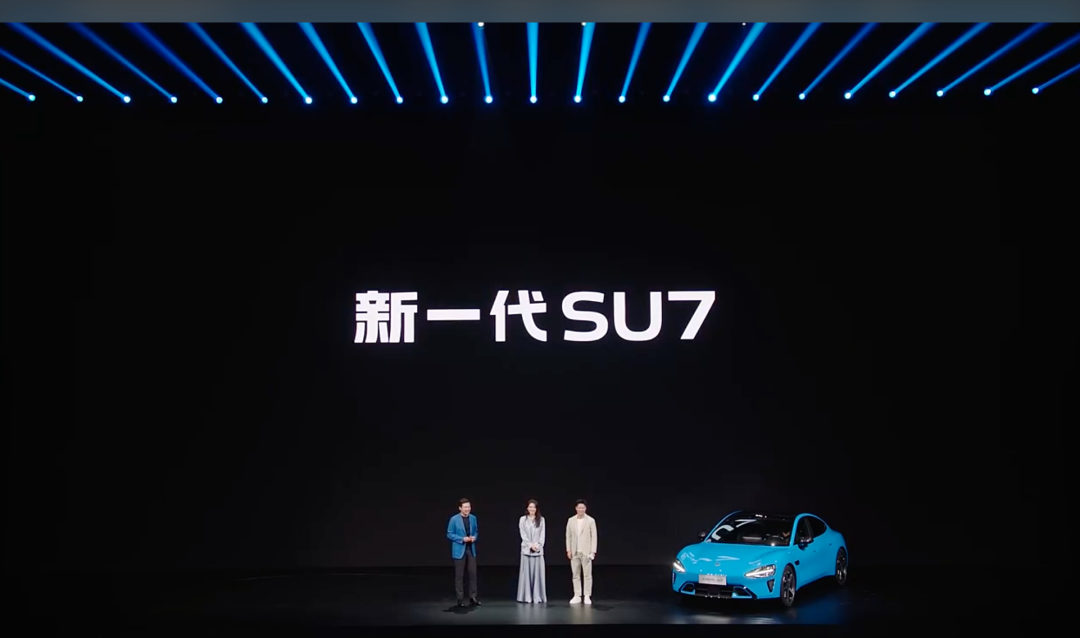
The majority of companies are now discreetly raising prices, with previous discounts and subsidies largely vanishing, replaced by financial policies such as seven-year low-interest loans.
Compared to the price hikes four years ago, this round appears relatively muted but harbors significant undercurrents.
On March 10th and 15th, 2022, Tesla raised prices twice within five days for its Model 3 Performance and Model Y Long-Range and Performance versions. The cumulative price increase for the Model 3 Performance and Model Y Long-Range versions over the two hikes was 28,000 yuan, while the Model Y Performance version saw a combined increase of 30,000 yuan.
Initiated by Tesla, over 20 new energy vehicle companies announced price hikes, involving nearly 40 models, with increases ranging from 1% to 10%, amounting to thousands or even tens of thousands of yuan.
In official price hike announcements, several key phrases were frequently cited: 'supply chain tensions, significant increases in raw material prices, and subsidy reductions.'
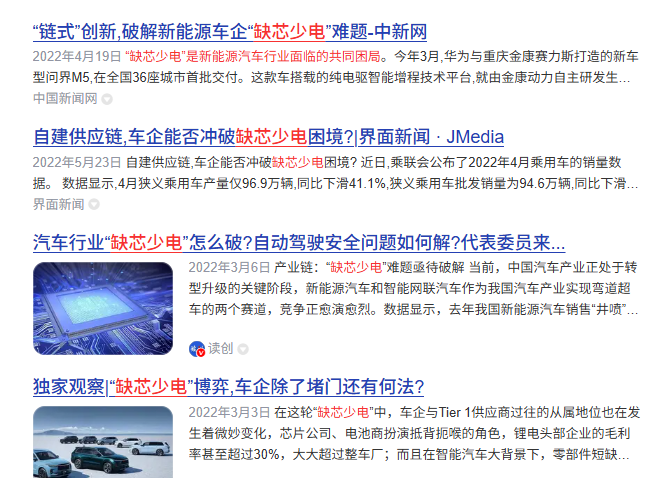
Four years ago, media reports were rife with discussions about how the 'chip and electricity shortage' was hampering the development of the new energy vehicle industry. It's surprising to see history repeating itself four years later.
Lithium Carbonate Prices Surge Again
Since the second half of 2025, the price of lithium carbonate has been on an upward trajectory. In June 2025, battery-grade lithium carbonate was priced at 60,000 yuan per ton, but by December, it had approached 120,000 yuan per ton.
Zimbabwe, the world's fourth-largest lithium producer, announced in February 2026 the suspension of all exports of raw ore and lithium concentrate, a move that once again triggered a rapid surge in domestic lithium carbonate prices.
As of April 2026, the price of battery-grade lithium carbonate has stabilized near 150,000 yuan per ton. As of April 3rd, the quoted price for battery-grade lithium carbonate was 158,000 yuan per ton, representing an increase of over 1.2 times compared to the price level of 60,000-70,000 yuan in the second half of 2025.
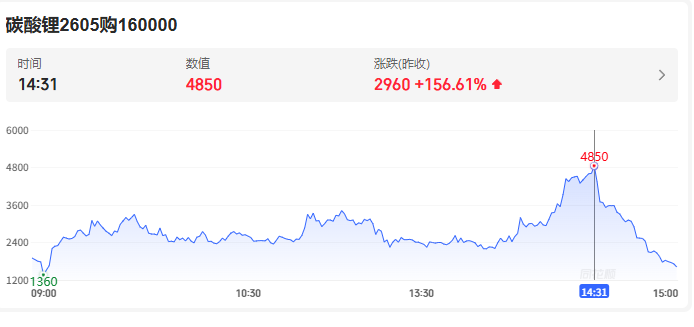
For every 10,000 yuan increase in the price of lithium carbonate per ton, battery costs rise by approximately 300 yuan. This means that compared to last year, battery costs alone have increased by 3,000-4,000 yuan. This does not include the cost increases in cathode materials such as cobalt, nickel, and manganese, as well as auxiliary materials like graphite anodes, electrolytes, and separators.
Since the beginning of this year, several leading new energy companies, including EVE Energy, Chuangming New Energy, BAK Battery, and Tianneng Group, have successively announced price hikes.
The unexpected price increases in upstream storage, power batteries, and copper and aluminum resources, combined with the challenging domestic automotive consumption environment, have put automakers to the cost test. Having weathered a supply chain crisis six years ago, automakers were somewhat prepared for the raw material price hikes. Moreover, there is a certain buffer in the price transmission of lithium carbonate, and automakers have some proactive adjustment capabilities.
Some analysts believe that from the perspective of battery production, the general increase in material prices will inevitably force battery prices to rise. However, from the demand side, the conclusion may be the opposite.
Mo Ke, the founder of Real Lithium Research, stated: 'Product prices are determined by both supply and demand. If the demand side (buyers) does not accept the price hikes proposed by battery manufacturers as the supply side, then the price increases will be difficult to implement. Moreover, from a bargaining power perspective, buyers usually have stronger voices, while battery manufacturers are relatively in a weaker position.'
If most automakers were somewhat prepared for the battery cost increases and passed on the raw material price hikes to battery manufacturers, then the current round of chip price increases has caught automakers off guard.
Is the Automotive Industry Facing Another Chip Crisis?
Since the beginning of this year, the sudden surge in artificial intelligence has been accompanied by an explosion in computing power demand. The global supply chain for memory chips has been impacted by a 'siphon effect,' leading to soaring prices for automotive-grade DRAM memory and NAND flash memory, exacerbating the supply-demand imbalance.
The high profits in the AI industry have prompted chip manufacturers to switch production, squeezing the production capacity for automotive-grade chips. Li Bin of NIO bluntly stated that 'the automotive industry simply cannot compete with AI in the battle for chips.'
According to TrendForce's monitoring data, in the first quarter of 2026, automotive-grade DDR4 memory prices cumulatively increased by over 150%, while automotive-grade DDR5 spot prices surged by over 300%, with long-term agreement contract prices rising by 70% to 100%. The DRAM cost for a mid-sized intelligent electric vehicle directly jumped from 700 yuan to 2,000 yuan, with the cost of a single chip contributing an additional 1,000-3,000 yuan per vehicle.
An insider from an automaker once revealed to the media that in the fourth quarter of 2025, he visited Samsung's headquarters in South Korea in hopes of securing DRAM supplies ahead of others. 'At that time, the hotel rooms on my floor were all occupied by people from AI giants like Google. They were offering prices far exceeding what automakers could compete with,' he said.
On March 20th, Chery announced an official price increase of 5,000 yuan for the high-end Intelligent Supreme version of the Exeed ET5, bringing the new price to 164,900 yuan, with chip price hikes being the core reason. The second-quarter new model of the Zeekr 007 GT is expected to see a price increase of 5,000-8,000 yuan due to the use of Sol's intelligent driving chips that require DDR5X memory with tight production capacity.
The latest industry research reports from HSBC and UBS indicate that for memory chips alone, the industry average cost per vehicle has increased by 1,000 yuan to 3,000 yuan, with high-end intelligent models seeing storage cost increases of 3,000 yuan to 5,000 yuan. Li Bin of NIO, during the first-quarter earnings call, and Lei Jun, at the Xiaomi SU7 renewal launch event, both publicly admitted that memory price hikes have become the largest and most rigid cost pressure for automakers in 2026.
An AI server uses eight times the amount of DRAM as an ordinary server, and the gross profit margin for HBM (High Bandwidth Memory) chips is as high as 65%. In contrast, automotive-grade memory chips have a gross profit margin of less than 30%. For global mainstream wafer foundries like TSMC and Samsung, prioritizing supplies to high-margin AI customers is an inevitable choice.
Currently, leading wafer foundries in the industry have allocated 70% of their advanced process production capacity to AI chip customers, leaving the automotive industry to scramble for the remaining scraps at the end of the capacity allocation chain, unable to even secure full basic production capacity, let alone have any bargaining power in the face of price hikes.
Some may wonder, haven't automakers been developing their own chips in recent years? Why are they still facing such 'bottleneck' situations?
In fact, the range of chip categories used in automobiles is extremely diverse, from power semiconductors to MCU chips, from sensor chips to cockpit SoCs, from memory chips to communication chips, from small-computing-power ECUs to large-computing-power AI chips, and so on.
This round of price hikes primarily involves automotive-grade memory chips, similar to computer memory. A few years ago, their prices were relatively low, and self-development would have been too costly, akin to using a cannon to shoot mosquitoes, so procurement was the main approach. No one expected this round of price hikes to be so rapid and severe.
Especially for new energy vehicles with high levels of intelligence, the price increases in memory chips do represent a significant cost increase.
Price hikes are somewhat expected. Additionally, starting from 2026, the purchase tax exemption for new energy vehicles has been adjusted from full exemption to a 50% reduction, with the maximum exemption amount reduced to 15,000 yuan. The final price of a 200,000 yuan vehicle has directly increased by approximately 9,000 yuan.
From the beginning of the year until the Chinese New Year, automakers have essentially been covering these subsidies out of their own pockets until the end of March. In April, some regions still have local subsidies to support, but the additional costs are largely borne by consumers.
Compounded by the triple factors of rebounding battery raw material prices, constrained chip supplies, and subsidy reductions, the current wave of widespread, cross-brand, and intense price increases for new energy vehicles is anticipated to escalate further.
However, from another perspective, automakers are no longer prioritizing volume over price but are shifting towards value restoration and profit recovery. The market is moving from 'wild growth' into a new phase of 'rational competition and cooperation,' which may not be a bad thing after all.
Note: Some images are sourced from the internet. If there is any infringement, please contact us for removal.
-END-
-
![]()
Automotive Market News: Ministry of Industry and Information Technology Takes Action to Investigate Safety Hazards in New Energy Vehicles
-
![]()
Beihang Professor Spearheads Team to Deploy Autonomous Driving in Mines, Achieving 500 Million Yuan in Annual Revenue, Now Eyeing Hong Kong IPO
-
![]()
Is it a false proposition to sell extended-range and pure electric vehicles well simultaneously?
-
![]()
AI Hasn’t Even Fully Integrated into Smartphones—Now They’re Trying to Put It in Cars?
-
HarmonyOS Steps into Manufacturing! China’s Pioneering Innovation Hub Lands in Shenzhen, with Robots First in Line for ‘Integration’, Followed by Drones and Autonomous Vehicles
-
![]()
Don’t Blindly Hand Your Documents Over to AI! Research Reveals Even Leading Models Secretly Modify Content
-
![]()
Inside Look at 'RedSkill': Is Xiaohongshu Emerging as the Premier AI App Store?
-
![]()
The Ultimate Showdown in Handheld Smart Imaging: DJI's Ecosystem Moat and Insta360's Risk of Falling Behind