Seres, also a diligent worker
 04/08 2026
 534
534
Layout | Xiaoxi
Seres increasingly resembles a diligent worker clocking in early and leaving late, the kind of conscientious 'office worker.'
In late March, Seres Group released its 2025 annual report, delivering a perplexing set of results: both revenue and gross profit margin increased, yet net profit stagnated.
In 2025, Seres's annual operating revenue reached RMB 165.054 billion, up 13.69% year-on-year, hitting a record high. However, net profit attributable to shareholders of the listed company was only RMB 5.957 billion, a mere 0.18% increase year-on-year—essentially standing still.
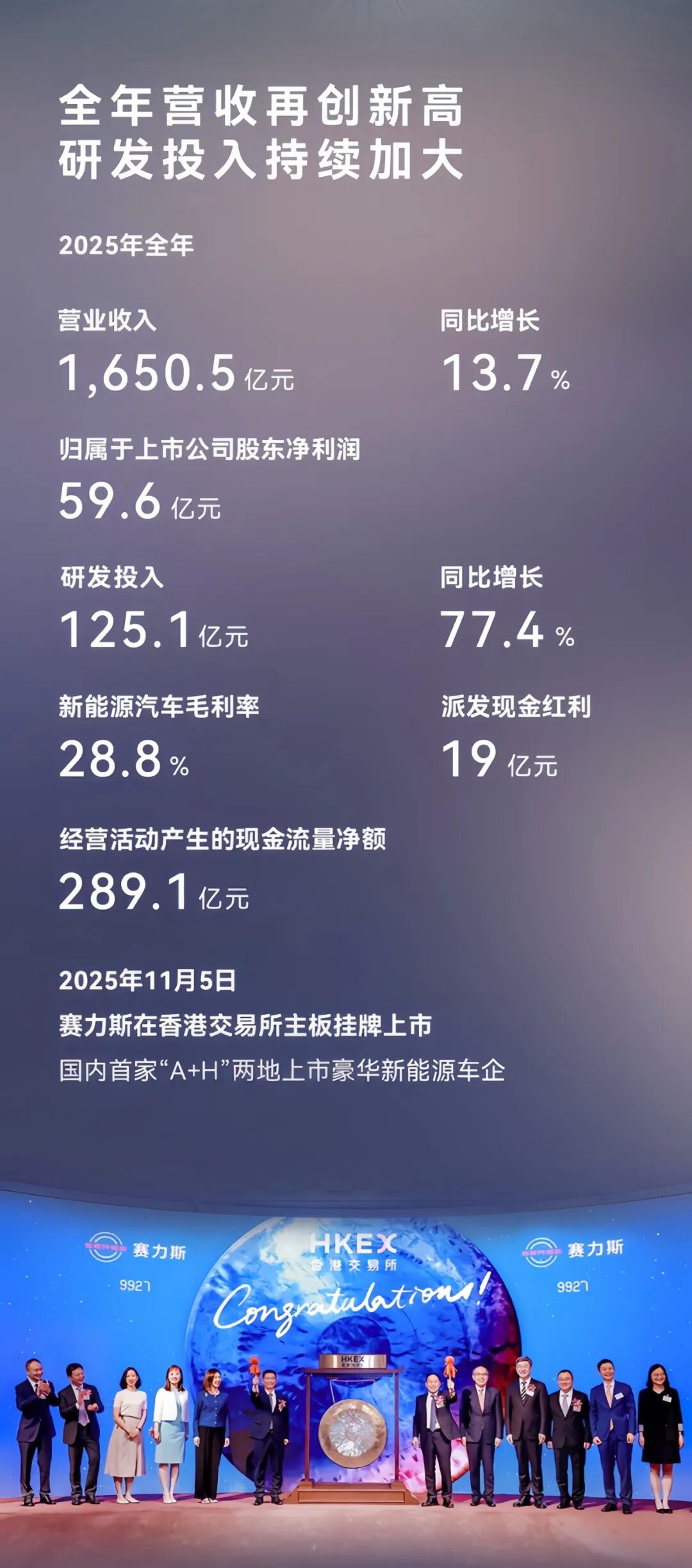
Analyzing its gross profit margin further, Seres's gross profit margin for new energy vehicles reached 28.78%, up 2.55 percentage points from 2024. The average transaction price of the AITO brand rose from RMB 377,000 to RMB 391,000. Logically, such increases in both volume and price should have driven significant profit growth, but the opposite occurred.
More critically, excluding non-recurring items such as government subsidies, net profit after deducting non-recurring items was RMB 5.136 billion, down 7.84% year-on-year. This indicates that Seres's core business profitability has weakened rather than strengthened.
Where did Seres's profits go?
| Profits Swallowed by Related Party Transactions |
Financial details reveal that Seres's combined operating expenses increased by over RMB 7.1 billion year-on-year: selling expenses reached RMB 24.19 billion, up 26.12%; administrative expenses hit RMB 4.787 billion, up 34.96%; and R&D expenses amounted to RMB 7.954 billion, up 42.41%. Among these, R&D expenses alone increased by RMB 2.37 billion, equivalent to an annual salary investment of approximately RMB 840,000 per additional R&D personnel.
However, the most eye-catching aspect is Seres's related party transactions with Huawei.
In 2025, Seres's related party transactions with Shenzhen Yinwang Intelligent Technology Co., Ltd. for procurement of goods and acceptance of services reached RMB 22.335 billion, 3.74 times Seres's annual net profit.
Shenzhen Yinwang, 80% controlled by Huawei, is the main entity after Huawei's automotive BU became independently operated.
On January 16, 2024, Huawei registered Shenzhen Yinwang, spinning off its original Intelligent Automotive Solutions Business Unit (Auto BU). On March 31, 2025, Yinwang completed industrial and commercial registration changes, with Huawei's stake reducing from 100% to 80%, while Avatr Technology and Seres Auto each held 10%. Xu Zhijun serves as chairman, Yu Chengdong and Chang'an Automobile Chairman Zhu Huarong as vice chairmen, and Seres Chairman Zhang Xinghai as a director.
According to Seres's announcement, the RMB 22.335 billion in related procurement primarily includes Huawei's HarmonyOS cockpit system, Qiankun Intelligent Driving ADS system, intelligent driving sensors (such as LiDAR and cameras), and domain controllers. Based on AITO's annual sales of 426,000 units, this equates to Seres paying approximately RMB 52,400 in 'technology usage fees' to Huawei per vehicle sold.
This is not the full cost.
Under the Harmony Intelligent Mobility cooperation agreement, Huawei charges approximately 8% of the vehicle's selling price for channel and marketing comprehensive service fees (including about 2% for brand marketing and technology empowerment). Based on AITO's average transaction price of RMB 391,000, approximately RMB 31,300 per vehicle goes toward channel service fees. Combined with the RMB 52,400 in Huawei technology procurement costs per vehicle, Seres pays approximately RMB 83,700 to the Huawei ecosystem per AITO sold, accounting for about 21.4% of the vehicle's transaction price.
This means that in the smart car value chain, Huawei occupies the most core and highest value-added segments (intelligent driving, intelligent cockpit, cloud services), while Seres primarily assumes manufacturing, some channel, and branding roles. This explains why Seres achieved RMB 165 billion in revenue but only RMB 5.9 billion in net profit—the majority of profits were taken by Huawei through related party transactions.
| Diluted Huawei Halo |
Seres's predicament (challenges) extend beyond profit compression; Huawei's halo effect is now covering more automakers, gradually diluting its impact.
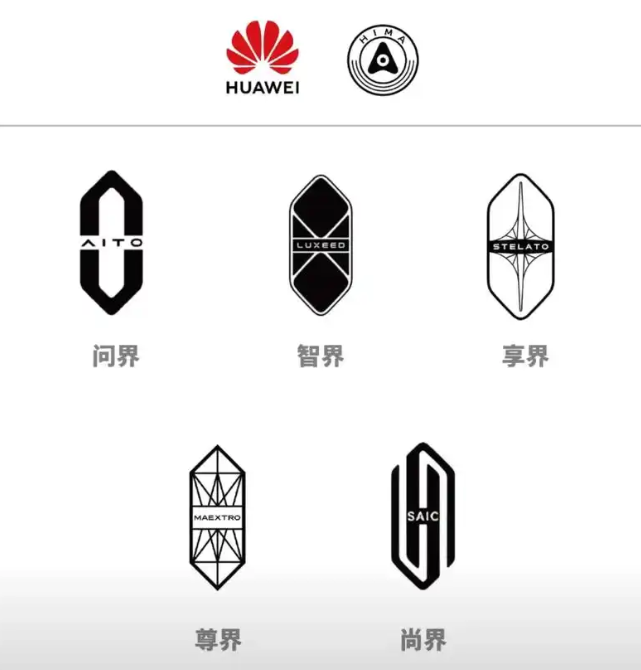
Harmony Intelligent Mobility has expanded from the 'Four Realms' to the 'Five Realms': AITO (Seres), Luxeed (Chery), STELATO (BAIC), MAEXTRO (JAC), and SHINE (SAIC). In 2025, the 'Five Realms' under Harmony Intelligent Mobility sold approximately 589,100 units (according to Huawei's financial report), with AITO accounting for over 70% at 426,000 units, while the remaining 'Four Realms' combined sold over 160,000 units.
More importantly, Huawei has introduced the 'Two Realms' (Hua Jing, Qi Jing) under the HI Plus model, deeply participating in joint definition and R&D while leaving brand ownership and sales dominance to automakers. This means Huawei's partner automakers have expanded from the deeply integrated Smart Selection model to the broader HI model, increasing pressure on resource allocation.
The emergence of Hua Jing is particularly noteworthy.
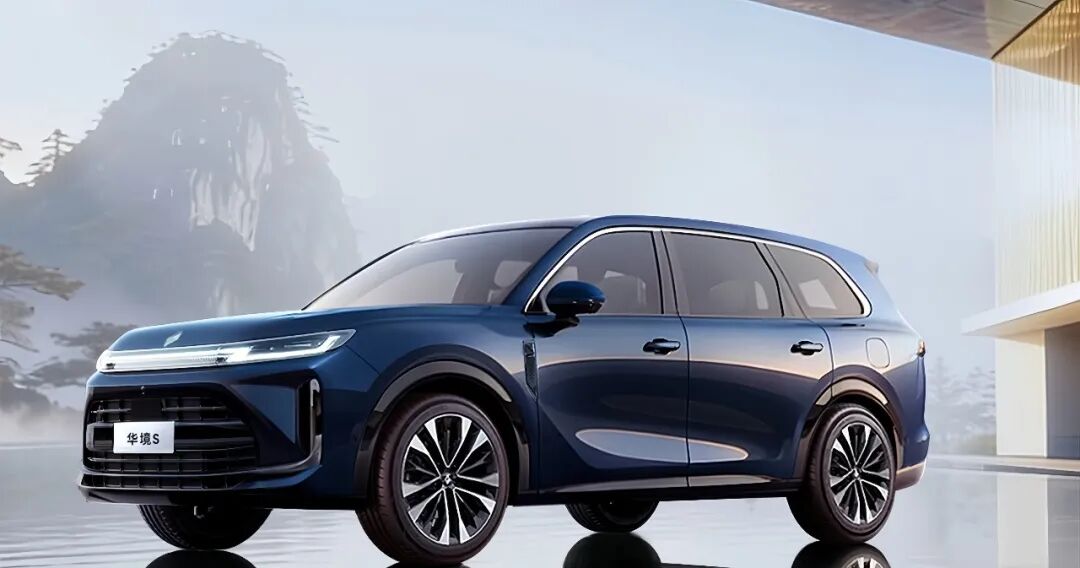
Hua Jing, a brand launched by Huawei and SAIC-GM-Wuling, features the same Huawei Qiankun ADS 4 and HarmonyOS Cockpit 5 technologies as the AITO M9 but is priced between RMB 200,000–250,000, far lower than the AITO M9's RMB 500,000 price range. This case clearly shows that Huawei's technologies are being 'democratized,' and AITO's technological advantages are being rapidly replicated.
How long can AITO sustain its success in the premium market? In 2025, the AITO M9 delivered over 110,000 units, securing the top sales spot for two consecutive years among models priced above RMB 500,000. The AITO M8 delivered over 150,000 units, ranking first in the RMB 400,000 segment. However, these achievements resulted from Huawei concentrating resources to create a 'showcase.' As Huawei partners with more brands, whether AITO can continue receiving preferential resource allocation has become a focal point of market skepticism.
Facing the risk of diluted Huawei resources, Seres initially chose equity binding. In August 2024, Seres announced that its wholly-owned subsidiary, Seres Auto, planned to acquire a 10% stake in Shenzhen Yinwang for RMB 11.5 billion in cash, attempting to upgrade from a 'partner' to a 'stakeholder.' However, the 10% stake represents more of a 'financial investment' than 'strategic control,' as Huawei still holds an 80% absolute controlling stake, retaining major decision-making power.
Next came reducing financial risks. On November 5, 2025, Seres listed on the main board of the Hong Kong Stock Exchange, becoming the first luxury new energy vehicle manufacturer to achieve dual 'A+H' listings, raising approximately HKD 14.098 billion in net proceeds. As a result, the company's year-end attributable owners' equity surged to RMB 40.918 billion, up 233.64% from the previous year-end; the asset-liability ratio plummeted from 87.38% to 70.91%, significantly enhancing financial stability.
This year, Seres has focused more on its core business. In February 2026, Seres announced it would divest assets related to Landian Auto, further concentrating on the AITO brand. Financial reports show that AITO contributed over 90% of Seres's revenue, with the company shifting to a single-engine growth model centered on AITO.
But can these measures alleviate Seres's anxieties?
Seres mentioned its new 'intelligent robot' business multiple times in its 2025 annual report, stating efforts to 'steadily advance the intelligent robot business' and 'conduct in-depth collaboration in industries such as intelligent robots to broaden technological capabilities and industrial applications.' In October 2025, Seres's subsidiary, Chongqing Phoenix Technology Co., Ltd., signed a Framework Agreement on Embodied Intelligence Business Cooperation with Beijing Volcano Engine Technology Co., Ltd., a subsidiary of ByteDance.
However, the intelligent robot business remains in the 'technological reserve' stage, with unclear business and profit models, making it difficult to significantly bolster Seres's position in the short term.
| Survival Test in the Final Round |
China's new energy vehicle industry has entered a 'knockout' phase. In 2023, China had over 100 new energy vehicle brands, but by 2026, fewer than 20 are expected to survive. During this industry consolidation, the 'Huawei factor' has become a crucial source of brand premium.
Seres's choice to partner with Huawei essentially leverages Huawei's channels and technologies to rapidly capture market share. However, this leverage comes at a cost: Huawei's open technology sharing across multiple automakers inevitably leads to homogenized competition, ultimately hinging on automakers' own operational efficiency and cost control capabilities.
Surviving the final round remains challenging for Seres.
Brands like Hua Jing, equipped with the same Huawei technologies but at lower prices, leave Seres with two options: maintain a premium positioning through product differentiation and brand premium or launch lower-priced products to engage in price wars, which would further damage its brand image.
In January-February 2026, AITO's delivery volume declined by 18.7% year-on-year, perhaps signaling a turning point. Seres stands at a delicate inflection point: balancing scale expansion with profitability pressures while contending with slowing growth and diluted Huawei resources.
With intense domestic competition, can Seres find opportunities abroad? Huawei, sanctioned by the U.S., faces barriers such as data security reviews and technology export controls for AITO models in overseas markets. Seres emphasizes overseas layout (global layout , global layout ) in its financial report but provides no specific overseas sales data.
The surface prosperity of AITO's premium positioning masks Seres's survival dilemma at the 'bottom of the smile curve' within Huawei's ecosystem. Despite record-high revenue and industry-leading gross profit margins, net profit growth has nearly stagnated, fundamentally due to an unfair value chain distribution—Huawei takes the majority of technological premiums through RMB 22.3 billion in related party transactions, while Seres bears high marketing and manufacturing costs.
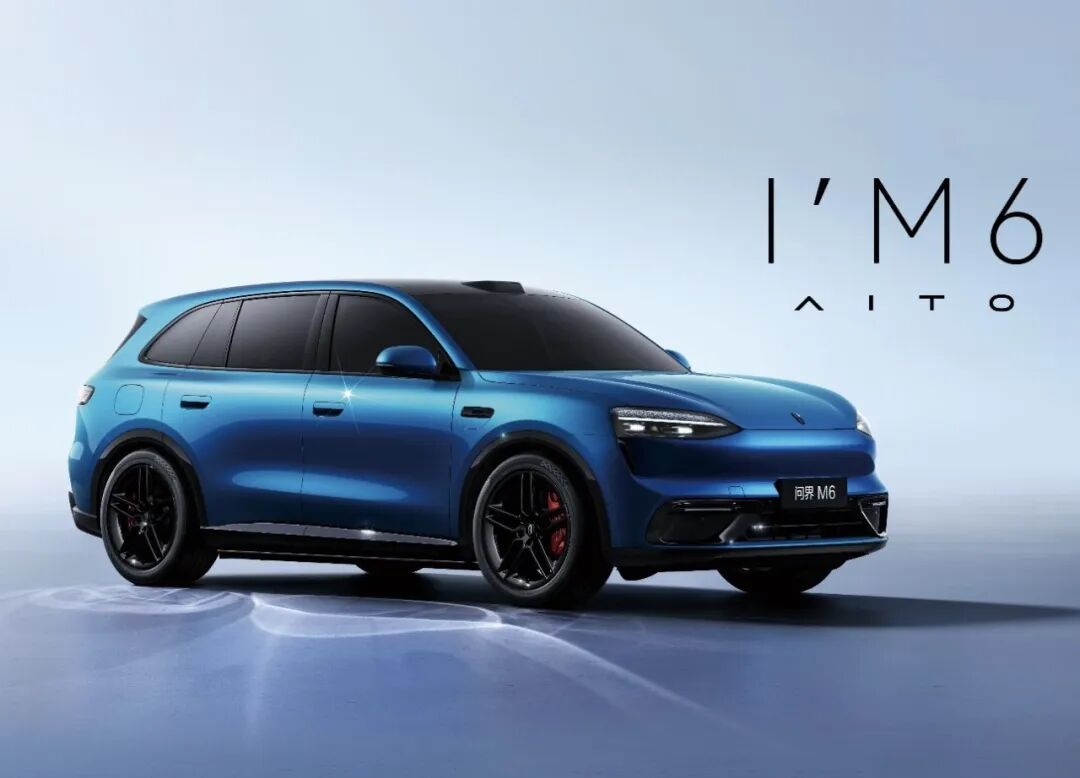
The success of the AITO brand owes more to Huawei's halo effect than to Seres's own brand value and technological capabilities. Once Huawei's halo fades, Seres's premium positioning will lose its foundation.
Currently, Seres has invested RMB 12.51 billion in R&D, yet its core technologies remain highly dependent on Huawei. How can Seres transition from being Huawei's 'contract manufacturer' to a 'technology partner'?
| Conclusion |
In 2025, Seres invested RMB 12.51 billion in R&D, up 77.4% year-on-year, with R&D personnel reaching 9,019, accounting for 41.1% of the total workforce. The company launched technological achievements such as the Magic Cube Technology Platform 2.0 and Super Extended-Range systems, completing development of the fifth-generation 2.0T super extended-range technology. Its extended-range engine business holds a 37.5% market share, ranking first in China.
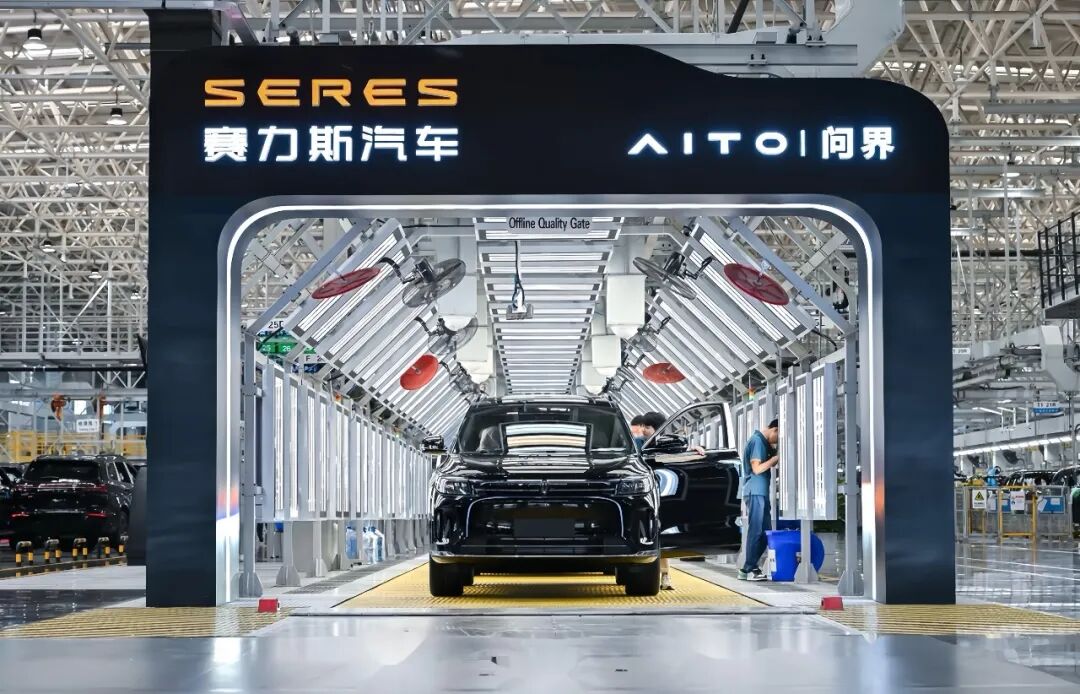
Additionally, Seres's super factory has achieved 100% automation in key processes, with world-leading super integrated die-casting technology reducing 222 components to just 10. This may represent Seres's opportunity—only by enhancing its operational efficiency and cost control capabilities can it outpace its 'junior peers.'
However, time is running out. The 'knockout phase' of the smart car industry has begun, and whether Seres can evolve from 'Huawei's AITO' to 'Seres's AITO' depends on its ability to establish core competitiveness.
For Seres, the 2025 financial report is just the beginning; the real test lies ahead.
Images sourced from the internet. Removal upon request.
-
![]()
Automotive Market News: Ministry of Industry and Information Technology Takes Action to Investigate Safety Hazards in New Energy Vehicles
-
![]()
Beihang Professor Spearheads Team to Deploy Autonomous Driving in Mines, Achieving 500 Million Yuan in Annual Revenue, Now Eyeing Hong Kong IPO
-
![]()
Is it a false proposition to sell extended-range and pure electric vehicles well simultaneously?
-
![]()
AI Hasn’t Even Fully Integrated into Smartphones—Now They’re Trying to Put It in Cars?
-
HarmonyOS Steps into Manufacturing! China’s Pioneering Innovation Hub Lands in Shenzhen, with Robots First in Line for ‘Integration’, Followed by Drones and Autonomous Vehicles
-
![]()
Don’t Blindly Hand Your Documents Over to AI! Research Reveals Even Leading Models Secretly Modify Content
-
![]()
Inside Look at 'RedSkill': Is Xiaohongshu Emerging as the Premier AI App Store?
-
![]()
The Ultimate Showdown in Handheld Smart Imaging: DJI's Ecosystem Moat and Insta360's Risk of Falling Behind