LYNK & CO Accelerates Progress: Geely and Volvo Forge Ahead into a New Era of Integration
 04/08 2026
 612
612
Introduction | Lead
On March 31, during Volvo Cars' Annual General Meeting, Li Shufu, Chairman of both Geely Holding Group and Volvo Cars, made a candid statement: "With intensifying competition, Volvo Cars' sole path to survival is through collaboration with other automotive brands under Geely." This sentiment echoes Geely's prior announcement that Volvo Cars will assume full control of LYNK & CO's commercial operations and brand management in Europe. In a stark departure from the initial acquisition phase, where Geely adopted a hands-off approach, the future heralds a deeper integration between Geely and Volvo Cars.
This article is produced by Heyan Yueche Studio
Written by Zhang Dachuan
Edited by He Zi
Full text: 3,836 characters
Reading time: 5 minutes
Recently, Geely Auto announced the signing of a non-binding memorandum of understanding with Volvo Cars. According to this memorandum, Volvo Cars will assume full responsibility for LYNK & CO's commercial operations and brand management in Europe. Notably, this collaboration does not entail any alterations to the equity structures of either entity. LYNK & CO will persist as a pivotal member of the Geely Auto Group, preserving its brand autonomy and independently managing core operations, including product design, R&D, and global compliance certifications.
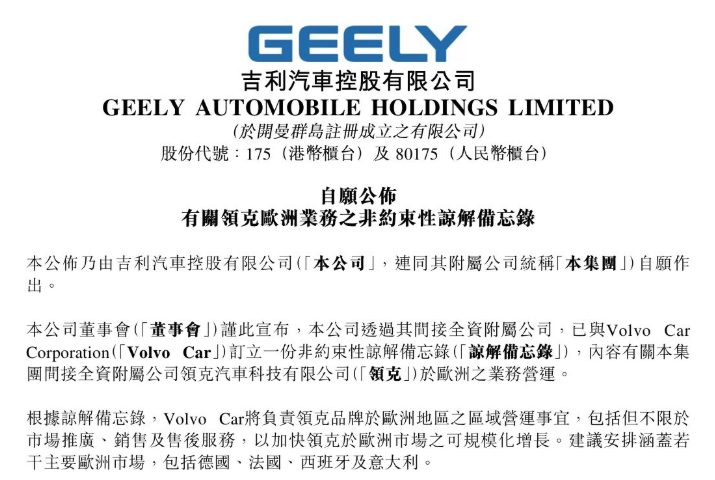
△ LYNK & CO Aligns Its European Future with Volvo
LYNK & CO Urgently Seeks Breakthrough in European Market
In 2026, Geely is set to follow in the footsteps of BYD and Chery, gradually shifting its business focus towards overseas markets. As a brand co-created by Geely and Volvo, LYNK & CO naturally shoulders the responsibility of spearheading Geely Group's international expansion.
In fact, LYNK & CO made its European debut in 2020, launching sales in the Netherlands, Sweden, Germany, and Belgium. Initially, LYNK & CO established Club experience stores in select major European cities, seemingly prioritizing brand presence over immediate vehicle sales. Its European operations were exploratory and experimental in nature. Consequently, by 2025, LYNK & CO's annual new vehicle sales in Europe hovered around 11,000 units, rendering it a relatively obscure and marginalized brand in the European automotive landscape. In contrast, SAIC's MG brand sold approximately 300,000 vehicles in Europe last year, successfully cementing its position among mainstream European brands. It's noteworthy that MG's European sales stood at just 50,000 units in 2021. Meanwhile, BYD's European sales reached 186,000 units last year, marking a year-on-year increase of 276%.
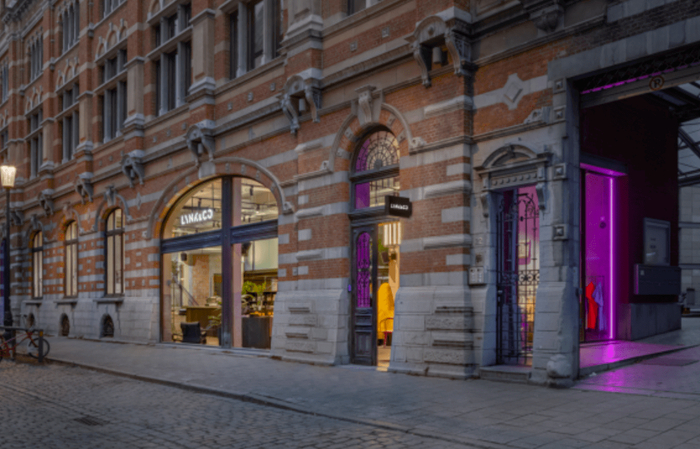
△ LYNK & CO Aims to Break Through in the European Market
Currently, LYNK & CO offers three primary models in the European market: the plug-in hybrid SUV LYNK & CO 01, the pure electric SUV LYNK & CO 02, and the premium plug-in hybrid SUV LYNK & CO 08. In terms of product strength, all three models are highly competitive, with no discernible weaknesses, covering both plug-in hybrid and pure electric segments, which are currently in vogue. Logically, LYNK & CO's sales should not be sluggish. Given the absence of product-related issues, the primary impediment to LYNK & CO's sales success in Europe likely lies in its sales channels.
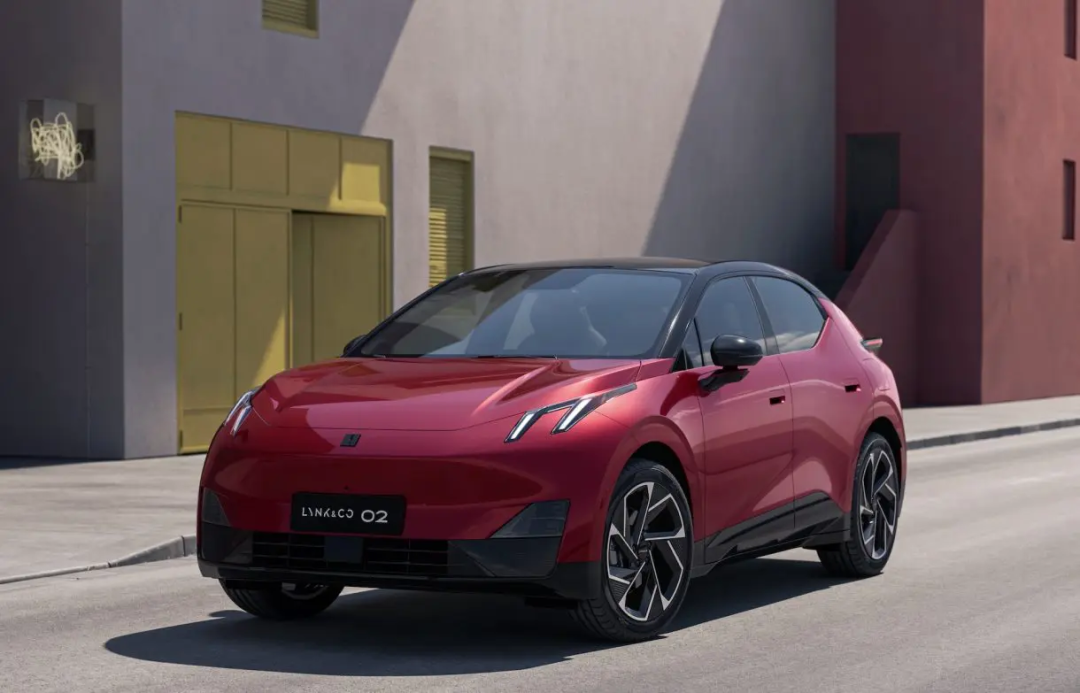
△ In terms of product strength, LYNK & CO's three European models are highly competitive, with no apparent flaws.
Upon its European market entry, LYNK & CO adopted a 'subscription model.' This model, wherein users pay a monthly fee for vehicle use and related services, has significantly hindered LYNK & CO's market expansion compared to MG, which entered Europe around the same time. While the subscription model appears innovative and lowers the entry barrier for users, it also entails a significant drawback: high operational costs for the manufacturer, particularly tying up substantial resources from the OEM. This has slowed down LYNK & CO's rollout of 4S stores in Europe. For a non-traditional European automotive brand like LYNK & CO, which already suffers from relatively low brand awareness among consumers, the absence of an extensive offline sales network makes it challenging to drive sales.
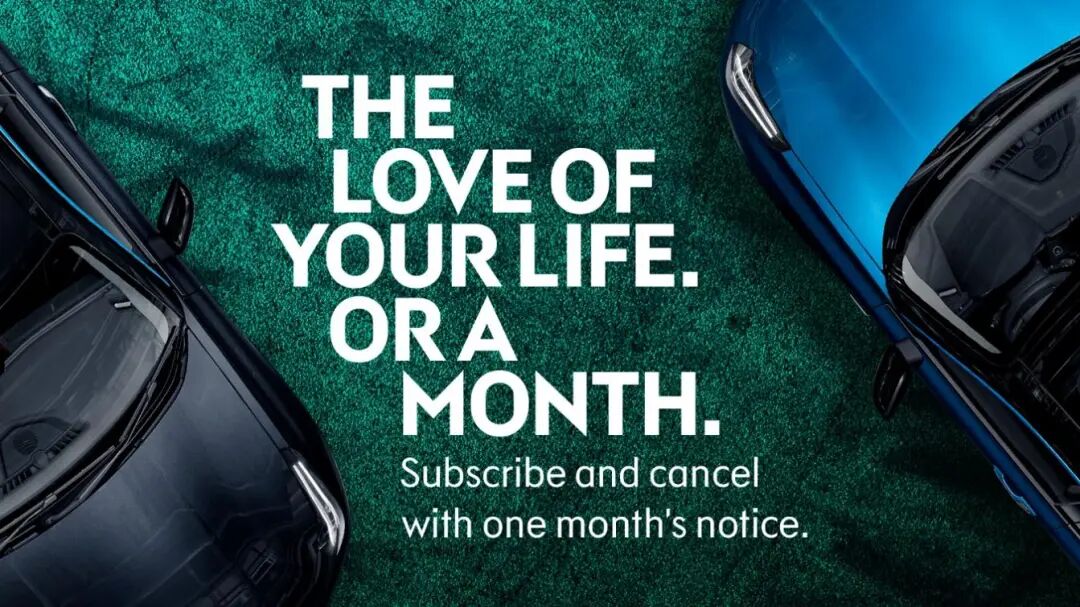
△ LYNK & CO Urgently Needs to Revisit Its Previous 'Subscription Model'
Taking SAIC MG as an example, its success in the European market stems not only from the launch of high-value-for-money models like the MG4 and MG ZS but also, more critically, from MG's establishment of a vast dealer network spanning 34 European countries and markets, boasting over 1,300 dealers. BYD, on the other hand, not only demonstrates robust competitiveness in the new energy vehicle sector but also adopts an aggressive approach in sales network expansion. By the end of 2025, BYD had approximately 1,000 sales outlets in Europe and plans to increase this number to 2,000 by 2026. Faced with such formidable competition, LYNK & CO has been compelled to reevaluate its strategy, transitioning from the 'subscription model' to a more traditional dealer model.
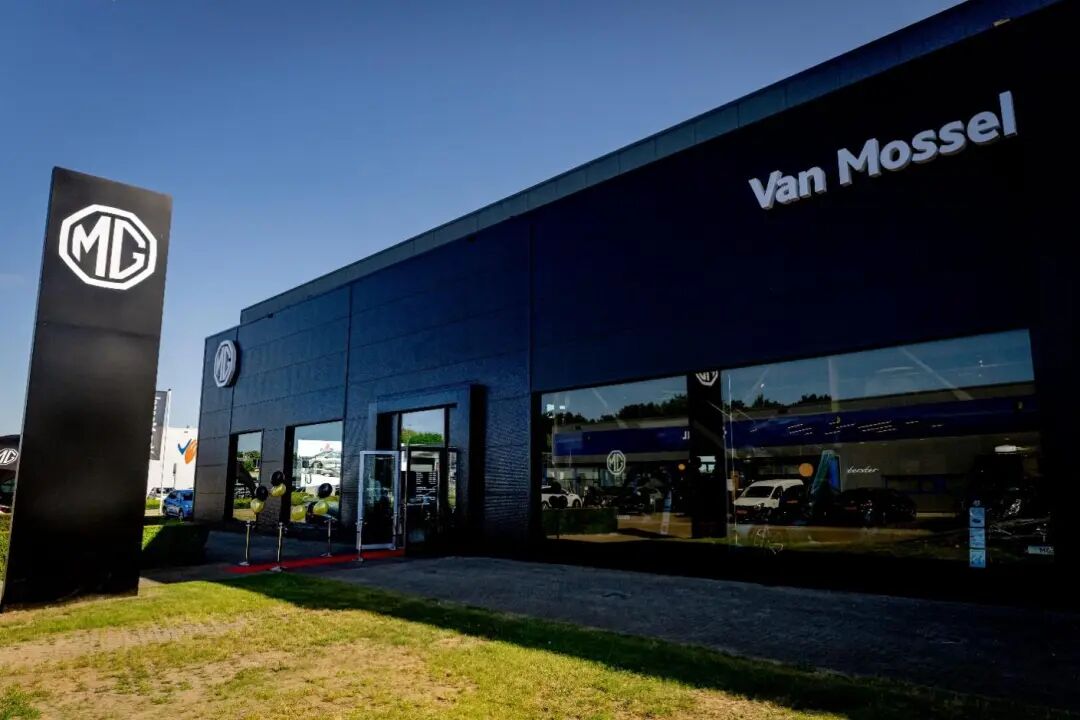
△ BYD and MG Boast Extensive Dealer Networks in Europe
Why is LYNK & CO Partnering with Volvo Again?
To extensively expand its dealer network, LYNK & CO would need to invest substantial resources. Currently, Geely's Galaxy and Zeekr brands are also accelerating their overseas expansion, actively vying for global market share. In this context, rather than competing for limited resources with sister brands, LYNK & CO has opted to refocus on its former 'parent company'—Volvo—to explore new avenues for win-win cooperation.
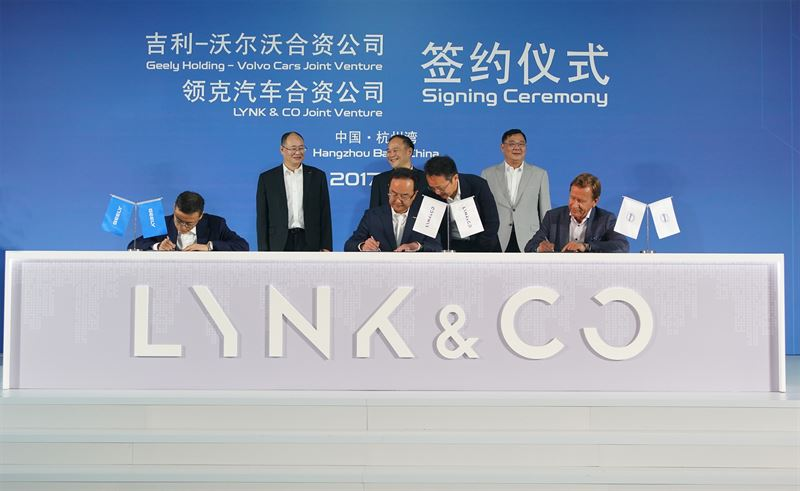
△ Instead of independently establishing a capital-intensive dealer network in Europe, LYNK & CO has chosen to collaborate with Volvo.
As is widely acknowledged, LYNK & CO was conceived by Geely following its acquisition of Volvo, with the ambition to leverage Volvo's technology to compete directly with international giants like Toyota and Volkswagen in the premium segment. Although Volvo announced at the end of 2024 that it would relinquish ownership of LYNK & CO, transferring its 30% stake in the brand to Zeekr for 8 billion Swedish kronor, the deep-rooted connection between the two brands persists. This connection is evident in the extensive sharing of components between the two brands and even similarities in certain repair processes. For technicians at Volvo's European 4S stores, servicing LYNK & CO models comes naturally. Moreover, communication channels between LYNK & CO's European team and Volvo's Swedish headquarters are highly efficient, laying a solid foundation for cooperation.
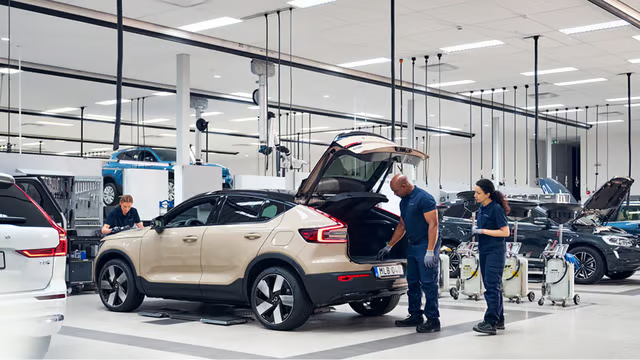
△ By selling through Volvo's 4S stores, LYNK & CO need not worry about its brand image being diluted.
Furthermore, and more critically, Volvo, as a luxury brand, positions itself at a premium level, and its 4S store standards are exceptionally stringent. By selling through Volvo's 4S stores, LYNK & CO need not fret about its brand image being diluted. Additionally, Volvo boasts a well-established and rational sales network layout in Europe. Through Volvo's network, LYNK & CO can rapidly expand its presence across the European market, significantly enhancing model visibility and user reach in a short period.
Of course, LYNK & CO will need to compensate Volvo for utilizing its sales channels. However, even with this cost, it remains significantly lower than the expense of independently establishing its own stores. More importantly, LYNK & CO can capitalize on the golden opportunity for Chinese brands to sell cars in Europe and swiftly establish itself in the market. In 2025, Chinese automotive brands sold over 800,000 vehicles in Europe, marking a year-on-year increase of nearly 100%. If LYNK & CO fails to promptly boost its terminal sales, it risks being completely marginalized once brands like BYD and MG solidify their positions in Europe.
Why is Volvo Willing to Assist LYNK & CO?
What impact will integrating LYNK & CO models into Volvo's European dealer network have on Volvo? According to information from Volvo, LYNK & CO and Volvo have distinct brand positioning: LYNK & CO focuses on youthfulness, trendiness, and technological innovation, while Volvo emphasizes luxury, stability, and quality; their price ranges also differ significantly, with LYNK & CO targeting more affordable segments and Volvo positioned in the mid-to-high-end market; their target customer groups are vastly different as well, with LYNK & CO attracting young consumers seeking individuality and value for money, while Volvo appeals to mid-to-high-end customers prioritizing safety and quality.
Based on these clear distinctions, incorporating LYNK & CO models into Volvo's dealer network will not substantially impact Volvo's direct sales. Moreover, introducing LYNK & CO models as a new business line can provide dealers with additional profit growth points and enhance their operational efficiency. In the long run, some customers exposed to LYNK & CO models may also be attracted to Volvo's brand charm and become potential Volvo customers in the future. Therefore, opening Volvo's European dealer network to LYNK & CO presents an excellent opportunity for a win-win-win scenario among Volvo, LYNK & CO, and Volvo dealers, fostering a positive environment for collaborative development among the three parties.
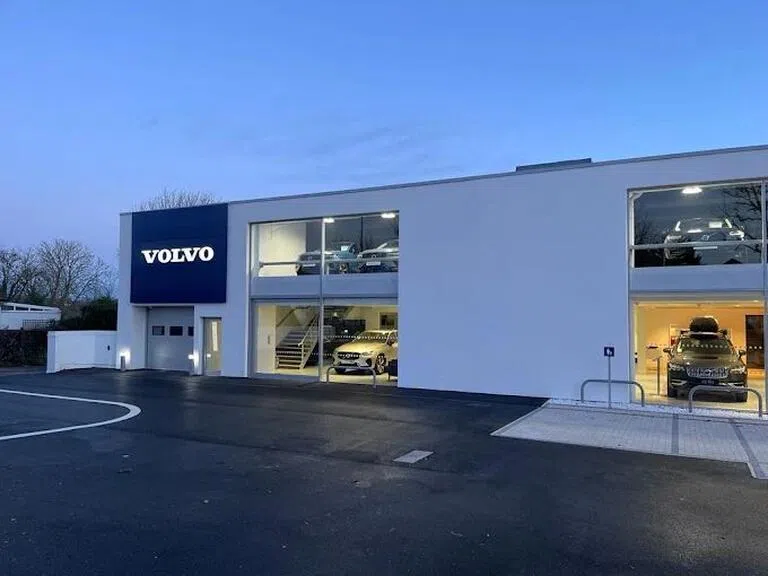
△ Opening Volvo's European dealer network to LYNK & CO benefits Volvo, LYNK & CO, and Volvo dealers in a win-win-win scenario.
From Geely's announcement, it is evident that Volvo will now fully oversee LYNK & CO's commercial operations and brand management in Europe. This signifies that, on the highly competitive stage of the European automotive market, LYNK & CO's future trajectory will largely be guided by Volvo.
The decision by Geely's top management reflects dissatisfaction with LYNK & CO's performance in Europe over the past few years. Despite possessing certain advantages in product strength, LYNK & CO has fallen short of expectations in market expansion and brand building. Opting for Volvo to handle operations demonstrates a high level of trust in European local brands and teams. Volvo, with its extensive experience in the European market, mature sales network, and deep brand heritage, is expected to leverage these strengths to help LYNK & CO rapidly establish itself in Europe, achieving sales breakthroughs and enhancing brand influence. If LYNK & CO successfully breaks through in Europe with Volvo's operational support, this model may serve as a blueprint for other Geely brands, such as smart and Lotus, to expand in Europe under Volvo's overall planning and management.
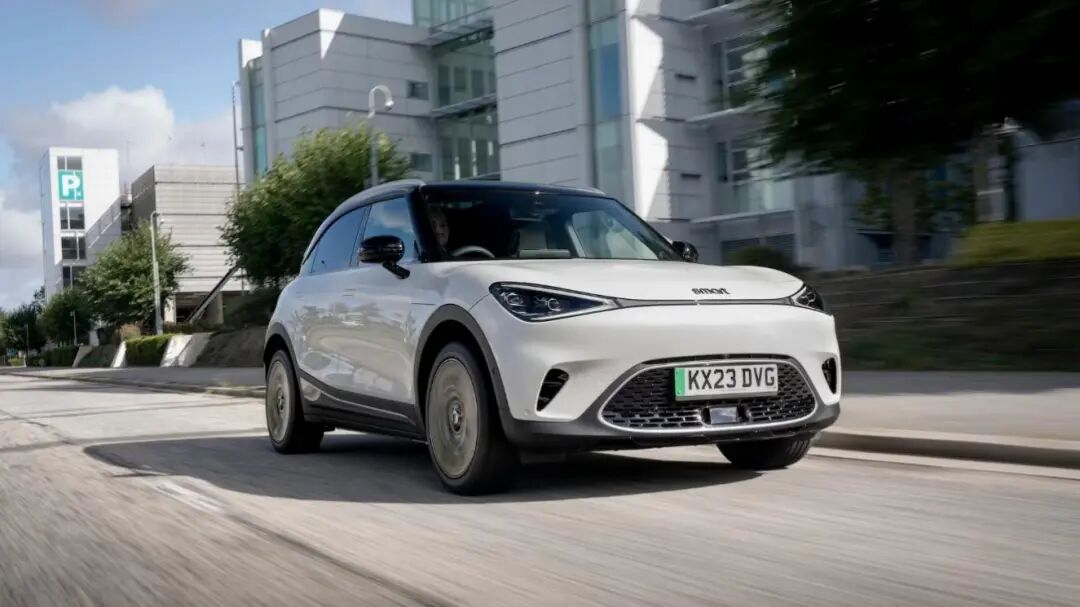
△ If LYNK & CO successfully breaks through in Europe with Volvo's operational support, this model may serve as a blueprint for other Geely brands' European expansion.
For Volvo, Chairman Li Shufu's recent remarks at the shareholders' meeting warrant significant attention and contemplation from Swedish management. Back in 2010, when Geely acquired Volvo, Volvo played a pivotal role in technology output within the Geely Group. Volvo's meticulously developed SPA1 and CMA vehicle architectures laid a solid foundation for Geely Auto's chassis performance and overall architectural design; its advanced internal combustion engine technology significantly enhanced the power performance and fuel efficiency of Geely models; numerous safety-related patents enabled Geely Auto to achieve a qualitative leap in safety performance; and its unique vehicle styling design endowed Geely models with a fashionable and imposing appearance, helping Geely's overall vehicle engineering level leap forward by multiple tiers.
However, times have changed, and Volvo now faces numerous challenges. Its battery factory has been unable to commence production smoothly due to various reasons, severely hindering its layout in the new energy vehicle sector; the SPA2 platform models have encountered software issues, affecting the launch of new models and market competitiveness; and its autonomous driving technology has developed slowly, gradually falling behind in the rapidly iterating industry. Taking the EX30 model as an example, Geely has already begun supporting Volvo by providing new energy vehicle technology. In the future, it may only be a matter of time before Geely's Qianli Haohan architecture is integrated into Volvo's system.
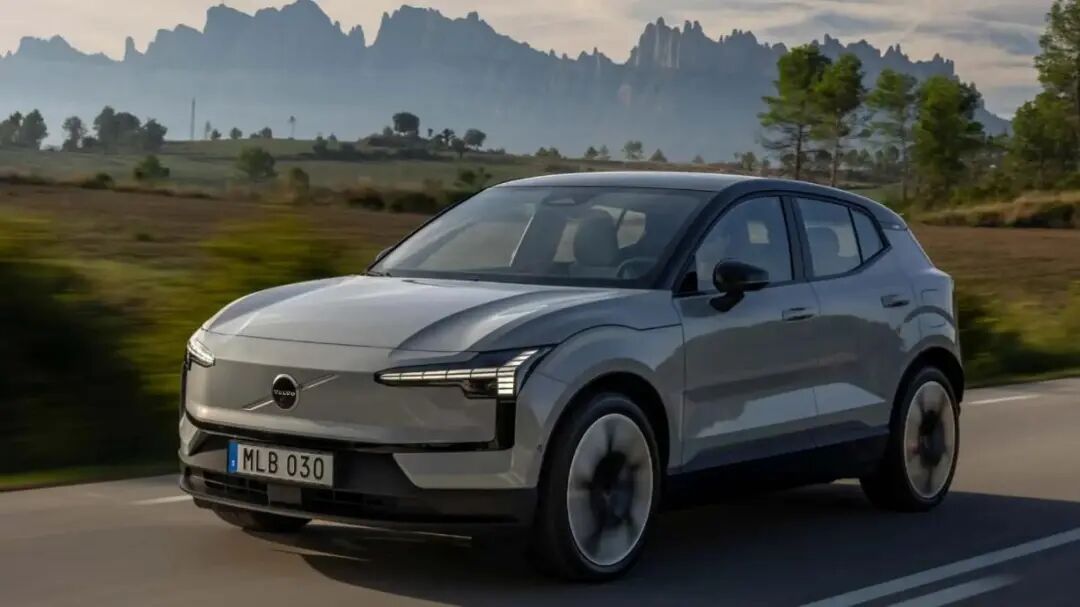
△ Geely Begins to Feed Back Vehicle Technology to Volvo
Commentary
On the surface, Geely entrusting Volvo with the operation of LYNK & CO in Europe represents another classic case of resource integration within the entire group. However, upon closer inspection, if Volvo fails to make substantive progress in the research and development of new models and breakthroughs in new technologies, and instead gradually relies on past technological accumulations, becoming merely a provider of technical support for brands under Geely, then its position within the entire Geely system will continue to decline. Therefore, the Swedish management must deeply recognize the current严峻 (severe) situation and actively take effective measures to drive Volvo to achieve innovative breakthroughs in the fields of new energy and intelligence, so as to reshape its important position within Geely Group and even the global automotive market.
(This article is original to Heyan Yueche and may not be reproduced without authorization)
-
![]()
Automotive Market News: Ministry of Industry and Information Technology Takes Action to Investigate Safety Hazards in New Energy Vehicles
-
![]()
Beihang Professor Spearheads Team to Deploy Autonomous Driving in Mines, Achieving 500 Million Yuan in Annual Revenue, Now Eyeing Hong Kong IPO
-
![]()
Is it a false proposition to sell extended-range and pure electric vehicles well simultaneously?
-
![]()
AI Hasn’t Even Fully Integrated into Smartphones—Now They’re Trying to Put It in Cars?
-
HarmonyOS Steps into Manufacturing! China’s Pioneering Innovation Hub Lands in Shenzhen, with Robots First in Line for ‘Integration’, Followed by Drones and Autonomous Vehicles
-
![]()
Don’t Blindly Hand Your Documents Over to AI! Research Reveals Even Leading Models Secretly Modify Content
-
![]()
Inside Look at 'RedSkill': Is Xiaohongshu Emerging as the Premier AI App Store?
-
![]()
The Ultimate Showdown in Handheld Smart Imaging: DJI's Ecosystem Moat and Insta360's Risk of Falling Behind