Will There Be a Confrontation Between Large SUVs and MPVs?
 04/17 2026
 672
672
Lead-in
Introduction
Large vehicles are competing fiercely for consumer attention.
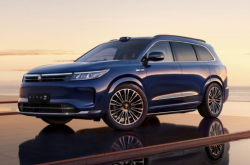
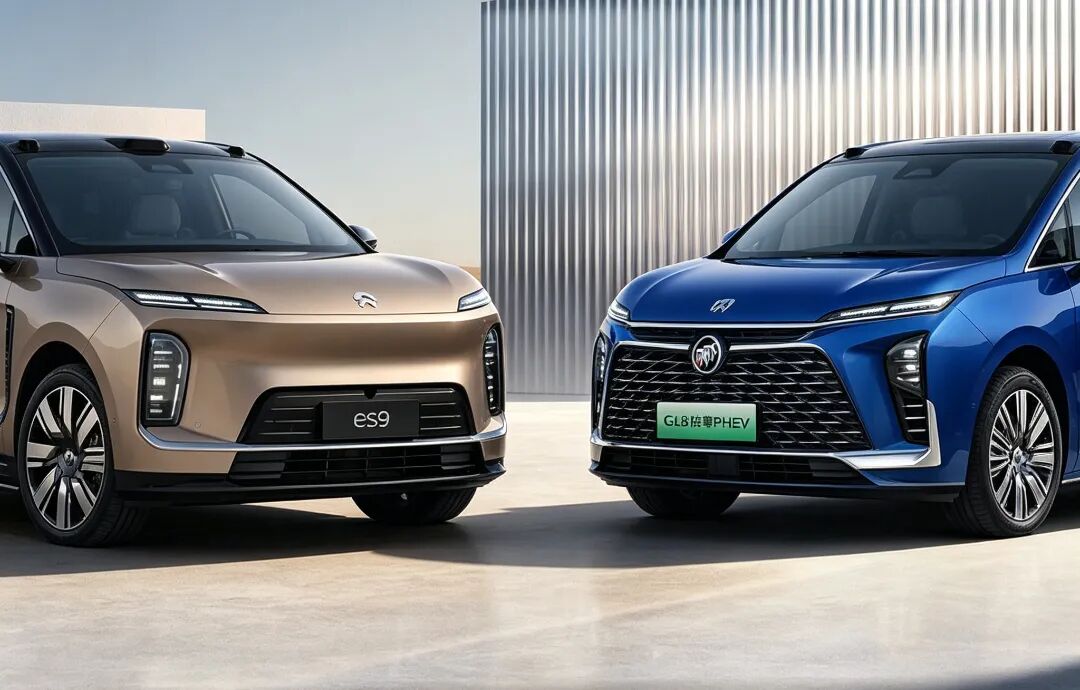
At a recent NIO ES9 launch event, Li Bin made a bold claim: "Every seat is an MVP. Forget about MPVs." The CEO, who had repeatedly dismissed the idea of an MPV lineup, chose to respond to users asking "when will an MPV be released" by introducing an SUV that offers "MPV-level space."
Less than a week later, Buick countered on its official Weibo account: "MPVs are not a category that needs to be 'replaced'; they are a choice that needs to be 'understood.'" Buick also invited Li Bin to attend its April 28 Century launch event.
These two events, just six days apart, underscore a clash between two product categories. NIO aims to demonstrate that a large SUV can combine the comfort of an MPV with the driving experience of an SUV. Buick, on the other hand, is defending a category it has cultivated for decades, asserting that the value of MPVs does not need to be validated—or replaced—by another vehicle type.
In fact, over the past year, the Chinese automotive market has seen the introduction of more than 20 new large SUVs and MPVs. Some estimates suggest that over 150 "large vehicles" are set to enter the market nationwide. For instance, models like the AITO M9 and Zeekr 9X have secured leading positions, while Volkswagen, Leapmotor, XPENG, and Avatr are also entering the mid-to-large SUV segment in 2026.
In the MPV market, Buick's MPV family sold over 120,000 units in 2025, up 17% year-on-year, with new energy models accounting for over 50% of sales. New energy MPVs like the Tengshi D9, WEY High Mountain, and VOYAH Dreamer continued to gain traction, performing impressively. Clearly, the clash between NIO and Buick is just a microcosm of the broader battle in the large vehicle segment.
So, will MPVs and SUVs engage in a winner-takes-all showdown, or will they coexist and grow together in a win-win scenario?
01 The Influx of Large Vehicles Transcends Categories
Since 2025, the Chinese automotive market has seen a clear trend: vehicles are getting larger. Mid-to-large SUVs and MPVs are experiencing unprecedented product density. The Geely Galaxy M9 has brought the six-seater SUV threshold below 200,000 yuan, the NIO ES8 has heralded the era of large three-row electric SUVs, BYD's Tengshi has launched the twin models N9 and N8L, Huawei-backed AITO has paired the M9 and M8, and models like the Zeekr 9X, Lynk & Co 009, Seres S09, and Li Auto i8 are also in the mix...
According to incomplete statistics, over 10 large six-seater SUVs were launched in the second half of 2025. Automakers are enthusiastic about new launches, but consumer demand is undergoing structural differentiation.
Looking at the SUV market as a whole, retail sales in the domestic SUV market reached just 1.402 million units in January-February 2026, down 9.8% year-on-year. However, the mid-to-large SUV segment bucked the trend, with cumulative retail sales of 1.11 million units, up a staggering 90.9% year-on-year, and five models selling over 20,000 units cumulatively.
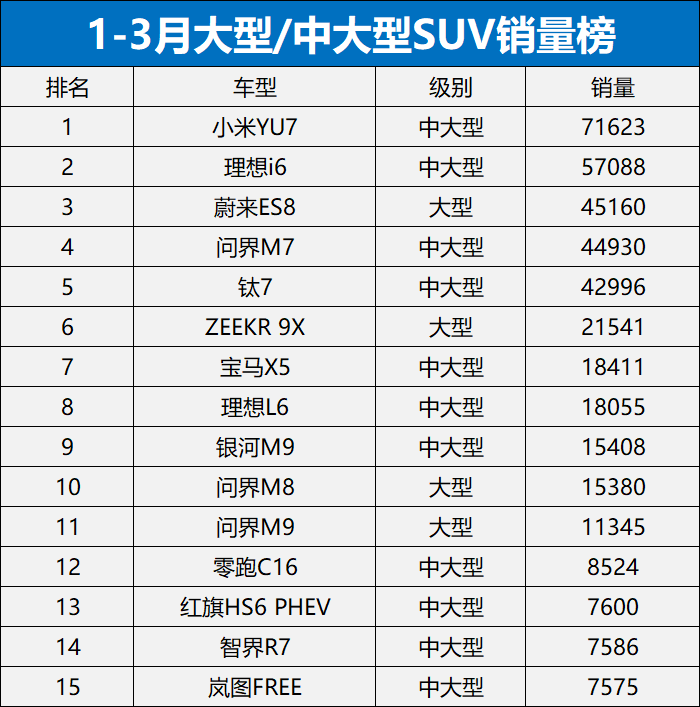
Meanwhile, the MPV market is characterized by slight growth in total volume but dramatic structural changes. Total MPV sales reached 1.058 million units in 2025, a slight year-on-year decline. However, new energy MPV sales surged 36% year-on-year, accounting for nearly 50% of total MPV sales. Among new energy MPVs, plug-in hybrid models accounted for 42.8%, primarily due to their advantages of no range anxiety and low operating costs.
Notably, the market share of MPVs priced above 300,000 yuan expanded from less than 30% in 2022 to 52%, with high-end models becoming the strongest growth engine in the MPV market. However, MPV retail sales reached 1.04 million units in December 2025, down 20% year-on-year. This was partly due to the year-end slowdown effect and partly due to strong competition from the SUV segment.
This raises an unavoidable question: Does the Chinese market really need so many large vehicles?
From a demographic perspective, the answer is yes. Chinese families are experiencing a trend of fewer children alongside larger families, with the traditional three-person household model gradually becoming marginalized. The increase in two- and three-child families means that five-seater vehicles can no longer meet the rigid demand for family travel. At the same time, consumers' vehicle usage philosophy has evolved from merely having seats to demanding comfort in every seat.
This is the underlying logic behind the rapid rise of six-seater SUVs. Data from the China Passenger Car Association shows that the market size for large six-seater SUVs exceeded 1.08 million units in 2025 and is expected to approach 1.5 million units in 2026. If there is one segment in the Chinese automotive market that has reached new heights of competition in 2026, it is undoubtedly the large six-seater SUV segment.
Real demand for usage scenarios also exists. An automotive salesperson revealed, "Consumers buying full-size SUVs don't really need seven seats—the third row is quite 'impractical.' The six-seater layout strikes the perfect balance between comfort and practicality." The popularity of lifestyle trends like camping and self-drive travel is also driving consumers to shift from functional needs to lifestyle aspirations.
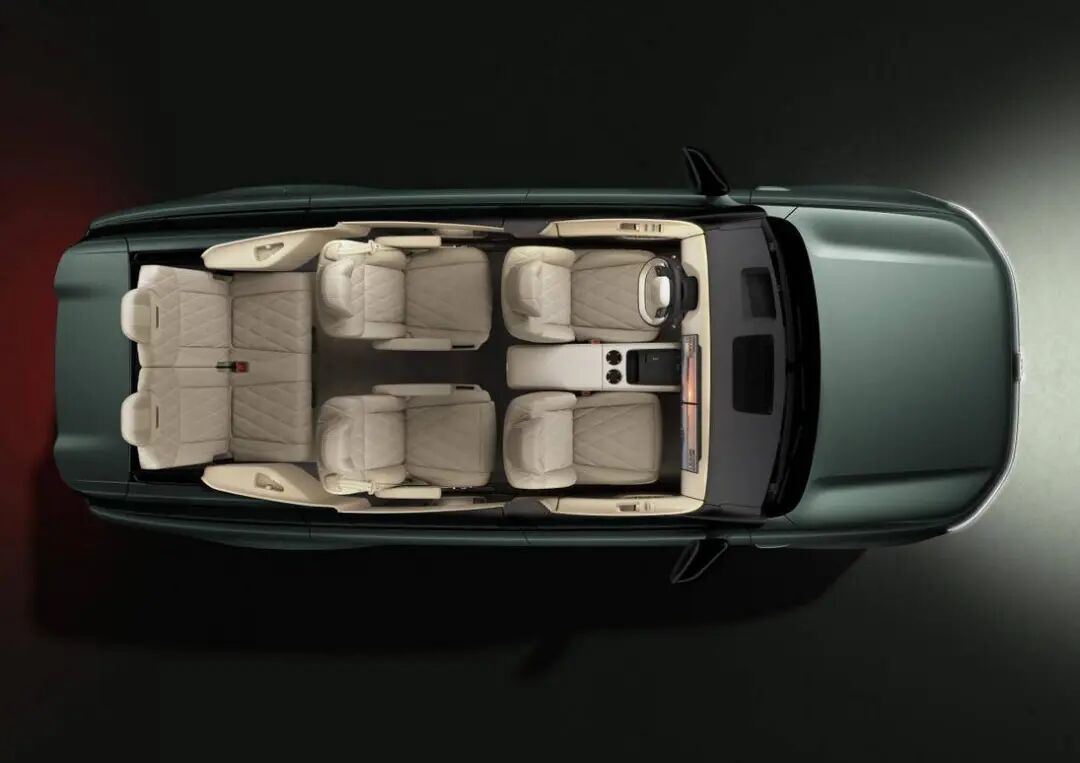
A vehicle must now meet daily commuting needs, weekend family outings, and occasional long-distance travel. This is the logic behind models like the ES9 emphasizing "ultra-large cargo space" and "no pressure fitting six people and 13 suitcases." Consumers don't just want seats—they want comfort, space, and an enjoyable driving experience.
However, data also shows that the growth rate of supply has clearly outpaced the expansion of demand. Taking the first quarter of this year as an example, while overall data is limited by various factors and of limited reference value, the decline in sales of these high-priced models is visible to the naked eye. To a large extent, this is due to the overwhelming number of new launches confusing consumers and increasing their wait-and-see attitude.
It is clear that demand for large vehicles is real, but the market is rapidly evolving from a blue ocean to a red ocean.
02 Compromise or Joint Growth?
Buick's statement—"MPVs are not a category that needs to be replaced but a choice that needs to be understood"—articulates the core stance of the MPV camp. In Buick's view, decades of user feedback and product experience have proven the irreplaceability of this category.
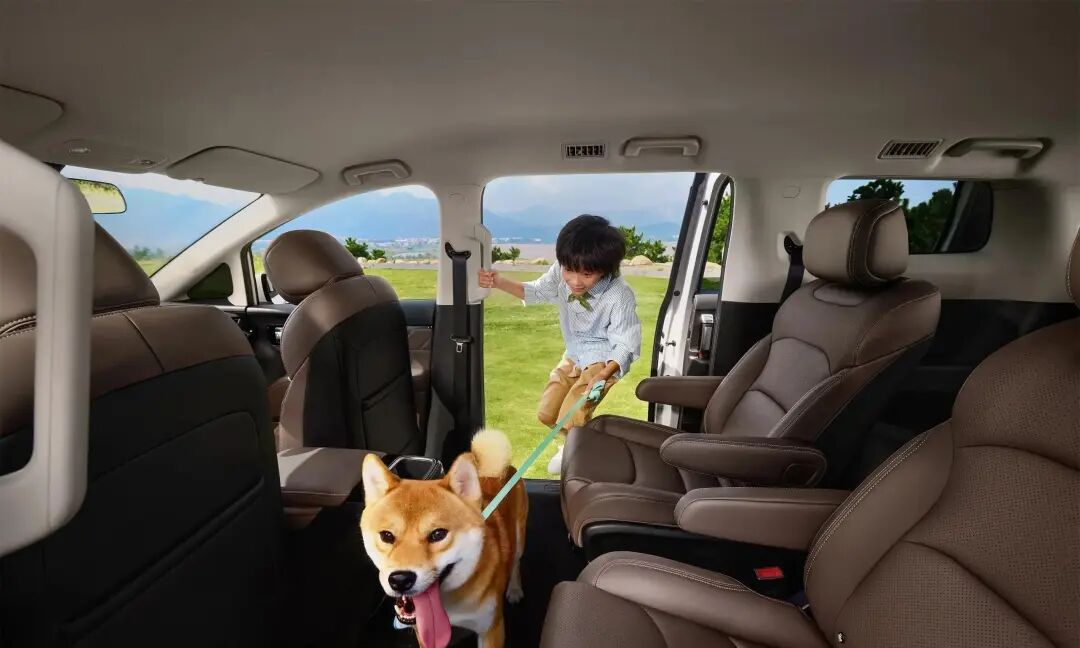
What is the core competitiveness of MPVs? First is the vertical space layout. Take the Buick GL8 as an example: the second-row captain's chairs offer heating, ventilation, and massage functions, while the third row can comfortably accommodate adults, and the trunk can still fit multiple suitcases when fully loaded. The low floor design makes it easy for elderly and young passengers to enter and exit, and the wraparound second-row seats reduce fatigue during long journeys.
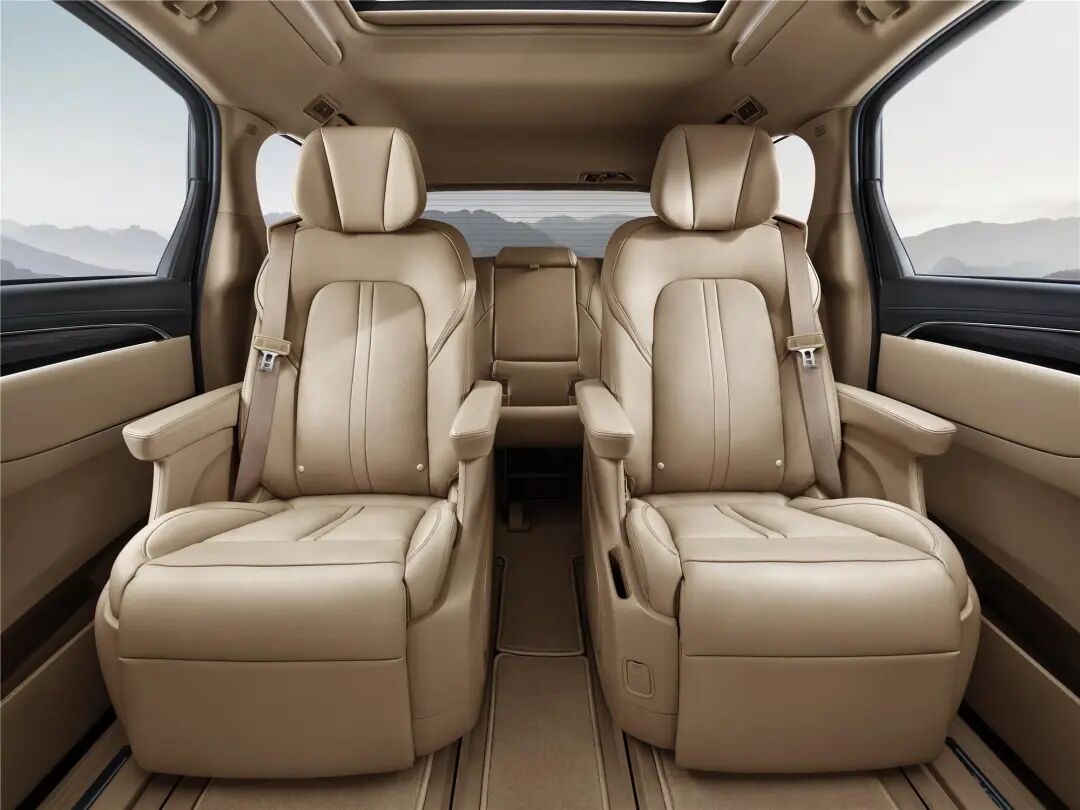
These advantages are difficult for SUVs to fully replicate for a considerable time. However, MPVs also have significant shortcomings. Their low handling limits make them unsuitable for spirited driving, and their limited ground clearance prevents them from handling complex road conditions. More importantly, MPVs have long been labeled as business or nanny vehicles, reducing their appeal to family users seeking style and driving enjoyment.
Large six-seater SUVs have precisely captured this gap. With independent second-row seats, a wide central aisle, and a flat floor, they achieve near-MPV levels of comfort and space flexibility while retaining the SUV's stance, higher ground clearance, and better road adaptability.
In consumers' words: "The tall, imposing body of an SUV gives a sense of sturdiness and reliability, and the longer hood and higher seating position provide a natural psychological hint of safety." In contrast, MPVs, with their elongated bodies and shorter hoods, are at a natural disadvantage in terms of perceived safety.
Yet the MPV market has not shrunk—instead, it has undergone a breakthrough. In the second half of 2025, the VOYAH Dreamer claimed the top spot in high-end MPV sales with 43,191 units, reaching 80,248 units for the full year, up 46% year-on-year. The Tengshi D9 sold 92,988 units for the year, while Buick's MPV family exceeded 122,000 units in terminal sales.
In contrast, the SUV camp, despite its new entrants' loud presence, is highly fragmented. The concentration effect among top models is intensifying, with the top five models accounting for half of the mid-to-large SUV market, leaving many latecomers struggling with sales of just over a thousand units. As "Auto Business Review" once put it, 80% of large six-seater SUVs are "cannon fodder."
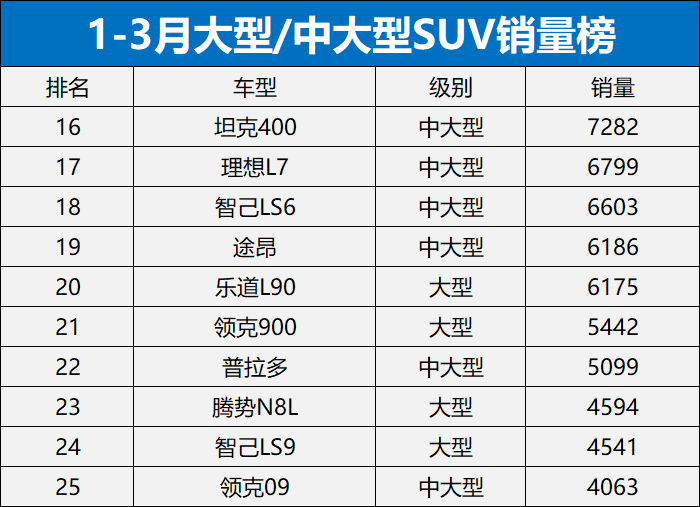
In reality, everyone knows that MPVs and SUVs each have their strengths and weaknesses, but manufacturers need to emphasize contrasts in competition. Their relationship is not zero-sum; the target demographics of the two markets do not fully overlap. In other words, choosing an MPV or an SUV is not about which is better but which is more suitable.
For a multi-child family that frequently commutes in the city and enjoys weekend camping trips with the whole family, a large six-seater SUV is clearly the more balanced choice. However, if the family takes several long-distance trips exceeding 500 kilometers annually and regularly travels with more than six people, the MPV's comfort advantages remain unmatched.
As one netizen put it: "While MPVs win in terms of functional extremes, six-seater SUVs excel in balancing value and functional experience." These two vehicle types will ultimately find their respective places in the travel landscape of Chinese families.
Thus, the "war" between MPVs and SUVs is less about a life-or-death showdown and more about a direct clash over shared customer segments. The outcome of this clash will not be a complete victory for one side but rather the continuous blurring and convergence of product boundaries.
Editor-in-Chief: Du Yuxin Editor: He Zengrong
THE END
-
![]()
Jitian Xingzhou: A Pioneer in Optical Payloads Secures Hundreds of Millions in Series B Funding!
-
![]()
Orders Secured Through to the Second Half of the Year! The Rationale Behind the 'Surge' in Demand for This Company’s Optical-Grade Base Films
-
![]()
Beyond Patents: The Retail Rivalry of Insta360 and DJI Unfolds
-
![]()
180 Billion Market Cap Vanished! How Did Seres Fall So Far?
-
![]()
Blockbuster! Domestic storage takes the global double crown for the first time, from an AI company
-
![]()
China Spearheads Formulation! World's Pioneering Global Technical Regulation for Automated Driving Systems Greenlit and Unveiled
-
![]()
Farewell to Pulsed Support Policies: Three Major Auto Policy Directions from Multiple Departments Take Effect on the Same Day
-
![]()
Embercore AI’s Accelerated Funding: The Robot Industry’s Shift Toward ‘Learning Systems’