JD.com Can Now 'Hail Rides,' But It's Not Another Didi
 04/17 2026
 583
583

JD.com's strength in 'optimizing the supply chain'—squeezing efficiency out of every link—is hard to leverage in the ride-hailing business.
Recently, multiple media outlets reported that JD.com is set to launch a new service called 'Open Departure.'
Its interface design closely resembles that of mainstream ride-hailing apps. After users input their address, they can tap 'Depart Now' with one click, but all service entries currently display 'Temporarily Unavailable.'
Outsiders speculate that this time, JD.com aims to establish a mobility platform. However, considering that last year, when JD.com made a push into the food delivery market, Liu Qiangdong had confidently stated, 'We won't do ride-hailing,'—has the company had a change of heart just a few months later?
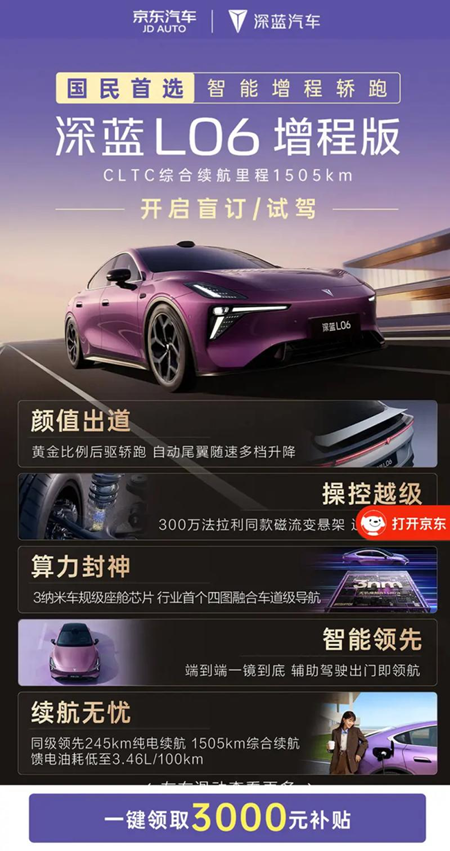
Several days later, the mystery was unveiled. On April 13, JD Auto announced a strategic partnership with Shenlan Auto to jointly launch the 'National Favorite Car 2.0' Shenlan L06 extended-range model. JD.com will provide exclusive sales and digital car-buying services for the new vehicle, while 'Open Departure' is a doorstep in-depth test drive service launched jointly by both parties.
Based on this logic, JD.com is not aiming to create a mobility platform but rather to help brands sell cars more effectively. However, compared to the somewhat unoriginal 'story' of JD.com venturing into the ride-hailing market, its launch of in-depth test drive services has piqued greater market curiosity.
After all, consumers are well-acquainted with the car-selling services of 4S dealerships. With JD.com, a company deeply entrenched online, entering this market, will consumers truly be willing to buy in?
1
JD.com Won't Do Ride-Hailing
Frankly speaking, JD.com's recent misinterpretation is not hard to understand.
Last year, JD.com launched a surprise assault on the food delivery market. Over the past year, it has continuously ramped up its efforts in the local services market, introducing offerings such as housekeeping, home search, travel, and in-store services. Naturally, outsiders assumed that Liu Qiangdong was aiming for another victory.
Moreover, JD.com's exploration in the mobility sector is not a sudden whim.
In 2018, JD.com set its sights on the automotive business and launched 'JD Auto Club,' an offline service chain brand specializing in aftermarket automotive services. That same year, Jiangsu JD Information Technology Co., Ltd., a subsidiary of JD.com, underwent industrial and commercial changes, adding 'network- Booking Taxi Operations ' (online taxi booking operations) and related services to its business scope. This move was seen as JD.com laying the groundwork for entering the ride-hailing market.
However, JD.com late (delayed) in making its move. From an outsider's perspective, the ride-hailing market war had already been settled in 2015, with Didi firmly occupying the leading position. JD.com's late arrival meant it had missed the optimal opportunity.
In 2022, JD.com tentatively introduced a 'Domestic Taxi Service' feature within its app. Users who actively searched for 'taxi' would be directed to the 'Yiqi Chuxing' mini-program, which offered real-time ride-hailing, scheduled rides, and airport transfer services.
However, this feature was not widely promoted, and JD.com explicitly stated that it was merely integrating a third-party ride-hailing service. Clearly, this was just a shallow foray by JD.com into the mobility market.
The next mention of ride-hailing came during an internal sharing session in June 2025.
At that time, JD.com was making significant strides in the food delivery market. Liu Qiangdong stated that JD.com's logic for entering food delivery was centered on the supply chain. He mentioned that the company would not only venture into food delivery but also expand into supply chains for hotels, medical aesthetics, and other sectors. However, he also made it clear that JD.com would not engage in ride-hailing.
JD.com has accumulated rich supply chain resources in retail, home furnishings, home appliances, and other fields. It has also established a system for managing and scheduling supply chains, capable of transforming complex resources into standardized delivery processes. Focusing on the supply chain is indeed something JD.com excels at.
JD.com's foray into the local services sector is precisely about reshaping service experiences with a 'supply chain mindset.' It aims to reorganize scattered, non-standardized services and capabilities in the offline market to form a nationwide delivery network.
However, this approach is less effective—or rather, 'hard to apply'—in the mobility market.
Ride-hailing services operate on a 'matching' business model, pairing passengers' and drivers' real-time demands. While the technical difficulty is not high, it requires a high-frequency traffic entry point, something JD.com lacks.
Moreover, JD.com's strength in 'optimizing the supply chain'—squeezing efficiency out of every link—is hard to leverage in the ride-hailing business.
In contrast, giants like Alibaba and Meituan have a greater need for traffic in the mobility sector than JD.com.
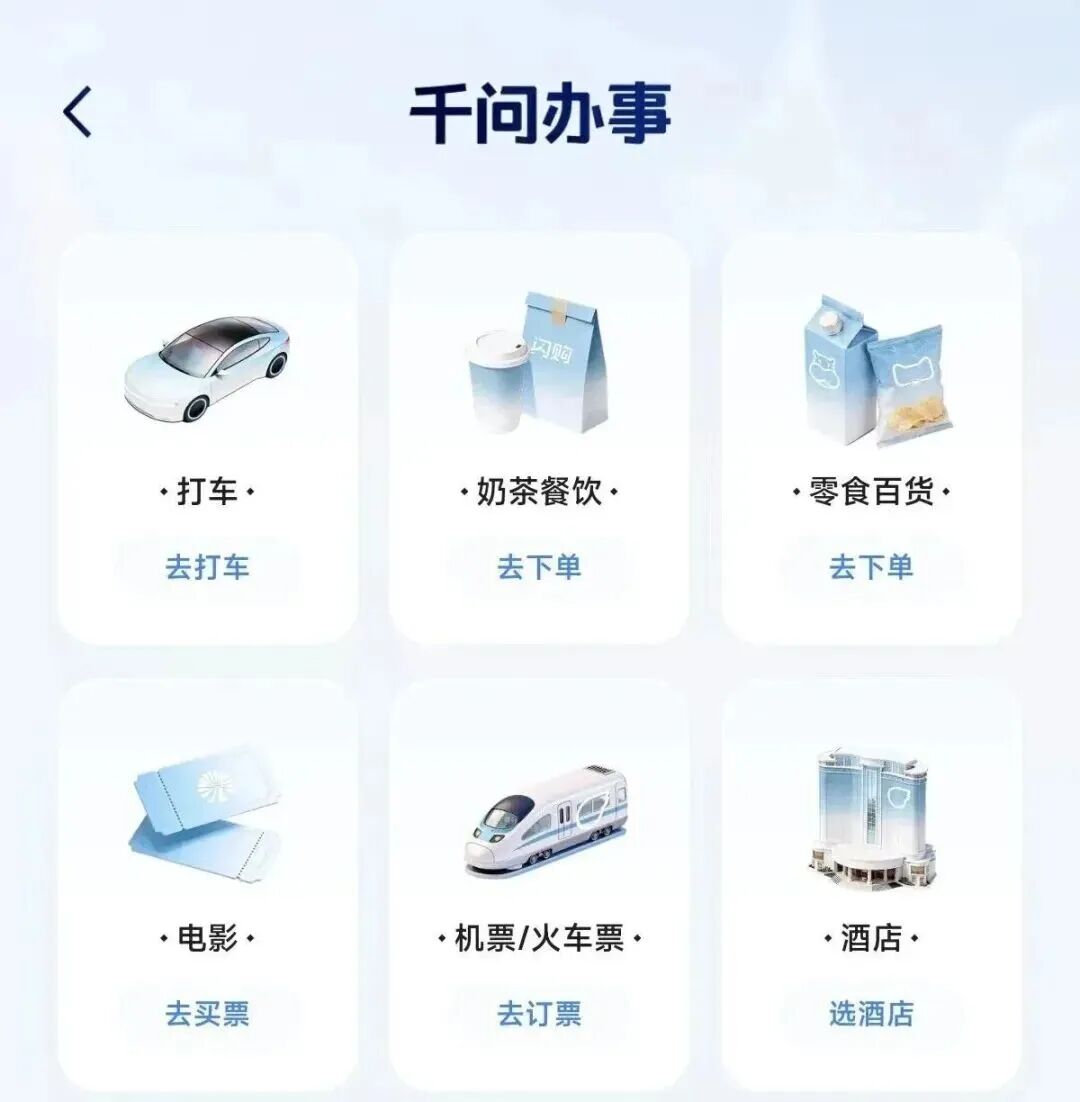
Some time ago, Alibaba's AI application, Qianwen, introduced a new 'AI Taxi' feature. However, this feature is less about driving more traffic to Gaode (Alibaba's navigation app) and more about empowering Alibaba's local services ecosystem through AI. It connects businesses like Taobao Instashop, Alipay, and Fliggy, turning mobility into a larger business entry point.
Of course, JD.com also needs traffic. Its entry into the food delivery market and subsequent launch of in-store and group-buying services are aimed at further expanding the flywheel effect of local services.
However, JD.com has not significantly shifted resources toward local services, indicating consideration of the return on investment and what constitutes its core future strategy.
Liu Qiangdong once said, 'Although some companies engage in battles everywhere, they will eventually return to doing what they excel at.' For JD.com, that expertise lies in the supply chain.
2
Eyeing the Trillion-Dollar Automotive Ecosystem
JD.com's layout (strategic layout ) in the automotive sector is another prime example.
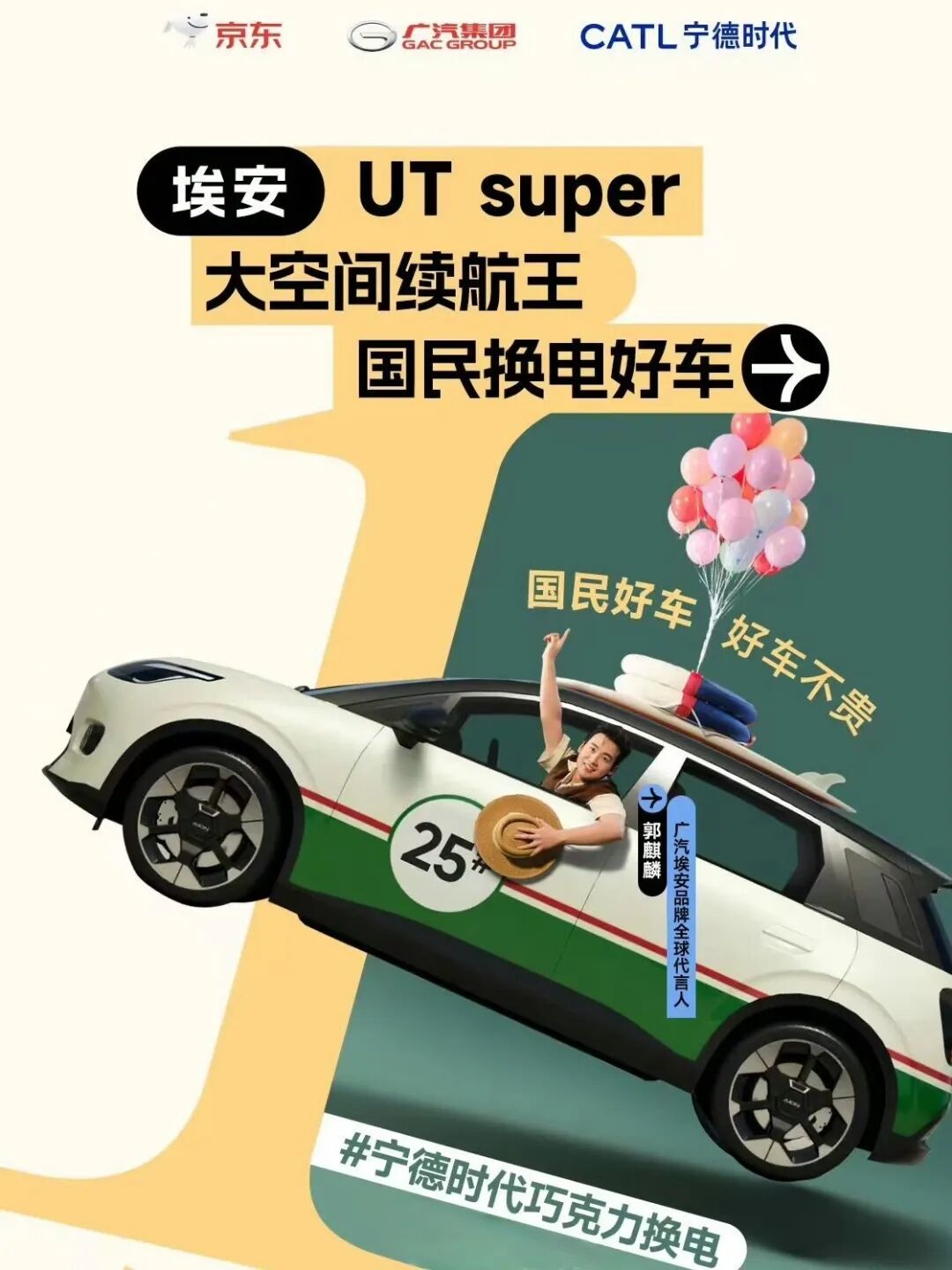
Last October, JD.com partnered with GAC Group and CATL to launch a 'National Favorite Car.' JD.com was responsible for providing a comprehensive product empowerment system covering market demand insights, product definition, online channels, offline transactions, and after-sales services, without directly participating in the manufacturing process.
This year, JD.com's collaboration with Shenlan Auto on the 'National Favorite Car' has advanced from version 1.0 to 2.0. The two parties jointly launched the Shenlan L06 extended-range model, positioned as 'the first intelligent coupe for young people.' Targeting the mainstream new energy vehicle market priced between 100,000 and 150,000 yuan, it emphasizes no range anxiety, intelligent driving, and Control experience (driving experience), better aligning with young people's pursuit of individuality and self-expression.
What truly surprised people was not the car itself but how it came to be.
According to JD Auto's marketing head, 'The evolution of the National Favorite Car from 1.0 to 2.0 was driven by continuous user feedback. Users hoped for products that offered greater value and better met full-scenario mobility needs. After extensive user research, the team identified extended-range mobility as a core pain point unmet by users in the 100,000-150,000 yuan market, leading to the collaboration with Shenlan.'
Thus, the 'National Favorite Car' 2.0 was not a unilateral decision by JD.com or Shenlan Auto but a response to genuine consumer demand. It returned part of the product definition authority from engineers to consumers.
JD.com builds what consumers demand. Behind this lies JD.com's expertise in supply chain integration.
The JD Auto marketing head pointed out that JD.com's core capability lies in procurement and sales. Based on insights into user needs, it leverages supply chain resources to provide users with products that offer both performance and experience.
However, JD.com is not solely targeting products. The 'Open Departure' service, mistaken by outsiders for a ride-hailing platform, is actually a test drive platform currently in beta testing at JD.com. Users can independently choose test drive locations and times, enjoying up to 120 minutes of test driving.
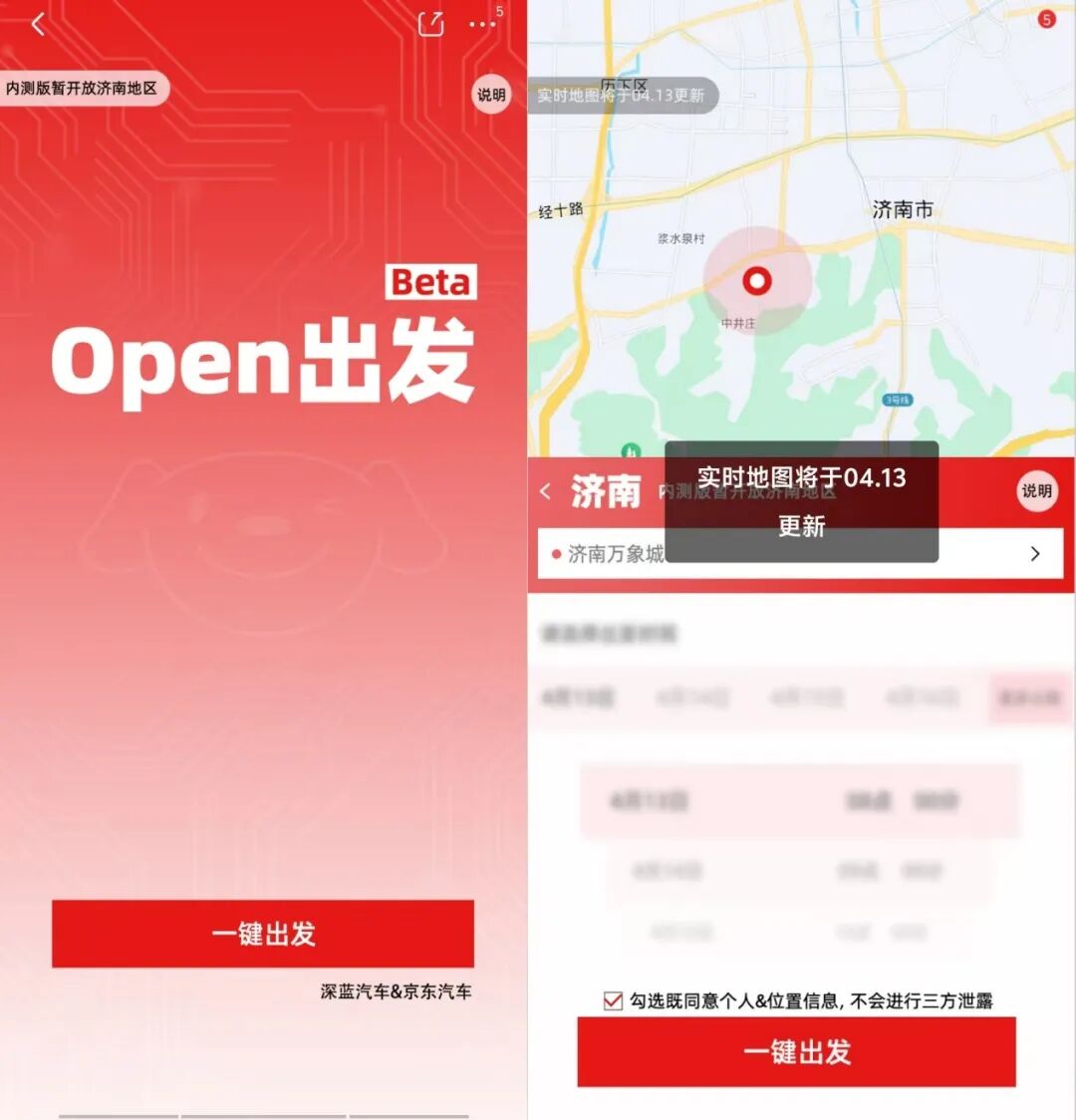
JD.com believes that with the increasing functionality of new energy vehicles, users find it difficult to fully grasp a vehicle's core features during a brief test drive. JD.com aims to customize test drive routes for commuting scenarios, offering users a more in-depth test drive experience.
It is evident that JD.com's entry into the automotive sector is not merely about 'building' or 'selling' cars but rather about positioning itself across the entire automotive lifecycle with the supply chain as its core, constructing a one-stop automotive consumption ecosystem encompassing 'purchase, accessories, maintenance, usage, and replacement.'
Currently, JD.com has established a dedicated vehicle services team covering scenarios such as refueling, charging, parking, and test drives. Combined with JD Auto's nationwide network of over 4,000 direct stores and approximately 40,000 partner stores, a full-lifecycle service system from car purchase to maintenance, insurance, and charging is taking shape.
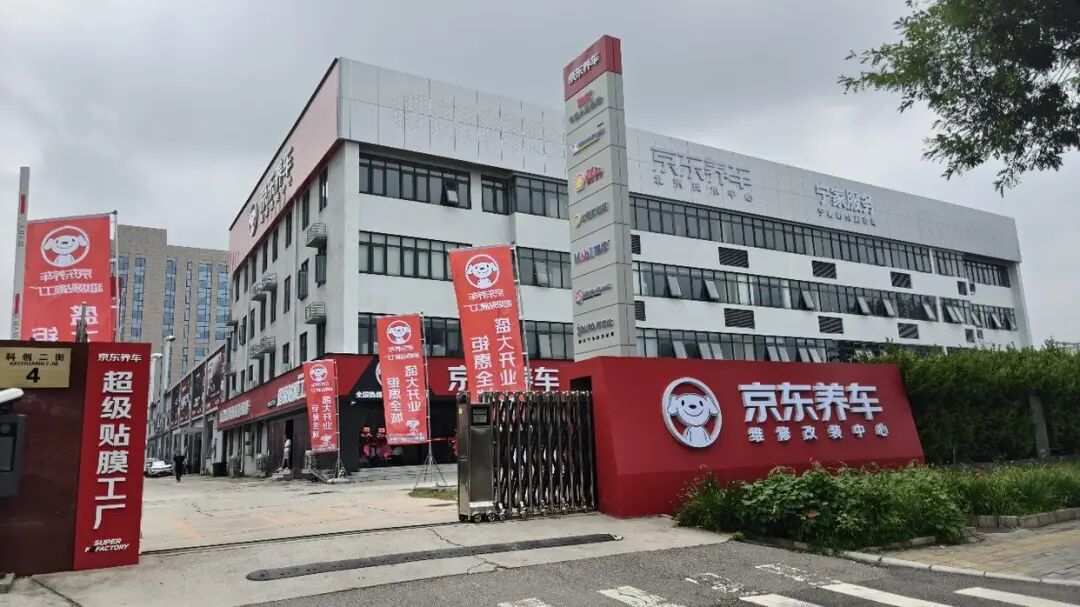
The car-selling business could become a new consumption entry point. After users purchase a car, their needs for maintenance, insurance, charging, and vehicle replacement can all be fulfilled within the JD.com ecosystem. These represent the true long-tail value, helping JD.com further expand its consumption ecosystem.
Roland Berger predicts that China's automotive aftermarket will reach 1.9 trillion yuan by 2025 and grow to 2.2 trillion yuan by 2030. By 2027, independent after-sales service markets will account for 58% of the automotive aftermarket.
3
Selling Cars the Way Home Appliances Are Sold
However, JD.com is not the only player making strides in the automotive business. Giants like Alibaba and Meituan are also setting their sights on this sector.
This January, Meituan announced a partnership with Shanghai Xiche Future Intelligent Technology Co., Ltd. to jointly build a one-stop service platform for 'car purchase, usage, and local services.' Over a hundred SAIC dealer stores have already joined Meituan.
Tmall Auto has opened an official flagship store on Tmall and sold its first complete vehicle, the 'Bestune Pony,' last year. Recently, Tmall Auto announced a collaboration with Changan Aito to launch the first 'Tmall Selected Car,' adopting a cooperation model similar to JD.com's 'National Favorite Car.'
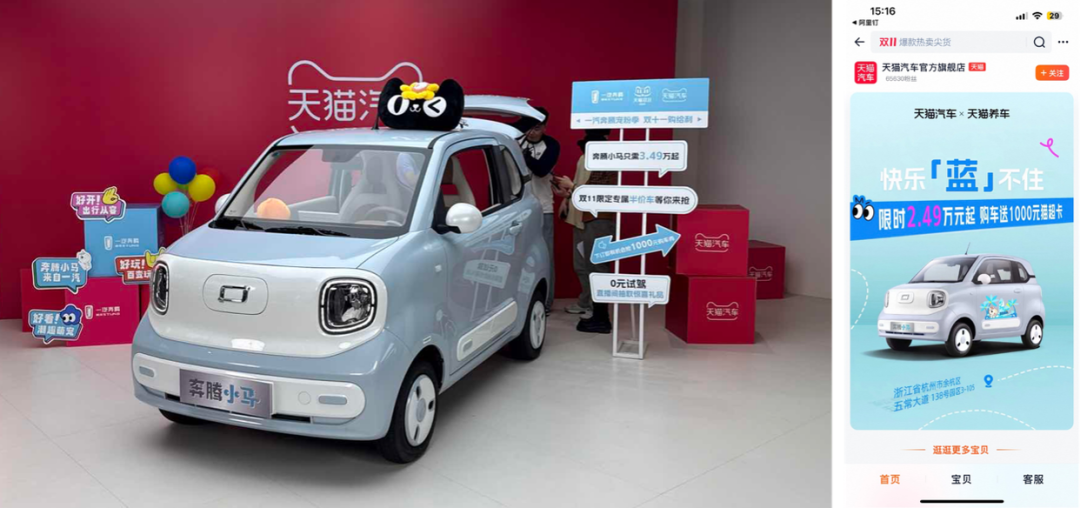
With competitors eyeing the prize, what other 'aces' does JD Auto hold besides its supply chain advantage?
This brings us to JD.com's internal 'Home Appliance Methodology.'
Miao Qin, Vice President of JD.com and President of JD Auto, once mentioned in a public speech that as new energy vehicles become increasingly electrified and intelligent, they will evolve from 'electric vehicles' to 'super-large appliances' in the future.
'Selling home appliances' is something JD.com excels at, and this methodology is equally applicable to 'selling cars.' This explains JD.com's layout (strategic layout ) and actions in the automotive sector.
The first aspect is using price to capture consumers' 'attention.'
Liu Qiangdong mentioned, 'When JD.com entered the home appliance market in 2009, many thought we wouldn't succeed due to our small scale. But I believed we could because we were willing to offer discounts.'
He stated that traditional home appliance retailers like Gome and Suning had gross profit margins exceeding 20% at the time. However, JD.com's cost of selling home appliances online was 15% lower, providing ample room to offer discounts to consumers.
Take the first JD.com 'National Favorite Car,' the Aion UT Super, as an example. The purchase price for the complete vehicle is 89,900 yuan, while the battery leasing price is 49,900 yuan, making it very affordable.
The second aspect is offering 'customized products' that better meet consumer needs.
In recent years, JD.com has launched a strategy for 'large-scale procurement of exclusive home appliance and home furnishing products,' promoting C2M (reverse customization) production. During last year's 'Double 11' shopping festival, the transaction volume of JD.com's customized new products was five times that of 2024.
Last year, JD.com launched a customization event for the 'National Favorite Car,' receiving over 300,000 survey responses. Users could not only choose basic configurations but also propose personalized needs, such as in-car mahjong tables and pet-specific air conditioning. According to JD.com's product manager, while not all suggestions could be implemented, they helped optimize the car's rear seat space and air purification system.
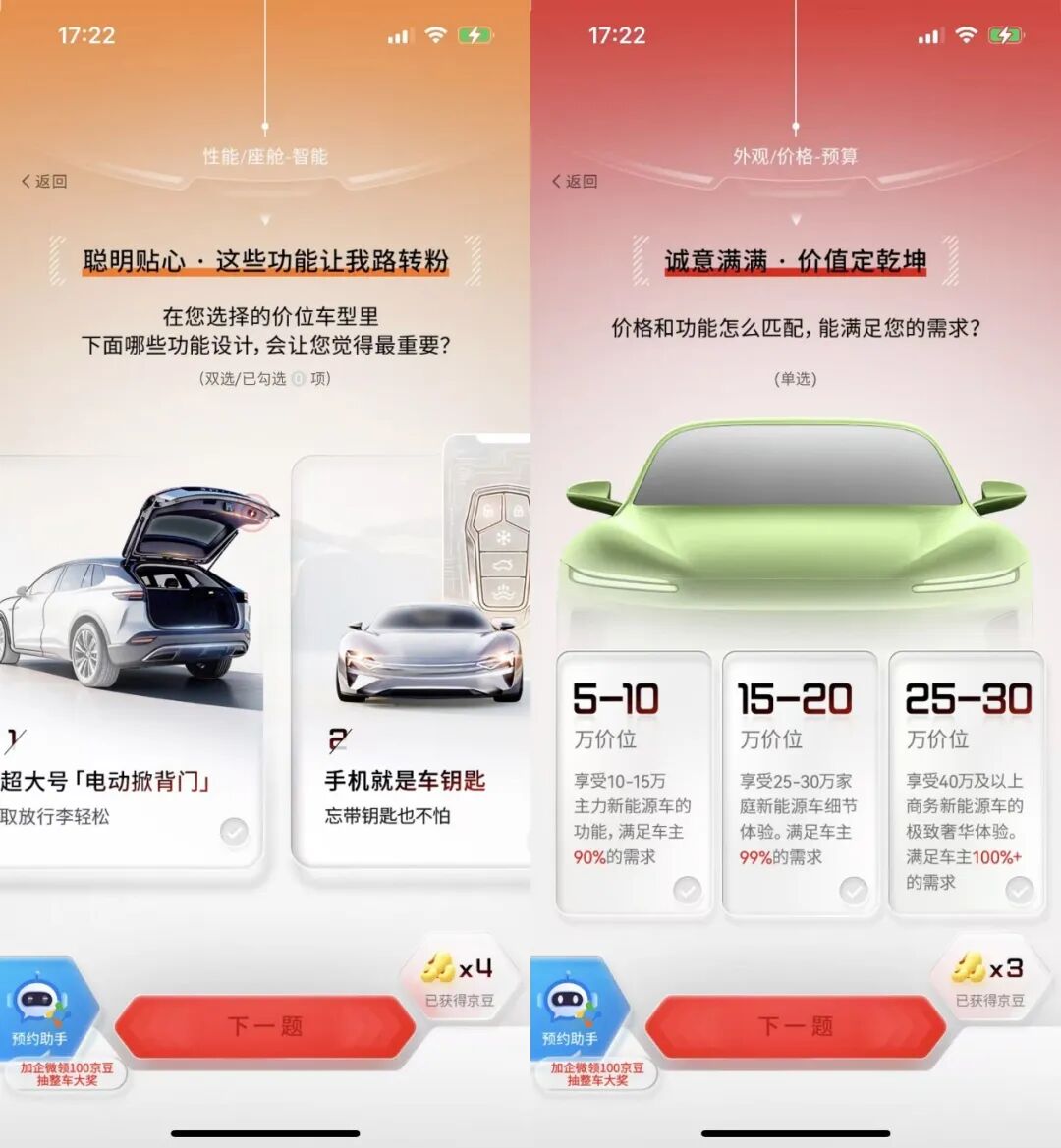
The third aspect is creating a closed-loop system that integrates online decision-making, offline delivery, and after-sales service, making car purchases as convenient as buying home appliances.
Currently, this logic has largely been realized. JD Auto revealed that among users who purchased the Aion UT Super, 90% made their decisions and completed transactions entirely online; 40% were existing users of JD Auto's maintenance services.
This indicates that when brand trust is sufficiently high and the service chain is well-established, even seemingly 'heavy' transactions can shift online. Each generation of consumers has its own shopping preferences.
Liu Qiangdong once stated in an internal letter, 'JD.com's success is built on cost, efficiency, and experience.'
Today, this methodology, which has proven successful in the retail sector, is being 'copied' by JD.com from one category to another, from one scenario to another. Automotive is just one of the focal points of this logic.
From this perspective, JD.com is not crossing boundaries but rather replicating more successful versions of itself. In the second half of the internet era, with increased competition, major players naturally focus on fighting battles they are best at.
-
![]()
A Hackathon Reveals How AI Reshapes a Company with Ten Thousand Employees
-
![]()
Musk Hurriedly Promotes 'American Coding Version of DeepSeek,' Comment Section: 'Not Even as Good as Free Alternatives...'
-
![]()
Dissecting the Satellite Architecture of Assisted Driving: It's Not Just Performance Upgrades, but a Shift in Industrial Chain Dominance!
-
![]()
AI Image Generation Finally Stops Guessing! GenEvolve Transforms Open-Ended Image Generation into a Trainable, Self-Evolving Agent!
-
![]()
Another Way to Thrive for Large Models: MiniMax Has Found the Path
-
![]()
Can Dreame's 'Asset-Light + Full In-House R&D' Approach Succeed in Automobile Manufacturing?
-
![]()
Sales Slump: The Waning Appeal of Imported Luxury Cars
-
![]()
Japanese Automakers Experience Collective Downturn, Financial Performance of Top Three Plummets