Can Dreame's 'Asset-Light + Full In-House R&D' Approach Succeed in Automobile Manufacturing?
 06/01 2026
 516
516

Source: Smart Car Technology, Securities Times, CCTV News, Xinhua Finance
In the spring of 2026, Yu Hao, the founder of Dreame Technology, is aggressively pushing forward his car manufacturing plan.
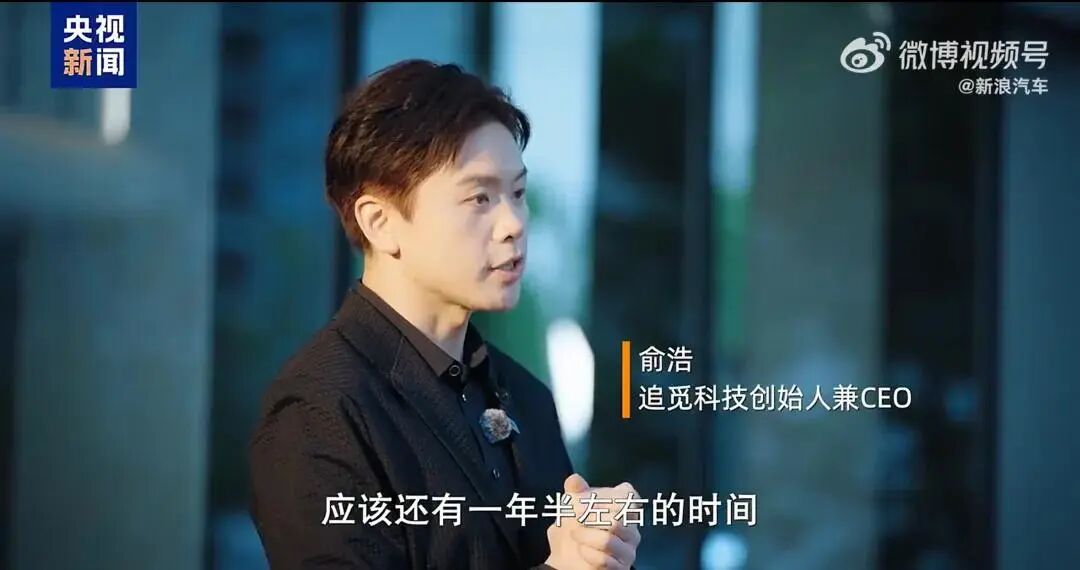
In mid-May, he publicly revealed in an interview that the Dreame car project plans to achieve mass production in about one and a half years, prioritizing overseas markets. Just the previous April, Dreame had launched its supercar, Nebula NEXT 01 JET Edition, equipped with a dual solid rocket booster system, in Silicon Valley, USA. The car, which boasts a 0-100 km/h acceleration time of just 0.9 seconds, became one of the most talked-about news stories in the automotive circle at the time. Yu Hao even claimed that they aim to build 'the first rocket car in human history to accelerate from 0 to 100 km/h in under 1 second.'
Source: CCTV News
A home appliance company primarily engaged in robotic vacuum cleaners and high-speed hair dryers is attempting to enter the automotive industry through a vastly different route.
Why is Dreame's foray into car manufacturing noteworthy? Because Dreame has chosen a path almost no one else has taken: it wants to follow the 'Huawei Model' of contract manufacturing cooperation while also pursuing 'full in-house R&D' from electric motors to intelligent driving chips. It claims to avoid the fiercely competitive domestic market by prioritizing overseas expansion, yet it attempts to challenge the global premium market with its 'N+1' product logic. Can this path succeed?

Can the 'Huawei Model' Be Replicated?
Dreame's core strategy in car manufacturing is to emulate Huawei's collaborative model.
Ma Junye, President of Dreame's Starry Sky Project, explicitly stated that Dreame will not apply for car manufacturing qualifications independently but will instead collaborate with established automotive OEMs for joint R&D and contract manufacturing. Dreame will be responsible for core technology and platform R&D, while the partner automaker will handle vehicle manufacturing and brand endorsement.
The appeal of this model lies in avoiding the heavy asset investment required for building its own vehicle factory, allowing it to focus limited funds and resources on R&D.
However, Yuan Shuai, Deputy Secretary-General of the Zhongguancun Internet of Things Industry Alliance, stated bluntly in an interview with Securities Times: 'On the surface, Dreame's approach resembles Huawei's car manufacturing model, but Dreame's capabilities and industry influence are not even close to Huawei's. The two are not comparable.'
Huawei has deep roots in the telecommunications sector, with three decades of accumulation in chip R&D, in-vehicle operating systems, and automotive-grade communication technologies—core resources in the era of intelligent new energy vehicles. Its HarmonyOS intelligent cockpit and advanced intelligent driving solutions are key pillars supporting the viability of the Huawei Model.
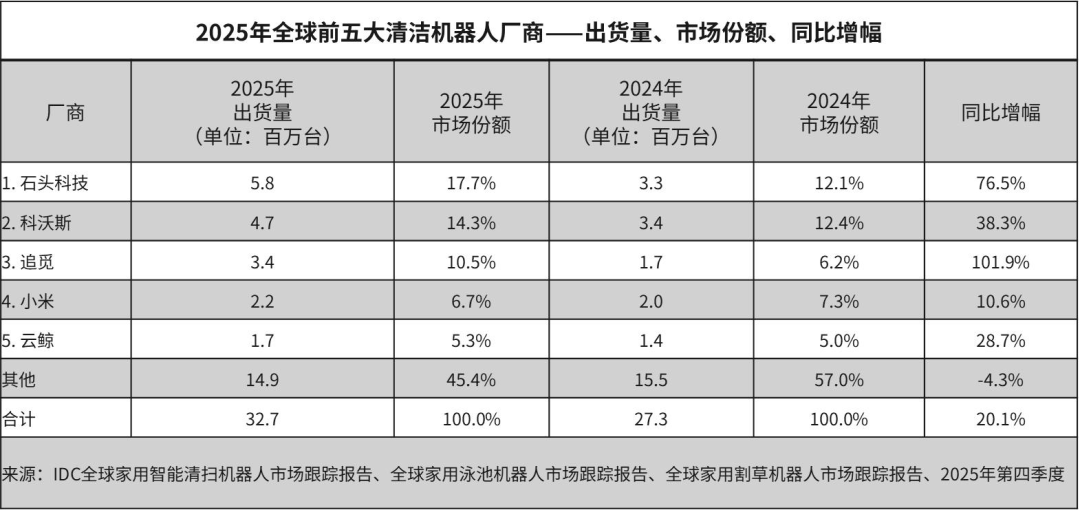
In contrast, Dreame's business foundation lies in home cleaning appliances. According to public data, Dreame held about a 10% global market share in robotic vacuum cleaners in 2025, ranking third, lagging behind Roborock and Ecovacs.
Source: Publicly Available Information
'Dreame's home appliance business base is limited in scale, and the home appliance sector itself faces competition from giants like Midea and Xiaomi. This means Dreame is unlikely to replicate Huawei's path of heavy long-term investment and patient waiting for technology maturation,' Yuan Shuai pointed out. Dreame's choice to emulate Huawei's car manufacturing model is 'more of a strategic narrative to help it tell more imaginative business stories during the funding stage.'
Notably, Dreame aims to pursue both collaborative car manufacturing and 'full in-house R&D.' Whether these two goals can be achieved simultaneously remains questionable.
Ma Junye repeatedly emphasizes 'full in-house R&D,' covering nearly all core components, from the pure electric platform chassis and electric motors to solid-state batteries, intelligent cockpit operating systems, and autonomous driving algorithms. Dreame's R&D team already exceeds 1,000 members, with R&D personnel accounting for 70% of the total, and plans to grow to nearly 2,000 by the latter half of this year. Yu Hao himself is deeply involved in the vehicle's ID styling design and product definition, communicating daily in internal groups.
However, the core strength of the 'Huawei Model' lies in the completeness of the HarmonyOS ecosystem and years of accumulated technological depth. Dreame's ambition to achieve such deep in-house R&D under a contract manufacturing model would require an enormous amount of funding for technological investment. As Pan Jun, a visiting professor at Donghua University, noted, 'The automotive industry has extremely high barriers to entry... All new entrants in the era of intelligence face triple pressures of 'scale-cost-survival.' Dreame's in-house R&D route is incompatible with its contract manufacturing path. Contract manufacturing addresses the manufacturing link , but long-term R&D accumulation cannot be replaced by contract manufacturing.'

Is the Story of 'Motor Technology Transfer' Plausible?
Dreame believes that a significant technological foundation for its car manufacturing comes from the homologous transfer of high-speed digital motor technology.
The high-speed digital motors developed by Dreame for intelligent cleaning devices and the electric drive motors used in new energy vehicles both require efficient conversion of electrical energy and precise control of power output while meeting mass production requirements for operational stability under high-load conditions.
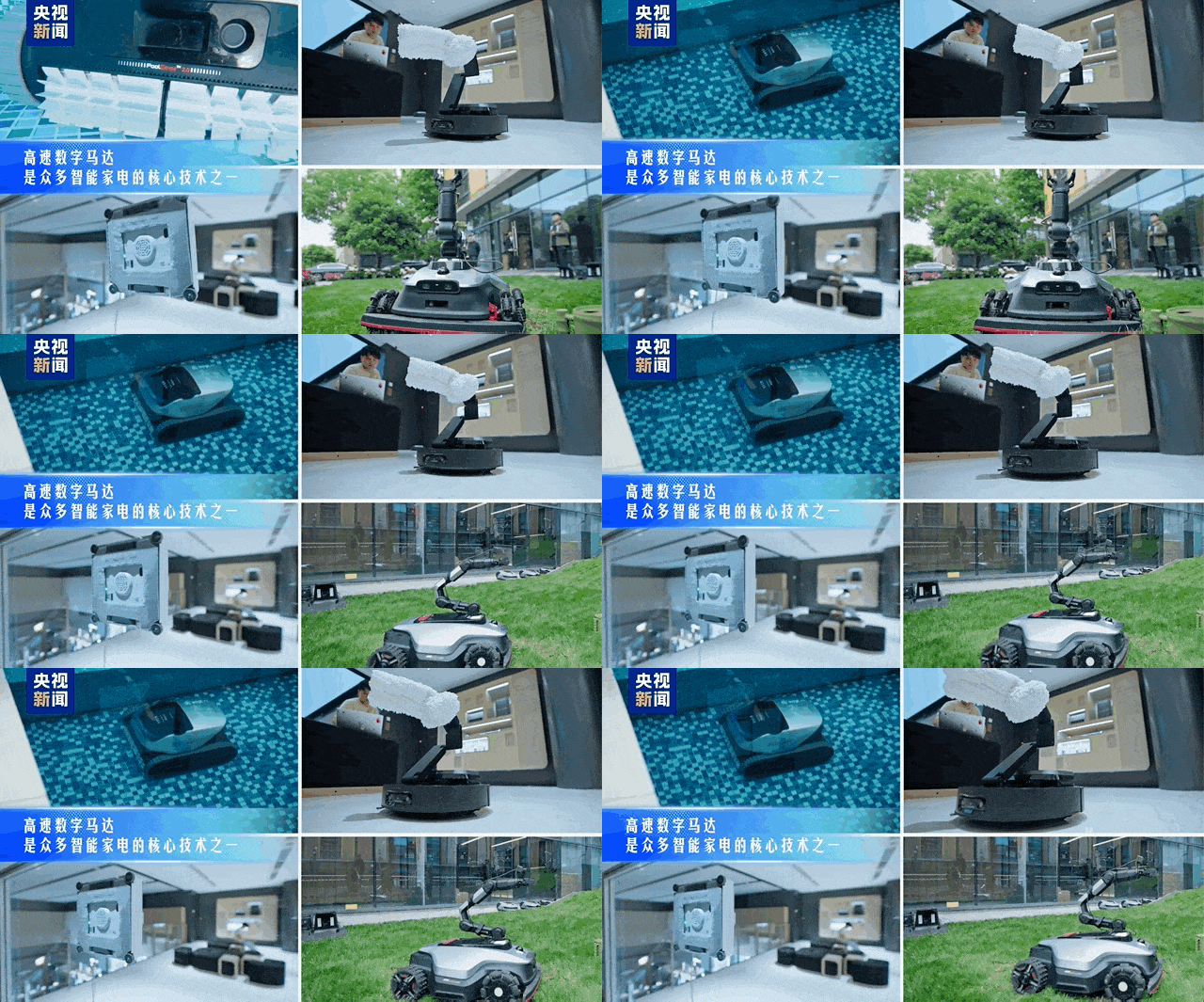
Source: CCTV News
Dreame's accumulations in the motor field are indeed compelling. While international manufacturers' electric motors typically operate at 125,000 RPM, Dreame has pushed this figure beyond 200,000 RPM. At the 2026 Beijing Auto Show, Dreame showcased its 'Starry Sky Twelve Full-Stack Technology System,' featuring a range of core technological achievements, including the flagship LiDAR DHX1, the first mass-producible all-solid-state battery, and a full wire-controlled intelligent chassis. Ma Junye further revealed that Dreame's self-developed motors have exceeded 30,000 RPM, with a single-motor power exceeding 450 kW and a total vehicle power of up to 1,800 kW in a four-motor layout—compared to Tesla Model S Plaid's three-motor total power of about 760 kW.
However, scaling motor technology from home appliances with tens of watts to automotive systems with hundreds of kilowatts involves different requirements in voltage levels, thermal management, safety redundancy, and automotive-grade certification. While Dreame's global presence, with over 6,500 physical stores and a presence in more than 120 countries and regions, provides some support for its automotive sales, the complexity of selling robotic vacuum cleaners and selling cars differs vastly—the latter involves a complete ecosystem of delivery centers, maintenance networks, and financial services, requiring far higher investment than the home appliance industry.
Thus, Dreame's narrative of 'full in-house R&D' faces far greater challenges in the automotive industry than mere technological realization. Vehicle engineering capabilities, supply chain management, quality systems, and after-sales networks are all critical areas that must be navigated to succeed in car manufacturing.
Another layer of concern for Dreame's car manufacturing endeavor lies in its supply chain. In May 2026, Tianyancha information revealed that Dreame's car manufacturing entity, Starry Sky Project (Shanghai) Automotive Technology Co., Ltd., had a new equity freeze notice involving approximately 2.3225 million yuan in frozen equity. According to a subsequent statement from Starry Sky Project, the matter stemmed from a ordinary commercial dispute with a supplier, and both parties had reached a settlement. However, according to Shanghai Securities News, citing an industry insider, some suppliers remain cautious about new automakers, 'mainly due to concerns over payment risks'—the failures of past new energy vehicle startups like Seres, WM Motor, and Jiyue have indeed caused actual losses to upstream suppliers.
An automotive industry insider pointed out that it is 'relatively rare' for a new automaker to become involved in commercial legal disputes with suppliers before mass production. Typically, at this stage, large-scale raw material procurement has not yet begun, and disputes are more likely to revolve around manufacturing equipment and related services.
According to Xinhua Finance, while Dreame's planned industrial land project in Lingang has been publicly announced for over a year, there has been no sign of construction, and the project has not seen substantive progress. Uncertainties surrounding the mass production timeline are not unfounded.
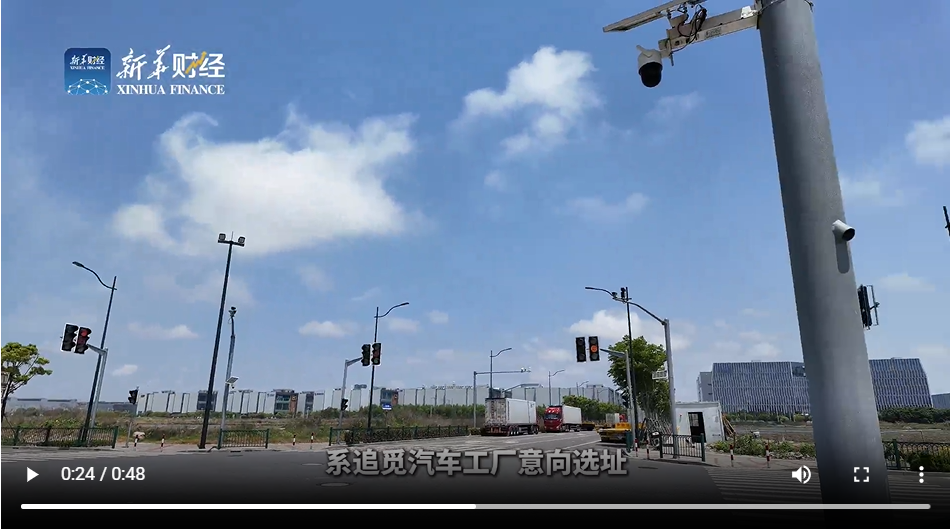
Source: Xinhua Finance

Is the 'Global Premium Route' a Breakthrough or Just a Pie in the Sky?
Dreame's relatively clear differentiated direction in car manufacturing is to go overseas and target the premium segment.
Yu Hao once claimed, 'Among those who truly understand automotive design in China, only Lei Jun, Richard Yu, and I come close; everyone else lags far behind,' and 'In 20 years, Dreame, Huawei, and Xiaomi will be the strongest automakers globally.' Dreame believes that many domestic automakers only produce affordable models for overseas markets due to a 'lack of brand confidence,' while it, leveraging its established premium brand image, will focus on the new energy premium market, with some high-end models potentially priced in the tens of millions.
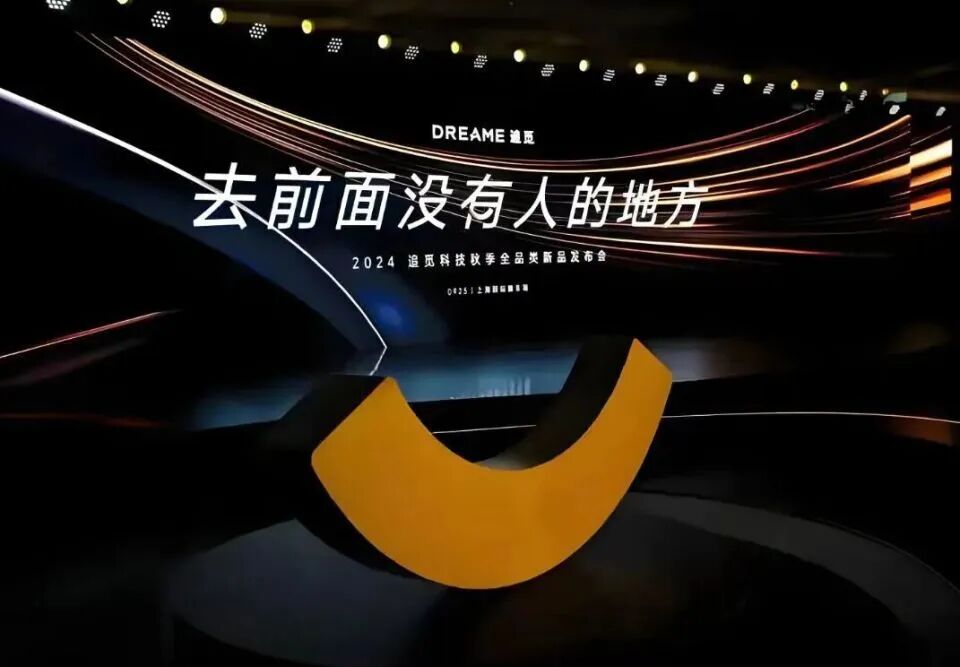
Source: Publicly Available Information
Dreame has at least two narratives for its overseas expansion.
The first is channel reuse. Dreame already operates in over 120 countries and regions globally, with more than 6,500 physical stores and overseas revenue accounting for nearly 80% of its total. In the U.S. market, Dreame's robotic vacuum cleaner revenue grew by 189% in 2025, while its floor washer revenue surged by 235%, with flagship stores opened in Silicon Valley, Los Angeles, and other benchmark locations. These channel networks could theoretically be repurposed as automotive marketing touchpoints.
The second is supply chain localization. Dreame has established its European production base in Berlin, Germany, adjacent to Tesla's factory, aiming to leverage the surrounding mature automotive industry cluster to reduce parts procurement and transportation costs. In product definition, Dreame proposes the 'N+1' methodology—not competing on price (N-1) but winning market share through superior product capabilities.
However, in today's global new energy vehicle market, which has entered a phase of stock competition (inventory competition), the narrative of an 'overseas blue ocean' is facing real-world tests. Several automotive industry insiders pointed out that overseas markets already face intense competition from international giants like Tesla, Volkswagen, and Toyota, as well as local brands, and Dreame's competitive landscape is no less challenging than in China.
Another uncertainty comes from within Dreame. According to National Business Daily, Dreame Technology's car manufacturing plans have shifted from initially focusing solely on international markets to advancing in both domestic and international markets simultaneously. Dreame has multiple car manufacturing teams—the 'Starry Sky Project' is directly under the Dreame brand, while 'STARMOTOTR Interstellar Crossing' is an independent brand incubated by the 'Dreame Fund.' Additionally, there are teams responsible for off-road vehicles ('Shanye') and RVs ('Starry Sky Dream House').
The relationships among these decentralized car manufacturing entities are unclear. When multiple brands advance simultaneously, how will resources be allocated? How will channels be coordinated? More importantly, Dreame is simultaneously expanding into multiple new sectors, including high-speed motors, embodied intelligence, and consumer electronics. The pressure on its capital chain from multi-line expansion is evident, and the investment required for car manufacturing far exceeds that of other sectors.

The One-and-a-Half-Year Mass Production Timeline
Among all the controversies, the mass production timeline is the most critical.
Yu Hao's proposal to achieve mass production in 'about one and a half years,' if completed on schedule, would represent a relatively fast execution speed in the cross-industry car manufacturing sector. However, the industry generally believes that this timeline is 'detached from industry norms.'
Authoritative data shows that car manufacturing requires at least 20 to 30 billion yuan in startup capital and a 5- to 8-year period of losses. By April 2026, the penetration rate of new energy vehicles in the Chinese market had exceeded 60%, and the entire industry had entered a brutal phase of elimination. For new entrants, every automaker faces triple pressures of 'scale-cost-survival.'
Dreame's response to funding concerns is that it has 'reserved sufficient funds' and emphasizes that its asset-light car manufacturing model 'requires far less fixed asset investment than fully-owned factory construction.' However, the issue of car manufacturing qualifications remains unresolved. Dreame has explicitly stated that it will not apply for car manufacturing qualifications independently but will instead collaborate with partner automakers to create a new brand. The question remains: Who are the partners?
Previous rumors suggested Chery Automobile as a potential partner, but Chery has publicly denied these claims. Dreame has yet to announce any specific partner automaker.
Guo Tao, an angel investor and senior AI expert, stated bluntly in an interview with Securities Times: 'Dreame's foray into car manufacturing is more of a cross-industry gamble driven by marketing and capital speculation. Its one-and-a-half-year mass production plan is detached from industry norms, lacking experience and accumulation in the automotive field. Its current actions focus on marketing rather than building core capabilities. Under the hard constraints of technology, supply chain, and funding, it will struggle to establish itself in the fierce competition.'
Whether Dreame can gain a firm foothold in the automotive industry largely depends on the answers to two unknowns:
First, who can become Dreame's "Seres"? Without the technological brand momentum like Huawei, can Dreame's "Huawei model" truly succeed? Identifying the potential contract manufacturing partner and finalizing the deal will be the most critical juncture.
Second, can Dreame strike a balance between market vision and practical capabilities? The rocket car that accelerates to 100 km/h in 0.9 seconds and its price tag exceeding a million yuan are core tools for generating buzz. However, whether these can be translated into truly scalable products and how long the main business resources can sustain vehicle manufacturing will ultimately determine the project's survival.
"Mass production in about one and a half years"—the endpoint of this timeline is the end of 2027. Only then will the answers truly emerge.
- End -
Disclaimer:
All works marked 'Source: XXX (not Smart Car Technology)' in this official account are reprinted from other media. The purpose of reprinting is to transmit and share more information, and does not represent this platform's endorsement of their views or responsibility for their authenticity. Copyright belongs to the original authors. If there is any infringement, please contact us for deletion.
-
![]()
618 'Silent Mode': Algorithms Speak Louder Than Words
-
![]()
The New Battle for 'AI Workstations' Among Tencent, Google, and Others: Can Marvis and Its Peers Replace Human Workers?
-
![]()
Bestune Finally Wakes Up! Yueyi 08 Launches Pre-sale, Can the Independent Brand Make a Splash?
-
![]()
The Dividends of AI Investment Have Yet to Materialize: Replicating a Century of Electrification, Industrial Transformation Approaches a Turning Point
-
![]()
A Hackathon Reveals How AI Reshapes a Company with Ten Thousand Employees
-
![]()
Musk Hurriedly Promotes 'American Coding Version of DeepSeek,' Comment Section: 'Not Even as Good as Free Alternatives...'
-
![]()
Dissecting the Satellite Architecture of Assisted Driving: It's Not Just Performance Upgrades, but a Shift in Industrial Chain Dominance!
-
![]()
AI Image Generation Finally Stops Guessing! GenEvolve Transforms Open-Ended Image Generation into a Trainable, Self-Evolving Agent!