When the Supply Chain Transforms into a 'Profit Chaser', Who Will Rescue the Auto Industry's Bottom Line?
 04/17 2026
 575
575
Manufacturers are struggling to turn a profit, the supply chain is facing slim margins, and consumers are not reaping the benefits either.
As the automotive sector continues its expansion, the release of annual financial results from various car manufacturers has thrown a wet blanket over the seemingly booming automotive manufacturing landscape, with profits taking a hit once again. The automotive industry finds itself in a predicament of rising sales but stagnant profitability.
According to data from the China Passenger Car Association, the profit margin of China's automotive industry stood at a mere 4.1% in 2025, significantly lower than the 6.2% recorded in 2020. As we stepped into 2026, the situation failed to show signs of improvement. In the first two months of this year, the profit margin of the automotive industry dipped further, reaching only 2.9%.
In response to the profit decline, various stakeholders presented diverse viewpoints at the recent High-Level Forum on the Development of Intelligent Electric Vehicles, sparking widespread attention.
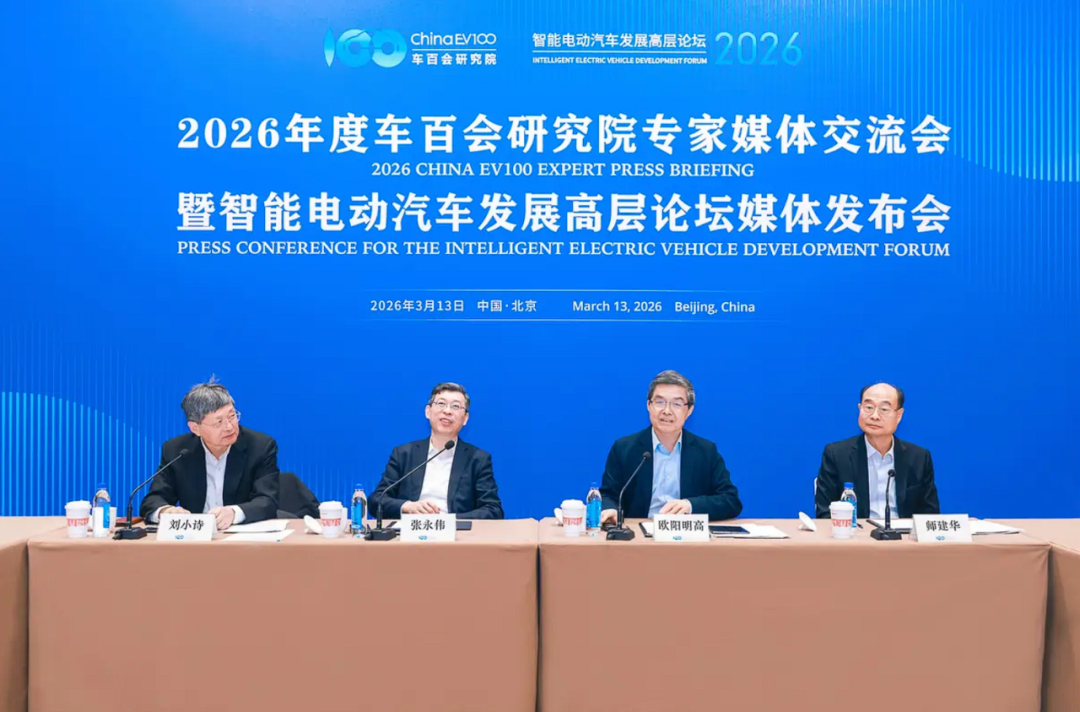
In particular, regarding automakers' pursuit of in-house research and development, Zhou Shiying, Deputy General Manager of the Strategy and Cooperation Department at FAW, and Wu Zhen, President of Magna China, offered unique insights.
Li Bin even raised a thought-provoking question: When manufacturers are not making profits, the supply chain is not reaping rewards, and users are not benefiting either, who is pocketing the money?
In-House R&D vs. Outsourcing
Looking back at the evolution of the automotive manufacturing industry, during the era of internal combustion engine vehicles, outsourcing was the prevailing approach. Even core components like engines and transmissions were sourced externally, and automakers formed a symbiotic relationship with their supply chains. Major automotive manufacturing groups all had their preferred suppliers.
However, with the advent of the new energy era, the advantages brought by electrification and intelligence have spurred a growing trend of in-house research and development among automakers, even faintly creating a market perception that in-house R&D is superior to outsourcing.
Recently, at an event hosted by an automaker, the company's fixation on in-house R&D was on full display. On one hand, they sought endorsement from a renowned autonomous driving company, while on the other hand, they aimed to showcase their own in-house R&D capabilities. The description of the background for the assisted driving features underwent three revisions, reflecting significant internal conflict.
The original motivation behind in-house R&D stemmed from automakers' considerations of cost and core technology.
From the automakers' perspective, in-house R&D offers three advantages in terms of cost and operations.
Firstly, in-house R&D can lead to direct cost savings. Li Bin of NIO mentioned that developing intelligent driving chips in-house could reduce costs by 10,000 yuan per vehicle. Previously, NIO spent $300 million annually procuring chips from NVIDIA.
This principle is not exclusive to NIO; XPENG and Li Auto have also joined the ranks of chip self-research. Through in-house R&D, XPENG has been able to offer high-level assisted driving features in products priced at the 100,000-yuan level, demonstrating the cost control advantages of in-house R&D.
Secondly, in-house R&D enables automakers to establish their own technological barriers and even ecosystems, enhancing product competitiveness and serving as a silent rebuttal to the past "soul theory" debate.
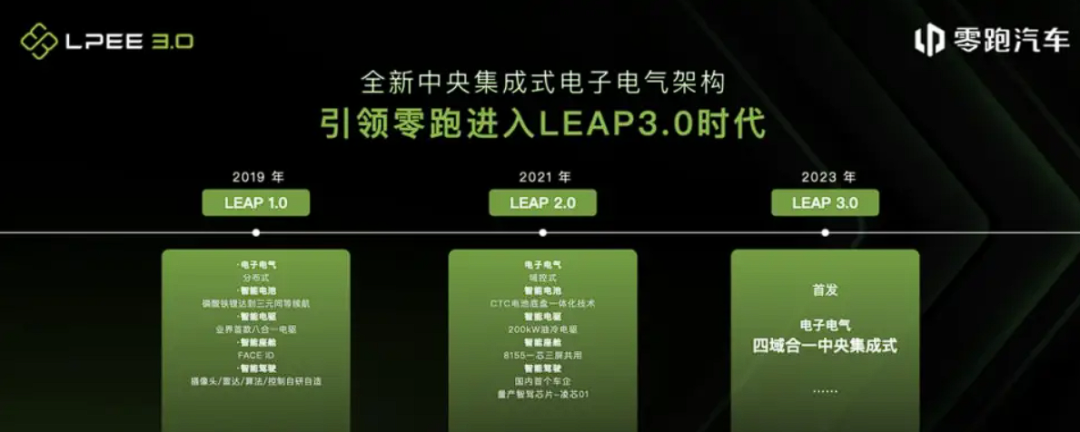
Most importantly, in-house R&D provides a voice within the supply chain system, ensuring supply security. Over the past five years, the fragility of the automotive supply chain has been exposed, with even minor disruptions causing supply crises. From chip shortages to rising battery prices, automakers have found themselves in a passive position relative to the supply chain.
Only through in-house R&D and even self-manufacturing can supply and demand stability be ensured. Li Bin mentioned at the forum that it is "normal" for a model to waste hundreds of millions of yuan due to mismatches between production capacity and demand.
However, in-house R&D is a double-edged sword. While it offers cost advantages, it also comes with high investment risks, especially in the field of intelligence. Automakers are investing heavily in software development and autonomous driving, and more concerningly, each automaker is making these investments independently, leading to redundant R&D expenditures.
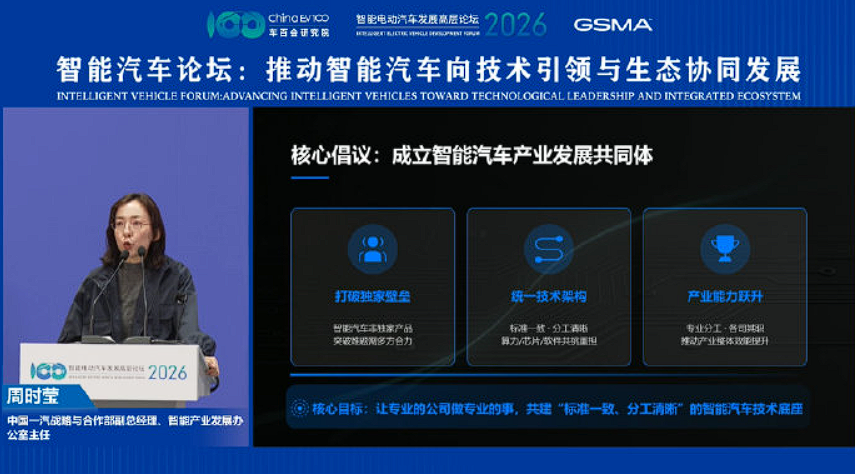
In response to this issue, Zhou Shiying, Deputy General Manager of the Strategy and Cooperation Department at FAW, stated that such low-level redundant construction has led to soaring R&D costs without delivering true technological breakthroughs, causing automakers to "lose sight of the forest for the trees."
Regarding this point, Wu Zhen, President of Magna China, emphasized that in-house R&D must consider commercial laws and economies of scale. If automakers developing chips in-house have sufficient scale, they will proceed if the return on investment is profitable; otherwise, they should adopt products from external third-party suppliers.
However, in reality, the annual sales volume of most automakers is far from sufficient to amortize the enormous R&D costs.
High R&D investments ultimately only become expenses on financial reports without generating tangible profits.
The Other Side of the Coin
When the issues of in-house R&D are brought to the forefront, supply chain procurement seems to offer a viable solution. However, automakers have even more grievances when it comes to the supply chain, which is often seen as their adversary in many contexts.
Against the backdrop of declining profits in the automotive manufacturing industry, many supply chain companies have seen their profits soar, especially key suppliers who have reaped substantial rewards.
For example, GAC Motor has publicly stated that automakers are essentially working for battery manufacturers. Affected by the price war in the new energy vehicle sector, the prices of new vehicles continue to decline. While battery prices are also falling, battery manufacturers still maintain significant bargaining power.
Starting from the fourth quarter of 2025, China's power battery market has faced a new supply-demand imbalance, with automakers scrambling to secure battery production capacity becoming the norm. There are even rumors of automaker executives personally visiting suppliers to seek additional capacity.
Against this backdrop, CATL, a giant in the power battery industry, delivered another impressive financial report in 2025, with annual revenue reaching 423.7 billion yuan, up 17% year-on-year, and net profit reaching 72.2 billion yuan, up 42% year-on-year, averaging nearly 200 million yuan in daily profits.
Data also shows that in the net profit distribution of the entire new energy vehicle industry chain, the battery segment accounts for over 70% of the industry's total net profit. It can be said that the automotive industry has long suffered from the dominance of battery manufacturers.
On the other hand, the often-overlooked raw material sector is also silently impacting automotive costs. Data indicates that the profits of upstream industries such as non-ferrous metal mining and smelting improved significantly in 2025, leading to an 8.1% increase in automotive industry costs, far outpacing the growth in revenue and profits of the automotive sector.
It seems that the entire automotive industry's profits are being devoured by the supply chain. Power battery manufacturers are making profits, non-ferrous metal companies are profitable, and even LiDAR companies are earning money. Only automakers are struggling to turn a profit.
However, traditional suppliers have their own grievances. In early 2025, a supplier disclosed online that it would no longer accept the annual price reduction demands of a large automaker.
Compared to well-known suppliers, many traditional suppliers have little bargaining power in front of automakers, and these mature product supply chains are the most affected by price wars.
Although the number of components in a vehicle has been optimized from around 25,000 to 15,000 due to intelligence, components like seats, shock absorbers, and even screws have seen little change. Under economies of scale, costs have already been averaged out, following a low-margin, high-volume business model.
However, automakers believe that these suppliers still have room for price reductions. While they may not be able to negotiate with dominant battery and chip suppliers, they take a tough stance against suppliers of mature processes, with annual price reductions of 10% becoming commonplace.
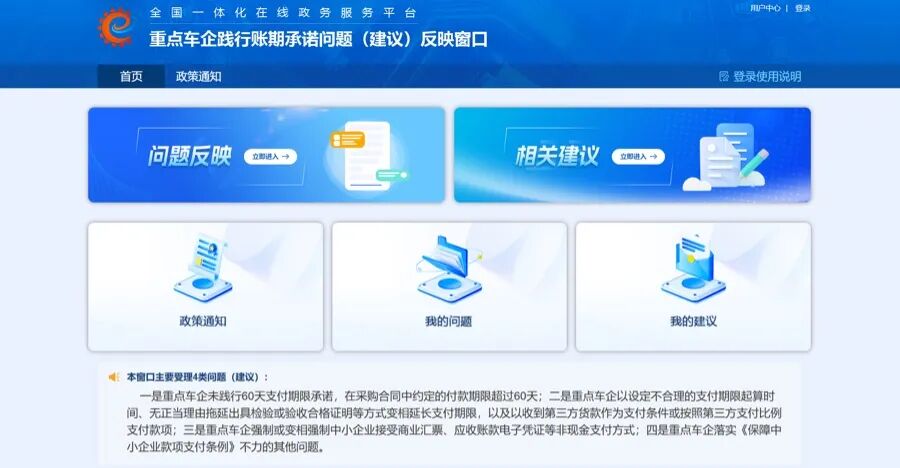
This imbalanced supply-demand relationship was brought to light in 2025, prompting multiple departments to intervene and set a "60-day payment term" red line to alleviate the financial pressure on small and medium-sized suppliers.
While the policy's intentions are good, automakers have found ways to circumvent it, using methods such as "supply chain finance" and "bill discounting" to indirectly extend payment cycles.
As for why automakers don't pursue in-house R&D for these components, the answer is simple: for these mature processes, suppliers' prices are already lower than what automakers could achieve through in-house R&D. Automakers would not engage in unprofitable ventures.
Automakers are willing to incur losses in areas that can attract investment stories, such as autonomous driving and artificial intelligence, to maintain financing capabilities in the capital markets.
Now, many automakers have come to realize this and are choosing to embrace key suppliers to reduce in-house R&D risks. From HarmonyOS-based infotainment systems to Momenta's assisted driving solutions, they are preserving price advantages and profitability.
For automakers, the choice between in-house R&D and procurement should not be dictated by "political correctness" but should be based on rational judgments considering scale, technological maturity, and differentiated value.
The core competence of automakers should not lie in in-house R&D of every component but in achieving optimal integration at the system level. Finding a balance between in-house R&D and the supply chain and identifying the optimal path between scale and innovation is crucial.
Note: Some images are sourced from the internet. If there is any infringement, please contact us for removal.
-END-
-
![]()
Musk Hurriedly Promotes 'American Coding Version of DeepSeek,' Comment Section: 'Not Even as Good as Free Alternatives...'
-
![]()
Dissecting the Satellite Architecture of Assisted Driving: It's Not Just Performance Upgrades, but a Shift in Industrial Chain Dominance!
-
![]()
AI Image Generation Finally Stops Guessing! GenEvolve Transforms Open-Ended Image Generation into a Trainable, Self-Evolving Agent!
-
![]()
Another Way to Thrive for Large Models: MiniMax Has Found the Path
-
![]()
Can Dreame's 'Asset-Light + Full In-House R&D' Approach Succeed in Automobile Manufacturing?
-
![]()
Sales Slump: The Waning Appeal of Imported Luxury Cars
-
![]()
Japanese Automakers Experience Collective Downturn, Financial Performance of Top Three Plummets
-
![]()
Sales Plummet by 90%! Why Is Dongfeng Peugeot Citroën Automobile Struggling to Maintain Its Foothold in the French Car Market?