"Selling Cars Alone Can't Generate Profits": Where Has the Auto Industry's Profit Gone?
 04/21 2026
 638
638
"Increasing Sales Without Increasing Revenue, Increasing Revenue Without Increasing Profits"
"Currently, automakers can no longer generate profits solely by selling cars," said Zhao Fei, General Manager of China Changan Automobile Group, at the recent High-Level Forum on the Development of Intelligent Electric Vehicles (2026).
Zhao Fei's statement is not an exaggeration but a true reflection of the current state of the automotive industry.
"From January to February this year, the automotive industry's profit margin was only 2.9%, showing significant downward pressure," Cui Dongshu, Secretary-General of the China Passenger Car Association (CPCA), stated bluntly at the forum. "The automotive manufacturing industry's profits are facing pressure from both upstream and downstream sectors."
From leading companies to small and medium-sized brands, and from new energy vehicles to fuel-powered cars, the entire industry is almost trapped in the vicious cycle of "increasing sales without increasing revenue, and increasing revenue without increasing profits." Sales volumes continue to grow, but profits are being squeezed thinner and thinner. Many companies are even operating at a loss for extended periods, relying on financing and shareholder investments to sustain operations.
Once, the automotive industry's profit margin was stable at around 8%, making it a "high-quality sector" within manufacturing. Today, however, the entire industry is facing a severe test of consecutive profit halving.
Where has the automotive industry's profit gone amid all the excitement?
Increasing Scale, Thinning Profits
The most intuitive (Note: ' intuitive ' is kept as is since it seems to be a placeholder for 'obvious' or 'visible' in the context, but for strict translation, it could be replaced with 'obvious') manifestation of the significant decline in the automotive industry's profits is the severe imbalance in the distribution of profits along the industrial chain. Original equipment manufacturers (OEMs) in the mid- and downstream sectors have seen their bargaining power within the chain continuously erode, becoming the most severely squeezed link in terms of profits.
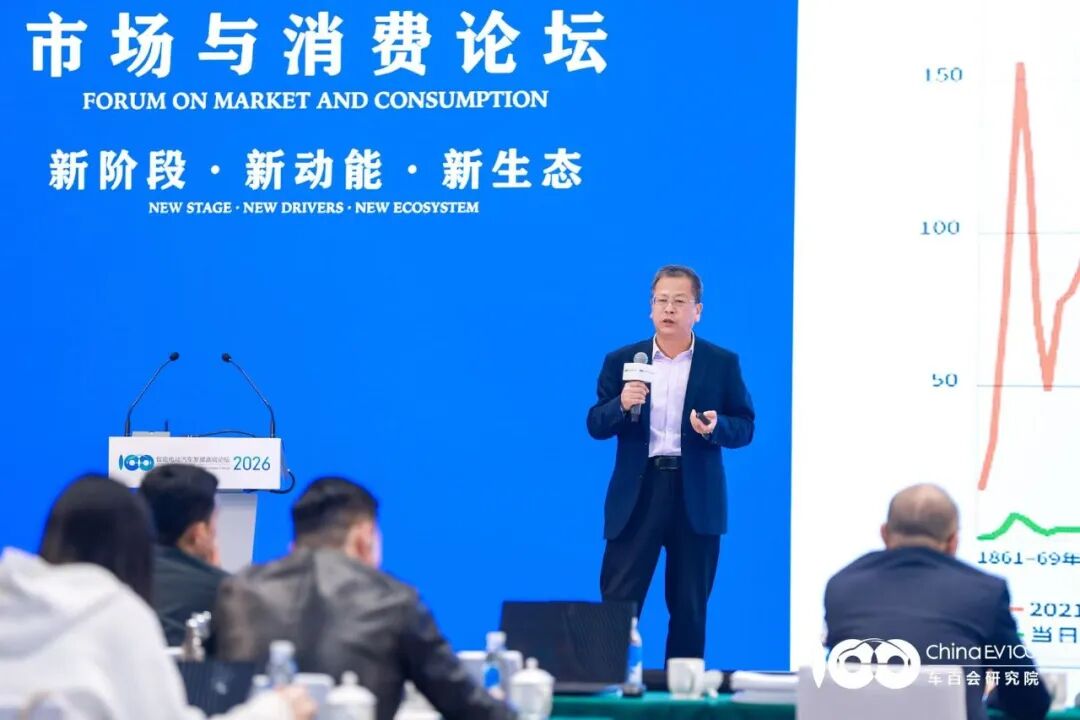
Image Source: Che Bai Hui Research Institute
According to Cui Dongshu, from January to February 2026, the profit margin of the non-ferrous metal industry was 39.4%, compared to just 9% in 2017. The oil industry's profit margin jumped from 5% to around 30%. In stark contrast, the automotive industry's profit margin fell from 8% in 2017 to 2.9%. "The automotive industry has made significant contributions to the upstream sector, and the contrast between upstream and downstream is becoming increasingly apparent. The mid- and downstream sectors, particularly the automotive industry, are under tremendous pressure and are currently struggling," Cui Dongshu said bluntly.
"Everyone is selling the same dumplings, but in the end, it's the dumpling wrapper sellers who are making money," said Zhang Yun, Global CEO and China Chairman of Ries Strategic Consulting, during an interview at the forum. Behind the industry's rapid growth lies a quagmire of "involution." Automakers are operating at a loss, with their profits being squeezed by upstream battery and chip sectors.
This viewpoint is corroborated by the financial reports of battery and automotive companies.
In the power battery industry, CATL's net profit has grown rapidly for five consecutive years, rising from 15.9 billion yuan in 2021 to 72.2 billion yuan in 2025, with a compound annual growth rate of 66.9%. According to its first-quarter report for 2026, CATL achieved total revenue of 129.131 billion yuan, up 52.45% year-on-year, and net profit attributable to shareholders of 20.738 billion yuan, up 48.52% year-on-year.
In contrast, even BYD, the domestic automaker with the highest revenue, could not avoid the trend of "increasing sales but decreasing profits." Data shows that in 2025, BYD's annual revenue reached 803.96 billion yuan, marking another step up in scale. However, its net profit for the year was only 32.62 billion yuan, a decrease of nearly 7 billion yuan from the previous year, representing a year-on-year decline of nearly 19%. This was also the first time in four years that BYD experienced a year-on-year decline in net profit. Notably, BYD possesses a rare vertical integration capability across the entire industry chain, but even this could not withstand the profit squeeze caused by excessive competition in the industry.
Li Bin, Founder and Chairman of NIO, stated at the forum that while the entire intelligent electric vehicle industry is still growing, it generally faces the challenge of "increasing sales without increasing revenue, and increasing revenue without increasing profits." Many companies are expanding in scale, but their profits continue to thin, and some are even mired in long-term losses. Li Bin lamented that this is not an operational issue for individual companies but a systemic dilemma facing the entire industry. Currently, batteries and chips account for more than 50% of the cost of intelligent electric vehicles. With chip iterations and battery technology advancements, vehicles must also iterate, "which brings significant supply chain pressure and makes it extremely difficult to balance supply and demand."
Lively Auto Show Scene (Photography/Liu Shanshan)
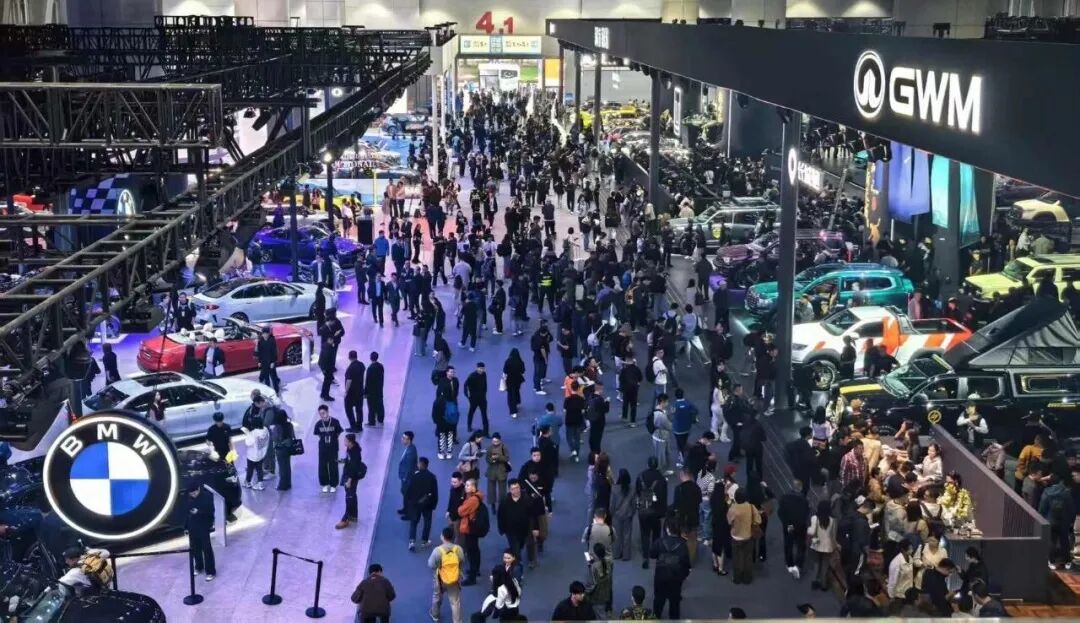
Meanwhile, the profit pressure in the automotive industry continues to be amplified by the ongoing price wars, which have now lasted for three years without abating. At the beginning of 2026, the trend of price reductions in the automotive market intensified. BMW's flagship model saw a price drop of 300,000 yuan, while joint venture mainstay models like the Accord and Wildlander fell below 140,000 yuan. Domestic brands, in an effort to defend their market share, were forced to follow suit, leading to collective price reductions for nearly 70 models across the industry. According to a report by the CPCA, from January to March 2026, the average price of new energy vehicles that underwent price reductions was 275,000 yuan, with an average reduction of 38,000 yuan, representing a reduction intensity of 13.7%. For conventional fuel vehicles, the average price of models that underwent price reductions was 258,000 yuan, with an average reduction of 37,000 yuan, and the reduction intensity reached 14.3%.
How to Break the Profitability Dilemma
Overall, the continuous decline in automakers' profit margins is the result of multiple factors, including rigid cost pressures, excessive market competition, uneven distribution of profits along the industrial chain, and fluctuations in consumer demand. This is a problem facing the entire industry, not just individual companies.
Faced with this issue, automakers and industry insiders are exploring paths to break the deadlock, with the core direction shifting from the past blind pursuit of scale expansion to improving profitability and achieving self-sustaining high-quality development.
Li Bin told China Newsweek that in the past, fuel vehicles iterated every 5-7 years, with relatively long investment and amortization cycles, so the pressure was not great. Now, whether it's intelligent chips, battery technology, or exterior and interior iterations, they must accelerate alongside model refreshes. If any aspect fails to iterate, the new vehicle will feel outdated.
Currently, a common issue in the industry is that new vehicles experience pulsatile dissemination, with consumers waiting for delivery during the hot-selling period. However, once production capacity and the supply chain ramp up, market demand declines, leading to significant waste. Li Bin stated bluntly that it is normal for a model to waste several hundred million yuan, with neither the manufacturer, the supply chain, nor the users benefiting.
In Li Bin's view, promoting the standardization and unification of core components is the most direct and potentially significant path for the industry to reduce costs and improve efficiency. Li Bin pointed out that the current immense supply chain pressure and difficulty in balancing supply and demand largely stem from the clutter (Note: ' clutter ' is translated as 'disorderly' or 'chaotic,' but for strict adherence to the context, it could be replaced with a more specific term like 'diversity' or 'fragmentation' if referring to the variety of specifications) specifications of battery cells and the multitude of chip models, leading to high adaptation costs, redundant research and development investments, and low production efficiency. If the entire industry can promote the standardization of battery cell specifications and achieve the unification of chip platforms, reducing unnecessary technological fragmentation, it will significantly enhance supply chain efficiency and improve the issue of mismatched supply and demand. "The standardization of battery cell specifications and the unification of chips are of great significance for improving the supply efficiency of key components in intelligent electric vehicles and solving the problem of matching supply and demand amid product fluctuations. As long as these two things are done well, the entire industry can reduce costs by hundreds of billions of yuan without any issue," Li Bin said.
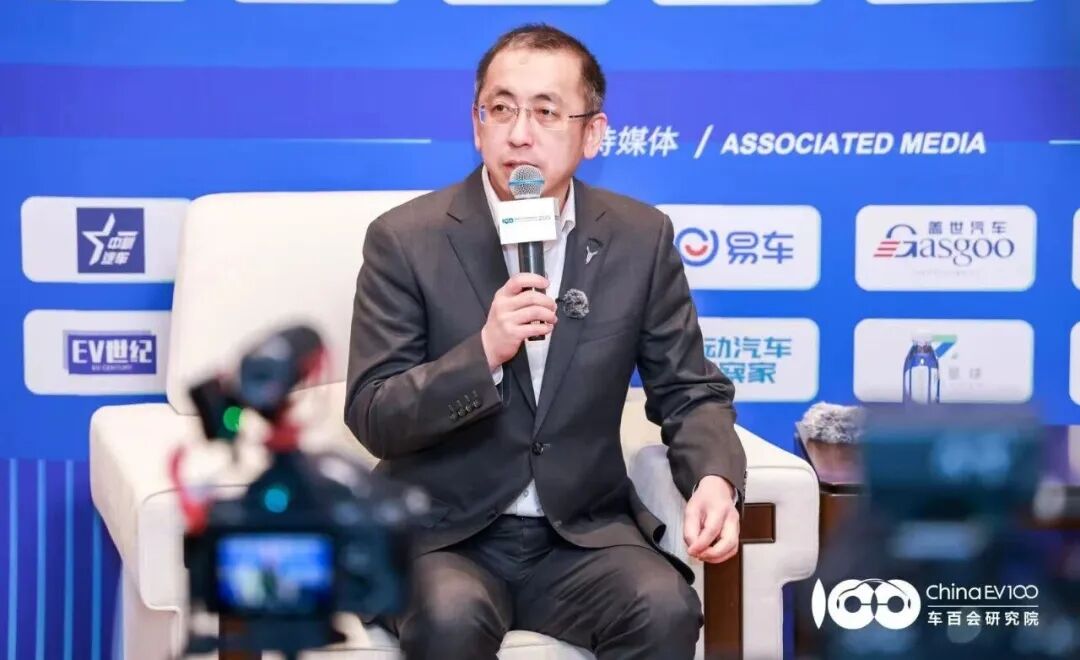
Lu Fang, Chairman and Party Secretary of VOYAH Automobile (Image Source: Che Bai Hui Research Institute)
Lu Fang, Chairman and Party Secretary of VOYAH Automobile, told the media that improving internal quality, reducing costs, and increasing efficiency, while optimizing the product mix externally, are fundamental measures for automakers to achieve self-sustaining growth.
"To ensure high-quality development, we must continuously improve our ability to generate product profits, that is, our gross profit margin or overall business profitability. Because ultimately, investors assess a company's value based on its ability to self-sustain and create positive value for society, rather than continuously consuming shareholder capital value. This is a matter of business philosophy," Lu Fang stated bluntly.
Against the backdrop of a saturated domestic market and intensifying competition, accelerating global layout and exploring overseas markets have also become important directions for automakers to improve profitability. By diversifying markets, they can share risks and enhance overall profit stability. Wang Lang, Vice President of Chery Automobile Co., Ltd., emphasized at the forum that going global is no longer just about exporting finished vehicles but involves a coordinated "fleet-style" approach encompassing the entire ecosystem, including battery cells, chips, intelligent connectivity solutions, user operations, charging networks, and finance. Chinese automakers must abandon the past competitive path of relying solely on cost-effectiveness and instead leverage core technologies such as autonomous driving, intelligent cockpits, and software-defined vehicles to seek genuine brand premium in the global market.
The competition in intelligent electric vehicles is a long-distance race, not a short sprint. Companies need to balance technological investment with profit output, avoid blindly following research and development trends, and focus on core technologies to build long-term barriers. At the same time, they must move beyond mere product competition, extend service value and user operation value, and construct brand moats.
For automakers, only by abandoning the practice of operating at a loss, adhering to cost reduction and efficiency improvement, technological innovation, and value competition, can they survive and thrive in the shakeout. For the entire industry, only by breaking free from "involution," promoting collaborative standardization, and reshaping the value distribution along the industrial chain can the automotive industry once again become a profitable and future-oriented pillar industry.
-
![]()
Jitian Xingzhou: A Pioneer in Optical Payloads Secures Hundreds of Millions in Series B Funding!
-
![]()
Orders Secured Through to the Second Half of the Year! The Rationale Behind the 'Surge' in Demand for This Company’s Optical-Grade Base Films
-
![]()
Beyond Patents: The Retail Rivalry of Insta360 and DJI Unfolds
-
![]()
180 Billion Market Cap Vanished! How Did Seres Fall So Far?
-
![]()
Blockbuster! Domestic storage takes the global double crown for the first time, from an AI company
-
![]()
China Spearheads Formulation! World's Pioneering Global Technical Regulation for Automated Driving Systems Greenlit and Unveiled
-
![]()
Farewell to Pulsed Support Policies: Three Major Auto Policy Directions from Multiple Departments Take Effect on the Same Day
-
![]()
Embercore AI’s Accelerated Funding: The Robot Industry’s Shift Toward ‘Learning Systems’