Xpeng's Ambition in Physical AI Blooms at the Beijing Auto Show, with Cars as Cash Flow and Data Collectors
 04/27 2026
 499
499
Produced by | Entrepreneurship Frontline
Art Editor | Qianqian
Reviewed by | Songwen
A few days ago, the newly released Xpeng GX pushed Xpeng's new car prices to the 400,000 yuan threshold.
This price places Xpeng Group at a critical crossroads. To the left lies the profitability safe zone of traditional automakers; to the right, the uncharted territory of physical AI.
There were early signs of this shift.
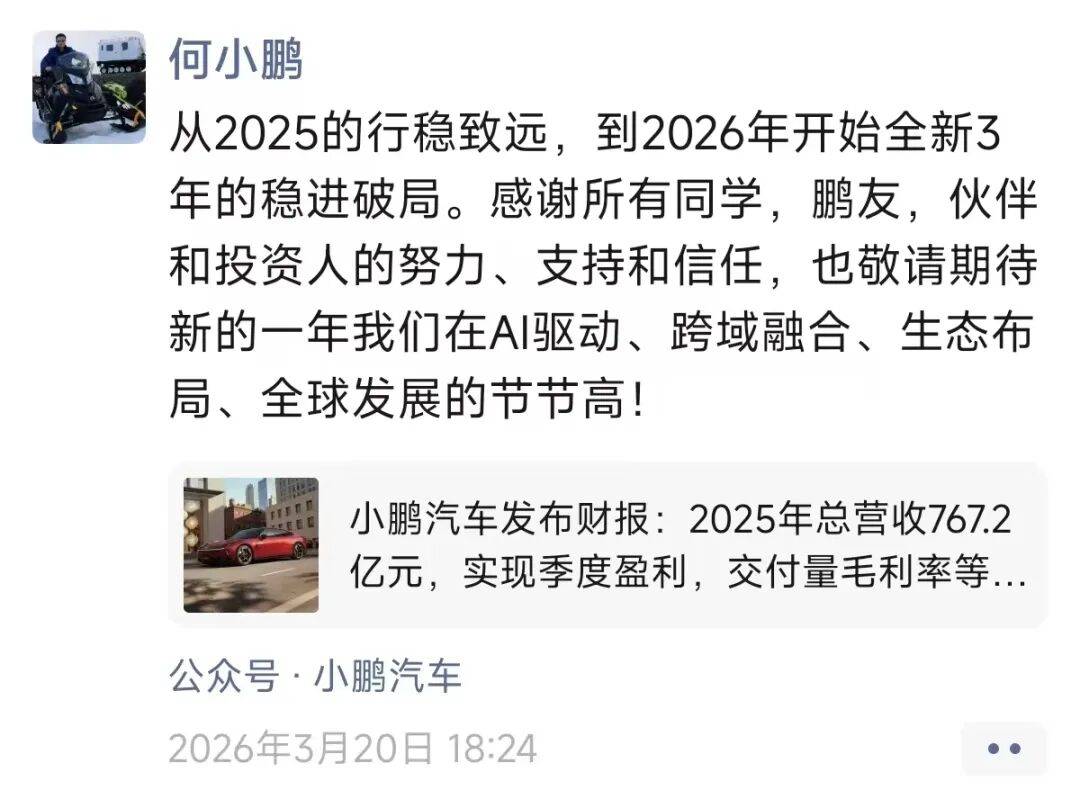
On March 20, He Xiaopeng reposted a WeChat Moment—a screenshot of Xpeng Motors' Q4 2025 financial report, showing a net profit attributable to the parent company of 380 million yuan. This marked Xpeng's first quarterly profit in its twelve-year history, with a gross margin soaring to a record high of 21.3%.
The accompanying caption was sincere: "From steady progress in 2025 to breakthroughs in the new three-year phase starting in 2026. We thank all team members, Peng friends, partners, and investors for their efforts, support, and trust. We also look forward to making continuous strides in AI-driven development, cross-domain integration, ecological layout , and global expansion in the coming year!
Almost simultaneously with the Q4 earnings release, Xpeng Motors announced a 7 billion yuan investment in 2026 for a grand narrative called "Physical AI"—covering the VLA model, humanoid robot IRON, flying cars, and Robotaxi vehicles pre-fitted for L4 autonomy.
Clearly, behind this massive R&D expenditure, Xpeng Motors has chosen a higher-stakes path—a long-term development strategy driven by technology.
"In the last decade, Xpeng was about smart electric vehicles; in this decade, it's about global physical AI," He Xiaopeng declared.
More milestone-worthy is the official rebranding of "Xpeng Motors" to "Xpeng Group," marking a transformation from a new force in car manufacturing to a physical AI group. At its core, this shift seeks a differentiated survival path between the hyper-competitive red ocean of smart electric vehicles and the blue ocean frontier of general artificial intelligence.
While Q4's single-quarter profit may not overturn industry perceptions, it serves as an entry ticket for this differentiated gamble—proving Xpeng can hold its ground in the first round of the boxing match.
The real test lies ahead: Will the market pay a sufficient patience premium for a new "China's Tesla + Optimus" narrative?
He Xiaopeng is now tackling a critical question for the company's future.
1. Tech Combination Punch—The Offensive-Defensive Logic of Product Matrix
Since the first quarter of this year, Xpeng Motors has launched a well-coordinated product strategy, blending offense and defense in a layered approach.
On the defensive side, the refreshed 2026 MONA M03 made its debut. Priced between 119,800 and 151,800 yuan, this volume model solidifies Xpeng's dominance in the 100,000–200,000 yuan pure electric sedan segment—a category it has led for 18 consecutive months.
But holding the fort is no easy feat. Traditional giants are tightening their grip, with BYD and Geely launching their own smart driving offensive in the mass market.
Xpeng's counterstrategy is "technology devolution": dual Turing AI chips (1,500 TOPS) and the second-generation VLA model have entered the 120,000 yuan market, achieving "smart driving dominance" and offering cost-effective smart pure electric options for younger users through technological democratization.
Even more noteworthy is the offensive play—the ambition of the Xpeng GX. As the first full-size flagship SUV, the GX's pre-sale price of 399,800 yuan precisely targets China's luxury car market's 400,000 yuan psychological threshold.
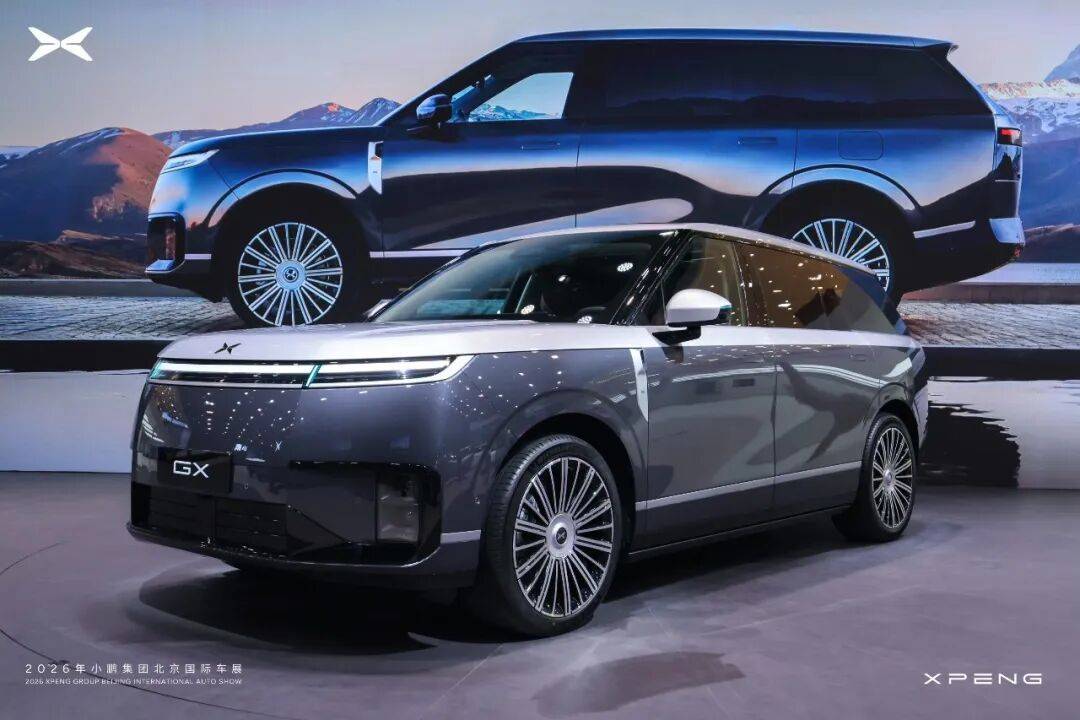
In product development, the Xpeng GX boasts comprehensive safety, advanced intelligence, tech-driven handling, and smart home integration.
Particularly in safety, Xpeng has spared no effort, defining L4-era full-size tech flagship SUV standards with three flagship safety systems: omnidirectional passive safety, industry-leading active safety, and aviation-grade six-layer redundant safety across all domains.
As Xpeng Group's opening masterpiece of 2026, the GX integrates cutting-edge technologies from across the group. Built on the SEPA 3.0 architecture, it merges multi-species advantages, sharing a core architecture with embodied intelligent agents like flying cars and the humanoid robot IRON. It represents a tech masterpiece designed for the L4 era.
Notably, it marks Xpeng's first integration of flying car safety technologies and robot embedded neural networks into a passenger vehicle platform. It's also the first flagship model designed according to L4 pre-assembly mass production standards, with parallel versions for passenger cars and Robotaxi.
In an interview, He Xiaopeng elaborated on this logic: readily available configurations like brake redundancy, steering redundancy, door handle redundancy, and communication redundancy are devolved to passenger vehicles, while computational and perceptual redundancies are reserved for the Robotaxi version. "This reduces extra cost consumption while delivering better value," he explained.
This "hardware once, software evolve long-term" model is reshaping the value cycle of high-end electric vehicles. While traditional automakers have a 3–5-year replacement cycle, Xpeng keeps vehicles fresh through OTA updates.
He Xiaopeng mentioned a telling detail: European customers once complained about rapid Chinese model upgrades, saying, "We don't need upgrades that fast." But now they ask, "Why can't we upgrade when China does?"
This cognitive shift underpins Xpeng's narrative of "tech luxury."
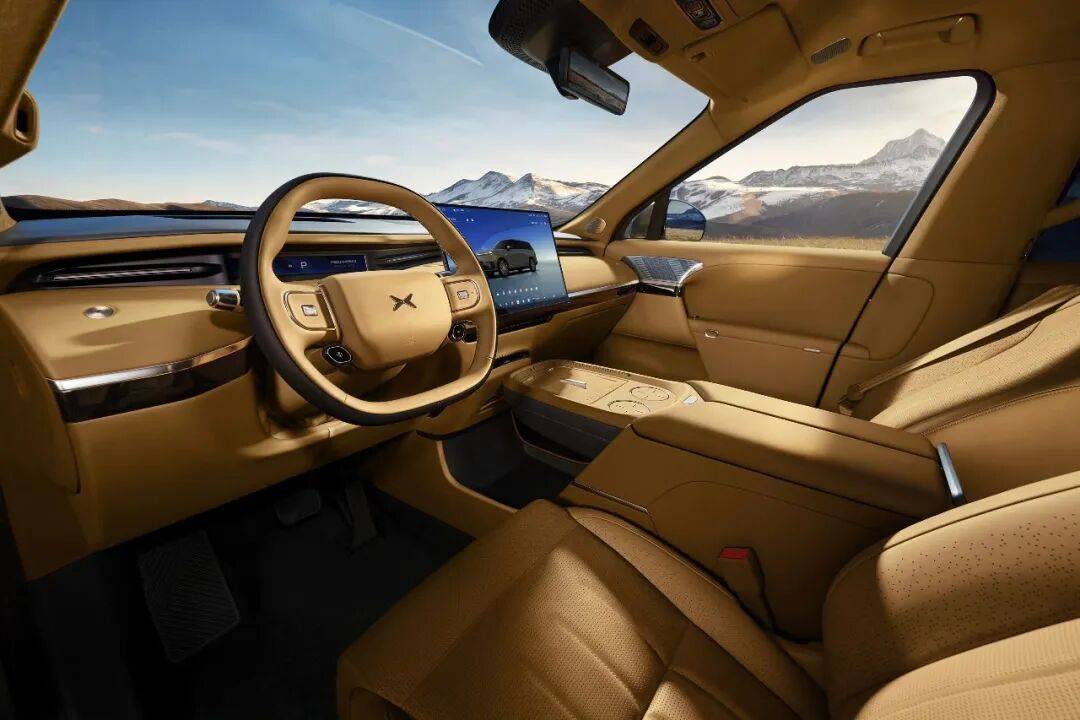
But the tech combination punch comes at a cost. Wu Anfei, General Manager of Xpeng Group's Product Matrix, admitted that the GX's air conditioning, refrigerator, and screen configurations—with "over 10,000 yuan in material costs alone"—use "cutting-edge solutions." R&D investments in 16,000-ton integrated front-rear die-casting, steer-by-wire, and AI-integrated steer-by-wire fusion systems run into the hundreds of millions.
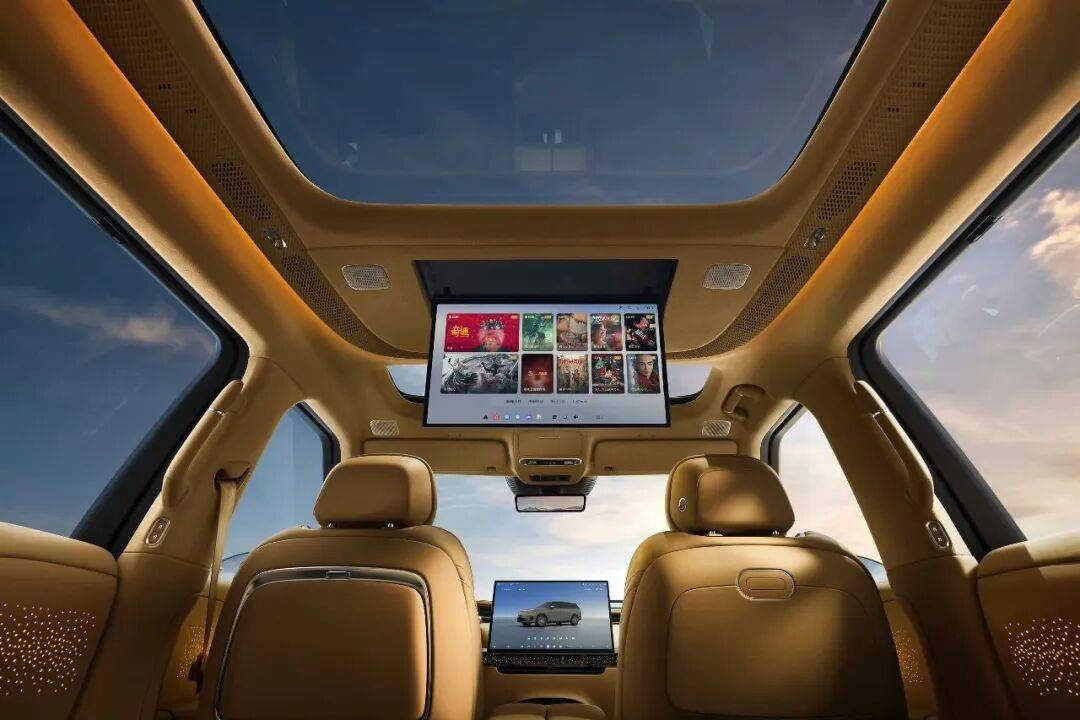
Meanwhile, Xpeng jointly developed the world's first AI-adaptive privacy glass with Fuyao Glass, achieving dual breakthroughs in hardware and intelligent capabilities for vehicle-mounted adaptive glass, leading a new direction in automotive smart cockpit technology.
With an industry-fastest 0.16s color-changing speed, full window coverage for the second and third rows with zoned adjustment, AI adaptive dimming, and one-touch privacy mode, it balances clear visibility with cockpit privacy.
2. From New Force in Car Manufacturing to Physical AI Group—Reconstructing Valuation Logic
Parallel to its product strategy, Xpeng is reconstructing its ecosystem at the corporate level.
On April 1, Xpeng Motors completed a seemingly minor but significant change: its Chinese name officially changed from "Xpeng Motors Co., Ltd." to "Xpeng Group," with the English name "XPeng Inc." unchanged. The two-character shift from "Motors" to "Group" marks He Xiaopeng's reconstruction of the company's underlying logic.
At its core, the physical AI group upgrades AI capabilities from in-vehicle applications to cross-morphological platforms.
He Xiaopeng articulated a clear technical philosophy: "In the past, when we built a car, we focused on customer thinking and hardware technology thinking. Starting with this year's GX and beyond, we think more about how AI drives hardware changes and how software and hardware integrate. This is our key insight from shifting from quadrupedal to humanoid robots—not thinking about software-hardware coupling from a hardware-driven integration perspective, but rather using AI to drive it from another angle."
This philosophy is transforming into concrete technical architectures.
The foundation is the VLA model—the second generation has achieved initial L4 capabilities, with vehicle-end model parameters set to rise to 20 billion by year-end.
Supporting the VLA is the self-developed Turing AI chip, with a tiered compute platform ranging from 1,500 to 3,000 TOPS, covering Xpeng's full product line from the MONA M03 to the GX.
Beneath that lies the steer-by-wire chassis—a fundamental refactor (reconstruction) of steer-by-wire steering, steer-by-wire braking, and active suspension, essentially providing millisecond-level latency physical interfaces for AI control.
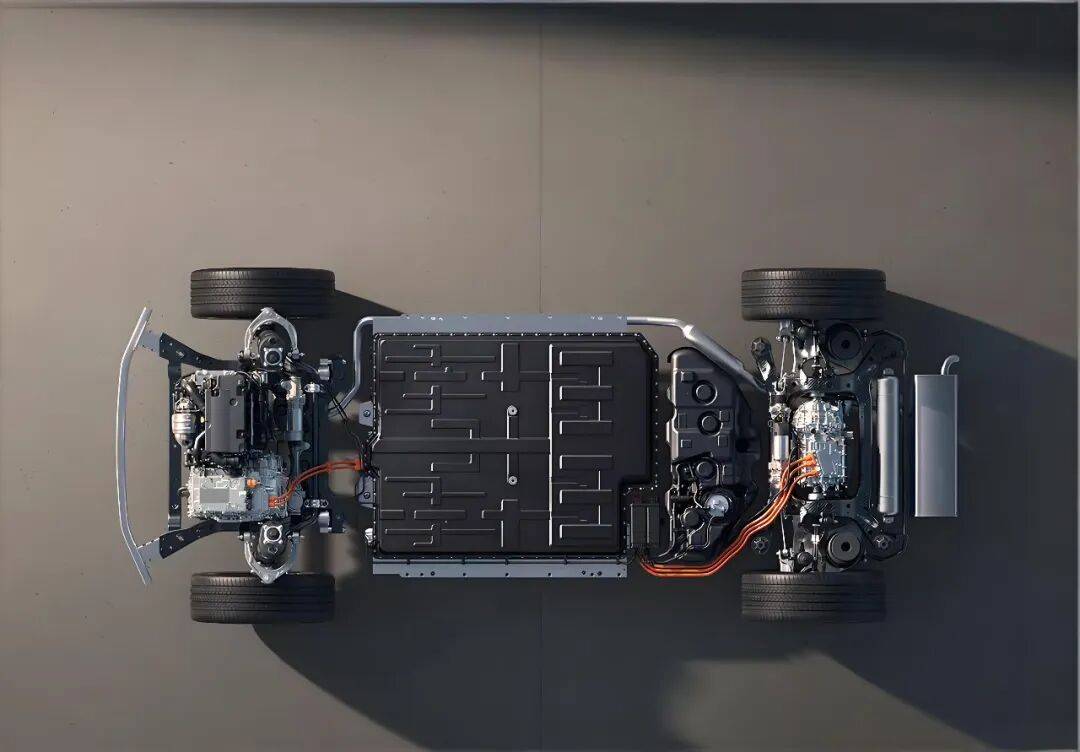
He Xiaopeng did the math: "If others brake in 350ms and steer in 270ms, while you can do 150ms braking and 120ms steering, your agility, safety, precision, and smoothness improve dramatically."
Based on this unified foundation, Xpeng is building a cross-morphological intelligent agent matrix: cars as current cash flow, the humanoid robot IRON as mid-term growth, Robotaxi as long-term ecosystem, and flying cars as symbols of technological spillover.
He Xiaopeng even envisions: "Could we make flagship models glide effortlessly over muddy and slippery swamps? Use technology to solve it and achieve ultimate comfort."
But a cognitive time lag is forming in capital markets. In the short term, the 7 billion yuan physical AI investment, expansion to 680 overseas stores, and humanoid robot mass production preparations are heavy cost burdens.
He Xiaopeng believes in focusing on physical and AI modularity.
Whether this focus can convince capital markets hinges on the speed of the data flywheel. Cars, as "data collectors," continuously gather real-world data to feed VLA model training, which then empowers robots and Robotaxi—this is Xpeng's Chinese approach to counter Tesla's FSD + Optimus route.
3. Profitability Is Just the Starting Point—A Bet on Intelligence
In fact, in the recently announced 2025 annual financial report, service and other revenues have become a key pillar supporting Xpeng Motors' overall performance.
Since early 2026, the second-generation VLA has become a core strategic focus for Xpeng Group. "After promoting the second-generation VLA in early March, test drive volumes at stores doubled month-over-month, with Ultra and Ultra SE version sales more than doubling. Once full-scale OTA rollouts begin, I expect the second-generation VLA to drive higher foot traffic and raise average vehicle prices," He Xiaopeng said, noting its significant positive influence at the terminal level.
In He Xiaopeng's view, fully autonomous driving capabilities at the software level are expected to emerge within one to three years, not just in China but globally.
Xpeng plans to expand its overseas sales and service network to 680 stores by 2026, doubling from the end of 2025. Another goal is to achieve mass production of the IRON humanoid robot by the end of 2026, with a planned monthly capacity of over a thousand units.
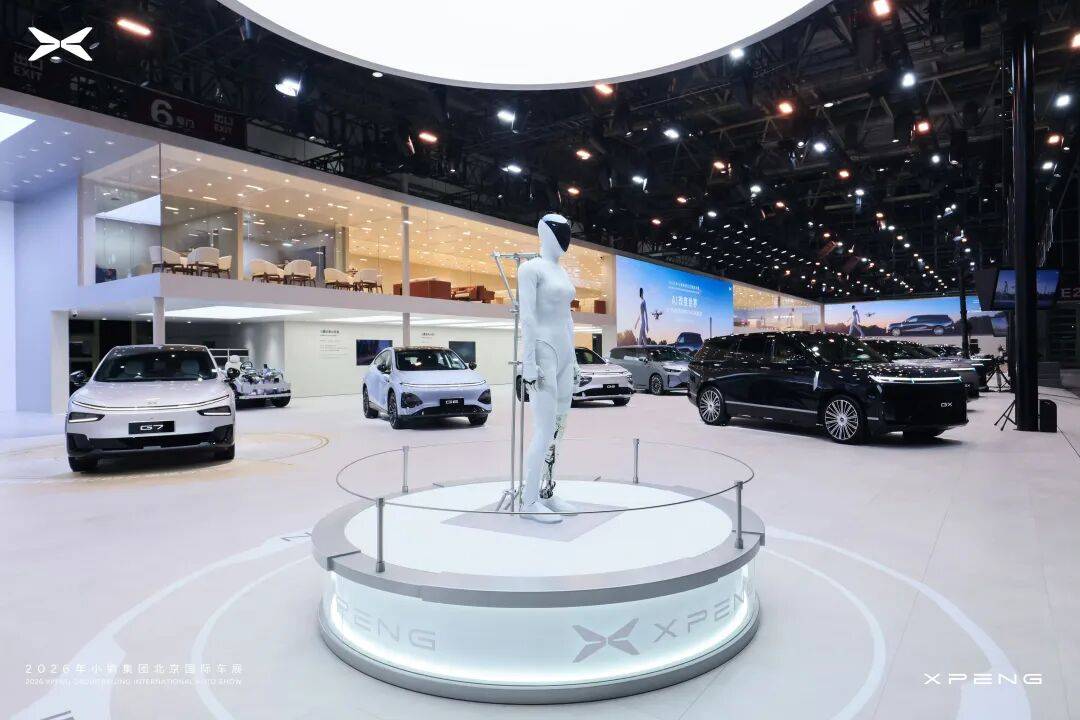
On one hand, Xpeng is proving its automotive business's stability through order conversions from the GX and M03. On the other, it's demonstrating the technical feasibility of physical AI through VLA's overseas rollout and IRON's mass production progress.
He revealed that VLA is undergoing testing in Europe, "expecting to see Xpeng's VLA land in most countries globally next year," while emphasizing that "the hardest part is policy; vehicle, technology, and resource preparations are not issues."
He Xiaopeng stated that hardware foundations are fully ready, with active evaluations underway for commercializing intelligent driving software overseas and its payment models.
4. Epilogue
Xpeng Group stands at a unique crossroads.
To the left lies the profitability safe zone of traditional automakers—controlling R&D investment, focusing on volume models, and becoming "the next BYD" in the sub-200,000 yuan market. To the right lies the uncharted territory of physical AI—sustaining heavy investment to gamble on a future as a "global physical AI leader."
Clearly, He Xiaopeng has chosen to go right.
While the new generation of products, led by the GX, impresses with their tech configurations, market competition is fiercely brutal. The physical AI group narrative is grand but requires time to validate—a resource new forces sorely lack.
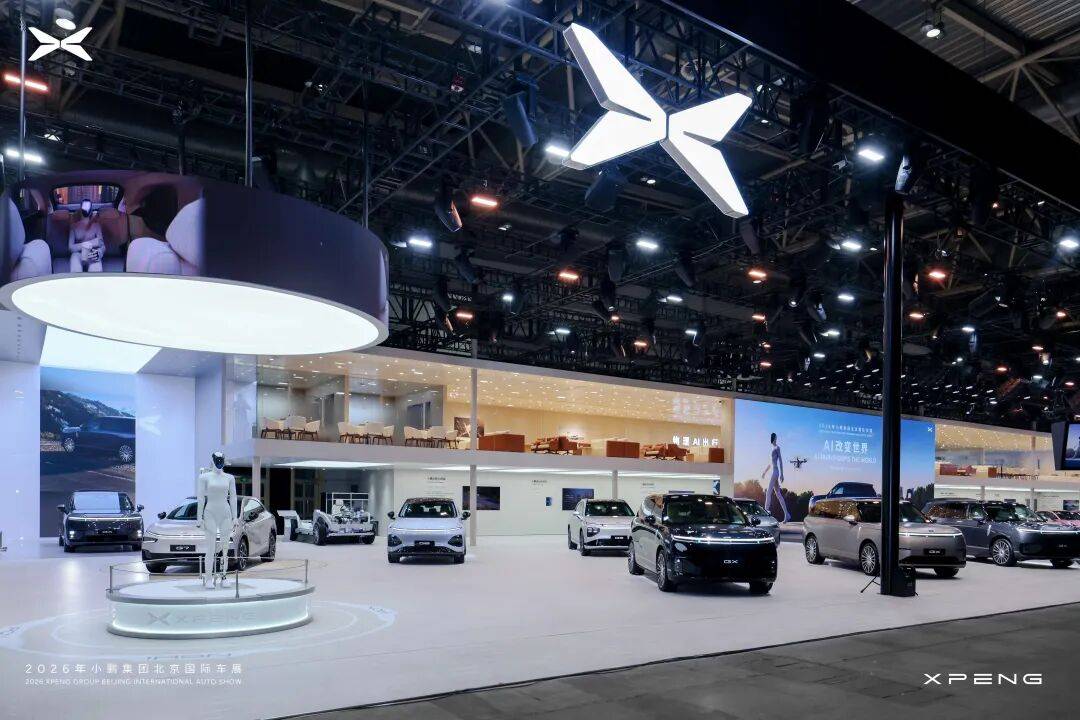
As intense competition in smart electric vehicles compresses gross margins below 15%, and price wars turn the sub-200,000 yuan market into a red ocean, the only path to differentiated survival is leaping to higher-dimensional technological barriers.
The VLA model, Turing chips, steer-by-wire chassis, humanoid robots—these investments are hard to monetize shortly but may form moats for the next decade.
In the last decade, Xpeng survived the smart electric vehicle race, proving the vitality of new forces. This decade, it aims to redefine itself with "physical AI," proving that Chinese automakers can secure a place in the global AI revolution.
The success of this transformation hinges not on Q4's 380 million yuan profit but on whether technological rollouts can keep pace with corporate development in 2026 and beyond—and whether commercial monetization can meet capital expectations.
As He Xiaopeng put it: "Peng friends want Xpeng to launch a full-size SUV." The subtext may be that the market needs new stories from Xpeng, investors need fresh narratives to support valuations, and China's new energy vehicle industry needs a sample daring enough to escape internal competition and explore blue oceans.
Xpeng Group's reconstruction and test (challenges) thus transcend a single company, becoming a slice through which to observe China's smart manufacturing upgrade.
Round two of the boxing match has begun. This time, the opponents are no longer NIO, Li Auto, or BYD, but time, capital patience, and the rollout speed of physical AI technologies.
*Note: Images in the article are from Xpeng Motors' official Weibo account.
-
Hao Jida, Apple Supply Chain Coil Supplier, Switches Brokerage and Revives IPO Amidst Customer Dependency and Compliance Challenges
-
![]()
Annual Advertising Expenditure of VOYAH with Yudeshui: A Deep Dive
-
![]()
Can Computers, Despite Daily Price Hikes, Still Be a Viable Purchase?
-
![]()
January-June Auto Stocks' 'Resilience Ranking': Geely Alone Posts Gains, Six Plummet Over 40%, One Tumbles 54.5% | Mirror Pro
-
![]()
China’s Public Charging Market: Didi Charging, Teld, and Yunkuai Take the Lead
-
![]()
The First Year of AI-Native Mid-Year Shopping Festival: Technology Reconstructs Human-Product Matching for 618
-
![]()
Micron has released its financial report, showing revenues of $41.5 billion, a 74% increase quarter-over-quarter, with a gross margin of 84.6%. The company provided both short-term and long-term guida
-
![]()
Expert Interpretation of New Policy Combination: Activating the Trillion-Dollar Automotive Aftermarket