Why Huawei ADS5 Didn't Dominate the Beijing Auto Show?
 04/27 2026
 512
512
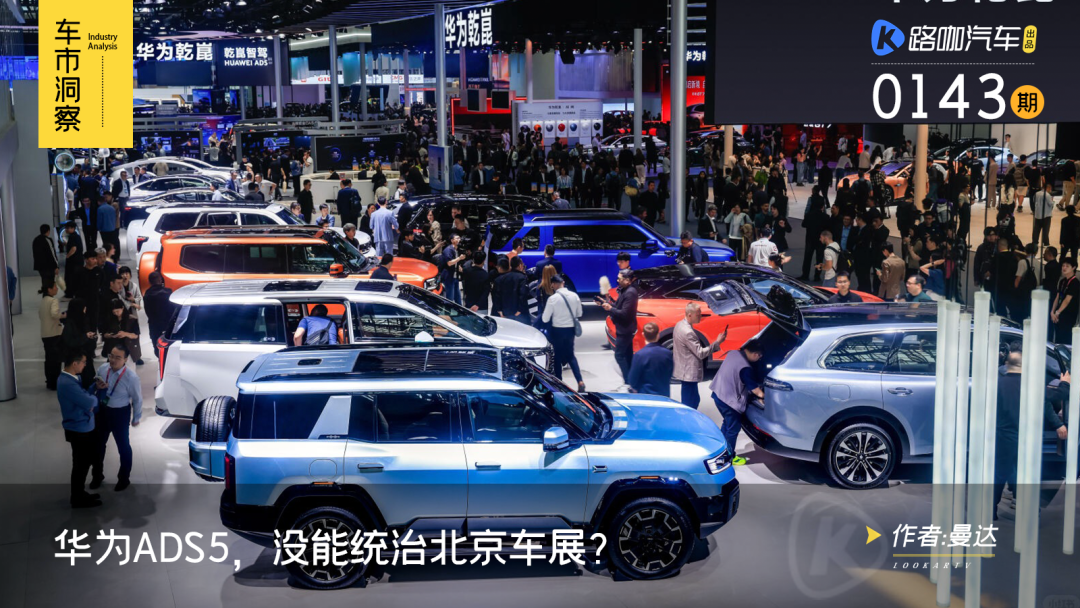
The 2026 Beijing Auto Show was an unprecedented spectacle in the intelligent driving circle. Horizon Robotics released its first cockpit-driving integrated chip on the eve of the show, officially declaring war on NVIDIA and Qualcomm. A day later, Huawei unveiled its latest ADS5, further cementing its position in the intelligent driving arena.
In fact, NVIDIA and Qualcomm, which did not hold solo launch events, were also busy. The former is refining its universal platform and toolchain, while the latter's high-end intelligent driving solution based on the Snapdragon 8650 chip has already entered mass production in 100,000-yuan-level new cars and will officially launch during the Beijing Auto Show.
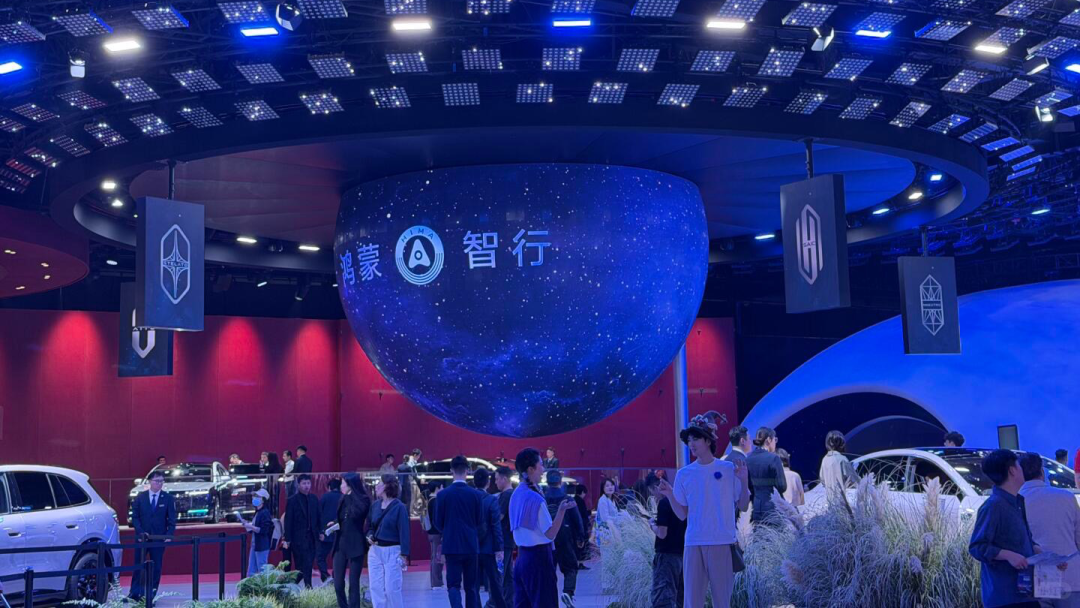
In addition to the five brands under Harmony Intelligent Mobility Alliance, various models collaborating with Huawei Qian Kun (Qiankun) were displayed in Hall W3 at the Beijing Auto Show, featuring over 20 mainstream automakers including Avatr, Qijing, Yijing, Hongqi, LanTu, and Shenlan... The dominance of 'Huawei cars' at the Beijing Auto Show is undeniable.
However, whether Huawei ADS5 has truly dominated the Beijing Auto Show remains unclear. During the event, intelligent driving solution providers such as Momenta, WeRide, and QCraft also announced the latest progress in mass production and vehicle integration.
Why Didn't ADS5 Dominate the Beijing Auto Show?
Huawei's ADS5 is undoubtedly one of the biggest highlights of the Beijing Auto Show. Judging from the showcased vehicles, ADS5 is poised to dominate the mid-to-high-end market. In addition to new models from the five brands, new cars from the two 'Jing' brands, such as the Qijing GT7 and Yijing X9, as well as Avatr 06T, which deeply collaborates with Huawei, will be among the first to feature Huawei's ADS5.
Of course, the number of models equipped with ADS5 is just one aspect and does not necessarily prove its superiority. To understand this, we must analyze it from a technical perspective. Two significant technical signals emerged from the pre-show launch events: First, ADS5 has introduced more redundant backups for L3-level autonomous driving to ensure fail-safe operation; second, while maintaining the overall technical route of WEWA+ vehicle-end upgrades, it has shifted from a purely large model-based control and decision-making approach to incorporating safety risk fields and collision prediction heatmaps at the vehicle end.
In other words, a notable change in Huawei's current ADS5 is that it has once again chosen a path similar to NVIDIA's. Not long ago, at MWC2026 in March, NVIDIA pioneered a combination of large models and classic rules in its autonomous driving algorithms. Now, it seems Huawei has followed suit.
Of course, having the same technical route does not guarantee success; engineering capabilities are also crucial. Throughout history, many great ideas have been conceived, but their originators often lacked the ability to implement them.
Looking at other strong contenders, the 'cockpit-driving integration' trend led by the Qualcomm camp is also fierce. The Leapmotor flagship model D19, launched before the show, adopted Qualcomm's dual 8797 cockpit-driving integration solution. However, during a livestream before the Beijing Auto Show, the D19 experienced an infotainment system failure, which trended on social media. Leapmotor executives promptly responded on social platforms, clarifying that it was not an intelligent driving issue. Zhu Jiangming, in an interview during the Beijing Auto Show, explained that the Qualcomm dual 8797 chip solution premiered in the Leapmotor D19, launching four months ahead of schedule, and some operating conditions had not been fully tested. Therefore, it is expected that, similar to the leap in intelligent driving performance seen in many leading new energy vehicle brands at the beginning of the year, giving Leapmotor and Qualcomm another six months could yield surprising results.
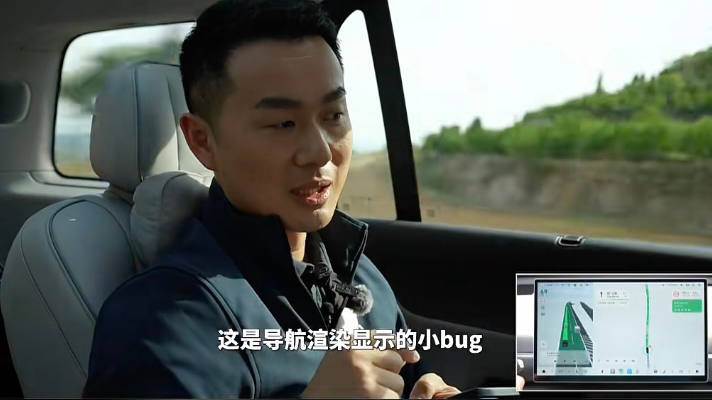
AutoX's VLA solution, built on the Snapdragon 8797, has already secured mass production projects, demonstrating rapid synergy between computing platforms and algorithm stacks. In the more mainstream price segments, the BAIC Alpha S5 and Wendao V9 adopted the Snapdragon 8775 for vehicle integration, indicating that 'cockpit-driving integration' is no longer just a flagship option but is beginning to scale down.
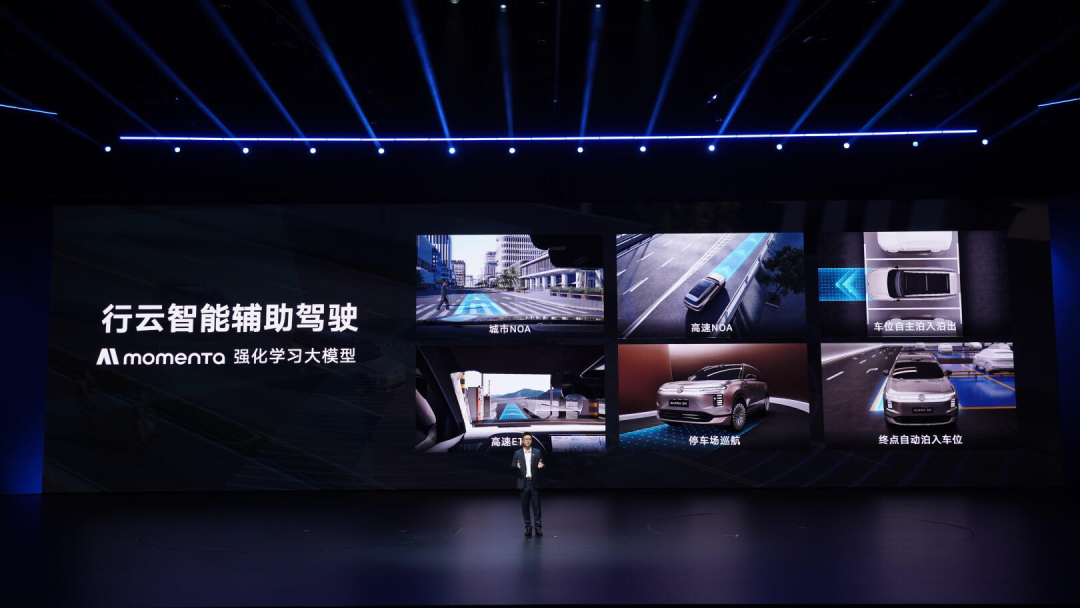
Furthermore, the Beijing Hyundai IONIQ's first mass-produced model, the IONIQ V, officially announced at the Beijing Auto Show, adopts Momenta's intelligent driving solution. The ID. ERA 9X, which officially launched during the show, premiered with Momenta's R7 reinforcement learning world model. Momenta CEO Cao Xudong endorsed the ID. ERA 9X at the launch event. Momenta's circle of intelligent driving partners continues to expand rapidly.
At the domestic chip level, Horizon Robotics' 'Xingkong 6' will debut in the Chery iCAR. Coupled with the implementation of Qualcomm's 8775 in multiple models, it is evident that 'cockpit-driving integration' is penetrating broader price segments following a 'tiered computing power—tiered experience' logic. This shift places higher demands on the vehicle's electrical and electronic architecture, software reuse rate, and OTA gray release capabilities: The higher the platformization level, the faster the experience rollout and the more stable the cost structure.
On the eve of the show, NVIDIA held a small-scale media roundtable. During the exchange, Wu Xinzhou mentioned that NVIDIA positions itself as a 'supporter for all,' aiming to create an open-source platform for autonomous and assisted driving, encompassing chips, models, algorithms, and overall solutions, where anyone can make purchases as needed. When asked which model or technical direction is better, Wu's response differed from those of many Chinese executives. He believes that regardless of the technical school, achieving excellence can lead to success, at least in realizing L4 autonomous driving.
Automakers are also open and diversified in their technological choices. For example, during the Beijing Auto Show, Chery and Qualcomm officially announced their collaboration to develop an intelligent driving solution based on the Snapdragon Ride platform. NVIDIA and Chery will also cooperate in deploying physical AI, including intelligent driving, cockpits, and robotics.
Additionally, Alibaba's Tongyi Large Model Business Unit will run the QianWen-Omni full-modal large model on the NVIDIA DRIVE platform. Lenovo Vehicle Computing introduced its AI Box, an intelligent computing platform equipped with NVIDIA DRIVE AGX Thor.
Is NVIDIA Aiming to Be the Biggest Player Behind the Scenes Without Competing Directly?
As a global giant in the intelligent driving sector, NVIDIA is also promoting a multi-pronged and diverse approach.
During the show, we conducted relevant communications and interviews with Wu Xinzhou. A series of overall actions warrant further reflection.
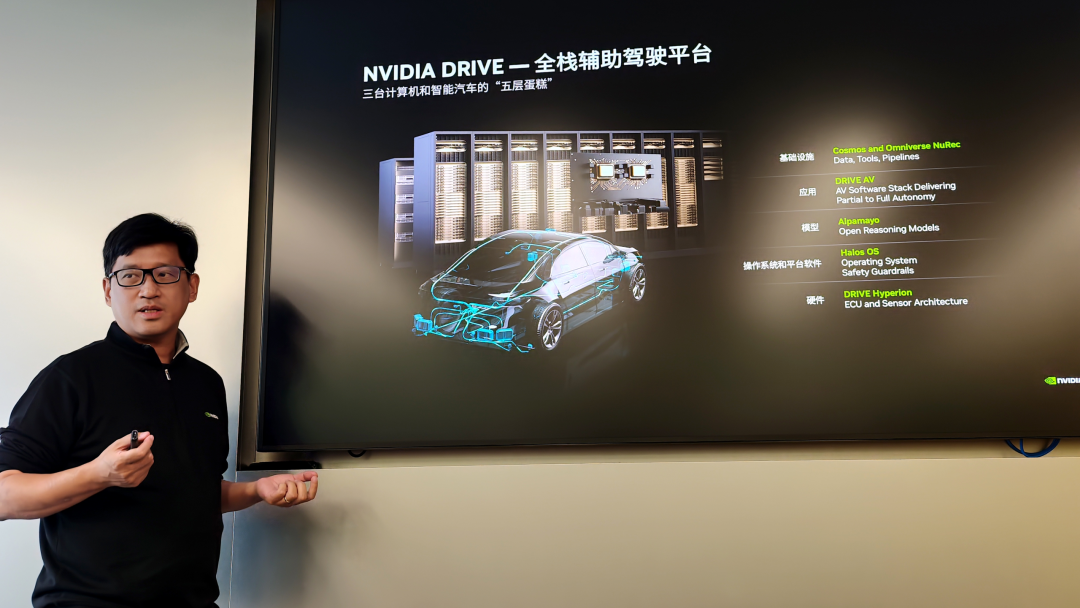
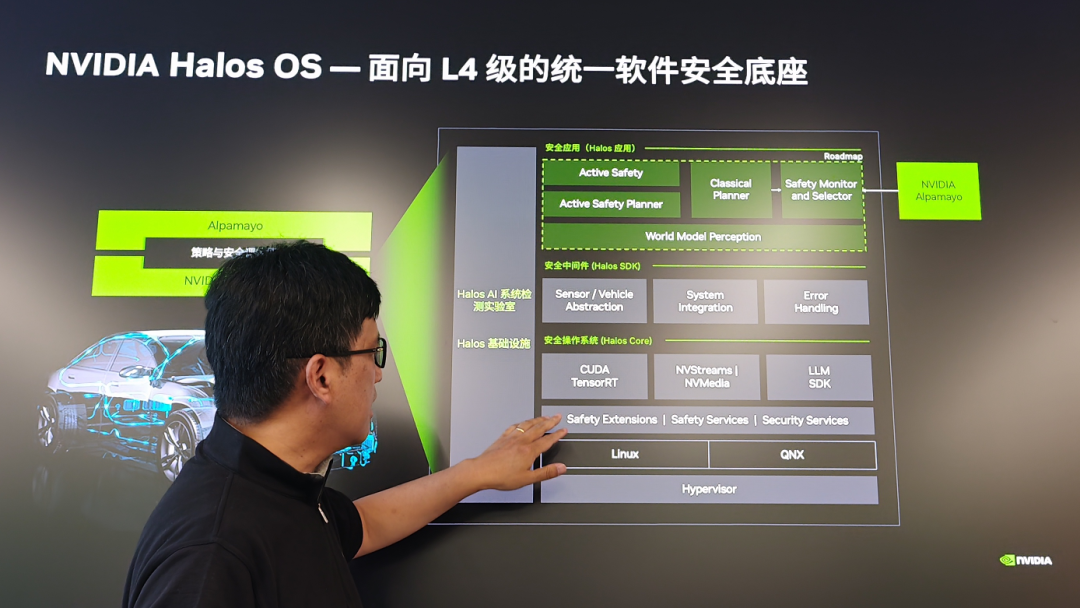
Currently, NVIDIA's business chain in automotive autonomous driving consists of five layers. The bottom layer is the hardware platform Hyperion, above which lies the Halos OS operating system and platform software. Above the operating system is the model layer, followed by the application layer, and at the top is the infrastructure layer.
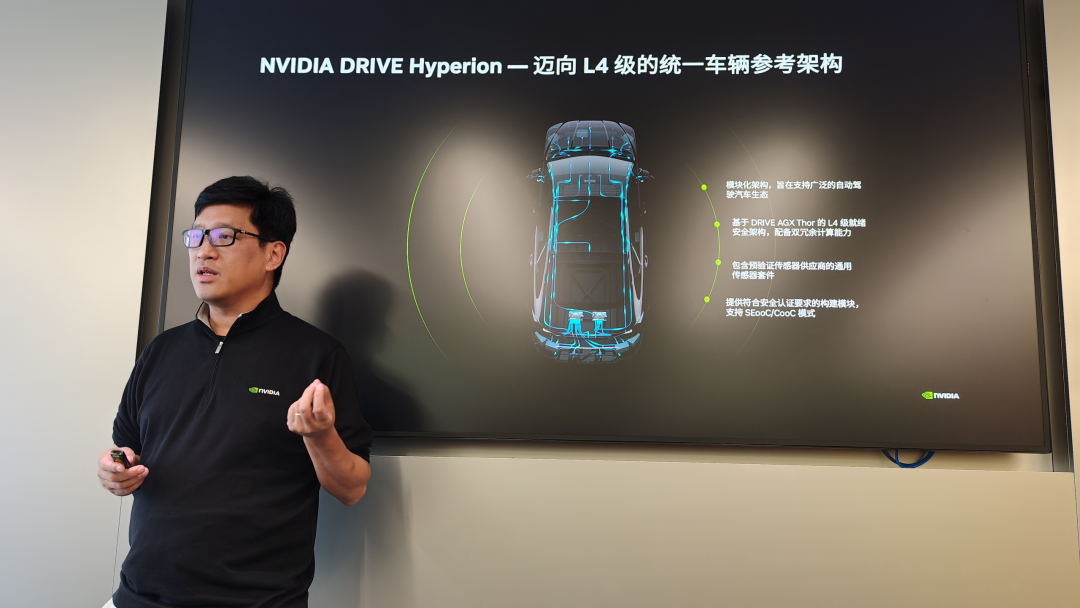
Breaking down these five layers, the hardware layer is characterized by NVIDIA's highest standard verification and safety standards, ensuring no issues with automotive-grade or NCAP crash tests. It covers not only computing but also sensors, akin to a large and small Lego set where children can freely choose how many wheels to add to their models, while automakers can lower the threshold for agile development on this hardware platform.
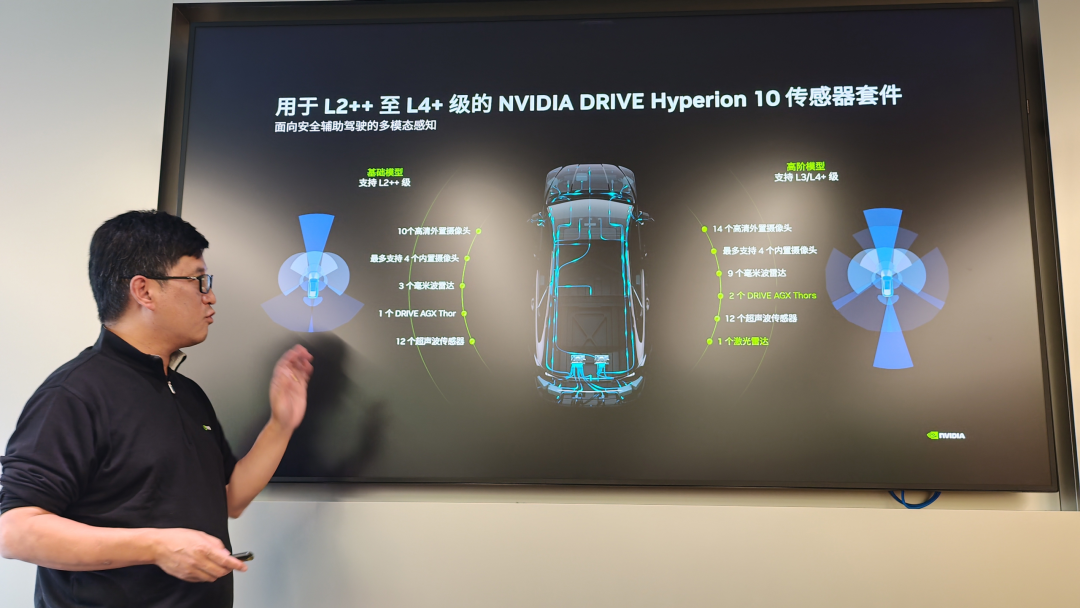
The operating system layer, Halos OS, is standardized by NVIDIA, significantly reducing development workload, including data processing often overlooked by consumers. Data generated by applications must first be classified and filtered, much like preparing ingredients before cooking. Moreover, NVIDIA has its own clever touches, pre-embedding many streamlined algorithms and active safety features to provide a safety net for automakers' development.
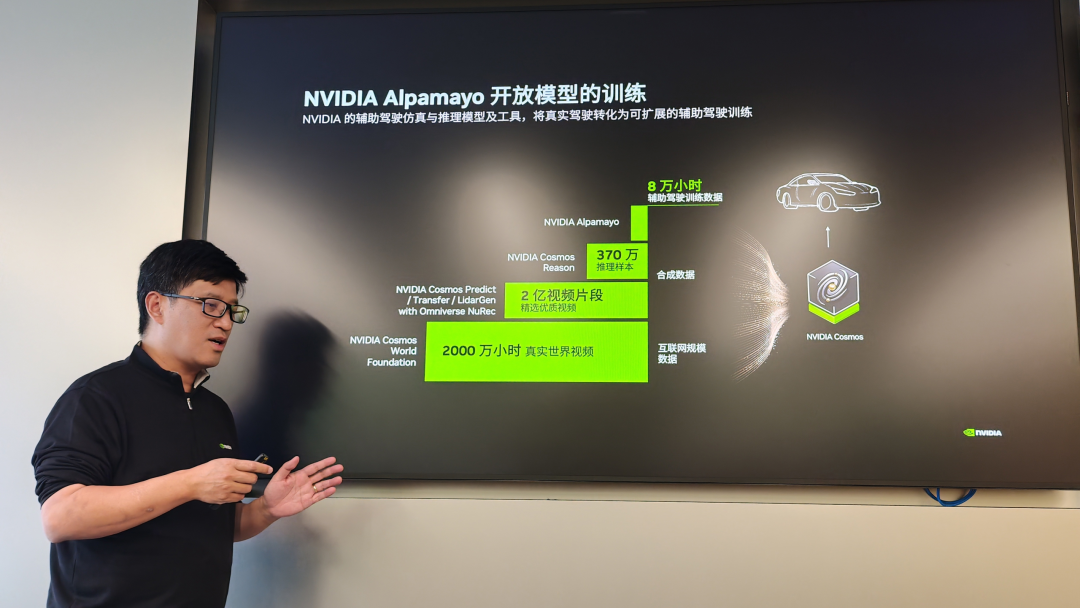
The model layer involves NVIDIA providing overall models, with the option for automakers to distill and develop their own capabilities. Additionally, the increasingly important world models, data simulation, and verification—a new frontier—are currently more for marketing than truly reflecting reality among automakers.
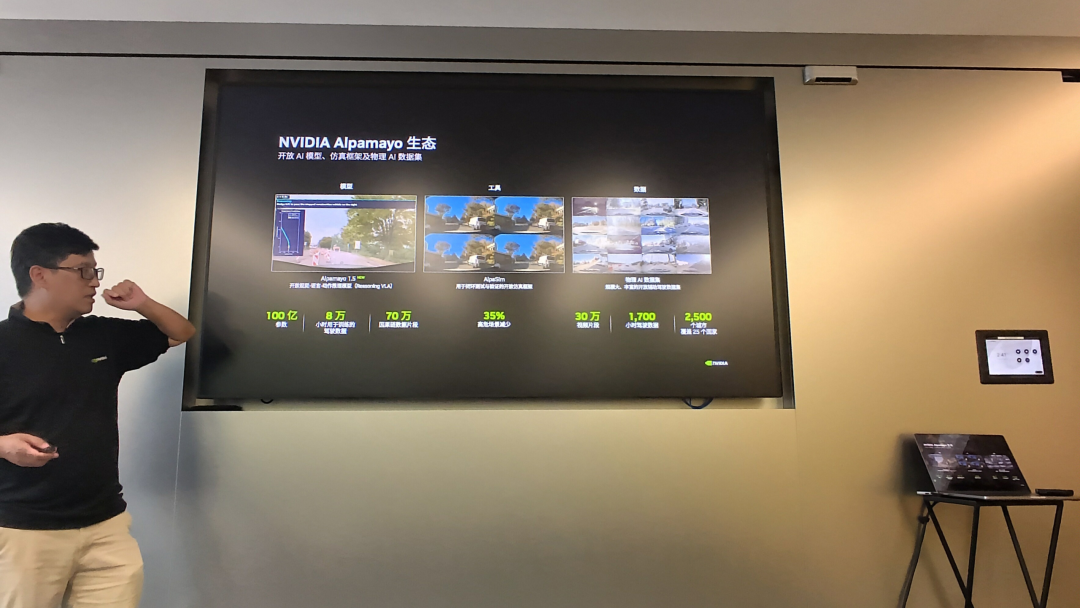
For instance, at this Beijing Auto Show, we visited nearly all intelligent driving assistance, autonomous driving, simulation, and data generation suppliers and automakers. The standard they presented to the outside world was interestingly uniform: 10 frames per second (FPS). Despite more and more automakers mentioning world models in their PPTs, the capabilities of these world models vary greatly.
In reality, a frame rate of 30 FPS is needed to truly approximate the real world and achieve physical AI. Moreover, world models are transitioning from 1.0 to 2.0. In the 1.0 era, individual modules were simulated separately, making data debugging and modification straightforward. However, to truly achieve physical AI, longer simulation times are required, and world models must also adopt a one-stage end-to-end approach. Many past methods are becoming obsolete.
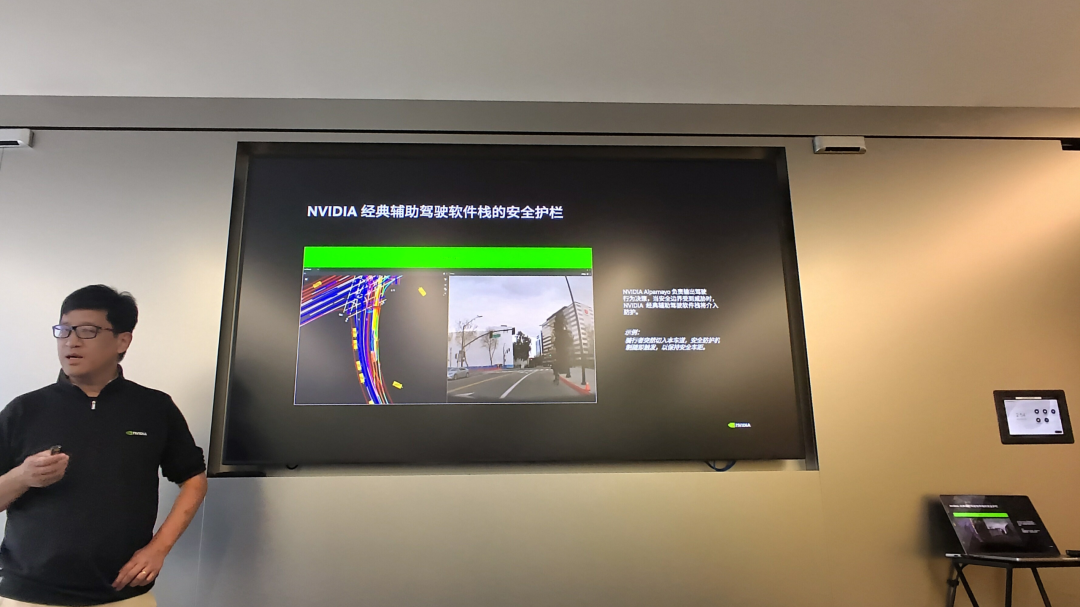
Currently, almost all relevant simulations globally rely on NVIDIA. In summary, NVIDIA aims to drive progress through a platform-based approach.
Of course, this approach faces commercial challenges. For instance, in the Chinese market, the rapidly evolving experience of Huawei's Qiankun ADS intelligent driving has become a core selling point for many new cars. This leaves automakers torn between investing in their own capabilities based on NVIDIA's technology or directly partnering with suppliers like Huawei or Horizon Robotics.
In Conclusion
Looking back at the past six years of Chinese automotive development, it is evident that many competitions are phased (phased).
For example, from 2021 to 2022, the industry often discussed whether internal combustion engine vehicles would die out and when they would disappear. Now, this topic seems somewhat amusing.
Could the same be true for intelligent driving? Its development trajectory resembles the previous debate between internal combustion engines and electric vehicles. For instance, Horizon Robotics' emergence allows more automakers to adopt the latest cockpit-driving integration technology while significantly reducing costs. Similarly, Momenta's circle of intelligent driving partners continues to expand rapidly.
Consider NVIDIA's additional cooperation announcements at this auto show. It is collaborating with Chery Automobile to deploy physical AI, focusing on assisted driving, cockpit AI, and robotics. Desay SV has created a new solution based on NVIDIA's DRIVE Hyperion, featuring the NVIDIA DRIVE AGX Thor accelerated computing platform combined with NVIDIA NVLink interconnection technology. In autonomous driving, Pony.ai released a new generation of autonomous driving domain controllers developed in collaboration with NVIDIA.
Alibaba's Tongyi Large Model Business Unit will run the QianWen-Omni full-modal large model on the NVIDIA DRIVE platform. Lenovo Vehicle Computing introduced its AI Box, an intelligent computing platform equipped with NVIDIA DRIVE AGX Thor.
After considering all these developments, it becomes clear that no one in the current intelligent driving and autonomous driving landscape can claim a definitive victory yet.
-
![]()
Expert Interpretation of New Policy Combination: Activating the Trillion-Dollar Automotive Aftermarket
-
![]()
Doubao Goes 'Professional', Volcano Rolls the Snowball
-
AI: No Sign of a Bubble!
-
![]()
NVIDIA-Backed AI Unicorn Secures $1.5 Billion Funding: Revenue Soars 2000%
-
![]()
Doubao Pro is Here: How Can Seed 2.1 Be Integrated into Real Processes?
-
"PCB Juice" Sees Four Consecutive Declines: Even Computing Power Material Suppliers Can't Lift This "Old Stock"
-
![]()
Potential 'Seismic Shift' in the U.S. TV Industry: Competition Shifts from Hardware Sales to Traffic Entry Points
-
![]()
Audi A6L's Defense in the Luxury C-Class Market: Following Huawei's Smart Driving Integration, Is Large-Battery HEV the Next Move?