2026 Beijing International Automotive Exhibition: Four Major Trends Ushering in a New Era for Chinese Automobiles
 04/28 2026
 494
494
Let's cut to the chase:
The 2026 Beijing Auto Show transcends its role as a mere automotive exhibition; it symbolizes a power shift in the global automotive industry and marks a pivotal moment for the Chinese automotive sector.
Insights from Jack: Observations, Experiences, and Key Figures
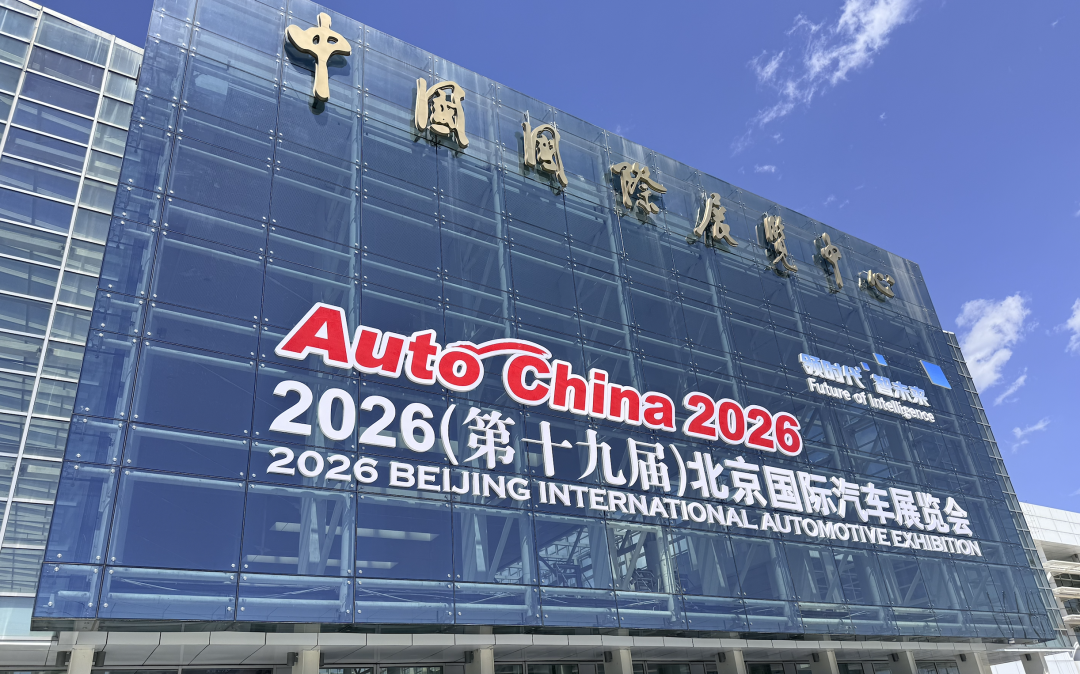
Spanning 380,000 square meters across two interconnected halls, the event showcased 1,451 vehicles, including 181 global debuts. It attracted nearly 4,000 international journalists, 7,401 overseas dealers, and over 28,000 international visitors—setting a new record. Throughout the exhibition halls, visitors from Europe, America, Japan, and South Korea were seen everywhere, capturing every detail of the interior and exterior designs and functionalities of Chinese vehicles with their cameras.
Chinese automakers now offer a comprehensive range of products, from Class A compact cars to full-size Class D flagships, along with various MPVs, rugged off-road vehicles, Crossover GT models, and supercars, catering to every niche segment. Every segment is now saturated with diverse offerings.
At the auto show, even nonagenarians in wheelchairs and toddlers were heard discussing "intelligent driving." Although the industry is cautious about this term, intelligent driving has clearly moved beyond early adopters and is now embraced by the mainstream across all age groups. Consumer perception has shifted from viewing intelligent driving as a "cool gadget" to a "must-have for easing driving tasks and ensuring family safety."
Booths of intelligent solution providers were filled with concepts involving various "AI boxes," regardless of whether the providers specialized in chips or integration.
These developments highlight four core transformative trends at this auto show—and their implications for automotive professionals, Chinese automotive brands, the intelligent supply chain, and overseas expansion.
1. Chinese Cars: From Specs to Sensibility—Competing on Aesthetics, Fun, and Soul
What was the keyword for Chinese cars over the past decade? Competition—on range, acceleration, screen size, and price.
But at this auto show, the atmosphere has shifted.
Chinese automakers now offer a full spectrum of products, from Class A compact cars to full-size Class D flagships, with rugged off-road vehicles, Crossover GT models, and supercars filling every niche. 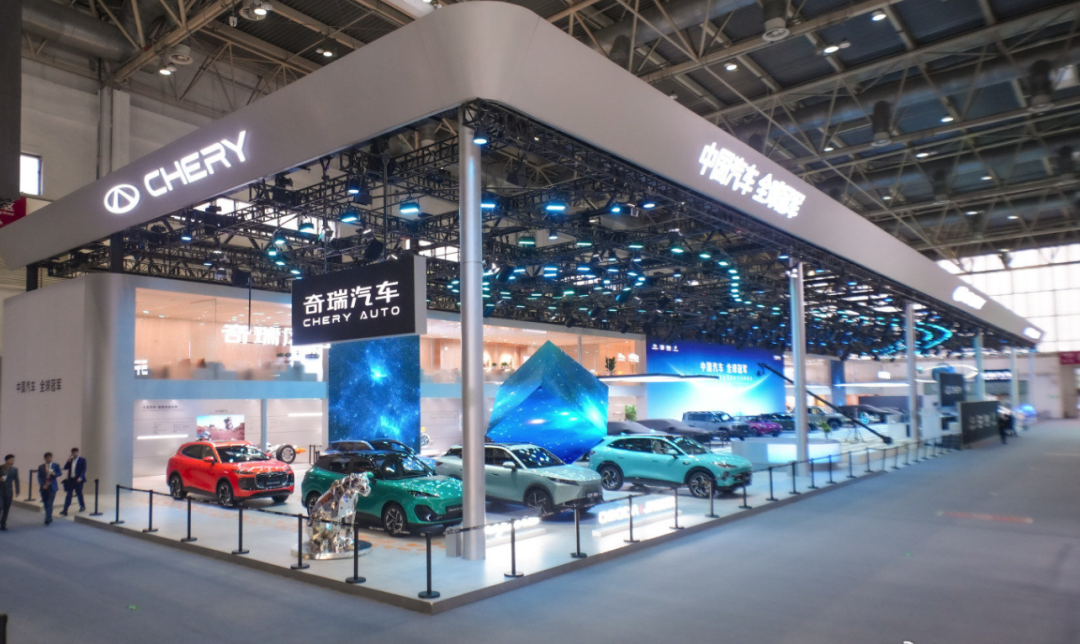
However, this sprawling 380,000-square-meter venue—the largest automotive exhibition platform globally—buzzing with activity, underscores the need for continuous innovation and competition among Chinese automakers.
What's next? The answer lies in competing on taste, emotional appeal, and value.
Consider these examples:
The NIO ES9, a 5.2-meter behemoth, comes standard with a Tianxing fully active suspension and the first domestically mass-produced steer-by-wire system, reducing its turning radius to 5.4 meters—more agile than many compact SUVs.
The Fangchengbao Formula X, a 1,000-horsepower, triple-motor, all-carbon-fiber-monocoque pure electric supercar. A brand known for off-roading has unveiled a track beast.
The Xiaomi Vision Gran Turismo concept car, with an ultra-low drag coefficient of 0.29 and 1.2 tons of downforce, pushes aerodynamics to new heights.
The Avatr Xpectra, measuring 5.8 meters, features pillarless opposing doors and a panoramic transparent glass roof—transforming the car into an emotional sanctuary on wheels.
In the large SUV market, as discussed in our previous article, "The RMB 400,000 Lifeline: The Outcome of the Competition Among Six Domestic Flagship SUVs Was Determined Before Their Launch," competition in the RMB 400,000 price range is fierce. This auto show has added various Huawei "Jing" and "Jie" models, further intensifying the rivalry.
Note that these brand examples are not about stacking specifications—they represent a leap in product definition capabilities.
Automakers are now asking not "How many more kilometers of range do I have than my competitors?" but "Why should users emotionally connect with my vehicle?"
Additionally, Huawei's automotive "Jing" and "Jie" models have formed a vast matrix of "Five Jie and Three Jing" models, along with Dongfeng Mengshi, occupying two halls at the Beijing Auto Show. Considering that the entire Beijing Auto Show includes 17 halls for components (excluding four additional halls), Huawei occupies nearly 20% of the exhibition space, mirroring its 18% market share in China for the first quarter of 2026. 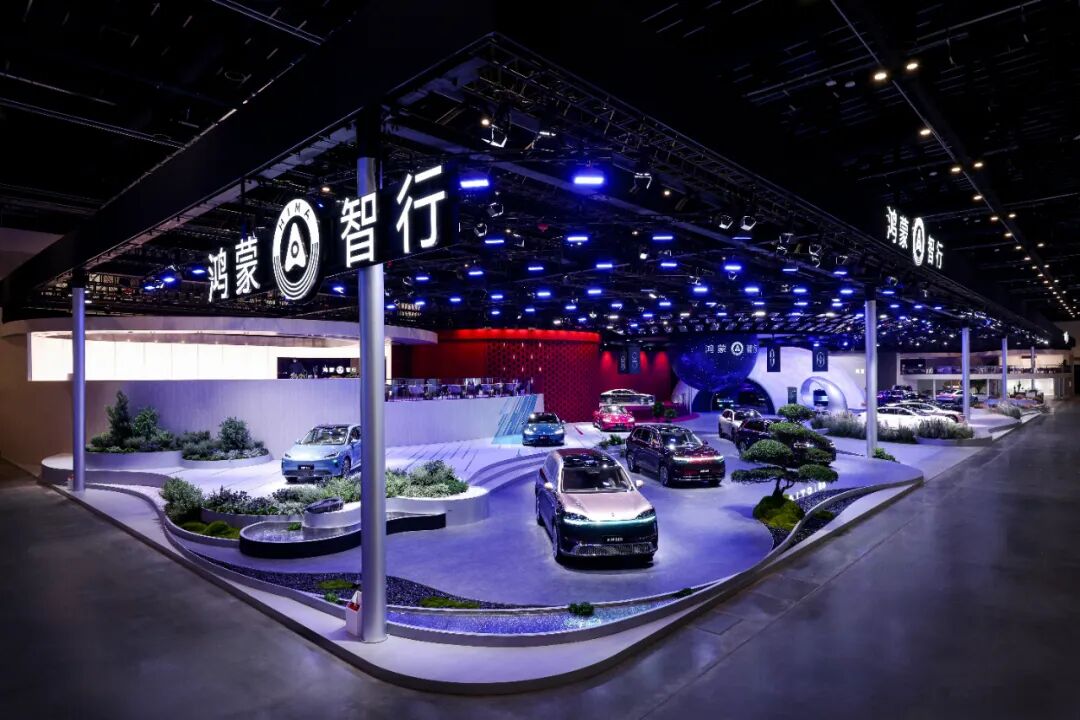
The "Jie" series represents the Harmony Intelligent Mobility Alliance (HIMA) cooperation model, while the "Jing" series represents models based on Huawei's Qiankun (HI mode/deep strategic cooperation). This foreshadows that the Chinese automotive market is increasingly resembling the mobile internet market, with a focus on vehicles. Stay tuned for our subsequent analysis on the implications of PC and mobile internet development for China's intelligent automotive industry.
Chinese cars have evolved from tools competing on functions and specifications to emotional containers competing on lifestyle. The Chinese automotive industry is increasingly mirroring the mobile internet sector.
2. Intelligent Driving for RMB 80,000: The Democratization of Intelligent Driving is Inevitable
Here's the most striking revelation from this auto show:
Except for nostalgic classic cars, no vehicle has fewer than seven cameras. The price floor for L2++ high-level intelligent driving vehicles equipped with laser radar has dropped to RMB 80,000.
The Leapmotor A10 Laser Radar Edition, with a top-tier suggested price (manufacturer's suggested retail price) of RMB 86,800, includes:
- One 128-line laser radar
- 27 perception hardware components
- Qualcomm 8650 intelligent driving chip (200 TOPS computing power)
- Qualcomm 8295 cockpit chip
- Park-to-park navigation assistance
A year ago, this configuration was only found in vehicles priced above RMB 200,000. Today, it has entered the mass market.
Why is this significant? Three data points tell the story:
In early 2026, the penetration rate of L2-level assisted driving in new vehicles in China surged to 69% (a 10 percentage point increase year-on-year).
The hardware cost for highway NOA (Navigate on Autopilot) has been slashed from RMB 5,000-8,000 in 2022 to RMB 1,500-3,000. The hardware cost for urban NOA has been reduced from over RMB 20,000 to RMB 4,000-5,000. Even more striking is what happened at the auto show: wheelchair-bound elders and toddlers were using the term "intelligent driving."
This is no longer a niche for tech enthusiasts. Intelligent driving has transcended early adopters and is now embraced by the mainstream across all age groups. Consumer perception has shifted from viewing intelligent driving as a "cool gadget" to a "must-have for reducing driving burdens and ensuring safety."
At the technical level, as shared in our previous article, "The Battle for Intelligent Driving Standardization: A Comprehensive Look at the Underlying Logic and Architectural Evolution of 'End-to-End' Autonomous Driving," the path is clear—end-to-end (E2E) is the industry consensus. Whether for Horizon Robotics, Momenta, DJI Automotive, Yuanrong, or SenseTime, all intelligent assisted driving suppliers are awaiting large-scale orders.
The assisted driving suppliers demonstrating or showcasing at this auto show all offer an end-to-end experience—smooth and human-like, no longer just PR slogans. This indicates that everyone is genuinely moving towards end-to-end solutions. The old rule-driven architecture is being rapidly marginalized.
What does this mean? The gap in basic intelligent driving experiences among automakers will quickly narrow. The key to winning the game will shift from "how well the code is written" to "whether the computing power is sufficient, how fast the data flywheel spins, how many long-tail scenarios are encountered, and how well the engineering implementation is done."
Intelligent driving is no longer a luxury option; it's a new safety belt with a standard end-to-end form. Vehicles without it are headed for the museum.
3. Your Car is Gaining a 'Soul': The AI Cockpit is Booming, But Faces Mass Production Challenges
If intelligent driving addresses "how the car drives," then the AI cockpit addresses "how the car understands you." At this auto show, the AI in cockpits is bidding farewell to the era of "voice assistants." It is no longer a passive tool that responds to questions but an intelligent agent with perception, decision-making, and execution capabilities.
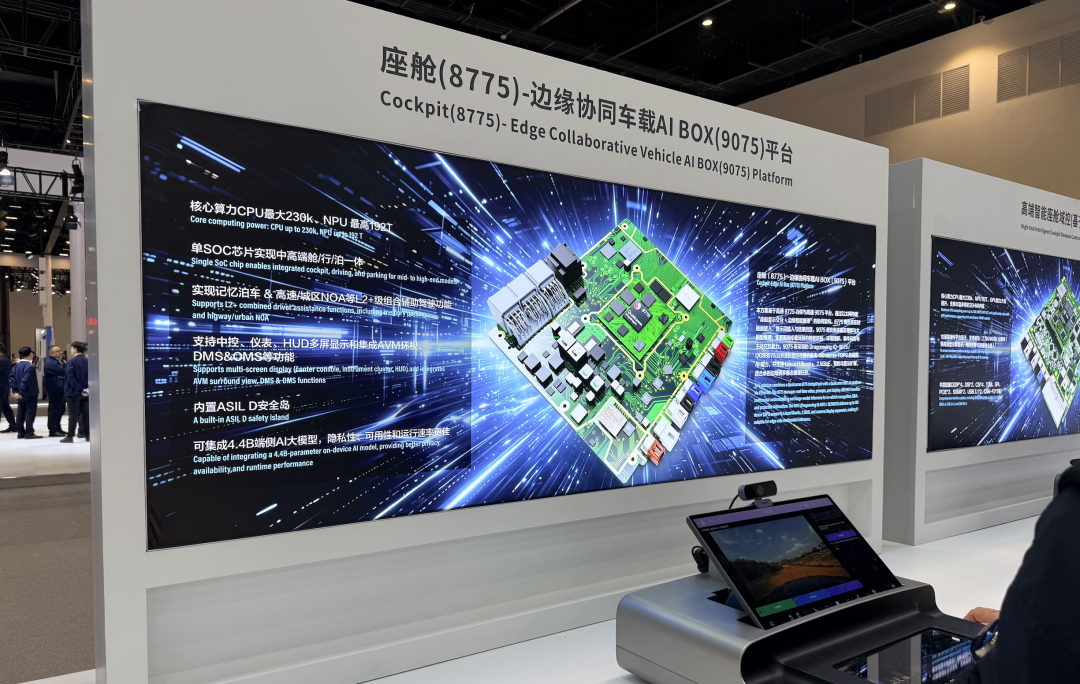
The hottest keyword: OpenClaw (nicknamed "Longxia" in the industry). This is an emerging open-source agent architecture with a core approach of "decoupling the brain and body":
- Complex task orchestration and strategy drafting are handled in the cloud.
- High-intensity model inference runs on the vehicle's AI chip.
- Even in areas without network coverage, such as tunnels or underground parking garages, local emergency decision-making is possible.
Several eye-catching implementation scenarios:
Banma Intelligence × Alipay: The agent hears you say "I want to eat" and automatically filters restaurants, navigates, makes reservations, and enables in-car contactless payment—all with a single sentence.
Mianbi Intelligence SuperMate: When you say "I feel carsick," the system automatically adjusts the car windows and suspension damping. It actively cares for you, rather than passively executing commands.
ThunderSoft Drip AIOS 2.1: The operating system is fully reconstructed from the kernel to applications, with the Kanzi rendering engine no longer just drawing but directly executing the agent's intentions.
Minieye BamBam: It can handle emails, plan itineraries, and recognize your emotions—positioning itself as a "soulmate."
However, don't be swayed by concepts and press releases.
The real experience at the auto show is that concepts abound, but the experience is still rapidly evolving. Various AI boxes and OpenClaw implementations are still in the conceptual stage, with everyone unsure how to implement or use them.
The supply chain is flocking in, but the challenges of application and mass production engineering remain unavoidable:
- What are the core scenarios?
- How to balance computing power and cost?
- If using an AI BOX, how to manage heat dissipation and placement?
Getting a vast agent network to run on mass-market vehicles priced between RMB 80,000 and RMB 150,000 will take time and is a point of contention among supply chain providers and OEMs.
The entire industry is transitioning from "releasing PPTs" to "tackling bugs" at a rapid pace. Jack personally experienced and used Horizon Robotics' Kaka Claw, Zeekr's Super Eva, ThunderSoft, and various OpenClaw and AI box solutions from SenseTime at the auto show. The only one that felt usable was Zeekr's Super Eva.
The AI cockpit is rapidly evolving alongside mobile internet AI, but the scaffolding is still being erected. What is released this year will iterate next year and only become truly usable the year after.
4. A Gathering of Nations: They're Not Here to See Cars; They're Here to 'Pay Homage'
This is the most thrilling part.
In the first quarter of 2026, China exported 2.226 million vehicles, a 56.7% year-on-year increase. New energy vehicle exports reached 954,000, a 120% year-on-year increase.
The China Passenger Car Association predicts that China's automotive exports will easily surpass 8 million units in 2026.
While the domestic market is fiercely competitive, the overseas market is ablaze. However, what deserves more attention is not just the numbers but the strategic upgrade.
Chinese automotive overseas expansion has moved beyond the basic (entry-level) stage of "dumping cheap vehicles" and entered the deep waters of "systemic expansion + ecological expansion":
Dongfeng's "Eastern Wind Rises 2030": A RMB 100 billion investment aiming for 40% overseas sales and 50% local manufacturing rate.
Chery: Establishing a European branch in Belgium and co-building direct sales with local dealers to create "Chinese cars with a local flavor."
BYD and Great Wall Motors: Building production hubs in Rayong, Thailand, and South America to establish local supply chains and bypass tariff and shipping risks.
XPeng: After entering Colombia and Mexico, it is now customizing products for Brazil. 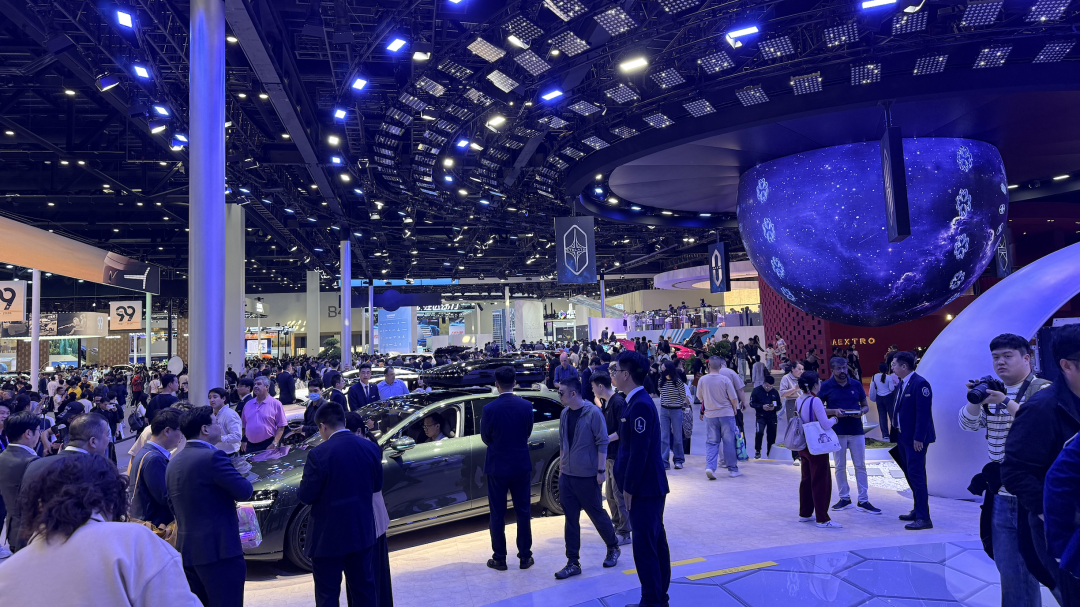
More interestingly, there is a reverse operation—products "co-created" in China by multinational giants are on display:
Volkswagen: Collaborating with XPeng for 24 months to develop the ID. UNYX 09, with future models fully adopting China's native electronic and electrical architecture (CEA).
BMW: The domestically produced new-generation pure electric platform has 70% of its operating system code written by a Chinese team; for intelligent driving, it collaborates with Momenta, and its AI large model is customized in partnership with Alibaba.
Mercedes-Benz: Also chose Momenta for full-scenario navigation.
Audi: The new-generation fuel (fuel-powered) A6L introduces Huawei's Qiankun intelligent driving for the first time—reshaping the soul of German luxury fuel-powered vehicles with a Chinese intelligent driving system. 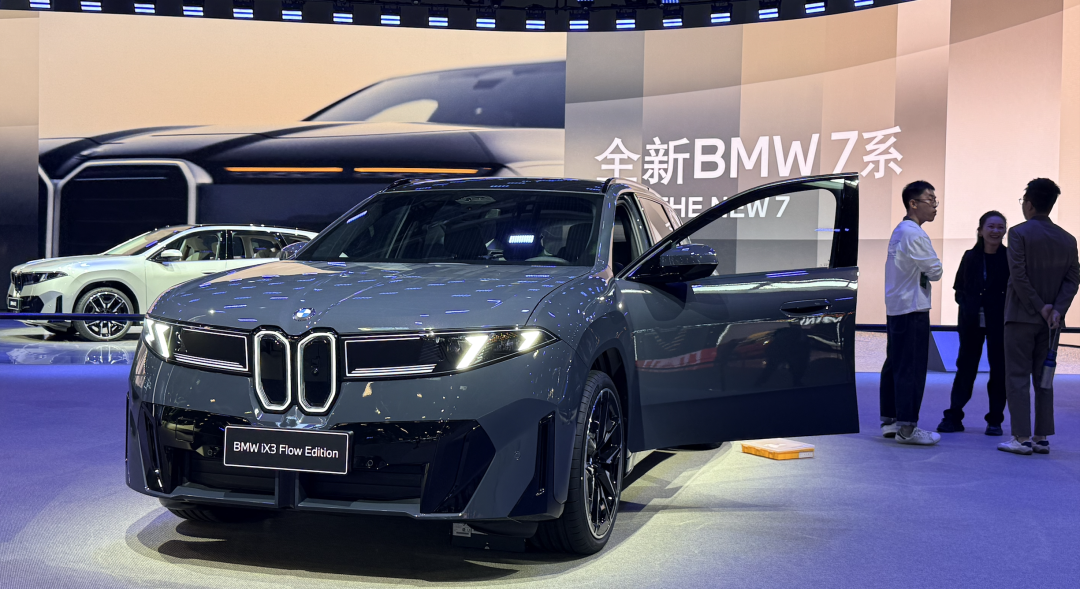
Understanding this reveals why foreign journalists, overseas dealers, and automotive executives are flocking to Beijing.
They are not here to "learn about China"; they are here to seek "tickets for survival under the new rules."
There's no denying that the epicenter of influence within the global automotive supply chain has decisively moved eastward.
The narrative has evolved from "China exports cars to the globe" to "the world flocks to China to purchase products, access technology, and forge partnerships."
In Summary
Therefore, the 2026 Beijing Auto Show stands as a pivotal event symbolizing the shift in power dynamics within the global automotive sector and marks a significant turning point for the Chinese automotive industry as it embarks on a new chapter. This surge of products and technologies, centered around China, is merely at its inception.
As professionals, OEMs, and suppliers within the automotive realm, both individuals and organizations are compelled to initiate transformation, adapt to changes, and spearhead the forthcoming era of Chinese automobiles.
Lastly, a brief plug: Vehicle dedicated three days to delving into the 2026 Beijing Auto Show, engaging in conversations with industry experts, and distilling over 30,000 words of insights and trends from the event. This compilation is designed to assist individuals, OEMs, and supply chains in the automotive industry to excel in the upcoming era. For those interested, please feel free to send a private message to Jack for pricing details.
Note: Unauthorized reproduction or excerpting of this content is strictly prohibited.
-
Hao Jida, Apple Supply Chain Coil Supplier, Switches Brokerage and Revives IPO Amidst Customer Dependency and Compliance Challenges
-
![]()
Annual Advertising Expenditure of VOYAH with Yudeshui: A Deep Dive
-
![]()
Can Computers, Despite Daily Price Hikes, Still Be a Viable Purchase?
-
![]()
January-June Auto Stocks' 'Resilience Ranking': Geely Alone Posts Gains, Six Plummet Over 40%, One Tumbles 54.5% | Mirror Pro
-
![]()
China’s Public Charging Market: Didi Charging, Teld, and Yunkuai Take the Lead
-
![]()
The First Year of AI-Native Mid-Year Shopping Festival: Technology Reconstructs Human-Product Matching for 618
-
![]()
Micron has released its financial report, showing revenues of $41.5 billion, a 74% increase quarter-over-quarter, with a gross margin of 84.6%. The company provided both short-term and long-term guida
-
![]()
Expert Interpretation of New Policy Combination: Activating the Trillion-Dollar Automotive Aftermarket