2026 Beijing International Automotive Exhibition: Who Will Shape the Future of Cars?
 05/05 2026
 521
521
In the past six months, the Chinese automotive market has witnessed a flurry of activity: nearly weekly new car launches, monthly price adjustments, and quarterly technological upgrades. Intelligent driving has progressed from highway NOA (Navigate on Autopilot) to urban NOA, and now to nationwide availability. Smart cockpits have evolved from basic voice control to integrating large AI models, with AI assistants capable of understanding emotions and contexts. Meanwhile, the aftermath of the price war lingers as technological competition intensifies. How fierce has the competition among automakers become? How far have intelligent technologies advanced?
The answers to these questions may lie in the newly inaugurated 2026 Beijing International Automotive Exhibition.
On April 24, the 2026 (19th) Beijing International Automotive Exhibition opened its doors to the public. Covering an area of 380,000 square meters, featuring 181 global premieres, and attracting over 2,000 exhibitors, the event has set new historical records in almost every metric.
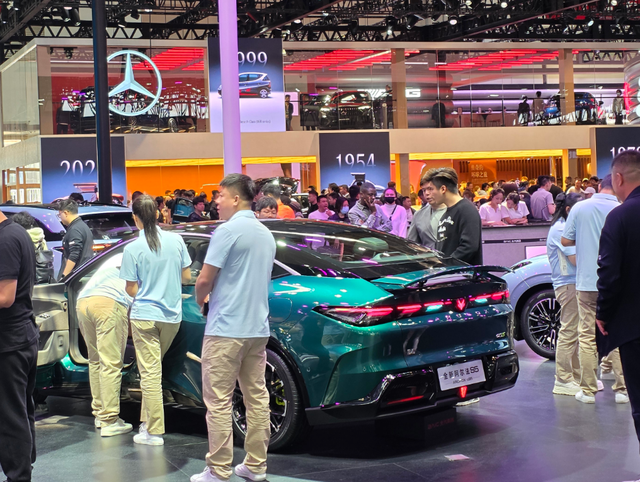
However, beyond these impressive numbers, it is the technological advancements that truly deserve attention. If the Beijing Auto Show two years ago was a showcase of electrification technologies, then the 2026 edition marks the materialization of AI large models, Level 3 autonomous driving, and flying cars into tangible products. This 10-day industry event sends a clear message to the outside world: China's automotive industry is undergoing a pivotal transition from electrification to intelligence.
So, what new changes have occurred in automotive technology over the past year? What should the next generation of automotive mobility look like?
Highlight 1: Chinese Automakers Unleash a Flood of New Models, Joint Ventures 'Leverage Intelligence to Catch Up'
This year's Beijing Auto Show has attracted leading supply chain and technology companies from 21 countries and regions, including China, the United States, Germany, Russia, and France. A total of 1,451 exhibition vehicles are on display, with global premieres increasing from 117 at the previous show to 181 this time.
The Hongmeng Intelligent Driving Solutions booth is bustling with activity, showcasing a dense array of debut models such as the Yijing X9 and Shangjie Z7, with long lines forming in front of each vehicle. BYD's exhibition area features its five major brands—Wangchao, Ocean, Tengshi, Yangwang, and Fangchengbao—lined up in a row, offering a complete product matrix ranging from 100,000-yuan family sedans to million-yuan off-road vehicles.
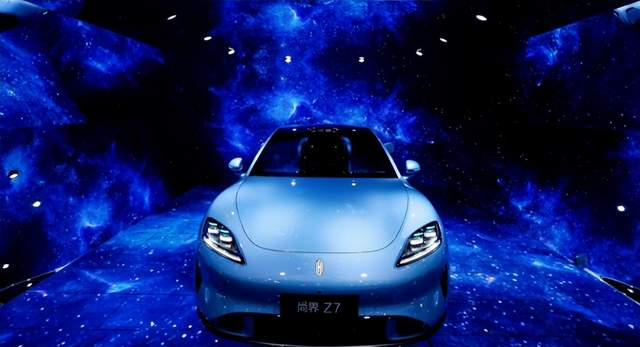
Behind these 181 global premieres, marking a 55% year-on-year increase, lies an unprecedented density of product launches in the Chinese automotive market. Automakers are vying for attention and market share through 'new model pushes.' However, what is even more noteworthy is that amid this surge of new products, automakers from different camps are taking distinct paths.
Chinese automakers are undoubtedly the protagonists of this new model competition. BYD has constructed a complete defensive line from mass-market to luxury with its five brands: Wangchao and Ocean focus on volume, Yangwang and Fangchengbao establish flagship status, and Tengshi occupies the mid-to-high-end segment. Huawei's Hongmeng Intelligent Driving Solutions, with its 'Five Realms' lineup—Aito, Luxeed, Enjoyland, Exceed, and Shangjie—making their collective debut, covers all categories from 200,000-yuan to million-yuan price points. NIO, Li Auto, and XPeng have also brought their annual flagship models. This all-price-range, all-category strategy was previously seen mostly among multinational giants, but now Chinese automakers can achieve it too.
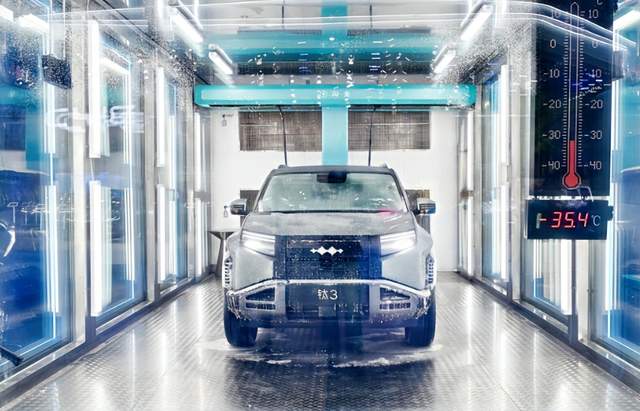
Joint venture and luxury brands are striving to catch up. Volkswagen has introduced its first model developed in collaboration with XPeng, the 'Zony 08,' and unveiled its 'Omni-Intelligent AI' technology roadmap. CEO Oliver Blume admitted, 'Because of China, we've taken a step further.' BMW has partnered with Momenta to refine its advanced Level 2+ assisted driving system for China's complex road conditions. This indicates that under the strong competition from Chinese automakers, joint venture brands are no longer simply introducing global models to China but are leveraging China's intelligent supply chain and technology ecosystem to enhance their products and regain their voice.
Of course, beneath the excitement, a concerning phenomenon has emerged: while the surge of new models is positive, indicating market vitality and corporate investment, as the number of new models increases, the differences between products are narrowing. Almost all brands are competing on 800V high-voltage platforms, the number of cities covered by urban NOA, and large rear-seat entertainment screens.
The industry must consider: when 'launching new models' becomes an end in itself, and when differentiation is diluted by intense competition, what will truly bring better, differentiated experiences?
The answer to this question can be glimpsed through the series of intelligent technologies unveiled at this Beijing International Automotive Exhibition.
Highlight 2: Intelligent Driving Shifts from 'Show' to 'Use'
Apart from the surge of new models, another noteworthy change is that the implementation speed of intelligent technologies has far exceeded expectations.
If two years ago at the auto show, we were still discussing 'how many TOPS of chip computing power' and intelligent driving was merely a showpiece on exhibition stands, then the theme of the 2026 exhibition has become 'what AI can do.' Among the 1,451 exhibition vehicles, most have lit up small blue lights representing assisted driving functions. Intelligent driving has not only become a key point of competition among automakers but also a must-have for consumers when choosing a car.
This year marks a turning point for the large-scale implementation of Level 3 autonomous driving. At the exhibition, Huawei's Qiankun ADS 5.0 made its official debut, skipping intermediate versions to directly achieve compliant hands-off driving on highways. Models such as the Aito M9, LanTu Taishan Ultra, and XPeng GX have obtained Level 3 market access qualifications and are demonstrating their intelligent driving performance in real vehicles at the exhibition hall.

The implementation of Level 3 autonomous driving relies on hardware support. At this auto show, the specification race for chips and sensors has significantly accelerated. The Luxeed V9 under Huawei's Hongmeng Intelligent Driving Solutions is equipped with the world's highest-specification mass-produced 896-line LiDAR, five 4D millimeter-wave radars, and 12 high-definition cameras. The Li Auto L9 Livis is equipped with four LiDARs and two self-developed 5nm 'Mach 100' chips, with a total computing power of 2,560 TOPS. The NIO ES9 is equipped with a self-developed Shenji chip, with computing power exceeding 1,000 TOPS. Two years ago, LiDAR was an optional feature for million-yuan luxury cars, but now such intelligent equipment is rapidly becoming more accessible.
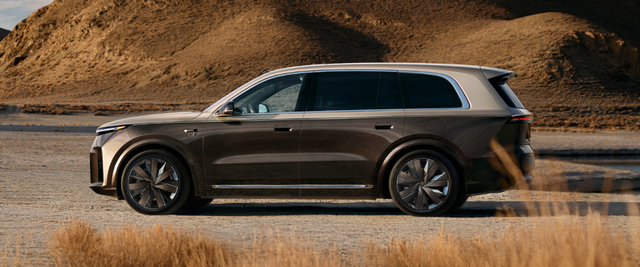
Similarly, qualitative changes are occurring on the cockpit side. If the core of the previous cockpit competition was 'how big the screen is and how fast the chip is,' then the core of this round has become 'how well AI understands you.' AI large models are being implemented in vehicles en masse, no longer just conceptual demonstrations. The Great Wall WEY V9X is equipped with 27 sensors, enabling precise occupant positioning and scenario-based intelligent responses. The Volkswagen ID.ERA 9X is the first to mass-produce an in-vehicle AI agent, running a local large language model on the vehicle side, capable of understanding complex semantics while ensuring privacy and security. The Audi E7X deeply integrates the intelligent cockpit with the chassis, automatically adjusting seat posture and suspension stiffness based on driving modes.
From intelligent driving to cockpits, the technological iteration of intelligence is happening so rapidly. Who is providing these LiDARs, AI chips, and intelligent driving algorithms? When a vehicle's core competitiveness increasingly depends on battery energy density, chip computing power, and software iteration capabilities, how much voice will traditional automakers still have?
Highlight 3: Supply Chain Moves from Behind the Scenes to Center Stage, Competing and Cooperating with Automakers
If the competition for new models and technologies is the main event, then the changes in the industrial landscape are the true underlying logic.
At this auto show, core supply chain companies such as CATL, Horizon Robotics, and Huawei have entered the main exhibition hall for the first time, competing on the same stage as automakers.
The supply chain companies' move from behind the scenes to center stage means that the power to define cars is shifting away from traditional automakers.
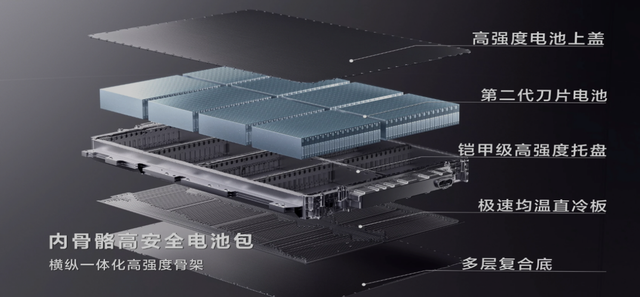
This shift is most directly reflected in the two giants of the power battery sector. CATL announced during the auto show that its Condensed Matter Qilin battery is planned for large-scale mass production and vehicle installation in the second half of 2026, with an energy density of 350Wh/kg, and has already secured designated supply contracts from several leading automakers. Meanwhile, BYD took the lead in releasing its second-generation Blade battery a month before the auto show and showcased it in real vehicles at the exhibition.
If battery companies are already making such moves, suppliers of intelligent driving solutions are even more directly entering consumers' car-buying decision lists. And in this process, Huawei is undoubtedly the most unignorable variable. At this auto show, Huawei's Qiankun, Huawei Digital Energy, and Hongmeng Intelligent Driving Solutions have set up independent exhibition stands, presenting a complete technological landscape from intelligent driving and Hongmeng cockpits to ultra-fast charging networks and in-vehicle energy systems through 'full-industry-chain participation.' The Hongmeng Intelligent Driving Solutions exhibition stand covers a total area of over 4,400 square meters, showcasing more than 20 vehicles, with its five brands—Aito, Luxeed, Enjoyland, Exceed, and Shangjie—making their collective debut, covering all categories from 200,000-yuan to million-yuan price points, from sedans to MPVs.
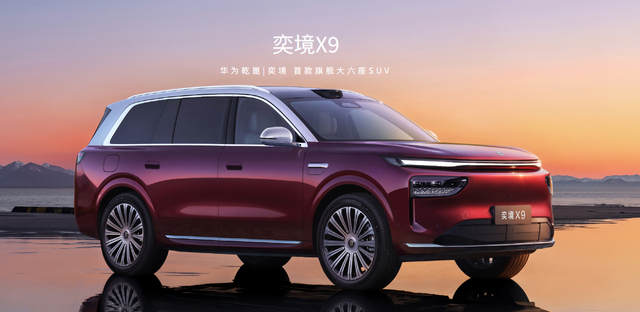
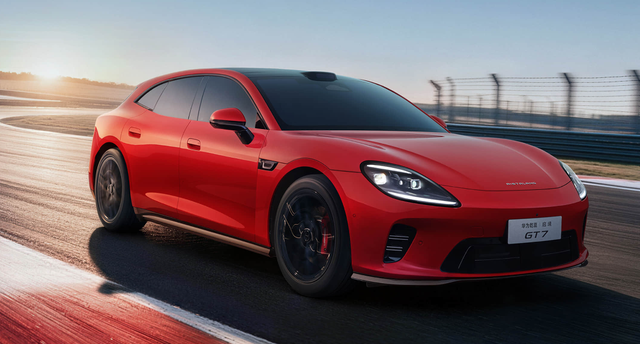
At the same time, several global premieres jointly developed by Huawei and automakers made their debut. The Yijing X9 large six-seater SUV, jointly developed by Dongfeng Motor and Huawei Qiankun, is fully equipped with Huawei's ADS 5.0 intelligent driving system and 896-line LiDAR. The Guangqi Qijing GT7 shooting brake, launched in collaboration with Huawei Qiankun, achieves a zero-to-100 km/h acceleration in just 2.98 seconds. The Hongmeng Intelligent Driving Solutions' first flagship MPV, the Luxeed V9, redefines intelligent cockpit standards with innovative configurations such as dual rotating seats in the second row.
-
Ant Group’s New Board of Directors: Signaling a New Era?
-
![]()
Google Initiates TPU Sales, as Industry Leaders Eye AI Chips for 'Cost-Effective Tokens'
-
![]()
Input Methods: The Rising Star in AI! WeChat, Doubao, and Qianwen Lead the Charge into the Voice Input Era
-
![]()
Struggling to Sell? Cut It Out! Toyota, Volkswagen, and Changan Lead the Charge in Streamlining, Eliminating Non-Core Products in the Blockbuster Model Era
-
![]()
Arm China and Volcano Engine Join Forces to Expedite Cloud Computing and AI Infrastructure Rollout
-
![]()
Total Investment Hits Nearly 3.28 Billion! Goertek Launches Mass Production of 12-Inch Transparent Substrate Wafer for AR Glasses’ Micro-Nano Optical Components
-
![]()
Why Is This Precision Optical Film Leader Worth Reevaluating with a Tens of Millions Procurement?
-
![]()
AI Costs Plummet by 90% Over Nine Years: Key Insights from Davos You Shouldn’t Miss