Prosperity Laced with Hidden Risks: Most Six-Seater SUVs Are ‘Sacrificing Profit for Popularity’
 05/08 2026
 656
656
For the automotive market, the question of whether six-seater SUVs can truly become mainstream hinges on the dual tests of time and consumer acceptance.
In the historical trajectory of China's auto market, six-seater SUVs have long lingered in a 'neglected niche.' From the perspective of average consumers, these vehicles lack the versatility of five-seater SUVs for daily commuting and lack the distinct commercial/multi-passenger appeal of MPVs. They were primarily supplementary offerings from automakers aiming to cater to evolving family needs, with a limited market presence and low consumer awareness.
However, this landscape underwent a fundamental transformation starting in 2025.
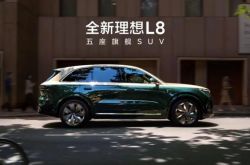
A growing number of automakers have integrated six-seater SUVs into their core product strategies. Pioneers such as Li Auto and Seres have consistently strengthened their product lineups, launching models like the Li Auto i8 and the all-electric Seres M8 to solidify their market positions. Independent brands including Geely Galaxy, Dongfeng eπ, Leapmotor, Zeekr, and Voyah have followed suit, constructing comprehensive product matrices across various price ranges.
This transformation is propelled by profound shifts in family travel needs, the reduction of barriers to large vehicle usage through new energy technologies, and the示范效应 (demonstration effect) created by leading brands in educating the SUV market.
The concentrated launch of multiple six-seater SUVs in late 2024 further fueled market enthusiasm, leading to widespread industry expectations that 2026 will witness a true explosion in this segment.
New Market Demand
In reality, the 'rise' of six-seater SUVs is the result of multiple converging forces, primarily stemming from profound changes in China's family structure.
With the continuous implementation of two-child and three-child policies, scenarios involving six-person high-frequency travel, such as 'couples + 2 children + 1-2 elderly,' have become increasingly prevalent. Traditional five-seater SUVs struggle in these scenarios, as two child safety seats occupy the rear sides, rendering the middle seat extremely uncomfortable for adults, especially during long trips, which can be almost 'punishing.'
While seven-seater SUVs can accommodate more passengers, their 2+3+2 seating layout makes accessing the third row extremely inconvenient, and the cramped space is only suitable for emergency use. MPVs, due to their strong commercial attributes and handling shortcomings, are difficult to adopt as daily commuters for families.
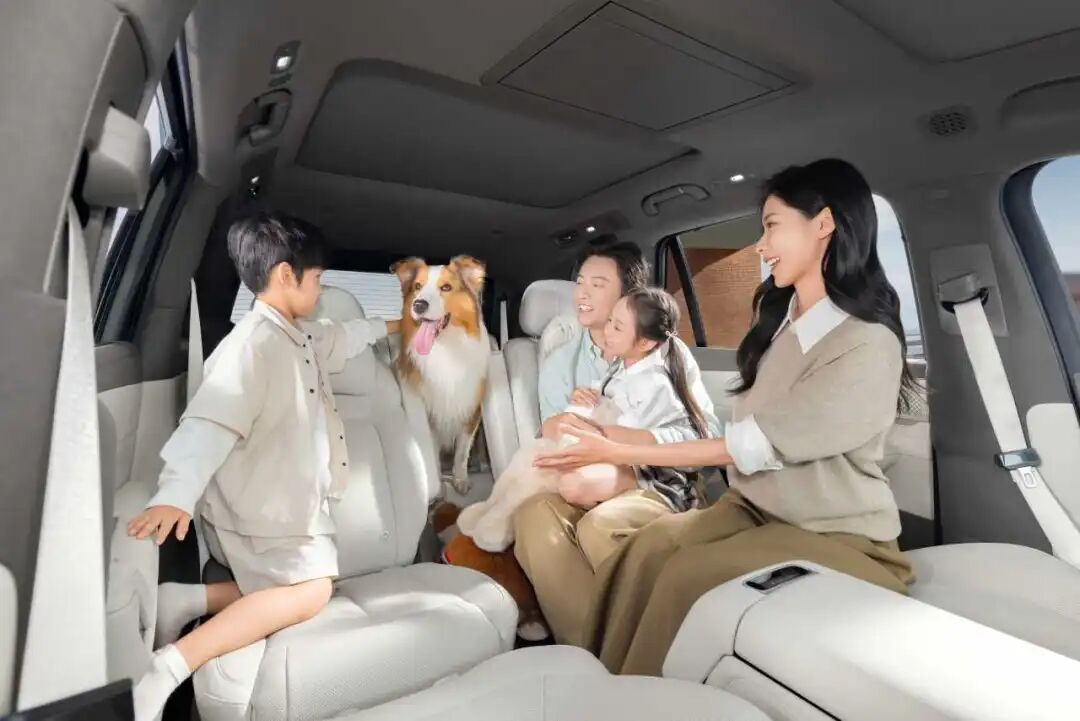
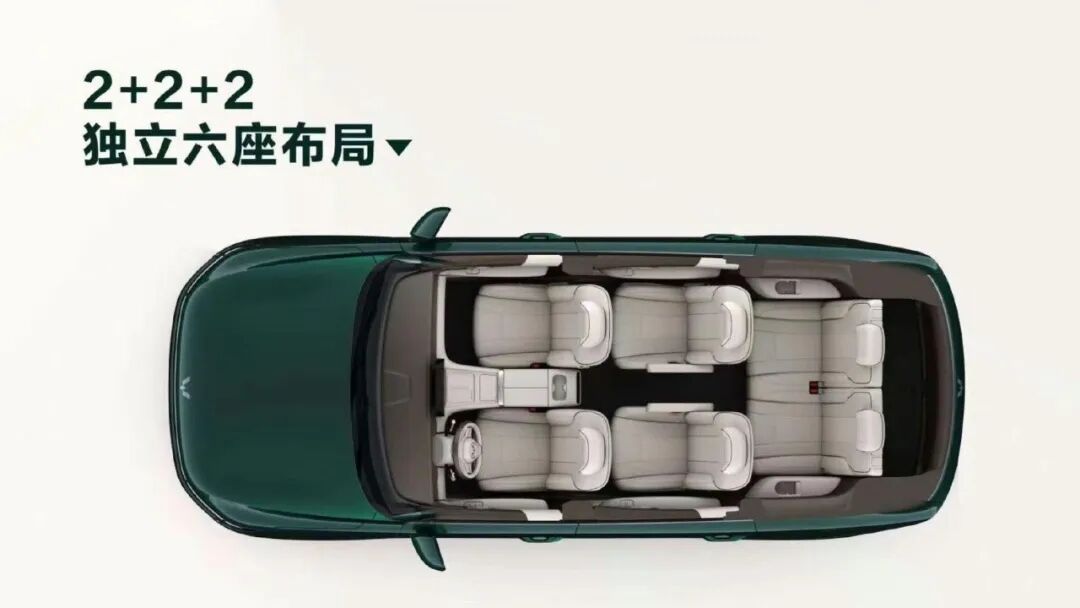
However, the 2+2+2 layout of six-seater SUVs precisely addresses these market pain points. Independent second-row seats ensure comfort for both elders and children, while the central aisle allows easy access for third-row passengers. Meanwhile, these vehicles retain the handling and off-road capabilities of SUVs, perfectly meeting families' dual needs for 'daily commuting + multi-passenger travel.'
This precise fit for specific scenarios has transformed six-seater SUVs from 'optional supplements' into 'must-have products.' Data indicates that in 2025, domestic sales of six/seven-seater SUVs reached 1.5 million units, with six-seater models accounting for over 60%, a year-on-year increase of 210,000 units, becoming the core driver of market growth.
If changes in family structure provide the demand foundation for the rise of six-seater SUVs, the maturation of new energy technologies is the key force driving their breakthrough.
In the era of fuel vehicles, large SUVs were synonymous with high fuel consumption, high purchase costs, and high usage costs. Even with multi-passenger travel needs, most families would hesitate due to long-term usage pressures.
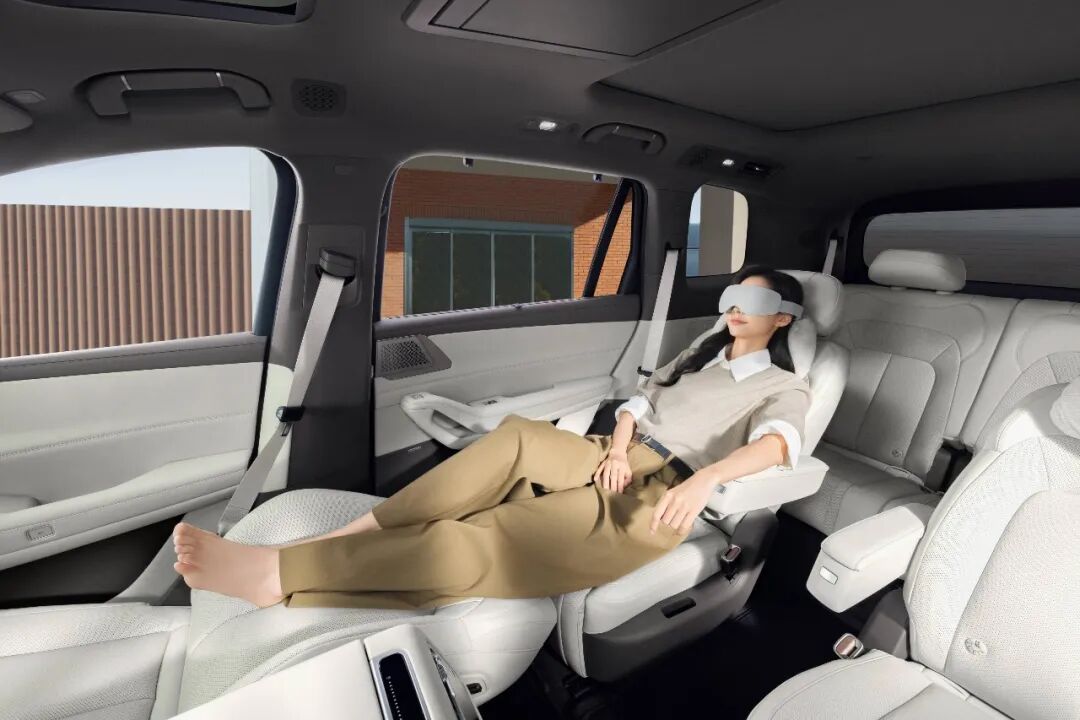
However, new energy technologies have fundamentally rewritten this logic.
The proliferation of extended-range and plug-in hybrid systems enables six-seater SUVs to adopt a flexible 'all-electric for city commuting, hybrid for long-distance travel' model, significantly reducing daily energy costs and eliminating 'range anxiety.' All-electric platforms optimize motor layouts and flat-mount batteries, freeing up interior space. This allows six-seater SUVs to have longer wheelbases and flatter floors, making the third row truly 'comfortable for all,' rather than a mere afterthought.
Additionally, new energy technologies have driven configuration upgrades in six-seater SUVs.
'Refrigerators, TVs, and sofas' have become standard features, while air suspension, intelligent cockpits, and advanced autonomous driving systems are gradually becoming more accessible, allowing family users to enjoy luxury-class experiences at more affordable prices. Take the Seres M9 as an example: its HarmonyOS intelligent cockpit, Huawei ADS advanced autonomous driving system, rear entertainment screens, and onboard refrigerator precisely meet family users' demands for a 'mobile home.'
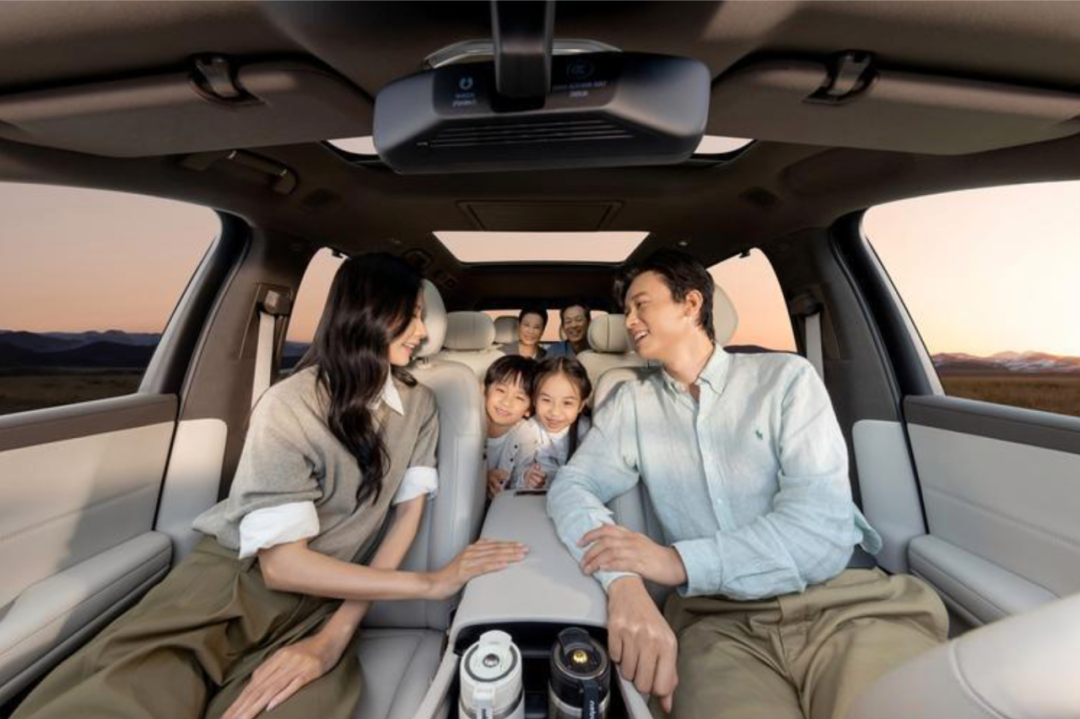
Meanwhile, leading brands like Li Auto and Seres have successfully educated consumers about the value of six-seater SUVs through early market cultivation, creating a strong demonstration effect.
Blue Ocean and Red Ocean Coexist
With the explosion in market demand, the six-seater SUV market has shown clear segmentation. A research report by Huachuang Securities in February 2026 pointed out that the current six-seater SUV market features a 'blue ocean at the 200,000 RMB level and a red ocean above 300,000 RMB,' with significantly different development logics across price bands.
Statistically, the 250,000-400,000 RMB price band is the core growth engine of the six-seater SUV market, with sales increasing by 300,000 units in 2025, becoming the main driver of market expansion. Models in this band offer sufficient space and configurations while maintaining cost-effectiveness, perfectly meeting the needs of most upgrading families.
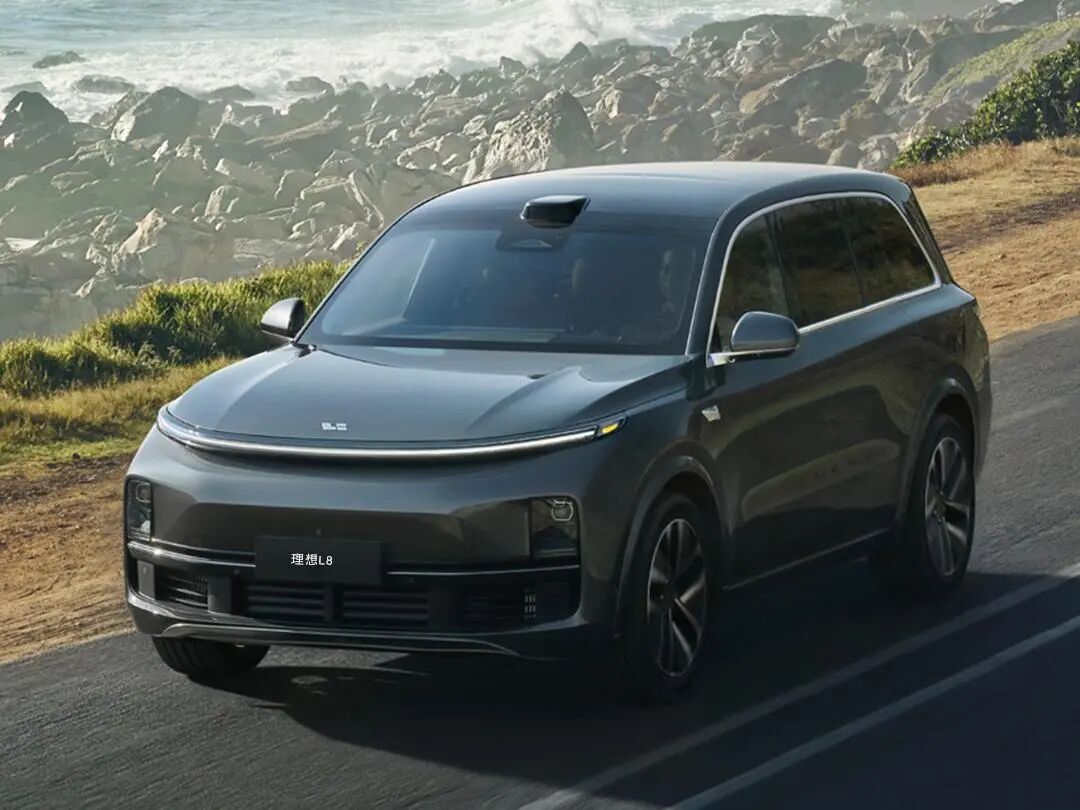
Brands like Li Auto and Seres dominate this segment. Li Auto has precisely targeted the market with its L series' 'family positioning + extended-range technology,' with cumulative sales of models like the L9 and L8 each exceeding 200,000 units, defining the six-seater SUV segment. Seres, leveraging Huawei's intelligent cockpit and advanced autonomous driving, has sold over 260,000 units of the M9 within two years of its launch, maintaining monthly sales of over 10,000 units despite a starting price of 469,800 RMB, demonstrating strong brand premium capabilities.
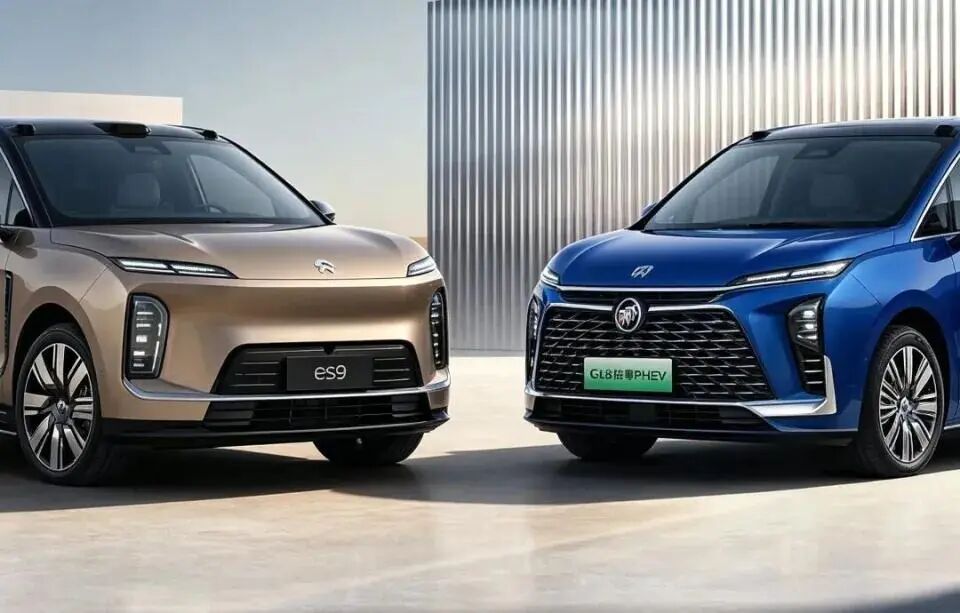
NIO's ES9 emphasizes 'every seat is an MVP,' highlighting full-vehicle comfort. While its sales lag behind the top two, it forms differentiated competition in the premium market.
Meanwhile, six-seater SUVs in this price band have also impacted the market for mid-to-large luxury SUVs.
Previously, models like the BMW X5 and Mercedes-Benz GLE dominated the market through brand premiums. However, six-seater SUVs, with their larger space, richer configurations, and more affordable prices, have attracted many consumers who originally planned to buy luxury mid-to-large SUVs. Data shows that in 2025, sales of luxury mid-to-large SUVs declined by 4% year-on-year, while the market share of six-seater SUVs in the 250,000-400,000 RMB band increased from 10% in 2024 to 23%.
Meanwhile, the high-end six-seater SUV market above 300,000 RMB achieved rapid growth in 2025, with sales reaching 840,000 units, a year-on-year increase of 260,000 units. From late 2025 to 2026, second-tier brands like Leapmotor, Deepal, Lanto, and Voyah attempted to break through with 'cost-effectiveness.'
Leapmotor's D19 lowered the threshold for large six-seater SUVs by nearly half with a starting price of 219,800 RMB, directly challenging Li Auto's core market. Meanwhile, joint-venture brands like SAIC Volkswagen's ID.ERA 9X joined the fray, competing for the mid-range market with a 'joint-venture quality + Chinese pricing' strategy, intensifying overall competition.
The sub-200,000 RMB price band is currently a potential blue ocean for six-seater SUVs. In 2025, sales in this market reached 660,000 units but declined year-on-year. The core reason is that existing models, with wheelbases mostly between 2.8-3.0 meters, fail to meet third-row space demands. Additionally, six-seater SUVs from ordinary brands account for only 4.9% of SUVs priced below 250,000 RMB, far lower than the 28% share above 250,000 RMB.
In 2026, five new models in this price band are expected to launch. Industry insiders believe that as technology costs decrease and economies of scale emerge, six-seater SUVs will gradually penetrate below 200,000 RMB, even below 150,000 RMB. The massive existing market will make this segment a 'disaster zone' for dimensional strikes.
Significant 'Matthew Effect' in the Market
Despite the apparent heat of the six-seater SUV market, whether it can truly become a mainstream SUV product remains questionable.
Data shows that among the nearly 70 six-seater SUV models available in 2025, only a dozen consistently sold over 5,000 units per month, accounting for less than 20% of the total. Over 30 models sold fewer than 1,000 units per month, and nearly 20 models sold less than 300 units per month, teetering on the edge of 'selling one unit at a loss.'
For example, an independent brand launched a six-seater SUV priced at 180,000 RMB in early 2025, emphasizing 'high cost-effectiveness.' However, its average monthly sales in 2025 were only 280 units, with a peak single-month sales figure below 500 units. To maintain market presence, the model frequently offered terminal discounts, even promoting '30,000 RMB off the bare car price,' but still failed to reverse its decline.
Another new energy brand launched a high-end all-electric six-seater SUV in mid-2025, equipped with a self-developed full-stack autonomous driving system and a 1,000 km range battery, sparking industry buzz at launch. However, due to weak brand influence and intense competition from strong rivals in the same price band, sales remained sluggish. With extremely low market acceptance, production capacity sat idle, and factory utilization fell below 30%, becoming the brand's biggest 'performance burden' in 2025.
A certain brand leveraged purchase tax subsidies in late 2024, offering 'lifetime free maintenance for six-seater SUVs,' which drove monthly sales to exceed 30,000 units, a record high. However, after policy withdrawal, sales quickly plummeted to an average of 8,000 units per month, less than one-third of the promotional period. Due to excessive demand depletion in advance, full-year sales in 2025 declined by 40% year-on-year, leading to severe inventory backlogs. The brand had to clear inventory through 'lease-to-own' schemes, causing significant disruption to its dealer network.
These cases are not isolated but a true reflection of the six-seater SUV market's prosperous facade. When we examine the underlying logic of market demand, we find that the foundation supporting the rise of six-seater SUVs is not unshakable.
While multi-child families have driven short-term demand, China's birth rate fell to 7.92 million in 2025, with the proportion of multi-child families also declining. Whether family structures will continue to support demand growth for six-seater SUVs remains uncertain.

Additionally, large five-seater SUVs and six-seater SUVs are not substitutes but complements. Brands like IM Motors and Nissan have launched large five-seater SUVs with more spacious trunks and second-row space, attracting many three- and four-person households and diverting some potential demand.
From a technological perspective, most six-seater SUVs currently emphasize 'spaciousness and full configurations' but lack breakthroughs in core technologies and scenario innovations. As 'refrigerators, TVs, and sofas' become standard, user selection criteria will become stricter. Only by forming differentiated advantages in intelligent interaction, range capabilities, and chassis tuning can brands stand out in fierce competition.
Industry insiders analyze that after the withdrawal of policies like purchase tax subsidies and trade-in incentives, consumer demand previously stimulated by policies will return to normal levels, and model sales will decline to rational market intervals. The overall auto market growth expectation for 2026 is low, with some pessimistic forecasts predicting a 7% decline, casting a shadow over the growth of the six-seater SUV market.
From a niche supplement to a mainstream segment, the rise of six-seater SUVs is the result of family demand shifts, technological progress, and market education. However, with more new models launching this year, market competition will intensify further, driving continuous product upgrades. For automakers, only continuous innovation in technology and scenarios will allow them to secure a place in this 'red ocean.' For the market, whether six-seater SUVs can truly become mainstream still requires the dual tests of time and consumer acceptance.
Note: Images sourced from the internet. If infringement occurs, please contact for removal.
-END-
-
![]()
Total Investment Hits Nearly 3.28 Billion! Goertek Launches Mass Production of 12-Inch Transparent Substrate Wafer for AR Glasses’ Micro-Nano Optical Components
-
![]()
Why Is This Precision Optical Film Leader Worth Reevaluating with a Tens of Millions Procurement?
-
![]()
AI Costs Plummet by 90% Over Nine Years: Key Insights from Davos You Shouldn’t Miss
-
Doubao, Your Late-Night AI Companion, Now Eyes Profitability
-
![]()
SRC Empowers SEER Intelligence to Reach a Market Cap of Tens of Billions, Yet Fails to Sustain Profitability
-
![]()
China’s Embodied AI Industry Faces Fierce Domestic Competition, Making Overseas Expansion Essential for Survival
-
![]()
32.8 Billion Yuan Investment! Goertek’s 12-Inch AR Glasses Optical Wafer Base in Lingang Begins Operations
-
![]()
How Far is the All-New Li Auto L8 from Being the Best Five-Seat SUV with In-House Full-Stack Development?