Domestic Joint Venture Cars, Making Waves Across the Globe
 05/09 2026
 441
441
Introduction
From 'Made in China for China' to 'Made in China for the World'
'Leading global trends with Chinese innovation—that's where the future lies,' declared Tong Oufu, head of Mercedes-Benz Greater China, at the Beijing Auto Show's Mercedes-Benz brand day, outlining the company's forward-looking vision.
'China is not only our production hub but also our R&D center, poised to become the launchpad for new products and models in other markets,' emphasized Mu Houzai, president and global CEO of Hyundai Motor, during the company's global media symposium at the Beijing Auto Show, underscoring China's strategic importance.
Beyond Mercedes-Benz and Hyundai, Nissan also positions China as 'one of the key global markets' and a 'global innovation and export base' propelling its future. Earlier this year, BMW Chairman Oliver Zipse remarked, 'China's pace of innovation and scale of its industrial chain are unparalleled. What we achieve in China will shape our global product lineup.'
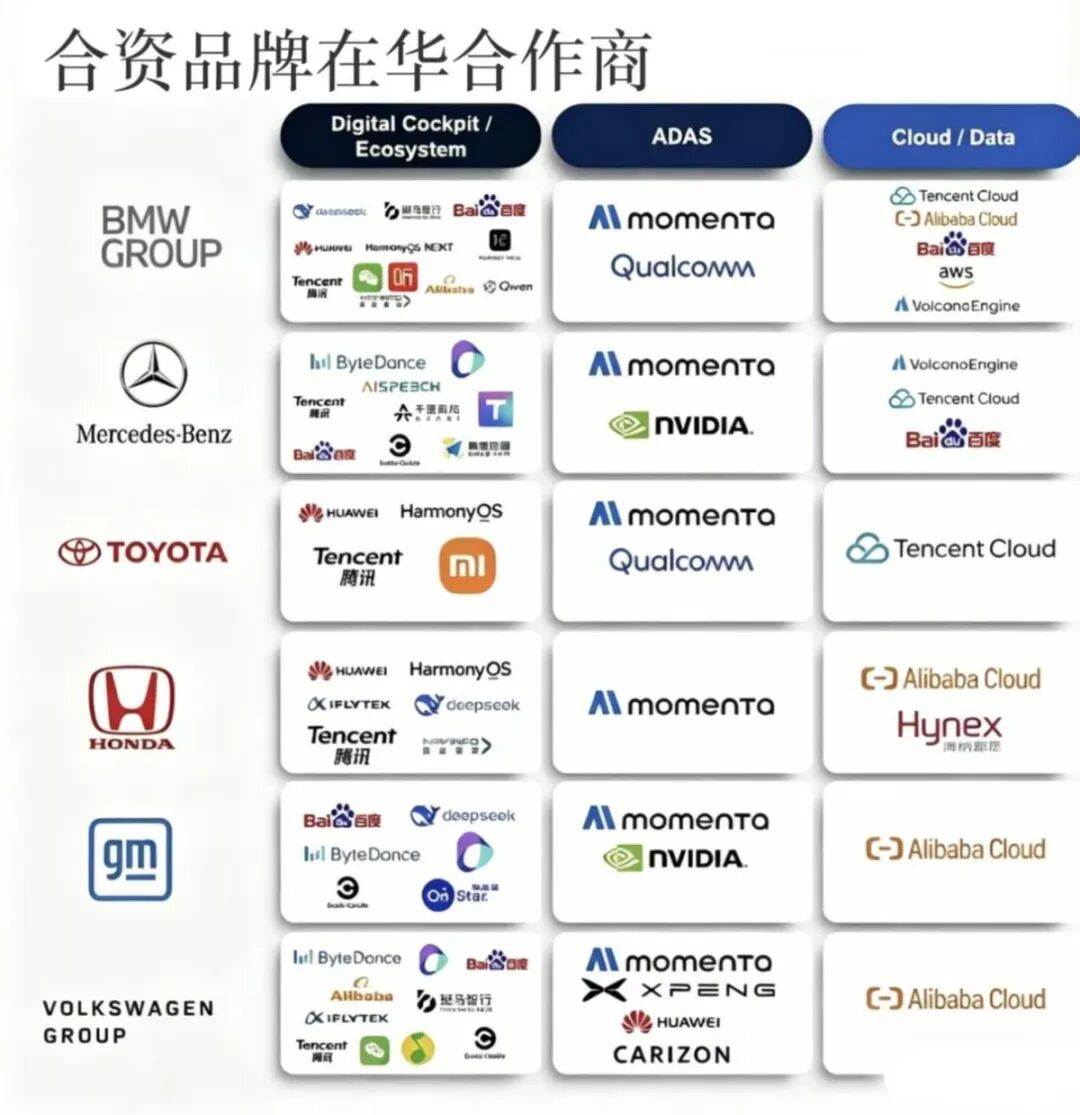
Earlier still, Toyota introduced a chief Chinese engineer system, Porsche established its first overseas integrated R&D center in Shanghai, and deep collaborations were initiated between Volkswagen-Xpeng and Geely-Mercedes-Benz.
Undoubtedly, foreign-funded and joint-venture automakers are significantly ramping up their presence in the Chinese market, with their development strategies evolving from the past 'Made in China for China' to today's 'Made in China for the World.' China's automotive market has transformed into an innovation hub that feeds back into the global automotive industry.
Meanwhile, leveraging their first-mover advantages and technological prowess in new energy and intelligent sectors, domestic independent brands are navigating shrinking profit margins amid fierce local competition. Venturing overseas has emerged as a crucial growth path for automakers to break through bottlenecks and enhance profitability.
01 Whoever Wins China, Wins the World
By 2025, global automotive production and sales are projected to reach 96.4 million and 99.8 million units, respectively, with China maintaining its top global position. Domestic sales for the year are expected to hit 27.302 million units, accounting for 27.35% of the global market, while vehicle exports will surpass 7.098 million units, leading the global automotive landscape.
Beyond its massive production and sales scale, China has established a comprehensive automotive industrial chain and continuously evolving core technological advantages. Take intelligent driving as an example: local tech firms like Huawei ADS, Momenta, and Horizon Robotics have emerged strongly, coupled with the mass production of self-developed intelligent driving systems by major independent brands, forming a globally leading intelligent vehicle technology ecosystem.
Amid this wave of industrial technological evolution, foreign automakers' positioning and strategic logic regarding the Chinese market are undergoing fundamental shifts.
During the fuel vehicle era, despite China's long-standing global leadership in automotive production and sales and deep collaboration with joint-venture automakers, it primarily served as a manufacturing base and product dumping ground for foreign brands. Under the 'market-for-technology' industry paradigm, most global models were first introduced to China, with joint-venture automakers generally adhering to a localized 'Made in China for China' strategy. Even when launching China-exclusive models, core design and R&D were fully controlled by overseas headquarters.
Today, multiple multinational automakers are comprehensively upgrading their China strategies, transitioning from 'Made in China for China' to a new phase of 'Made in China for the World.'
Specifically, the voice and independent R&D capabilities of Chinese R&D teams are increasingly prominent. Models designed and developed by local teams not only cater to the domestic market but also begin to reverse-export globally, participating in the creation of cutting-edge models launched simultaneously worldwide.
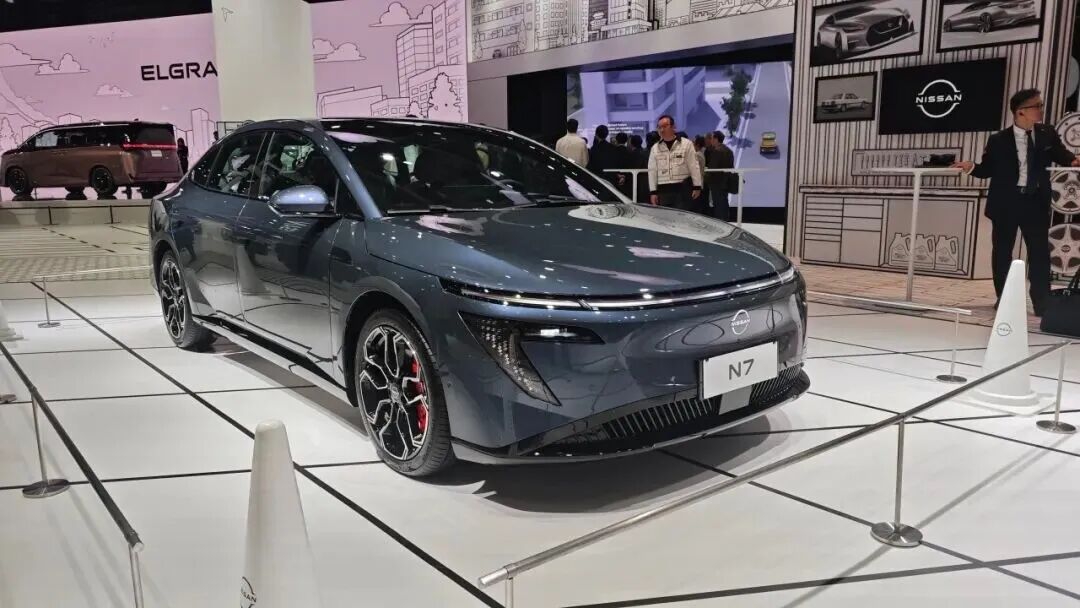
In October 2025, at the Japan Mobility Show, Nissan's booth drew crowds as a joint-venture model primarily developed by its Chinese team made its debut on the Tokyo stage—a rare feat in Japan's traditionally closed automotive industry. A week earlier, at Nissan China's 40th-anniversary brand night, newly appointed CEO Ivan Espinosa declared that 'China is key to Nissan's transformation.' During the recent Beijing Auto Show, he reiterated that the N7 model would expand from China to the global stage, with initial exports to Latin America and Southeast Asia.
Beyond Nissan, after experiencing global sales declines and profit drops, Porsche chose to establish its first overseas integrated R&D center in Shanghai. The entertainment screens developed and designed there will enter mass production within the year.
SAIC Volkswagen's ID.ERA 9X has already achieved mass production. Unlike the traditional 'overseas R&D, China adaptation' model, this model was primarily developed by its Chinese R&D team. SAIC Volkswagen defines it as a milestone product ushering in the 'Joint Venture 2.0 Era' and realizing 'Made in China, Global Output.'
In an interview following the new vehicle's pre-sale launch, SAIC Volkswagen stated that the model was not solely developed for the Chinese market. From the outset, its global pathway was planned, with right-hand-drive versions for Southeast Asia, Australia, and other markets already in adjustment and development stages.
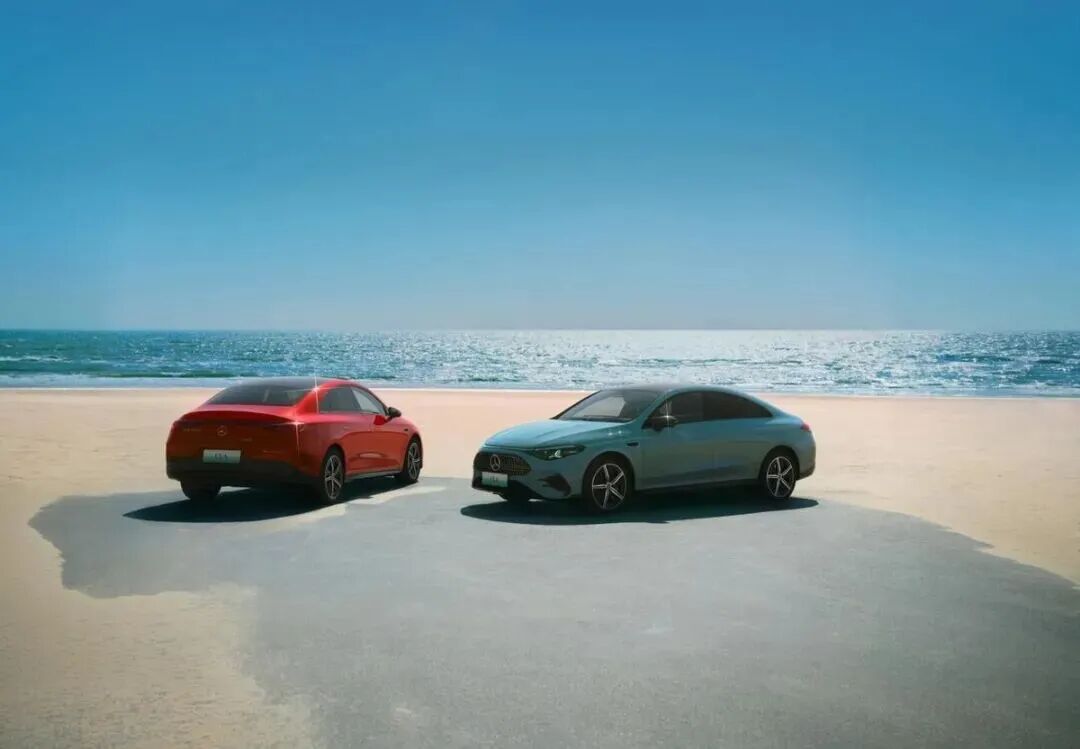
Mercedes-Benz's trajectory is equally clear. The all-new CLA, unveiled last year and dubbed the 'smartest Mercedes ever,' features the MB.OS architecture primarily developed by Mercedes' Chinese team, equipped with Momenta's assisted driving system and batteries supplied by Chinese firms—fully embodying Mercedes' 'Made in China for China' R&D philosophy.
Despite being positioned as Mercedes' next-gen technological flagship, the niche CLA model does not shoulder significant sales volume in China. However, globally, the CLA has performed exceptionally well, even exceeding expectations. Since its launch, the all-electric CLA has accumulated over 25,500 registrations in Europe.
Ola Källenius, Chairman of the Board of Management at Mercedes-Benz Group AG, once defined the Chinese market as the 'Champions League' of the automotive industry, underscoring its core role in Mercedes' global strategy. 'Our Chinese R&D team already has considerable autonomy. But I believe a better approach is to leverage what we develop here—innovate in China and empower the world,' he emphasized in a recent interview, reiterating the market's significance.
All signs indicate that joint-venture brands have entered a new era: Whoever wins China, wins the world.
02 Setting Sail Overseas for Profit
Mirroring foreign automakers' deepening focus on China to fuel global growth, Chinese independent brands at the heart of global automotive competition have also reached a new inflection point. Amid sluggish domestic market growth and shrinking profit margins, going overseas has become this year's brightest growth engine for Chinese automakers.
The data speaks volumes. In Q1 2025, the automotive industry's total profit reached 78.4 billion yuan, down 18% year-on-year, with the profit margin dropping to 3.2%. In stark contrast, overseas markets saw China export 2.34 million vehicles in Q1, up 53% year-on-year, with Latin America and Europe serving as key growth engines.
As a trailblazer in Chinese automotive exports, Chery Automobile's trajectory is highly representative. In 2025, Chery Group's self-owned passenger vehicle sales reached 2.631 million units, with exports accounting for 1.2944 million units—49.2% of total sales, nearly half. Revenue-wise, the group's annual total revenue hit 300.29 billion yuan, with overseas revenue surpassing 157.42 billion yuan, or 52.4% of total revenue. Overseas markets have become Chery's core revenue pillar.
Under a structure where 'overseas sales volume is slightly lower than domestic but revenue contribution is higher,' Chery's net profit and profit margin remain leading in the industry despite widespread pressure.
Affected by international geopolitical conflicts, rising global oil prices, and other factors, demand for new energy vehicles in multiple overseas countries has surged. BYD accordingly raised its overseas sales target to 1.5 million units this year, showcasing strong confidence in overseas markets. Data shows that from January to April, BYD's vehicle exports exceeded 450,000 units, up 65.3% year-on-year, with robust growth momentum.
Empowered by technology, Chinese independent brands' overseas expansion is no longer limited to low-end commuter products but is gradually breaking into the high-end segment. The DENZA Z9GT, equipped with BYD's second-generation Blade Battery, quickly gained market recognition and positive reputation after landing in Europe. Its pre-sale price of up to 115,000 euros matches that of European local high-end models.
Fueled by the overseas boom, Chinese independent brands like BYD, Geely, Chery, and Changan are accelerating their global布局 (layout), acquiring and building overseas production bases, and deeply penetrating key markets such as Russia, Southeast Asia, and Latin America to achieve a global layout of localized production, sales, and services.
Two paths, one direction. Foreign firms leverage China to fuel global growth, while independent brands seek expansion overseas. Though seemingly divergent, they converge on the same goal: China has become the true 'midfield' of the global automotive industry. Whoever wins China wins the world, but to win the world, one must also deeply cultivate China. This bidirectional story of competition and cooperation has just begun.
Editor-in-Charge: Cao Jiadong Editor: He Zengrong
THE END
-
![]()
Total Investment Hits Nearly 3.28 Billion! Goertek Launches Mass Production of 12-Inch Transparent Substrate Wafer for AR Glasses’ Micro-Nano Optical Components
-
![]()
Why Is This Precision Optical Film Leader Worth Reevaluating with a Tens of Millions Procurement?
-
![]()
AI Costs Plummet by 90% Over Nine Years: Key Insights from Davos You Shouldn’t Miss
-
Doubao, Your Late-Night AI Companion, Now Eyes Profitability
-
![]()
SRC Empowers SEER Intelligence to Reach a Market Cap of Tens of Billions, Yet Fails to Sustain Profitability
-
![]()
China’s Embodied AI Industry Faces Fierce Domestic Competition, Making Overseas Expansion Essential for Survival
-
![]()
32.8 Billion Yuan Investment! Goertek’s 12-Inch AR Glasses Optical Wafer Base in Lingang Begins Operations
-
![]()
How Far is the All-New Li Auto L8 from Being the Best Five-Seat SUV with In-House Full-Stack Development?