Chinese EVs: Challenging the U.S. Market
 05/14 2026
 461
461
Lead
Introduction
In the age of electrification, the influence in the global automotive industry is inexorably shifting towards China.
"Set aside Huawei and TikTok for now — focus on Chinese automakers,"
Ford CEO Jim Farley's public expression of concern reveals the deep-seated anxiety within North America's auto sector. Previously, U.S. political and business leaders were preoccupied with digital technology competition, using tariffs as a weapon in trade wars to secure profits.
Today, Chinese EVs have emerged as their most formidable industrial competitor.
Farley's warning is not an overstatement. It reflects China's global EV breakthrough, which is quietly surrounding the North American auto market. Over the past two years, Chinese automakers have intensified their focus on the Americas, refining their global presence and steadily forming an invisible encirclement around the U.S.
In South America, markets such as Mexico have witnessed steady expansion by BYD, Great Wall, and other automakers, with surging sales, advancing factory plans, and a firm grip on Latin America's gateway to North America.
Meanwhile, Canada represents a significant breakthrough: a 2026 Sino-Canadian EV cooperation agreement reduces tariffs on Chinese EVs and grants permission for local factory construction. The Lotus Eletre, the first model in Canada, is priced ¥450,000 less than its U.S. counterpart, with deliveries commencing this summer.
Chinese EVs now dominate in Europe, Australia, and Southeast Asia, leveraging their strong product appeal, competitive pricing, and mature after-sales systems to reduce the market space available for overseas automakers.
In North America, despite barriers to U.S. market entry, China's southern Mexican base and northern Canadian penetration complete a market encirclement — explaining Washington's frantic policy efforts to block Chinese EVs.
Lawmakers have urged the White House to prohibit Chinese automakers from building factories in the U.S. and to block "Chinese-assembled" EVs from Mexico and Canada.
Behind these tough policies lies America's unresolved weakness in its industrial chain. Experts from AAA admit that no systemic countermeasure currently exists to counter China's dominance in the new energy supply chain.
01 Chinese Cars Haven't Entered the U.S.—Yet They Have
How challenging is it for Chinese EVs to enter the U.S. market?
According to a report by Auto Business, titled "Priced from ¥620,000: U.S. Blocks Chinese Cars Again," Chinese EVs face a combination of taxes: basic MFN tariffs, Section 232 auto duties, 100% punitive tariffs on Chinese firms, plus emergency tariffs — reaching a peak of over 137.5%.
These exorbitant fees effectively strangle formal imports. A Jinpeng AMY micro-EV, costing ¥26,700 offshore, surges to ¥620,000 post-tax in the U.S., with mid-to-high-end models doubling in price.
Yet, strict trade barriers have not dampened U.S. consumer demand. A niche trend of "cross-border purchasing" has emerged along the U.S.-Mexico border.
Ciudad Juárez, Mexico, just 8 km from the border, now serves as a hub for Chinese EVs for U.S. buyers. Popular domestic models like the BYD Seal and XPeng G6 line showrooms, with American drivers crossing to pick up cars and returning home — forming a mature informal delivery chain.
What drives this trend? Unmatched cost-effectiveness.
In comparable segments, Chinese EVs cost around $20,000 in Mexico, compared to $36,900 for the Tesla Model Y in the U.S. — a $16,000 gap. Entry-level models widen the divide: the BYD Seagull at $10,000 versus the U.S. EV average of $50,000 — a fivefold difference. Even with 100% tariffs, Chinese EVs remain price-competitive, making them an irreplaceable choice for cost-conscious buyers.
This grassroots surge has alarmed Washington. Surveys indicate that around 30% of Americans would consider buying Chinese EVs, heightening political vigilance.
Beyond lawmakers' letters, January 2025 saw U.S. bans: smart connected vehicles with Chinese software (from 2027) or hardware (from 2030) face entry bans; Chinese-linked automakers, regardless of production location, are barred — closing potential loopholes.
U.S. senators warn that allowing Chinese factories would cripple local automakers and pose national security risks. Ford's Farley predicts an 18-month irreversible decline in orders for U.S. fuel-powered vehicles (ICE vehicles) if Chinese EVs gain full market access.
Yet, internal divisions persist. Some analysts propose a compromise: if Chinese firms invest billions to revamp idle Midwestern U.S. plants, market access might follow.
This duality — tough bans versus tentative compromises — reveals U.S. ambivalence: fearing China's automotive prowess yet craving foreign capital.
02 Global Auto Industry's Influence Shifts Irreversibly to China
The frenzy of border purchases and surges in overseas markets reflect China's strength in new energy vehicles.
Domestically, Chinese brands dominate, with new energy vehicles (NEVs) capturing over 60% market share in April 2025, outpacing joint ventures. Lagging technology and weak product appeal have forced traditional joint ventures to exit China. The domestic shakeout is complete, with leading brands cementing their technological, production capacity, and supply chain advantages for global expansion.
Export data underscores this boom. In 2025, China shipped 7.098 million vehicles (+21.1% YoY), including 2.615 million NEVs (+103.7% YoY), accounting for 36.8% of exports — the core growth engine.
Beyond sales, Chinese EVs have achieved qualitative leaps. A landmark 2025 milestone: BYD outsold Tesla globally, claiming the NEV crown.
Recent years' Chinese auto exports are characterized by words like "leap" and "double," signaling not just volume growth but systemic deepening.
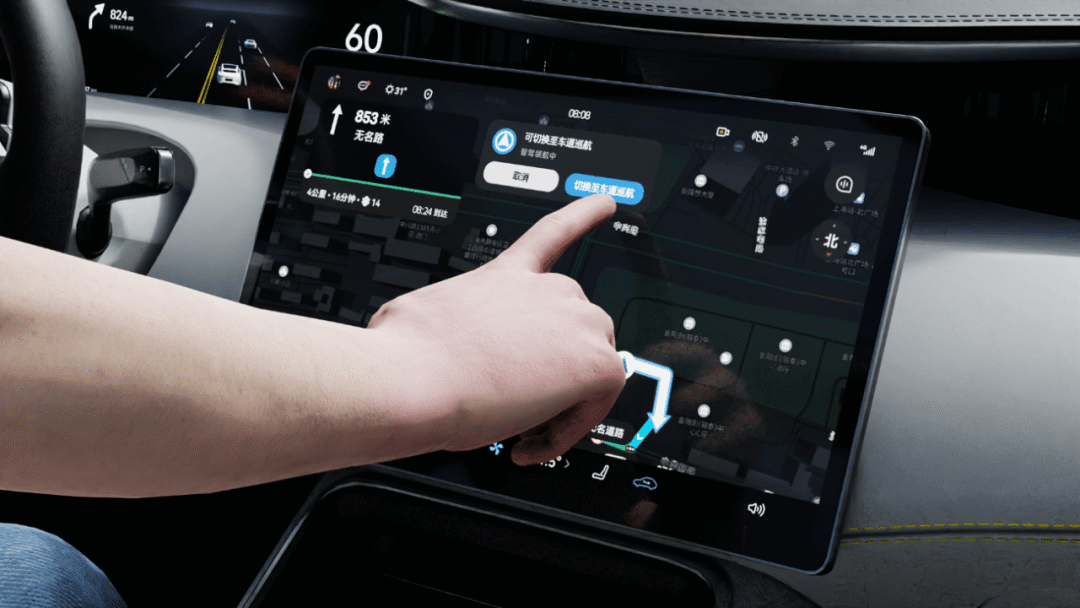
Technologically, China leads with innovations such as CTB battery integration, 800V fast charging, mega-casting, and tariff-free urban NOA, creating a clear technological gap over foreign brands.
Globally, Chinese automakers have refined a model of "vehicle exports + local factories + self-owned logistics + policy dividends."
Leveraging this ecosystem and technological edge, China dominates regional markets. In South America — a region of concern for the U.S. — BYD, Chery, and Great Wall logos have replaced German and Japanese brands, with 80% of Brazilian EVs now Chinese-made. North American market access widens via the Sino-Canadian pact, flooding Canada with cost-effective Chinese EVs and pressuring the U.S. market.
By 2026, growth in South America transcends mere sales volumes.
In January 2026, the Changzhou ro-ro ship docked in Argentina with 5,841 BYD NEVs, setting a local record. BYD expands its ocean fleet to eight ships by 2026, securing global logistics.
Local production accelerates: BYD's Brazilian plant launched in 2025, rolling out its 14 millionth NEV and selling 100,000 units locally, with President Lula praising its contributions. Chery, Great Wall, and SAIC follow suit, with Great Wall revamping Mercedes' Brazilian factory to bolster global expansion.
As Ford's Farley noted: "70% of global EVs and 80% of batteries come from China. This isn't just numerical dominance — it's absolute supply chain control."
In contrast, U.S. automakers struggle: Ford and GM shutter plants, lay off workers, and hemorrhage money on electrification while lagging in technology and cost efficiency.
The gap widens. U.S. policy blocks are short-term trade protectionism, doomed to collapse against global market forces and China's mature industrial chain.
Because one truth remains: In the electrification era, the influence in the global auto industry is shifting inexorably towards China.
Editor: Du Yuxin Copy Editor: He Zengrong
THE END
-
![]()
Is XPENG Merely a Stopgap Solution? Volkswagen’s Secret Weapon in China’s Autonomous Driving Race: CARIZON’s Advanced R&D Strategy
-
![]()
Google Launch Event: The Largest Android Update in History; AI-Powered Notebook Tailored for Gemini
-
![]()
Chinese EVs: Challenging the U.S. Market
-
How Does the Occupancy Perception Network Detect Dynamic Objects?
-
![]()
Is Android 17 Underdeveloped? Android 17 Beta First Impressions: None of Google's Touted AI Features Have Come to Fruition
-
![]()
While the Entire Industry Fixates on Tokens, Baidu Advocates for a New Standard
-
![]()
Paradigm Shift Unleashed: OpenClaw Sparks China’s AI ‘Era of Action’ — Decoding the ‘Report’ (Part 1)
-
![]()
Can Kuaishou 'Gain Honor Through Its Offspring' by Listing Its 'Prized Asset' Kling?