Chinese Automobile Design Steps into a New Phase of Global Aesthetic Dialogue
 05/27 2026
 387
387
With a mature system and aesthetic heritage, Chinese automobile design is creating brand-new value.
From the worship of speed to the refinement of mechanical aesthetics, and now to the deep integration of intelligent technologies, global automotive design has traversed a golden era of 'diversity,' driving design languages toward greater efficiency and integration.
Elements such as split headlights, through-type (Note: retained as-is for HTML context, but in practice should be translated if not a brand name) tail lights, and closed front faces have naturally emerged as industry consensus within this technological context. Electrification has elevated the automotive industry to a new level, with design gradually maturing and major, transformative visual distinctions between brands disappearing.
The ensuing question is direct: When old design paradigms are dismantled by technology, who can provide a different answer with a new paradigm?
European automotive media are beginning to turn their gaze toward China.
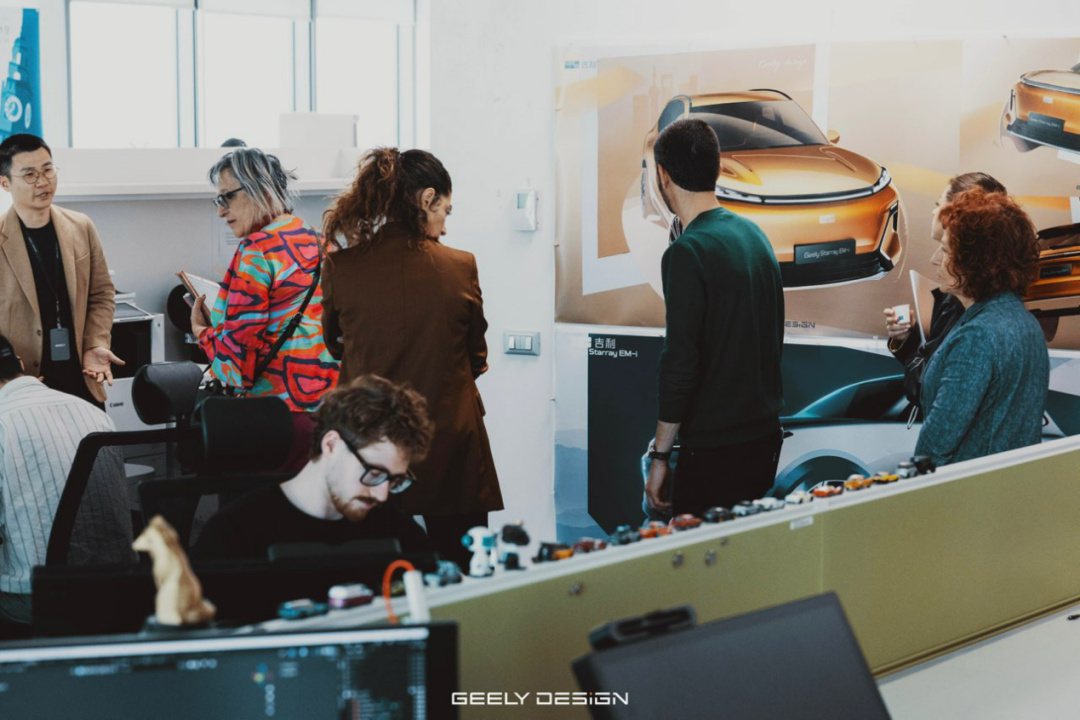
There's an old saying, 'If you are not at the table, you are on the menu.' In other words, without a voice in defining trends, one can only accept them.
Today, amid the dynamic global automotive landscape, the path to globalization for Chinese automobiles is undergoing profound generational shifts—from product exports to system exports, with a full suite of systems encompassing design, technology, supply chains, and manufacturing standards becoming the new 'globalization narrative.'
In this race, technology, supply chains, and manufacturing standards form the hardcore foundation for brands to go global, supporting automakers in steadily integrating into the global market. Design, meanwhile, embodies a brand's understanding of the times, its cultural expression, and its responsiveness to user preferences, becoming the first language through which a brand engages with the world.
Based on this judgment, Geely, as a key force in China, has constructed a 'six-in-one' strategic capability system centered on strengthening top-level coordination and global synergy under its 'One Geely, Comprehensive Leadership' 2030 strategic goal, aligning key indicators with global leading standards. It can be understood that Geely is waging a tough battle to transform 'Chinese scale' into a 'global system,' with design being the critical first move in this battle.
Remembering the Journey
The global automotive market is beginning to face a question: 'What should a good car look like?'
In the era of fuel-powered vehicles, a brand could be recognized by a single waistline or grille. Entering the era of intelligent electrics, with diverse evaluation criteria and vastly expanded dimensions, this question is not easy to answer.
Recently, Chen Zheng, Vice President of Geely Automobile Group, shared some insights. 'Chinese automobiles and Chinese design are at a multidimensional crossroads, with brands, technology, design, and global perspectives all undergoing simultaneous transitions. To steadily 'move upward,' we must not forget our journey.'
Because this is the foundation for entering the global market and the core password for grasping transitions across different eras. He summarizes the journey as 'four growth curves.'
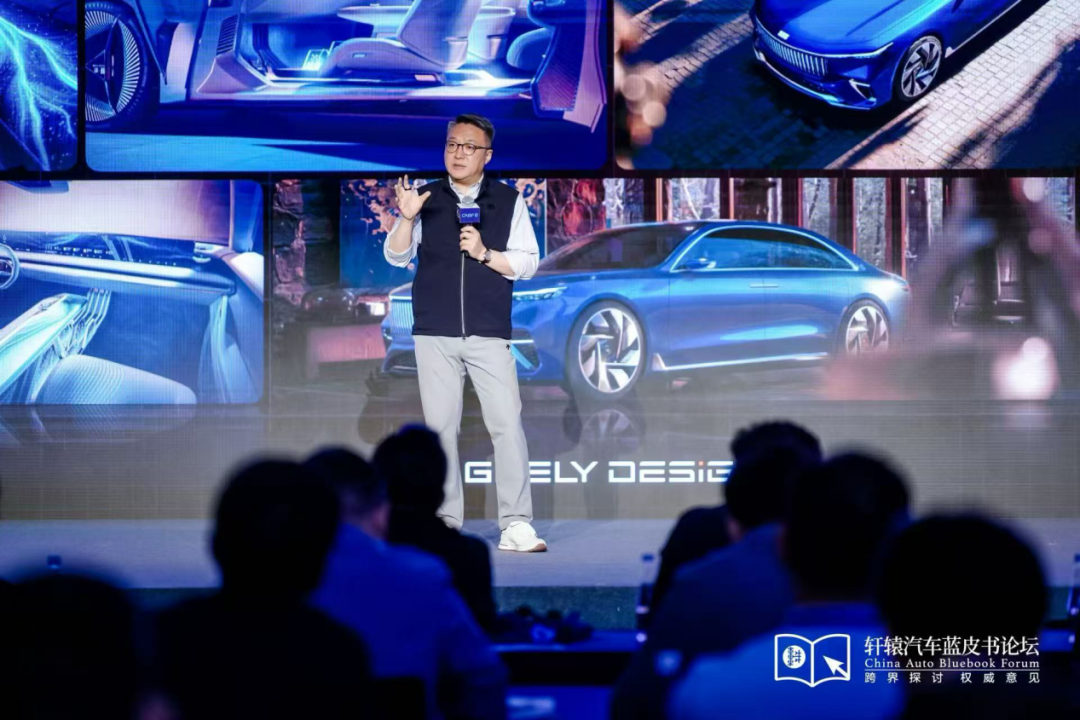
From 1995 to 2005, the phase of 'learning to walk.' From 2005 to 2015, Chinese automobile design began to emphasize 'styling.' At that time, Geely's Borui and Boyue models introduced the 'Water Droplet Ripple' design language, incorporating Chinese aesthetic connotations into automotive design and forming a highly recognizable design expression.
From 2015 to 2025, the original design language of Chinese brands began to take shape. During this phase, represented by Geely Design, Chinese original design explored a systematic answer, not only pioneering the 'New Paradigm of Chinese Automotive Design' in 2023 but also formulating a 'Three-Step Ten-Year Strategy' based on industry development, brand culture, technological advancement, and user needs: 'Harmony in Diversity, Breaking Boundaries for Beauty, Resonating with the Tide.'
Geely has established a complete design system from theoretical research to real-world implementation, encompassing three editions of white papers on Chinese automotive design discourse, a map of Chinese user aesthetic divisions, Geely's Nine Design Principles, Chinese R-Corners and Geely Patterns, and research on comfortable cabins. Previous research accumulations are now fully integrated into vehicle proportions, surface forms, body volumes, detail craftsmanship, and overall layouts. Building a mature design system is far more challenging than creating a single hit model, yet it lays a solid foundation for long-term brand development.
The Galaxy brand, built on Geely's design system, achieved sales of over 2 million units in just 37 months. Its remarkable market performance demonstrates how Chinese automotive design has continuously advanced, fully unleashing its design evolution in the new era.
Chinese Original Design Shatters the 'Old Aesthetic Paradigm'
In 'The Power of Design,' it is said, 'A brand impression is like building a large pile of stones by the river with small pebbles. It's not about using one big stone but about cleverly balancing a pile of small pebbles to form a stone mountain. This is how brand impressions are built.'
Once, German brands defined the engineering standards for luxury cars and shaped consumers' aesthetic paradigms for luxury vehicles through their technological barriers and iconic design languages in traditional fuel-powered vehicles.
During the phase of the third growth curve, Chinese automobiles continuously asked themselves: What is the most suitable design paradigm for 'Chinese needs,' and how can this paradigm be developed into a new benchmark for design?
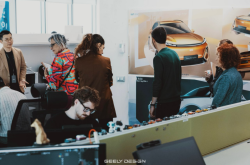
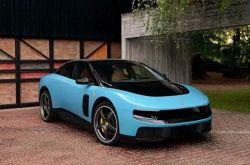
Recently, Geely collaborated deeply with the Italian design studio dotdotdot, integrating Geely's globally aesthetic design philosophy and finding an answer on an immersive art exhibition platform.
'Aesthetic resonance,' said European media and netizens.
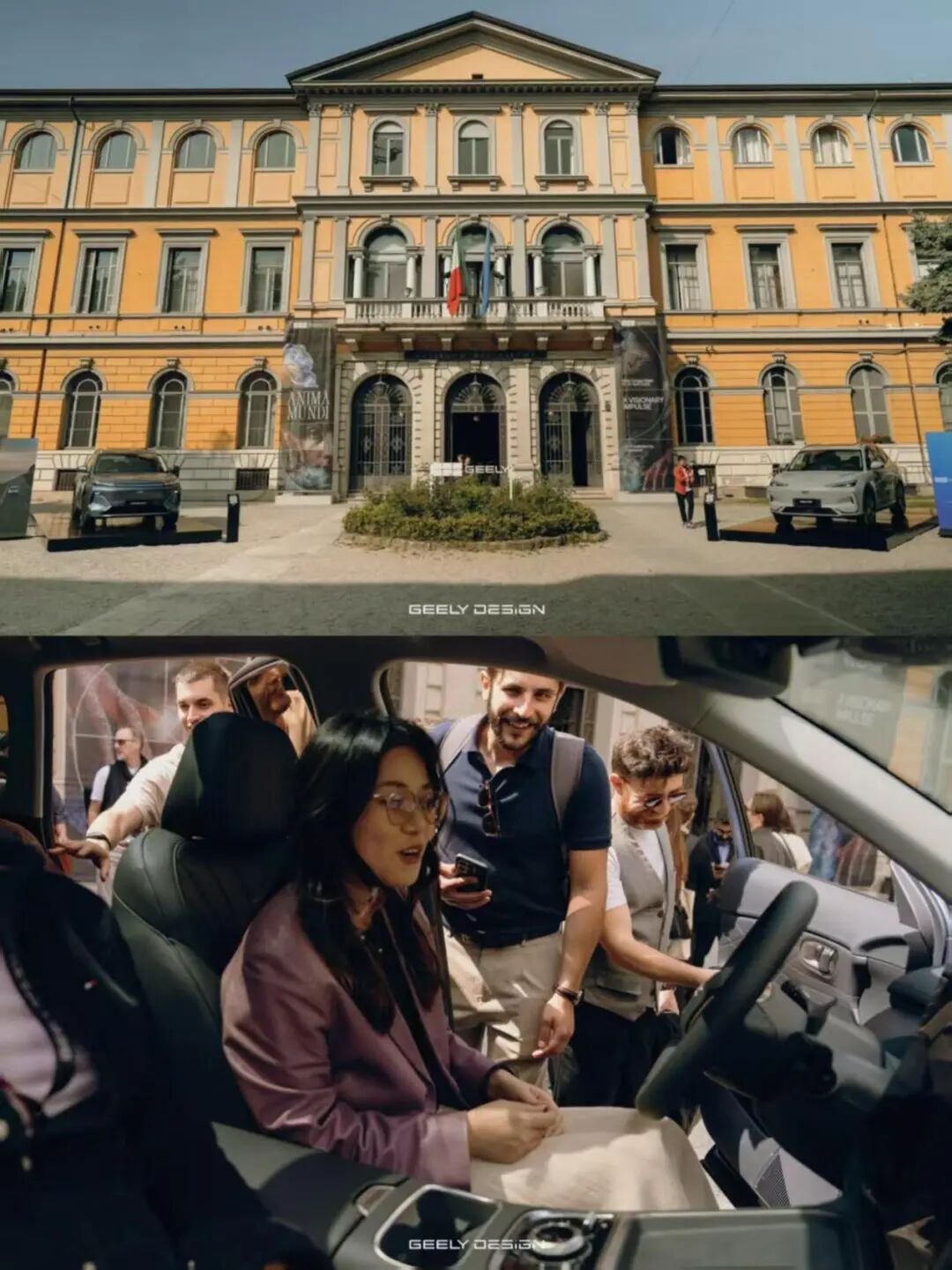
Exploring the 'small pebbles' behind this, the perspective can be focused on two stages.
'Leaping beyond traditional paradigms,' not following definitions, requires presenting a unique design narrative and facing the world with a new image to remove past stereotypes. Geely uses 'Chinese design narratives' to open the door to the world.
During this phase, Chen Zheng believes that 'finding the 'root,' having a brand's own value 'proposition,' and possessing distinct 'characteristics' become the core of exploration. Only by achieving the unity of these three can a complete and self-consistent discourse system for Chinese automotive design be formed.'
Geely has succeeded in integrating 'Chinese cultural heritage' into product design. Unique Chinese design researches such as 'Geely Green,' 'Chinese Chairs,' and 'Chinese R-Corners' have, for the first time, shown the global market the uniqueness of systematic Chinese original automotive design.
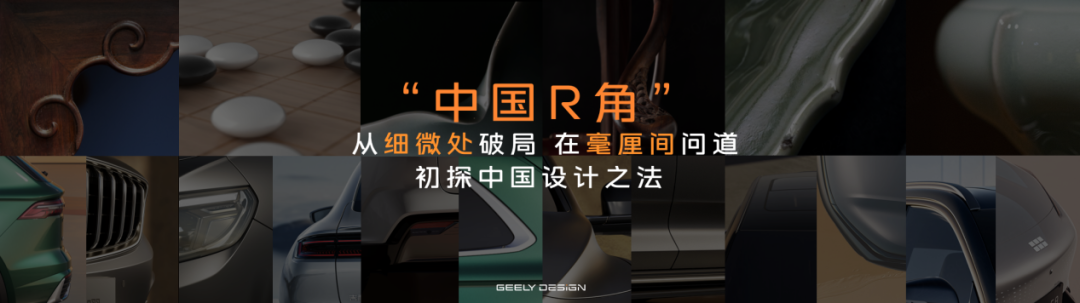
However, for Chinese design narratives to move the global market from 'seeing' to 'affirming' is not easy. It requires finding and refining universal aesthetics while considering aesthetic preferences across different regions.
Global design styles are inherently diverse: Milan's fashion classicism, Stuttgart's engineering rigor, and Silicon Valley's technological breakthroughs. Based on this, only by integrating global high-quality design resources and standing at the forefront of the industry can the challenge of diverse aesthetics be overcome. As a pioneer in Chinese original design, Geely has established five global design centers, relying on an efficient collaborative innovation system to quickly respond to new design demands in the global market.
As the model carrying the 'greatest aesthetic common denominator,' the Geely Galaxy E5 achieved global sales of over 230,000 units in 16 months, spanning 'multiple aesthetic tiers' from China to Europe.
The force of Chinese original design knocking on the door of the global market is inevitable.
Good Design Must Serve as the Brand's 'Interpreter'
From being seen to being affirmed is not the endpoint. Gaining the right to define is.
As is well known, in the global automotive landscape, 3 million units is a chasm. Surpassing this threshold means entering the 'top table' of the global automotive industry, reshaping the core competitive circle.
In 2025, Geely's total annual sales reached 3.02 million units, a testament to the brand's gradual integration into the global automotive market. Looking toward longer-term development, Geely has set a 2030 strategic goal to achieve total global sales exceeding 6.5 million units, ranking among the top five global automakers.
As Chinese automakers' global layout deepens, the aesthetic standards of the global automotive industry are also undergoing a new iteration.
Currently, Chinese automobiles are entering a crucial transition: from simply 'selling globally' to a new phase of 'born global.' To stand firm, they must have both strong hard power as support and soft power capable of integrating into local markets.
Geely has defined a clear path: integrating Chinese original design, technical standards, industrial rules, and cultural philosophies into the mainstream discourse system of the global automotive industry, which is crucial for going global.
Zhang Yongwei, Vice Chairman of the China Electric Vehicle 100 Forum, has also stated that as the boundaries of automotive design widen, design has become the core competitiveness for automotive enterprises to open markets, establish brands, and achieve global development.
However, in the multi-energy era, the energy structure has brought significant changes to vehicle design. How design can accommodate different energy structures has become a new topic for global designers. Additionally, the uncertain aesthetics caused by multi-energy sources make 'integration' even more challenging.
Again, the saying goes, 'If you are not at the table, you are on the menu.' But how to integrate? The difficulty lies in aesthetic compatibility.
'What truly drives commercial success in design? Are there measurable standards?' In the last of the 'four growth curves,' Geely took the lead in providing a forward-looking answer to the multi-energy trend with the Galaxy Light 2nd Generation, offering an 'oil-electric convergence' design style.
The Galaxy Light 2nd Generation evolves its front face from the first generation's 'Light Ripple,' which carried the new energy strategy, to the current 'Galaxy Star Waterfall,' which embodies the multi-energy strategy, breaking energy boundaries with a new 'oil-electric convergence' design style.
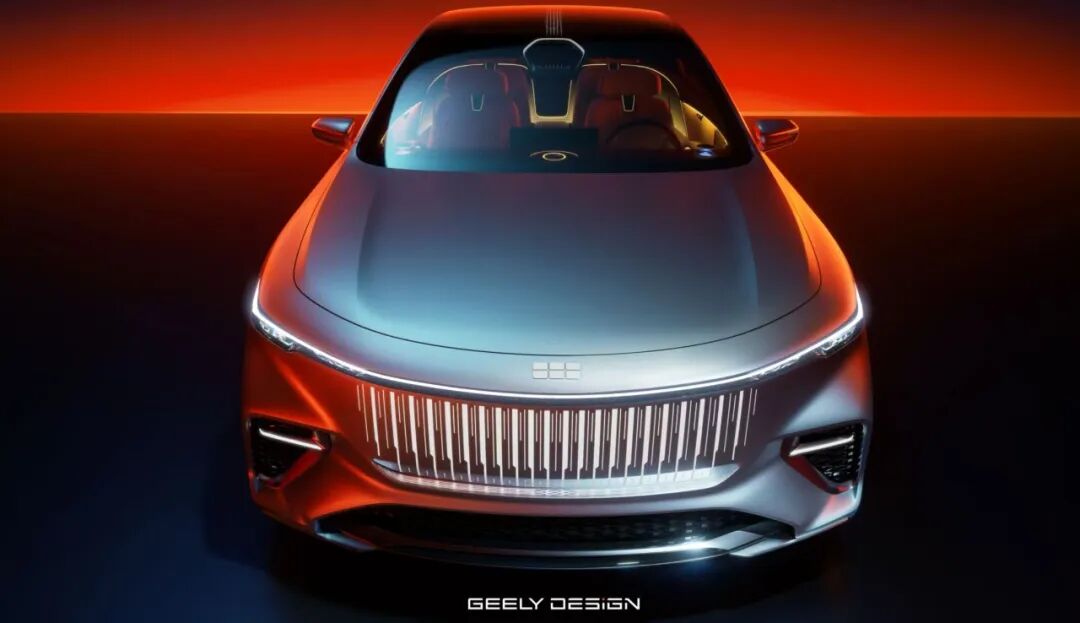
Chen Zheng often says, 'Design is the best interpreter for a brand.' Today, design has also become the passport for Chinese automobiles to break through global barriers. Geely's competitiveness in underlying technologies, interaction capabilities, and large models further ensures the 'confidence' for Chinese automotive design to continue leading internationally.
Establishing a global voice for Chinese automotive design is a lengthy process, requiring preparation for a protracted battle. From 'Made in China' to 'Designed in China,' a watershed has been crossed. The dividing line lies in no longer waiting for others to tell us what is good but confidently telling the world with our works: This is good design; this is Chinese automotive design.
-END-

-
Computing Power Crisis: Four Major Forces Enter Token Service Market
-
![]()
Agnes AI Releases Three Core Multimodal Models: Text, Image, and Video
-
![]()
Tesla Abandoned Radar Five Years Ago; Now, China’s Market is on the Verge of Delivering Its Verdict
-
![]()
Chinese Automobile Design Steps into a New Phase of Global Aesthetic Dialogue
-
![]()
Huolala's Seventh Bid for a Hong Kong IPO: How Will It Leverage New Energy and Driverless Delivery After Achieving $2.1 Billion in Annual Revenue?
-
![]()
When It Comes to Electric Car Manufacturing, Even Ferrari Must Learn from China
-
![]()
Is the Ultra-Luxury Electric Vehicle a Misguided Concept?
-
![]()
Xiaomi: Facing Decline and Doubting the Future? The Tide Has Turned