Gazing into the Future Auto Pioneers Conference: Turning Concepts of Future Mobility into Reality
 06/01 2026
 436
436
In May 2026, the Shenzhen Guangdong-Hong Kong-Macao Greater Bay Area Auto Show will celebrate its 30th anniversary milestone, and the 4th Future Auto Pioneers Conference will officially kick off with the core theme of "Ascending Steps."
As the penetration rate of new energy vehicles in China surges from 38% at the beginning of the year to 61% in April, with domestic brands maintaining an 80% market share, plug-in hybrid models accounting for over 70% globally, and pure electric models making up 60%, autonomous driving stands on the brink of commercialization, and semi-solid-state batteries mark the first year of industrialization. Both core sectors are simultaneously reaching breakthrough points. China's auto industry has bid farewell to the chasing stance of the fossil fuel era and is now navigating the technological deep waters of electrification and intelligence.
The industry is adopting a steady approach of "ascending steps," setting aside the obsession with speed and scale, and focusing on safety bottom line (bottom line), technological innovation, and industrial collaboration to lay the foundation for future mobility amidst transformative waves.
Autonomous Driving: On the Eve of Commercialization, Safety and Compliance Are the Red Lines
After years of technological sprint, the autonomous driving industry has moved beyond the "showmanship stage" and entered a critical climb period of pilot commercialization → Large scale implementation (large-scale deployment) → Compliance profitability (compliance-driven profitability). At this conference, a strong consensus emerged among guests: safety is the absolute bottom line for the commercialization of autonomous driving; without safety, there is no autonomous driving.
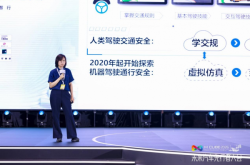
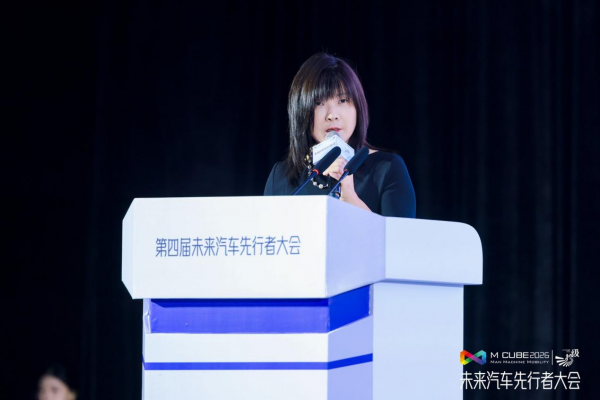
Ma Mingyue, a researcher at the Road Traffic Safety Research Center of the Ministry of Public Security, pointed out that when overseas brands' driver-assistance systems enter the Chinese market, they generally face shortcomings in scenario adaptation—such as the inability to recognize domestic non-motorized lanes or even illegally entering non-driving lanes. This exposes core vulnerabilities in autonomous driving regarding traffic rule adaptation and understanding of local scenarios. This issue is not an isolated case but a common challenge in the global deployment of autonomous driving technology, also becoming a key safety shortcoming (weakness) constraining rapid industry adoption.
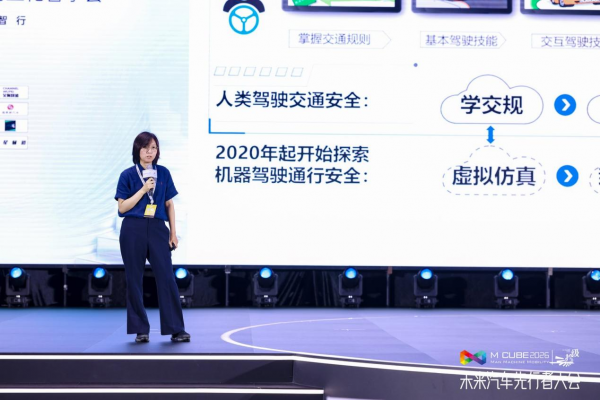
Lang Dan, Deputy Director of the Shenzhen Autonomous Driving Safety Laboratory, further escalated the safety discussion: as autonomous driving transitions from single-vehicle testing to fleet pilots, the risk dimension has fundamentally changed—single-vehicle safety has upgraded to fleet-level public safety, corporate risks have evolved into city-level risks, and technical failures can easily turn into industry trust crises. Recent landmark industry events and the self-inspection actions initiated by three departments repeatedly confirm that safety is no longer just a technical issue but a public governance proposition crucial for the industry's survival.
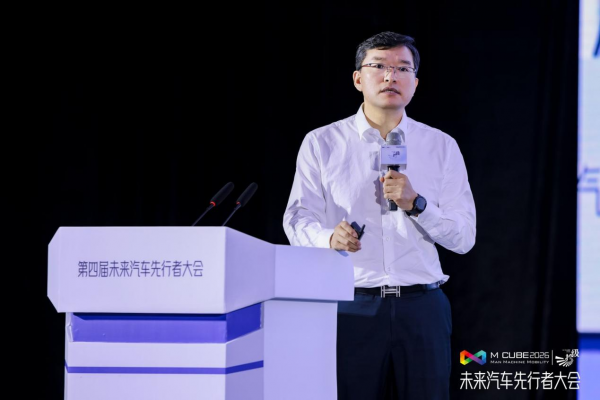
Above the safety bottom line, technological penetration and cost reductions have opened a window for the large-scale adoption of autonomous driving. Luo Zhongliang, Vice President of BYD Group, shared a set of data highlighting the industry's current state: in 2026, the penetration rate of L2-level driver-assistance systems in passenger vehicles has reached 66.1%, while in commercial heavy trucks, it is only 20%, mostly driven by regulatory mandates. Meanwhile, the cost of LiDAR, a core component of intelligent driving, has plummeted from $1,500 five years ago to about RMB 1,000 in 2026, breaking the hardware cost bottleneck and providing a basis for large-scale promotion. The pattern of passenger vehicles leading in intelligence and commercial vehicles steadily following will continue to deepen over the next 3-5 years.
Autonomous logistics have become the focal scenario for autonomous driving deployment at this conference. Li Xi, Deputy General Manager of Shenchengjiao Technology Group, described the current development trend of autonomous logistics vehicles as "a thousand vehicles rushing forward," while pointing out that the industry must address three key challenges: safe and compliant operations, efficiency in traffic emergency response, and cross-departmental collaborative regulatory mechanisms, ultimately driving high-quality development of the new format (industry format) through a one-stop service system.
Local scenario training has equipped Chinese companies with globally leading capabilities for adapting to extreme environments.
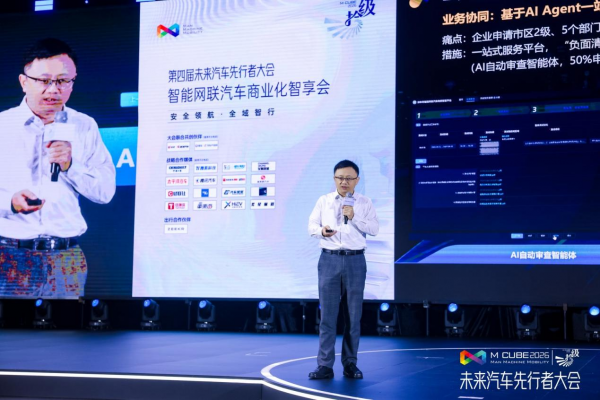
Peng Jun, Founder and CEO of Pony.ai, compared international cases: Waymo suspended its driverless operations in six cities due to its inability to handle water puddles in heavy rain, while local companies in Shenzhen, benefiting from Normalized testing (regular testing) in rainy weather, can operate normally in rainstorm (torrential rain). Scenario data and local testing are becoming core competitive strengths for Chinese autonomous driving.
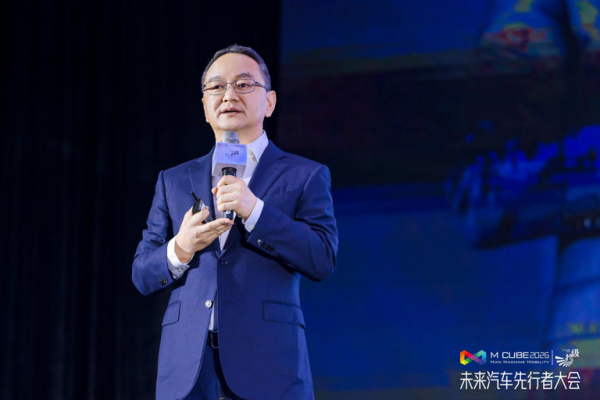
The dual drive of technology and policy is resolving deep-seated contradictions in industrial transformation. Wang Shuiyin, Deputy Director of the Research Institute of Highway Science and Technology at the Ministry of Transport, defined autonomous driving as a typical representative of new quality productivity. While it brings about productivity transformation, it also conflicts with traditional production relations, and the core goal of institutional design is to resolve this contradiction.
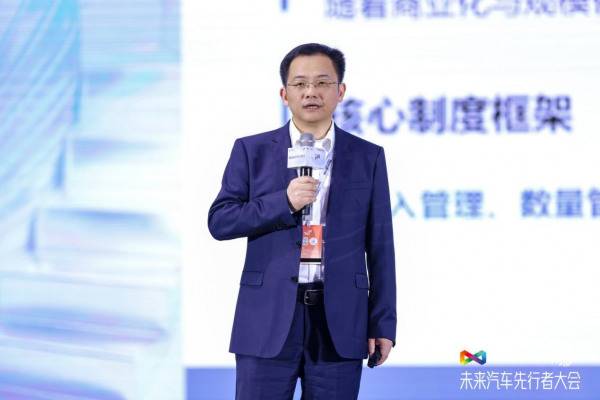
Semi-Solid-State Batteries: Technology at a Crossroads, 2026 Marks the First Year of Industrialization
If autonomous driving determines the intelligence height of future mobility, then power batteries determine the energy bottom line of new energy vehicles. At the concurrently held Semi-Solid-State Battery Value Forum, a clear industry consensus emerged: 2026 is the first year of solid-liquid hybrid batteries, and semi-solid-state batteries represent the optimal solution for the ten-year transition window from liquid to solid-state.
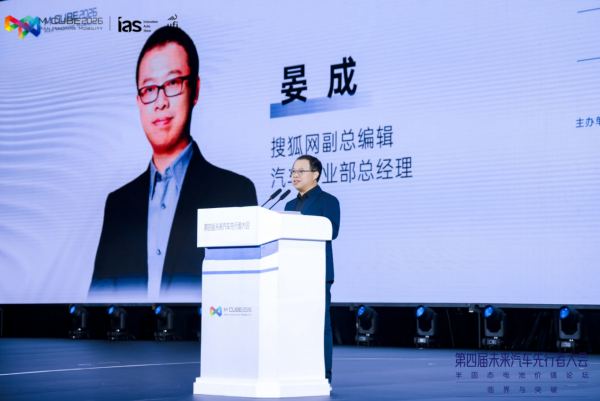
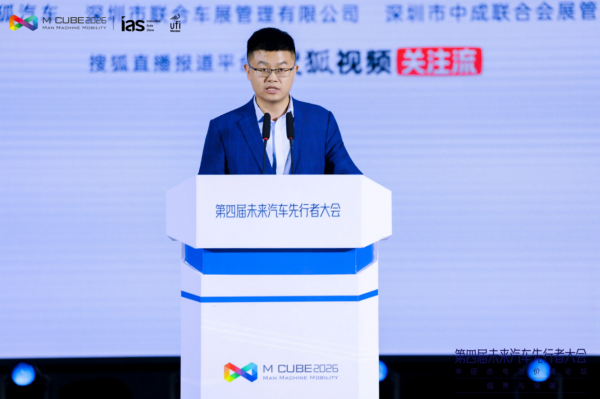
Yan Cheng, Deputy Editor-in-Chief of Sohu and General Manager of its Automotive Division, raised a soul-searching industry question: have power batteries reached a delicate crossroads, with semi-solid-state batteries being either a compromise solution for the transition period or a scientifically viable path? Guests at the conference provided answers through technological and industrial practices.
Jin Yong, an academician of the Chinese Academy of Engineering, made a core judgment: semi-solid-state batteries achieve a perfect balance between energy density, cost, and safety, and are highly compatible with existing liquid lithium-ion battery production lines, with extremely low retrofitting costs. China can rely on its mature production capacity for rapid mass production and quickly occupy the market. He also emphasized that with a ten-year window still ahead for the transition from liquid to all-solid-state batteries, semi-solid-state batteries represent the best strategic choice for capturing the market at this stage.
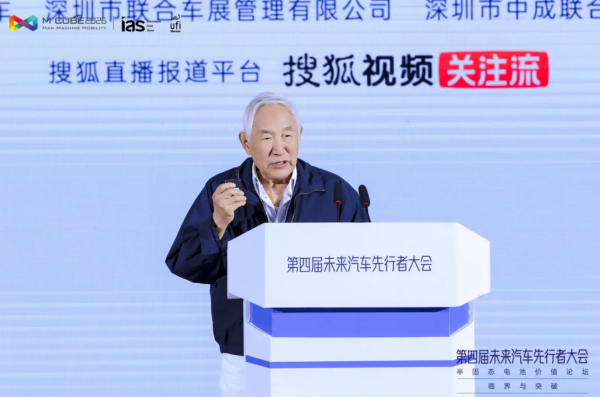
Huang Xuejie, Convenor of the Energy Storage Materials and Devices Group at the Institute of Physics, Chinese Academy of Sciences, further clarified the timeline: the full-scale deployment of all-solid-state batteries still requires time, and before "overturning the table," the industry must focus on the present—semi-solid-state batteries can both enhance energy density and ensure safety, representing a realistic path that balances technology and industrialization.
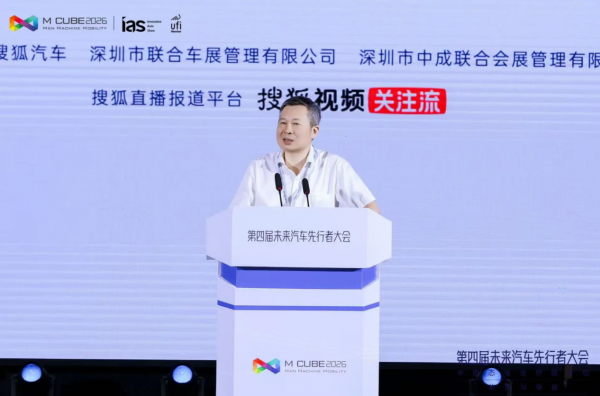
Technological deployment has moved from the laboratory to the civilian market. Yang Kun, Head of System Development at Qingtao Power, revealed that Qingtao Power, in collaboration with SAIC Motor, has developed the first-generation semi-solid-state battery, which has been installed in whole vehicles and launched on the market, delivering excellent performance. Subsequent collaborations with the MG brand will introduce more models, popularizing cutting-edge technology in mass-produced vehicles priced around RMB 100,000, allowing ordinary users to enjoy technological dividends.
From an industrial logic perspective, semi-solid-state batteries are not a "transitional solution" but the most commercially viable route at present: they eliminate the need to rebuild production lines, reducing transformation costs; they balance range and safety, alleviating user anxiety; they are suitable for mainstream price-range vehicles, quickly opening up the market. Before all-solid-state batteries mature, semi-solid-state batteries will become a core lever for automakers to differentiate and for the industrial chain to upgrade.
Future Outlook: Dual Drive Reconstructs Future Mobility
This Future Mobility Conference is essentially a consensus-building event for industrial collaboration between intelligence and energy. The breakthrough directions of the two major sectors—autonomous driving and semi-solid-state batteries—collectively outline the development blueprint for China's future mobility.
From an industry development perspective, autonomous driving has shifted from "technology first" to a pragmatic path prioritizing safety, compliance, and scenario deployment. Shenzhen's regulatory paradigm, the cost reduction of core hardware, the enabling infrastructure of low-Earth orbit satellites, and the scenario logic of human-vehicle collaboration are collectively driving the industry from "pilot trials" to "large-scale commercialization." Limited scenarios such as autonomous logistics, park shuttles, and urban delivery will be the first to achieve profitability, becoming the industry's cash flow pillars.
From an energy revolution perspective, the industrialization of semi-solid-state batteries provides a new direction for the power battery industry to break out of internal competition. Industry competition is shifting from simply pursuing range parameters to a comprehensive value competition involving energy density, safety, cost, and production line compatibility. Leveraging its complete lithium battery industrial chain, China is expected to consolidate its global leadership over the next decade while helping automakers break free from price wars and achieve brand upgrading and profitability breakthroughs.
From a global perspective, China holds significant advantages in autonomous driving scenario deployment, the full industrial chain of power batteries, and policy guidance efficiency. As the global AI+ competition accelerates, China, with its focus on local innovation, ecological co-construction, and compliance-driven development, is transitioning from "global follower" to "global leader."
Ascending Steps: A Long-Termist Answer for Future Mobility
"Ascending steps, gathering strength, and moving forward together." This ancient saying from The Book of Rites depicts the development blueprint of China's mobility industry: not pursuing blind growth but taking steady steps to rebuild order and uphold values. Autonomous driving adheres to safety bottom lines for steady commercialization, while semi-solid-state batteries seize the window of opportunity to accelerate industrialization. The Collaborative efforts (synergistic efforts) of these two fields are jointly propelling China's future mobility industry toward intelligence, sustainability, and ecological development, step by step.
Standing at the 30th anniversary milestone of the Guangdong-Hong Kong-Macao Greater Bay Area Auto Show in 2026, China's automotive industry is completing a critical transformation from "quantitative accumulation" to "qualitative leap." Cars are no longer just transportation tools but super terminals in the digital civilization era; competition is no longer a duel of single products but a comprehensive game theory (game) involving the industrial chain, computing power, data, and ecosystems. Future mobility is no longer a distant concept but a reality currently taking shape.
-
![]()
Domestic Games Aiming to Enter the South Korean Market: More Than Just Genshin Impact
-
![]()
Empowering Agentic AI with a Major Focus: Arm China Optimizes Business Architecture to Empower Customer Innovation and Breakthroughs
-
![]()
Between tool enhancement and environment reconstruction, Kingsoft Office has found its path to AI productivity
-
![]()
Gazing into the Future Auto Pioneers Conference: Turning Concepts of Future Mobility into Reality
-
![]()
From Selling Cloud Services to Selling Tokens: Operators Fully Join the AI Battlefield
-
![]()
From 'Selling Cloud' to 'Selling Tokens': Operators Fully Join the AI Battlefield
-
![]()
Profits Slide, Yet Xiaomi Holds Strong Cards
-
![]()
JieYue's Innovative Model Takes the Lead in the Next Frontier of Large-Scale AI Models