Sales of Six Major Chinese Automakers in May: BYD Reclaims Top Spot, Domestic Market Under Pressure While Exports Drive Growth | Mirror Pro
 06/03 2026
 402
402
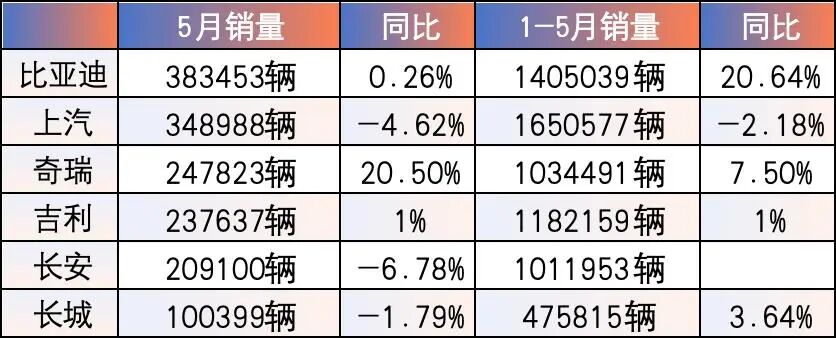
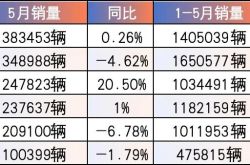
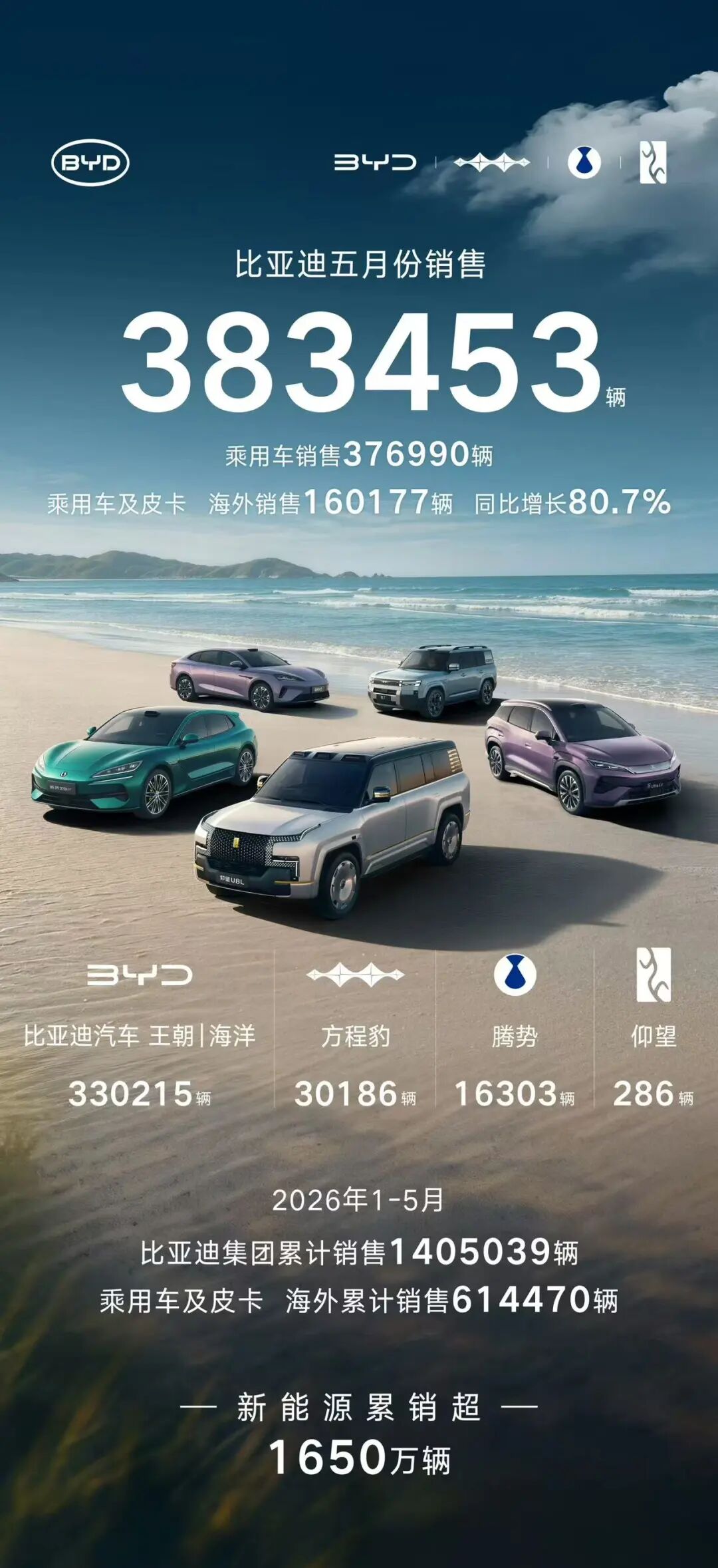
After five months, BYD has reclaimed the top spot from SAIC. In May just passed, BYD sold 383,453 vehicles, marking a year-on-year increase of 0.25%. Although the growth rate is not high, it is a positive signal for BYD: this is the first time it has returned to positive year-on-year growth after experiencing eight consecutive months of decline, showing signs of stabilization and recovery.
The core drivers of BYD's sales rebound in May were breakthroughs in high-end brands and a surge in overseas markets. In terms of sales structure, the combined sales of the core Ocean Network and Dynasty Network reached 330,215 vehicles, down 5.22% year-on-year. In contrast, Fangchengbao sold 30,186 vehicles, up 139.7% year-on-year; Denza sold 16,303 vehicles, up 3.14% year-on-year; and Yangwang sold 286 vehicles, up 105.8% year-on-year.
The overseas market has become a new growth curve for BYD's sales. In May, BYD's overseas sales reached 160,644 vehicles, up 80.4% year-on-year, a record high, accounting for 42% of total sales. The sustained demand for electric vehicles in Europe and emerging markets, coupled with rising international oil prices due to conflicts between the U.S.-Israel and Iran, provided favorable conditions for its export expansion.
Facing fierce domestic market competition, BYD has unveiled two key strategies this year to fuel growth. The first is its Blade Battery with flash charging technology, which has been fully adopted in multiple updated models. However, due to the upgrading of existing battery production lines, the pace of new capacity release has not kept up with order growth, affecting its recent sales performance to some extent. Nevertheless, starting from June, the production capacity of the Blade Battery with flash charging technology will steadily ramp up.
The second strategy is its intelligent driving safety net policy. At the end of May, BYD announced that for models equipped with its self-developed intelligent driving system, if an accident occurs during compliant use of urban navigation-assisted driving due to issues with the intelligent driving system, the automaker will bear the relevant compensation. Among domestic automakers, BYD is the first to proactively assume responsibility for intelligent driving accidents. This assurance has boosted external confidence in BYD's intelligent driving capabilities. These two "trump cards" will be the core levers for BYD to regain lost ground in the domestic market in the second half of the year.
SAIC sold 348,988 vehicles in May, down 4.62% year-on-year, primarily due to the impact of rising oil prices on sales of fuel-powered vehicles in its joint venture segment. Within its sales mix, the self-owned brand business continued to climb, with SAIC Passenger Vehicles selling 100,429 vehicles, up 37.67% year-on-year; SAIC Maxus selling 25,511 vehicles, up 43.66% year-on-year; and IM Motors selling 7,785 vehicles, up 77.54% year-on-year. In May, SAIC's self-owned brands collectively sold over 260,000 vehicles, up 14.7% year-on-year, accounting for more than 75% of the group's total sales—a historic moment in SAIC's development.
In the new energy sector, after the Wuling Hongguang MINI EV and Bin Guo, SAIC launched another blockbuster model, the MG4. The group's new energy sales reached 182,484 vehicles in May, up 46.49% year-on-year, with a new energy penetration rate of 52%. Although the joint venture segment saw an overall sales decline, it had notable achievements in new energy. For example, Buick's new energy terminal sales reached 12,253 vehicles in May, up 39.2% year-on-year and 64.8% month-on-month, with the Envision EV delivering over 10,000 vehicles in its first month on the market. The SAIC-Volkswagen ID.9X received 11,079 orders within an hour of its launch and delivered over 7,000 vehicles in its first month. By actively localizing and embracing local tech companies, joint venture brands have gradually found their rhythm in creating blockbuster new energy products, which will become a significant force in SAIC's sales recovery.
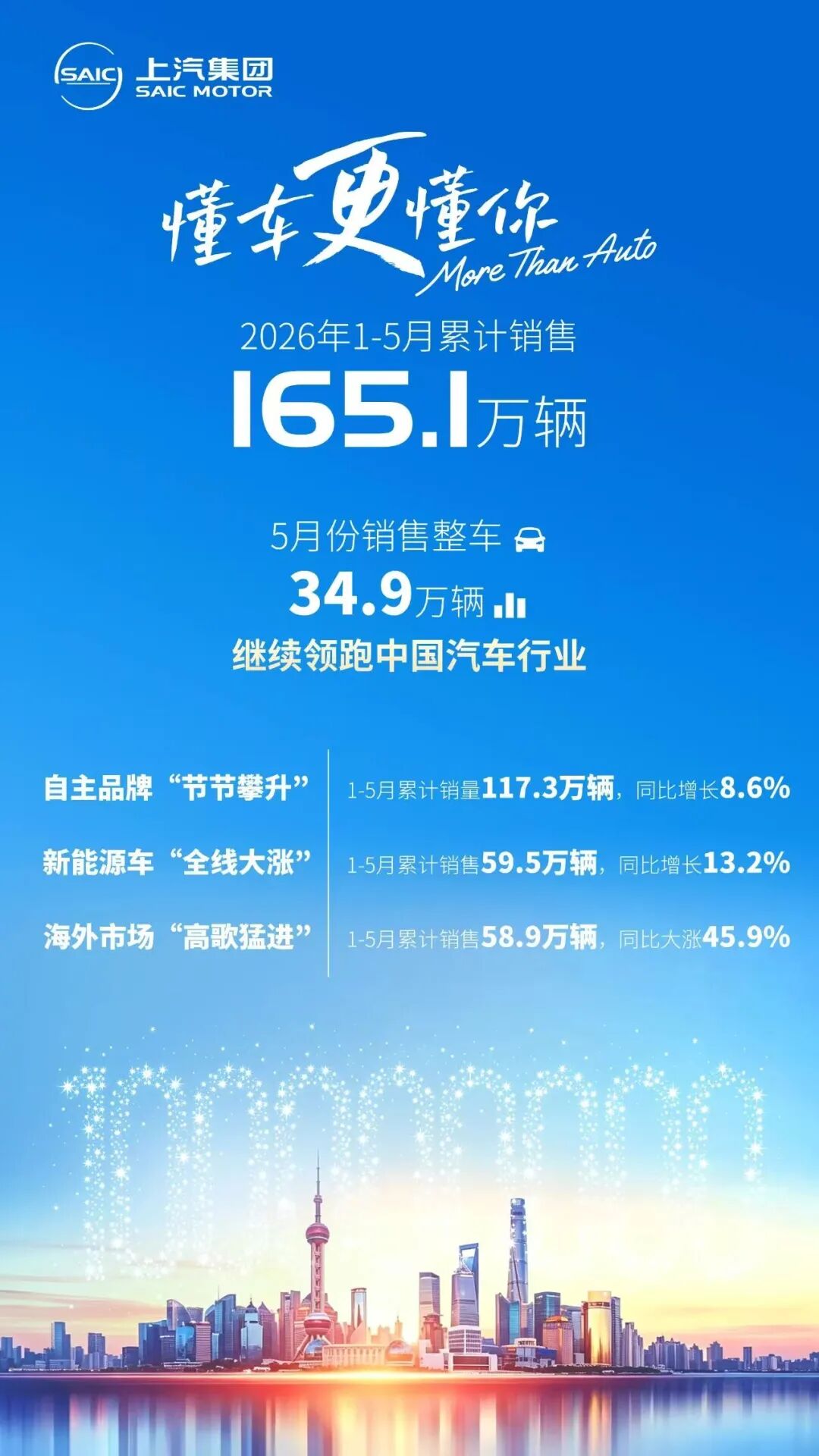
Additionally, SAIC continued to expand its overseas business, with sales reaching 129,541 vehicles in May, up 32.5% year-on-year, second only to Chery and BYD. Overseas sales accounted for 37% of its total sales. Thanks to its leading sales in previous months, SAIC's cumulative sales for the year remained higher than BYD's. From January to May this year, SAIC's cumulative sales were 1,650,577 vehicles, down 2.18% year-on-year, while BYD's cumulative sales were 1,405,039 vehicles, down 20.64% year-on-year. The title of China's top automaker by sales this year remains uncertain.
From a market-wide perspective, among the traditional leading automakers that have announced their sales figures, only BYD, Geely, and Chery have achieved year-on-year growth, while the rest have experienced varying degrees of decline.
Specifically, Chery sold 247,823 vehicles in May, up 20.5% year-on-year. Among them, new energy vehicle sales reached 100,304 vehicles, up 58.8% year-on-year, surpassing 100,000 units for the second consecutive month, with a new energy penetration rate of 40%. Chery's biggest sales highlight in May was its overseas expansion, with exports reaching 181,871 vehicles, up 80.5% year-on-year, setting a new record for China's automotive monthly exports for three consecutive months. Overseas sales accounted for over 73% of its total sales. The high growth in overseas sales directly offset the sales pressure in Chery's domestic market, enabling its overall sales to maintain positive growth. Horizontally, although BYD's export growth is rapid, Chery has a larger base and is also maintaining high growth, so Chery still holds a significant lead over BYD in export volume.
Geely's cumulative sales in May were 237,637 vehicles, up slightly by 1% year-on-year and month-on-month. Against the backdrop of continued pressure in the fuel vehicle market, Geely empowered its China Star series with intelligent and i-HEV technologies, achieving sales of 100,801 vehicles, with both year-on-year and month-on-month growth. In new energy, Geely sold 133,355 new energy vehicles in May, with a new energy penetration rate of 56%, exceeding 50% for the fourth consecutive month. Among them, the high-end brand Zeekr achieved a record high delivery volume of 34,377 vehicles, up 82% year-on-year and 8% month-on-month, with the Zeekr 9 and 8 series accounting for nearly 50%, solidifying its position in the high-end luxury market.
While achieving balanced development in fuel and new energy vehicles and breakthroughs in high-end brands, Geely has also significantly accelerated its export efforts this year. In May, Geely's export sales reached a record high of 85,144 vehicles, up 184% year-on-year, accounting for 35.8% of its total sales. Among them, overseas export sales of new energy products reached 40,803 vehicles, accounting for 48% of new energy sales. This indicates that Geely's overseas expansion is no longer solely reliant on fuel vehicles, as new energy models have gradually become an important part of its overseas sales mix.
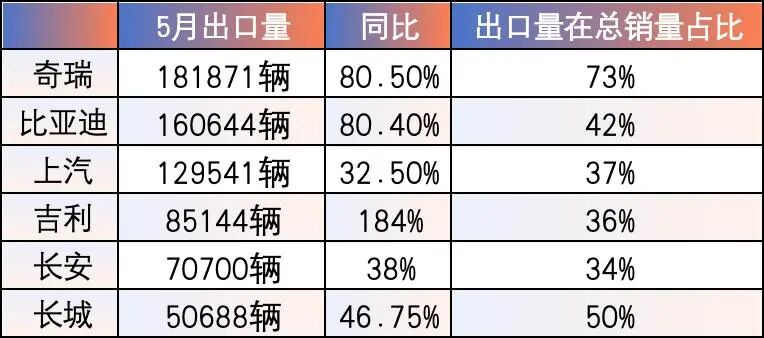
Changan Automobile delivered 209,100 vehicles in May, down 6.78% year-on-year. Within its sales mix, Changan Uni stabilized the fuel vehicle base, while new energy brands such as Qiyuan, Shenlan, and Avatar jointly drove new growth. In May, Changan's new energy deliveries reached 92,400 vehicles, up 5.8% year-on-year, with a new energy penetration rate of 44%. Overseas deliveries reached 70,700 vehicles, up 38% year-on-year, accounting for 33.8% of its total sales. Additionally, Changan Automobile has not yet released its self-owned brand sales data.
Great Wall Motors sold 100,399 vehicles in May, down slightly by 1.79% year-on-year but still remaining above 100,000 units. Among its five major brands, WEY sold 8,119 vehicles in May, up 31.78% year-on-year. With the launch and delivery of the V9X, WEY's sales are expected to continue growing this month. Following the launch of the Ora 5, its sales also rebounded, reaching 6,018 vehicles in May, up 206.88% year-on-year. By energy type, Great Wall's new energy vehicle sales in May were 30,477 vehicles, with a new energy penetration rate of 30%. In terms of overseas expansion, which is a key driver of Great Wall's sales growth, its overseas sales in May were 50,688 vehicles, up 46.75% year-on-year, accounting for 50% of its total sales.
The sales performance of these automakers in May sends a strong signal: overseas expansion is no longer just a supplementary boost but a critical factor in offsetting domestic competitive pressure and driving overall growth for leading automakers. The export volume of the six leading automakers mentioned above generally accounts for over 30% of their total sales, with Chery even reaching 70%. The "intense competition" in the domestic market continues to escalate, while overseas markets will become a key variable in determining the rankings of leading automakers. Automakers like Chery, which have taken the lead in establishing brand recognition, channel systems, and localized manufacturing capabilities overseas, are converting their first-mover advantages into sustained support for volume and pricing.
-
![]()
From 'Hardware Price Comparison' to 'Endurance Race': Who Will Lead the Heavy-Duty Truck Sector?
-
![]()
Sales of Six Major Chinese Automakers in May: BYD Reclaims Top Spot, Domestic Market Under Pressure While Exports Drive Growth | Mirror Pro
-
![]()
Search Will Enter the Third Phase of Its Lifecycle: Search as Code
-
![]()
Computex 2026 | Qualcomm’s Visionary Outlook: In the Age of Agents, Devices Take Center Stage in Computing
-
![]()
Computex 2026 | Marvell: How to Connect Data Centers in the AI Era?
-
![]()
【Intelligent】Tianjin Launches Its First L4 Autonomous Bus Route
-
![]()
BYD’s Monthly Overseas Sales Soar Past 160,000 Units: Elevated Gross Margins Drive Profitability!
-
![]()
Tencent's Trump Card Has Never Been Large Models