Under the Intense Pressure of 'Huawei Profit-Sharing,' Seres Embarks on a New Journey with a Fresh Start
 06/05 2026
 454
454
Recently, Chongqing Landian Technology Co., Ltd., a subsidiary of Seres Group, underwent a significant transformation. It was officially renamed Chongqing Saidoo Technology Co., Ltd. and, simultaneously, completed a substantial capital increase and share expansion worth RMB 6.671 billion. Chongqing's local state-owned enterprise, Shaci Zhiyuan, invested RMB 3.433 billion to become the largest shareholder, securing a 34.5% stake. Seres, in turn, holds a 32.96% stake, relegating it to the second-largest shareholder. Additionally, Wending Investment, a wholly-owned subsidiary of CATL, acquired an approximate 9.89% stake.
Saidoo Technology is set to officially launch its new brand in Beijing on June 9, with its inaugural model expected to debut within the year. Positioned in the mass-market segment priced between RMB 100,000 and RMB 200,000, the brand will adopt a crossover strategy, offering both pure electric and extended-range dual powertrains. It will forge a deep collaboration with ByteDance's Volcano Engine for intelligent cockpits, while DeepRoute.ai will provide the intelligent driving solution. Notably, Saidoo Technology explicitly stated that it will not utilize Huawei's Qiankun intelligent driving system.
This rebranding from 'Landian' to 'Saidoo' signifies more than just a name change; it represents a strategic breakthrough centered around cost efficiency and influence.

From Landian to Saidoo: A Necessary Strategic Shift
Seres' 'overhaul' of Landian was actually foreshadowed early on.
In 2023, Seres introduced the Landian brand, positioning it as a 'pioneer in intelligent electric vehicles,' aiming to fill a gap in the mid-to-low-end market. However, overshadowed by the AITO brand's prominence, Landian struggled with low visibility and poor sales. In February of this year, Seres signed a cooperation agreement with the Shapingba District Government of Chongqing Municipality, leveraging Landian's existing assets to establish a target company. Just three months later, Landian Technology was rebranded as Saidoo Technology and underwent a large-scale capital increase and share expansion.
'The primary motivation behind this move is the urgent need for Landian to transform and break through. The recent introduction of partners in artificial intelligence and energy is aimed at facilitating Saidoo Technology's transformation and modernization in the mass-market new energy vehicle sector while revitalizing assets,' explained an informed source.
Why does Seres believe Saidoo can succeed where Landian failed over three years? The answer may not lie in the product itself but rather in its cost structure.
To comprehend Seres' eagerness to explore a 'second curve,' we must consider a significant figure: RMB 75 billion.
Since Seres' deep collaboration with Huawei commenced in 2022, it has paid Huawei over RMB 75 billion in procurement fees over the past four years. In the first half of 2025 alone, Seres paid Huawei RMB 20 billion in procurement fees, accounting for roughly one-third of its total revenue during that period.
Translating this to a per-vehicle basis: In the first half of 2025, AITO sold approximately 147,000 units, with roughly RMB 136,000 directed to the Huawei ecosystem for each AITO sold. This fee encompasses hardware costs (electric motors, LiDAR, battery management systems, etc.), software and services (Hongmeng intelligent cockpit, ADS advanced intelligent driving system technology licensing fees), as well as channel and brand empowerment—sales promotion and after-sales service sharing from Huawei's nationwide stores.
This implies that for an AITO with an average transaction price of RMB 409,000, more than one-third of the vehicle's price is allocated to Huawei.
Of course, this fee remains highly cost-effective for Seres. Leveraging Huawei's empowerment, AITO achieved one million deliveries in 46 months, setting an industry record. Seres' gross profit margin surged from 8% in 2022 to 26.5% in the first half of 2025, with net profit attributable to the parent company reaching a record high of RMB 5.96 billion. Zhang Xinghai, Chairman of Seres Group, acknowledged at the one-millionth vehicle roll-off ceremony, 'Without Huawei, AITO would not exist today.'
Yet, that's precisely the issue.
Intensifying 'Huawei Content' Competition Dilutes AITO's Uniqueness
Today, the Hongmeng Intelligent Driving ecosystem encompasses five brands: AITO, Luxeed, Enjoya, Zunjie, and Shangjie, spanning the entire price range from RMB 150,000 to RMB 1.2 million. The 'five realms' of Hongmeng Intelligent Driving are aligned side by side, with each brand differing only in logo but offering a comprehensive Huawei experience internally. Meanwhile, the 'Jing' series models outside these five realms are also set to roll out this year.
For consumers, what matters is Huawei's system experience, Hongmeng cockpit, Huawei Qiankun intelligent driving, and technical endorsement, with Seres' presence gradually fading. Seres increasingly resembles a contract manufacturer for AITO.
While AITO remains a cash cow, following the continuous expansion of the Huawei ecosystem, AITO's brand exclusivity has diminished. Seres' non-recurring profit and loss attributable to the parent company declined by 7.84% in 2025, and its reliance on a single brand has become a valuation risk.
Within Huawei's portfolio, no automaker is indispensable. Not only is AITO's absolute sales share diluted within the Hongmeng Intelligent Driving ecosystem, but Seres' profits are also being eroded.
How long can Huawei continue to 'support' Seres? Seres must contemplate this question.
The emergence of Saidoo Technology represents, to some extent, a systematic reconstruction by Seres beyond the cost structure of the Huawei model. Two clear main lines are evident:
The equity design of Saidoo Technology itself reflects a cost-control logic. Shaci Zhiyuan's investment of RMB 3.433 billion to become the largest shareholder means that Chongqing's local state-owned assets have shouldered a significant portion of the capital contribution obligations. The entry of industrial investors such as CATL, Bojun Technology, and Xingyu Co., Ltd. further shares the startup costs of Saidoo Technology. Seres, stepping down to the second-largest shareholder, no longer includes Saidoo in its consolidated financial statements, achieving a financially 'light-asset' approach.
'By rebranding Landian as Saidoo, introducing state-owned and industrial capital, and relinquishing control, Seres is employing a 'light-asset' strategy to pursue two paths: one is to retain AITO's high-end Huawei route, and the other is to use Saidoo to forge an independent, affordable intelligent route separate from Hongmeng Intelligent Driving,' stated an industry analyst.
Cost Reduction through New Partnerships is Paramount; New Model Experience is Crucial
AITO is deeply integrated with Huawei's ADS solution for its intelligent driving system, with estimated per-vehicle intelligent driving hardware costs of approximately RMB 84,000. In contrast, Saidoo Technology has opted for DeepRoute.ai's intelligent driving solution, adhering to a vastly different cost logic.
According to a source, one of the core objectives of Saidoo Technology in selecting DeepRoute.ai as its intelligent driving supplier is to control costs, differentiating itself from the high-end AITO and avoiding internal competition.
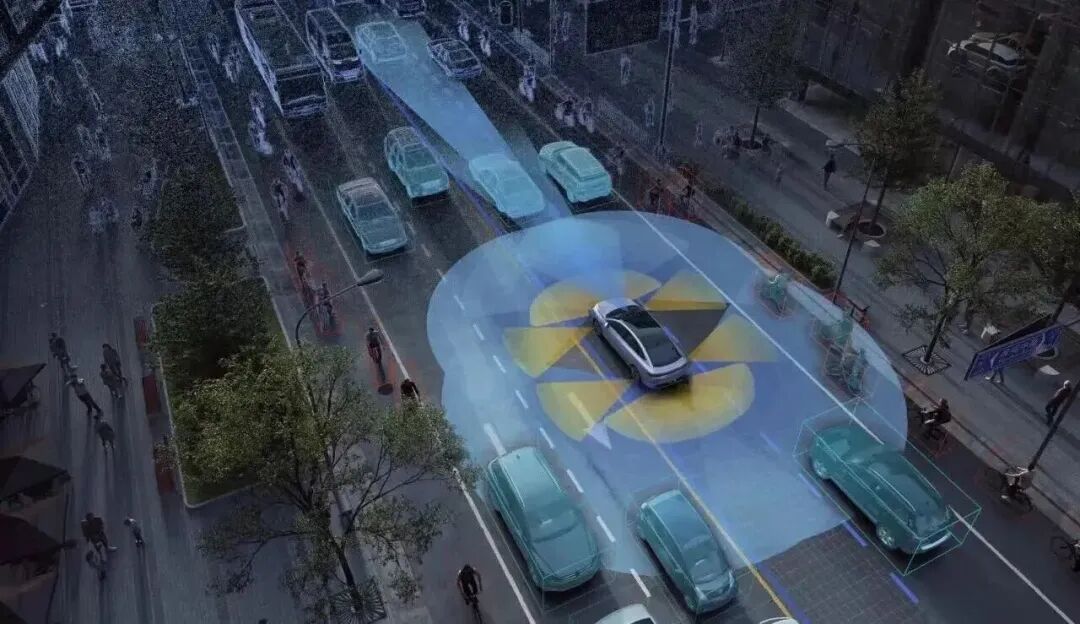
Founded in 2019, DeepRoute.ai has completed eight rounds of financing, totaling over USD 1 billion. In 2025, its market share in third-party urban NOA reached 24%, a 2.1-fold increase year-on-year. 300,000 vehicles equipped with its intelligent driving solution have entered the consumer market, covering more than ten models. Its production capacity has been market-validated, and its intelligent driving solution's implementation cost is significantly lower than Huawei's ecosystem. This cost-effective approach is precisely the core support for Saidoo to penetrate the RMB 100,000-200,000 price segment.
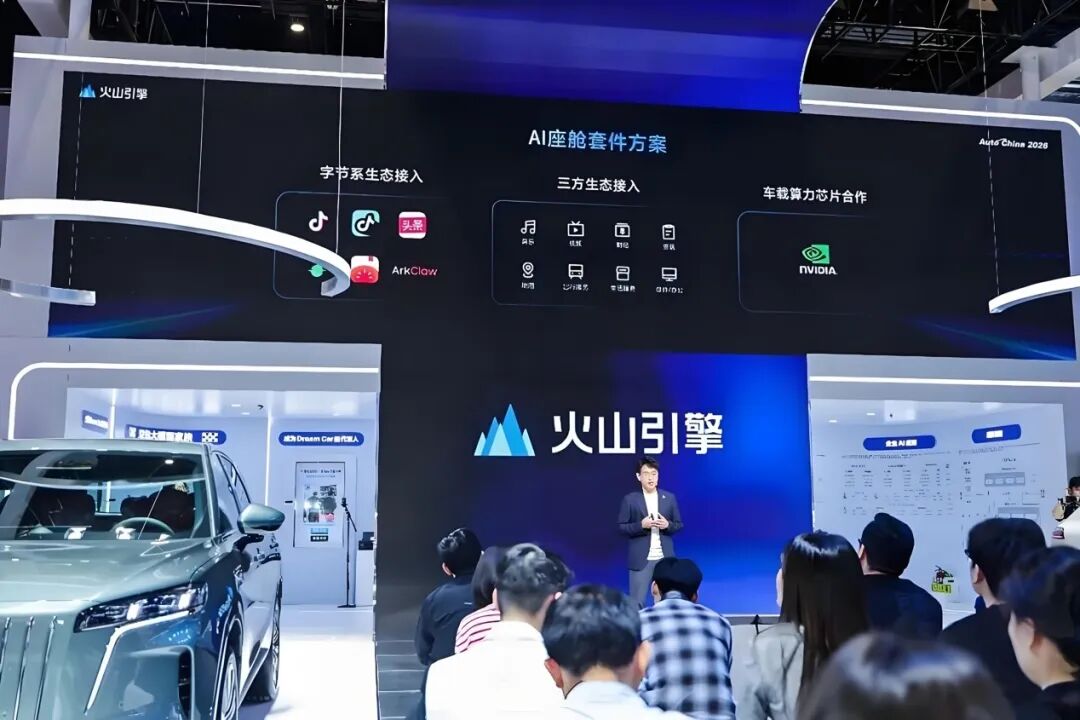
In terms of intelligent cockpits, Saidoo's collaboration with ByteDance's Volcano Engine is also noteworthy. Volcano Engine's involvement is expected to surpass its previous cooperation with SAIC Roewe, potentially involving underlying technologies such as sensor definition and computing solutions. This combination of 'ByteDance's large model + DeepRoute's intelligent driving' is anticipated to deliver an AI interaction experience acceptable to users at a lower cost.
It is worth noting that Seres is not alone in launching a new brand outside of 'Huawei.' Automakers are gradually realizing that behind the 'Huawei empowerment' halo lies an increasingly heavy financial burden. Several automakers cooperating with Huawei are implementing or planning similar strategies.
An industry analyst remarked, 'Huawei's cooperation model is essentially 'technology premium for sales volume.' For automakers, Huawei brings technology, brand, and channels, but the cost is the partial transfer of product pricing power. When sales volume reaches a certain scale, automakers will naturally start to think: Can we replace Huawei with lower external costs and retain more profits for ourselves?'
The birth of Saidoo Technology is precisely the result of such contemplation. An industry insider said, 'For the new brand to gain a foothold, the key is not whether it surpasses AITO in technical parameters but whether it can provide an overall experience exceeding user expectations at the RMB 150,000 price point. ByteDance's AI capabilities and DeepRoute's intelligent driving solution need to genuinely create a synergistic effect.'
-
![]()
Dell’s AI Infrastructure Boom: NVIDIA Reaps the Benefits
-
![]()
Computex 2026 | NXP: Why Can AI Outplay Humans in Go but Struggle with Folding Clothes?
-
![]()
After Parting Ways with OpenAI, Microsoft AI Seeks Its Flagbearer
-
![]()
Ride-Hailing Giant Earns Less Than One Cent Per Order: What Story Does T3 Go Out Tell as It Prepares for IPO?
-
![]()
Europe's Pure Electric Vehicle Share Nears 20%, Chinese Brands' Pure EV Market Share Exceeds 15% for the First Time
-
![]()
Under the Intense Pressure of 'Huawei Profit-Sharing,' Seres Embarks on a New Journey with a Fresh Start
-
![]()
"Dahan" Takes the Lead in Voting, Poised to Become the Moniker for BYD's Inaugural D-Class Dynasty Series Sedan
-
A Brand-New Auto Brand, Saidou Technology, Set for June 9 Launch