Are Fuel-Powered Cars Completely Out of Options?
 06/22 2026
 395
395
China's auto market in 2026 is witnessing an unprecedented 'reverse trend.' On one hand, the traditional fuel-powered car market is experiencing a ' Fracture type ' (fracture-like) sell-off, with price systems collapsing across all segments, from the Audi A6L to the Nissan Sylphy. On the other hand, the new energy vehicle (NEV) market has entered a period of moderate price increases, with over a dozen mainstream NEV brands tightening discounts or raising prices.
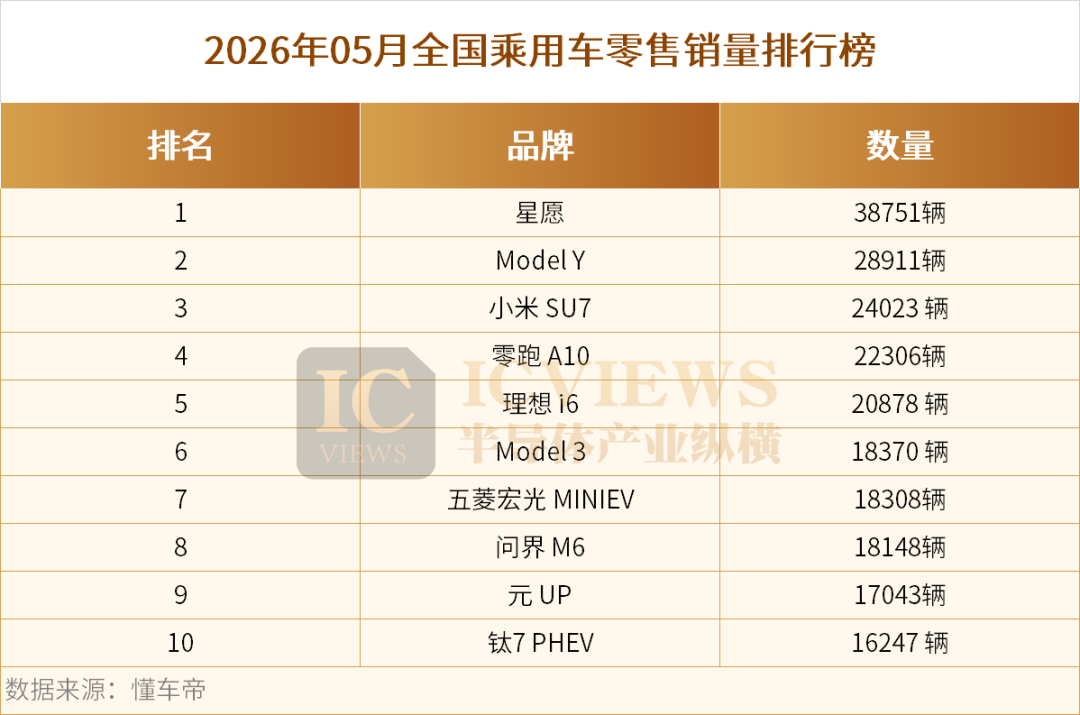
In May 2026, the domestic retail penetration rate of new energy passenger vehicles in China surpassed 60%, reaching a historic high of 62.9%—the second consecutive month above the 60% threshold. Meanwhile, fuel-powered cars are rapidly exiting the market. According to Dongchedi statistics, not a single fuel-powered car ranked among the top ten best-selling passenger vehicles in May; all ten spots were occupied by NEVs. Even when expanding the list to the top twenty, only four fuel-powered models remain.
Supply-side changes further confirm this trend. Since the beginning of the year, nearly 80% of new vehicle launches have been in the NEV sector, with pure fuel-powered cars accounting for less than 10%. Among Chinese domestic brands, NEV penetration has reached 81.4%, leaving fuel-powered cars marginalized at just 18.6%. While joint-venture brands lag in overall transition, with only 14.5% NEV penetration in May, Buick has achieved a 45% share, setting an example for electrification in the joint-venture segment. The pace of electrification is accelerating faster than expected.
The plight of fuel-powered cars can be described as ' ferocious ' (dire). In early 2026, Mercedes-Benz led the way with official price cuts on mainstay models like the C-Class and GLC, with reductions of up to RMB 69,000. BMW quickly followed, adjusting retail prices for 31 models, including 24 with reductions exceeding 10% and five with cuts over 20%. Price cuts cascaded down to joint-venture brands like Volkswagen, Nissan, and Honda. A salesperson at FAW-Volkswagen stated that all fuel-powered models in their lineup now offer discounts, with the Golf R-Line, priced at RMB 156,900, now available for around RMB 130,000.
According to the latest statistics from the China Passenger Car Association, 32 fuel-powered models officially announced price cuts in the first five months of 2026, up 13 year-on-year, covering home, joint-venture, and luxury segments. The average price of fuel-powered models experiencing cuts was RMB 223,000, with an average reduction of 14.6%—far exceeding the magnitude of price cuts for NEVs. By May, comprehensive promotional discounts for luxury fuel-powered cars climbed to 25.2%, with models like the BMW X2 and Aston Martin offering over 20% in concessions, loosening the price floor for high-end fuel-powered vehicles.
In contrast, the pricing logic for NEVs is undergoing a transformation. From March to May 2026, over a dozen mainstream brands, including BYD, Tesla, Xiaomi, NIO, XPeng, and Zeekr, issued dense ( dense ) price adjustment announcements or tightened terminal discounts, with per-vehicle increases ranging from RMB 2,000 to RMB 20,000, primarily concentrated in the mainstream price band of RMB 100,000 to RMB 300,000. This is not sporadic fine-tuning but the first collective price correction since 2024 covering over 15 automakers. In May, the average price reduction for NEV models was just 9.6%, a significant narrowing from previous periods, signaling a clear rebound.
While soaring lithium carbonate prices have been a factor in dismantling the low-price structure of NEVs, the shortage and price hikes of automotive-grade chips represent another parallel challenge.
First, consider the raw material data. Shanghai Metals Market shows that as of May 25, 2026, battery-grade lithium carbonate was quoted between RMB 180,000 and RMB 190,000 per ton, up from just RMB 61,700 in early July 2025—a surge exceeding 200%. For NEV models equipped with 70kWh to 100kWh mainstream batteries, the lithium raw material price hike alone adds RMB 4,000 to RMB 6,000 in rigid costs, rendering the previous cost-dilution model through scale ineffective for automakers.
Even more noteworthy is the pressure from the chip side. Since the second half of 2025, the automotive-grade memory chip market has experienced an unprecedented price surge. TrendForce forecasts that DRAM memory prices will rise over 60% in Q1 2026, with a full-year increase of 144%; NAND flash memory is expected to rise 55% to 60% in Q1 and about 112% annually. In terms of actual spot market increases, automotive-grade memory chips have risen roughly 180% overall, with high-end DDR5 memory spot prices surging past 300%. Lei Jun publicly stated that the memory cost per Xiaomi SU7 has increased by several thousand yuan due to price hikes; Li Bin of NIO cited memory price increases as the biggest cost pressure for automakers in 2026, with some new-force models seeing gross margins compressed below 20%.
At the same time, automotive intelligence itself is rapidly expanding demand for storage. A vehicle equipped with a high-level intelligent driving system must process massive amounts of data daily from cameras, LiDAR, and millimeter-wave radars. Industry projections indicate that storage capacity requirements for L3-level and above intelligent driving systems can reach hundreds of GB, several times that of L2 systems. When 'AI competes for production capacity' and 'automakers compete for memory' occur simultaneously, the supply-demand gap widens sharply.
On one side are rising hardware costs; on the other is the reality that automakers cannot arbitrarily raise prices across the board. This explains why the price hikes for NEVs in this round are more 'selective'—high-end intelligent driving versions are the primary drivers of price increases, with some optional packages rising over 20%, while adjustments to base versions are relatively moderate. The market is sending a clear signal to consumers: high-end intelligence is not a free lunch and will ultimately be reflected in the final price.
Against this backdrop, in April, the Ministry of Industry and Information Technology and the State Administration for Market Regulation conducted interviews and reminders with auto manufacturers suspected of engaging in irrational competition. Experts pointed out that the interviews directly targeted 'irrational competition,' encompassing not only prolonged price wars and below-cost price cuts but also mutual attacks, online water army campaigns, and malicious smears among companies. The regulator's clear stance signals that competition logic overly reliant on price levers is being phased out.
The 28th Chongqing International Auto Show, which opened on June 13, provides an excellent window to observe these trends.
A notable new development is that this year's Chongqing Auto Show features, for the first time, a dedicated N6 Hall as the 'Future Automotive AI Technology Exhibition.' Nearly a hundred upstream enterprises in the industrial chain, including Horizon Robotics, Huawei Qian Kun (Qiankun), iFLYTEK, and CATL, showcased not complete vehicles but core technologies and hardware that will shape the future of automobiles, such as intelligent driving chips, in-vehicle AI large models, and advanced battery management systems. The auto show has evolved from a simple product display into a comprehensive platform integrating underlying technology exhibitions, industrial ecosystem exchanges, and supply chain collaboration.
At BYD's booth, the second-generation Blade Battery's flash charging technology, capable of '5-minute full charge, 9-minute rapid charge,' attracted large crowds. Changan Automobile unveiled cutting-edge innovations like the Golden Bell Armor all-solid-state battery, Tian Shu driving assistance system, and Tian Yu cockpit at the show. Its 'Tian Shu Navigation' assisted driving system, available in Pro, Max, and Ultra versions, establishes three safety barriers—physiological, psychological, and emotional—and will be fully equipped on the Changan Qiyuan Q06, set to launch in the second half of the year. The Hongmeng Zhixing booth brought together five brands—AITO, ZhiJie (Zhijie), Xiangjie, Zunjie, and Shangjie—with Huawei's Qiankun Intelligent Driving ADS system as the focal point. According to statistics, over 80% of the models exhibited at this auto show feature intelligent configurations, ranging from highway NOA to urban navigation-assisted driving and from multi-modal interactions in intelligent cockpits to whole-vehicle OTA capabilities. Intelligence has become a standard feature of new cars rather than an 'optional highlight.'
Data from CCID Consulting shows that the domestic automotive-grade SoC market size was RMB 38.1 billion in 2024, reaching RMB 53.6 billion in 2025 (a 42.7% YoY increase), and is expected to grow to RMB 64.3 billion in 2026. Globally, the automotive semiconductor market will expand from USD 66.35 billion in 2025 to USD 114.65 billion by 2030, with a CAGR of 11.6%. Clearly, automakers' rigid demand for high-computing-power chips is releasing rapidly.
This rigidity has two layers of meaning. First is algorithm-driven: the proliferation of end-to-end autonomous driving models directly raises the minimum computing power requirements for single chips, with low-computing-power solutions quickly becoming obsolete amid algorithm iterations. Second is architecture-driven: as automotive electronic/electrical architectures evolve from distributed to domain control and then to central computing platforms, the fragmented landscape of dozens of ECUs managing separate functions is being disrupted. Computing power must concentrate, making SoCs the sole core node.
Connecting these points reveals a more fundamental industrial shift: the competitive dimension in the automotive industry is changing. The collapse of fuel-powered cars' pricing systems is not merely a cyclical issue but reflects the failure of mechanical performance as a core selling point. Smart electric vehicles (EVs) can stabilize their price levels in this round of price wars not because of falling battery costs or feature stacking but because chip computing power and AI capabilities provide new value anchors. When computing power becomes a key indicator of product competitiveness, traditional cost-based competition is naturally replaced by technology-driven competition.
2025 has been dubbed the 'mass production the first year ' for self-developed chips by Chinese automakers. XPeng's 'Turing' AI chip has entered mass production, NIO's ET9 is equipped with the self-developed 5nm 'Shenji NX9031,' Geely's Semiconductor Tech launched the 7nm 'Xingchen No.1' chip, and BYD introduced the 4nm cockpit chip BYD 9000. Suddenly, 'chip development' has become a standard move for leading automakers, as if failing to pursue self-development means falling behind technically.
The logic behind this trend is not hard to grasp. XPeng invested over RMB 10 billion in the Turing chip, but calculations show that each self-developed chip saves about RMB 1,200 in BOM costs compared to purchasing NVIDIA solutions—a significant amount at scale. NIO's Li Bin put it more bluntly: 'We save billions annually by not buying NVIDIA chips.' More importantly, NVIDIA and Qualcomm's chips are general-purpose platforms, forcing automakers to fit their algorithms within these frameworks, leaving much computing power idle. In contrast, XPeng's Turing chip is optimized for its own AI large model, boosting computing power utilization by 20% and enabling local operation of a 30 billion-parameter large model. NIO's Shenji NX9031 claims to 'replace four Orin chips.' This efficiency from deep hardware-software coupling is unattainable with externally sourced chips.
But is self-development truly the only path?
At the Chongqing Auto Show forum, Jiang Hanping, vice president of Semiconductor Tech, poured cold water on the enthusiasm: 'Chip development requires 'sitting on a cold bench for a decade.' Globally, only a handful of companies can independently survive in the automotive chip sector. Automotive chips have a 10- to 15-year lifecycle. Will these companies and teams still exist five years from now? Will the supply chain remain intact?' These harsh words carry weight. Developing an automotive-grade chip costs billions, with a minimum three-year timeline from design, tape-out, automotive certification, to mass production. Without annual sales in the millions of units, costs cannot be amortized. Shi Yunpeng, head of chips at Changan Automobile, stated: 'Self-development isn't necessarily good, nor is non-self-development necessarily bad. Different stages and companies should have different positioning.'
Ultimately, self-developed chips are not a black-and-white issue but a strategic choice based on one's scale and positioning. Tesla's success in self-development doesn't mean all automakers must replicate it. BYD can afford self-development with over 2 million annual sales, but a new-force automaker selling 300,000 units a year could collapse under RMB 10 billion in R&D costs. A more viable path might be: self-develop core intelligent driving chips to establish differentiation, entrust other MCUs and power chips to domestic suppliers for joint definition, and maintain multi-sourcing to hedge risks.
'The battery industry's today is the chip industry's tomorrow'—this phrase expresses both hope for the future and a reminder to be patient. It took a decade for the battery industry to transition from catching up to leading. The chip industry will take no less time. In this prolonged process, what matters more than the 'self-developed' label is clarity on why one is developing chips in the first place.
-
![]()
Oil Prices Revert to 7-Yuan Range: Are Gasoline Cars Getting a Reprieve?
-
![]()
Momenta Secures CSRC Approval: Is It Poised to Be the 'Pioneer in Physical AI Stocks'?
-
![]()
What's the Use of Having a General-Purpose Motion 'Cerebellum' for Humanoid Robots?
-
![]()
Volkswagen Starts Operating at a Production Capacity of 9 Million Vehicles
-
![]()
Interpretation of China's Auto Market in May: A Fig Leaf, Two Fault Zones, and Three Surprises
-
![]()
China's Auto Industry Accelerates Expansion in Spain: From Vehicle Sales to 'Local Manufacturing in Europe'
-
![]()
Momenta | Going Public Not for Money
-
![]()
How Much Can Doubao Make by Charging Fees?