When Seat Ventilation Goes Mainstream—Enhanced Fan Performance, Cooler Comfort
 06/22 2026
 385
385
Just three years ago, seat ventilation was considered a premium feature, typically listed among optional upgrades with a hefty price tag that could reach nearly five figures. Fast forward to today, and as you browse through the specifications of new cars, from budget-friendly family sedans to top-tier models from emerging electric vehicle brands, seat ventilation is quickly becoming a standard offering. With decreasing costs and a more mature supply chain, integrating a seat ventilation fan is no longer a daunting task.
However, this shift has given rise to new challenges: When every car claims to have 'seat ventilation included,' what truly matters to consumers is the immediate sensation upon sitting down—how swiftly it cools, how quietly it operates, and how long it maintains its effectiveness.
Why Does a Tiny Fan Make Such a Big Difference in Experience?
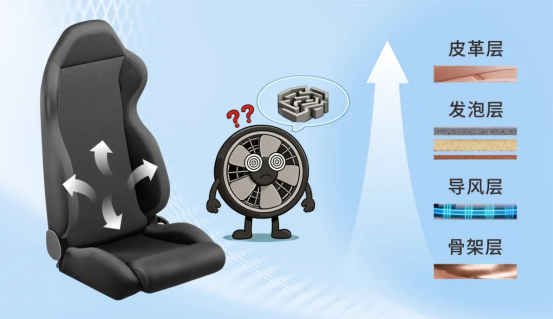
The principle behind seat ventilation is straightforward: Fans are embedded within the seat cushion and backrest, propelling airflow through various material layers to facilitate continuous heat exchange between the occupant's body and the seat.
While the concept seems simple, the interior of a seat is far from a hollow tube. The foam density, the breathability of the leather covering, and the layout of the air ducts all consume airflow energy. The fan must not only overcome air resistance but also navigate through this 'material labyrinth.'
This implies that the key performance indicators of a fan extend well beyond its rotational speed.
Key Considerations When Selecting a Seat Ventilation Fan
⒈ Airflow Volume and Static Pressure—Balance is Crucial
Airflow volume determines how much heat can be dissipated per unit of time, while static pressure dictates whether the airflow can penetrate the seat to reach the occupant's back. These two factors are like two ends of a seesaw; neglecting one in favor of the other can easily lead to suboptimal choices.
⒉ Noise Level—There's No Room for 'Quieter' in the Cabin
In the era of internal combustion engine vehicles, engine noise naturally masked many subtle sounds. However, in the electric vehicle age, the cabin is much quieter, amplifying every whisper of the fan. When selecting a model, don't just focus on the decibel level under rated conditions; pay closer attention to the fan's noise profile across different speed ranges—continuous low-frequency noise can be more disruptive than occasional high-speed operation.
⒊ Durability—A Fan Should Last as Long as the Vehicle
Once installed, replacing a seat ventilation fan involves removing the seat, disconnecting wiring harnesses, and recalibrating—a labor-intensive process that far exceeds the cost of the part itself. Dual-ball bearing designs offer high reliability, as they rely on mechanical contact rather than oil film lubrication (which can degrade and fail under high temperatures), making them more resilient in harsh conditions.
⒋ Temperature Resistance—Withstanding Extreme Heat is Vital
On a scorching summer afternoon, the surface temperature of a seat in a parked car can easily soar above 60°C. The fan must start and operate stably under such extreme conditions without malfunctioning.
Blowing or Suction? Why Choose When You Can Have Both?
Blowing mode provides rapid cooling—turn it on as soon as you enter the car, and you'll feel cool within seconds, making it ideal for short commutes. Suction mode, on the other hand, is gentler, cooling by drawing away hot and humid air from the contact surface, offering a more consistent and comfortable experience over long periods without the discomfort of continuous direct airflow.
Both modes have their proponents, but the optimal solution is not having to choose between them. The Sifang Fengxin seat ventilation fan supports both blowing and suction modes, allowing flexible configuration with a single fan, eliminating the need for two separate material sets for different solutions.
Sifang Fengxin: From Product to Comprehensive System
The fan product itself is just the tip of the iceberg. Beneath the surface lies a complete ecosystem—from raw material inspection, SMT placement, dynamic balance calibration, to final product inspection—all covered by the IATF16949 automotive-grade quality system.
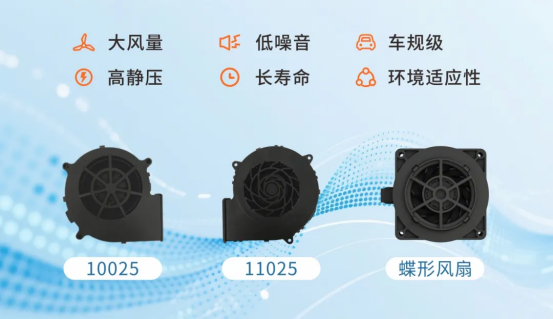
Sifang Fengxin has established an automated production line and a digital quality control system, with full traceability to production batches, process parameters, and test records. Currently, the 10025 series, 11025 series, and butterfly fans have been mass-installed in production models of several mainstream automakers. For specific model parameters or sample testing requests, please feel free to inquire.
-
Three-Year Cumulative Losses Reach 4.4 Billion! Can AI Revolutionize Yonyou’s Future?
-
![]()
Zhipu: Trillion-dollar Market Cap, Is China's Anthropic Really Here?
-
![]()
Why Are Automakers Hesitant to Offer Consumer Guarantees?
-
![]()
Targeting 12 Million in Exports! China’s Auto Industry Faces a Pivotal Test of Maturity
-
![]()
One in Six Employees at Volkswagen Faces Layoffs Amidst Largest Strategic Retrenchment in 88 Years
-
![]()
Breaking Free from Involution: How These Four Automakers Are Charting New Courses
-
![]()
From National Pride to WPS Controversy: The Dilemma Faced by Zou Tao of Kingsoft Office
-
![]()
He Xiaopeng: Ant Group's 'AI Visionary'