Is the Future of Extended-Range EVs Pure Electric or Li Auto’s 5C Extended-Range? A Li Auto Executive Shares Insights
 06/25 2026
 399
399
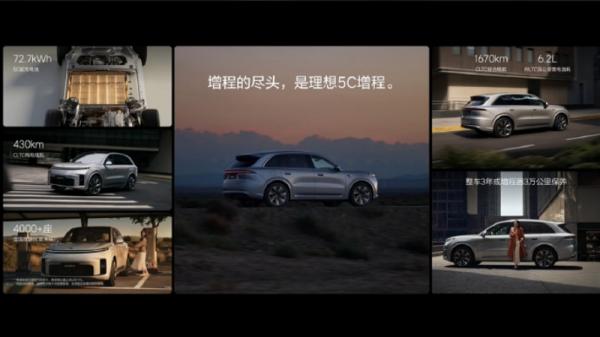
Last evening, during the launch event for the brand-new Li Auto L8, Liu Jie, President of Li Auto's Product Line, publicly challenged the industry's widely-held belief that “extended-range is merely a transitional phase, with pure electric being the ultimate goal.” Instead, he proposed that Li Auto’s 5C extended-range technology represents the pinnacle of extended-range innovation. In my view, Liu’s statement primarily reflects Li Auto’s strategic direction and a proactive effort to navigate market dynamics and public expectations, with the aim of reinforcing its technological edge.
Strategically, Li Auto is delineating clear product roles to prevent internal competition. The company has officially announced that the L series will exclusively focus on extended-range vehicles, while pure electric SUVs will be developed under the separate i series. Liu’s comments are intended to clearly convey this differentiation to the market and consumers.
Li Auto believes that rather than diluting efforts by pursuing both pure electric and extended-range technologies, it is more effective to concentrate resources on delivering an unparalleled “flexible power” experience—combining the best of fuel and electric power—as its core brand strength.
Technologically, Li Auto is betting big on 5C extended-range technology to revolutionize the user experience. This is not just marketing hype; it is a technical solution designed to address long-standing issues with traditional extended-range vehicles, such as limited pure electric range and slow recharging times. By leveraging an 800V high-voltage platform and a 72.7kWh large-capacity battery, new models like the Li Auto L8 achieve a CLTC pure electric range of 430 kilometers and can recharge from 10% to 80% in just 10 minutes at Li Auto’s supercharging stations.
Through this technological advancement, Li Auto aims to transform the usage scenarios of extended-range vehicles from the conventional “electric for daily commutes, fuel for long trips” to “electric for daily use, electric for highways, and fuel for off-road adventures.” This shift is intended to match or even surpass the experience offered by some pure electric models. In essence, 5C extended-range technology promises an electric vehicle experience that is as good as, if not better than, pure electric models in daily use, while completely eliminating range anxiety.
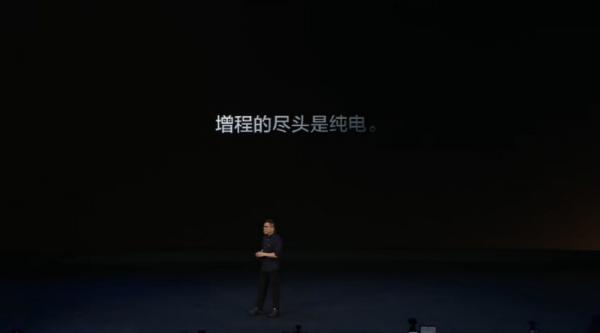
From a market standpoint, this move is Li Auto’s strategic response to its declining market share and the prevailing narrative of an “energy hierarchy.” Recent industry data indicates that while the market share of pure electric models is on the rise, that of extended-range models is declining. In response to competitors promoting the idea that “extended-range is just a stepping stone to pure electric,” Li Auto’s CEO, Li Xiang, firmly rejects this hierarchical thinking. He emphasizes that pure electric and extended-range technologies cater to different user needs and should not be pitted against each other.
Currently, over 40% of consumers in China still opt for traditional fuel vehicles. The advantage of extended-range models in completely eliminating range anxiety during long-distance travel and off-road adventures cannot be fully replicated by pure electric vehicles. User preferences for the peace of mind that comes with using gasoline for long trips and in remote areas should be respected.
In fact, the debate over whether the future of extended-range vehicles lies in pure electric or Li Auto’s 5C extended-range technology reflects the diversified competition in today’s new energy vehicle market, particularly the normalization of technological route disputes. On one hand, “pure electric advocates” like NIO and Leapmotor, relying on increasingly sophisticated charging and battery-swapping infrastructure, argue that pure electric is the future. On the other hand, “extended-range advocates” like Li Auto and Seres, backed by actual sales and user mileage data, demonstrate that long-range, low-fuel-consumption extended-range models still have a broad audience.
Overall, Liu Jie’s recent statement underscores Li Auto’s technological confidence and serves as a robust rebuttal to market pessimism. Whether the extended-range route can truly gain a foothold depends not only on technological advancements but also on the speed of building its supporting 5C supercharging network and whether this anxiety-free driving experience can gain widespread recognition among consumers in real-world daily usage scenarios.
For ordinary consumers: If your primary use is for city commuting, you have access to home charging, and you rarely take long trips, pure electric vehicles are the top choice due to their lower costs and simpler mechanics. If you frequently embark on cross-province road trips, lack fixed parking, or prioritize peace of mind for family travel, 5C long-range extended-range vehicles are currently the optimal solution. For the industry, both technological routes will coexist long-term—neither will completely eliminate the other. 5C extended-range technology does not negate pure electric vehicles; instead, it pushes the extended-range segment to its ultimate potential!
-
![]()
NVIDIA-Backed AI Unicorn Secures $1.5 Billion Funding: Revenue Soars 2000%
-
![]()
Doubao Pro is Here: How Can Seed 2.1 Be Integrated into Real Processes?
-
"PCB Juice" Sees Four Consecutive Declines: Even Computing Power Material Suppliers Can't Lift This "Old Stock"
-
![]()
Potential 'Seismic Shift' in the U.S. TV Industry: Competition Shifts from Hardware Sales to Traffic Entry Points
-
![]()
Audi A6L's Defense in the Luxury C-Class Market: Following Huawei's Smart Driving Integration, Is Large-Battery HEV the Next Move?
-
![]()
Zhipu VS Minimax: A Chinese Reflection of Anthropic PK OpenAI
-
![]()
Dialogue with Trooly.AI: AI is Just the Pathway to Connect Authentic User Voices Directly to Brands
-
![]()
From January to May, New Energy Battery-Swap Heavy Truck Sales Surge 29% Year-on-Year, with Geely, XCMG, and Foton Daimler Leading the Pack