Volkswagen Lays Off 100,000 Employees, The Elephant Sits Down
 06/29 2026
 547
547
This transformation, dubbed an “epic restructuring” by foreign media, not only exposes Volkswagen's wounds but also reflects the collective anxiety of the entire traditional automotive industry at a turning point in the era.
A few years ago, facing the wave of intelligent electrification, Volkswagen began a series of changes and transformations. Some said it was the turning of an elephant, while others said the elephant was dancing gracefully. Little did they know, after several years, it was still the same elephant, making little progress and simply sitting down.
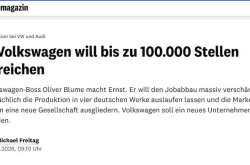
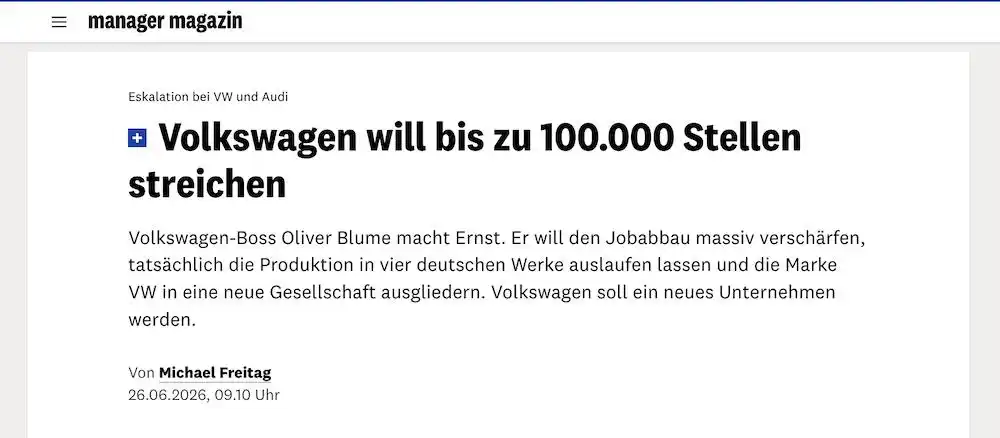
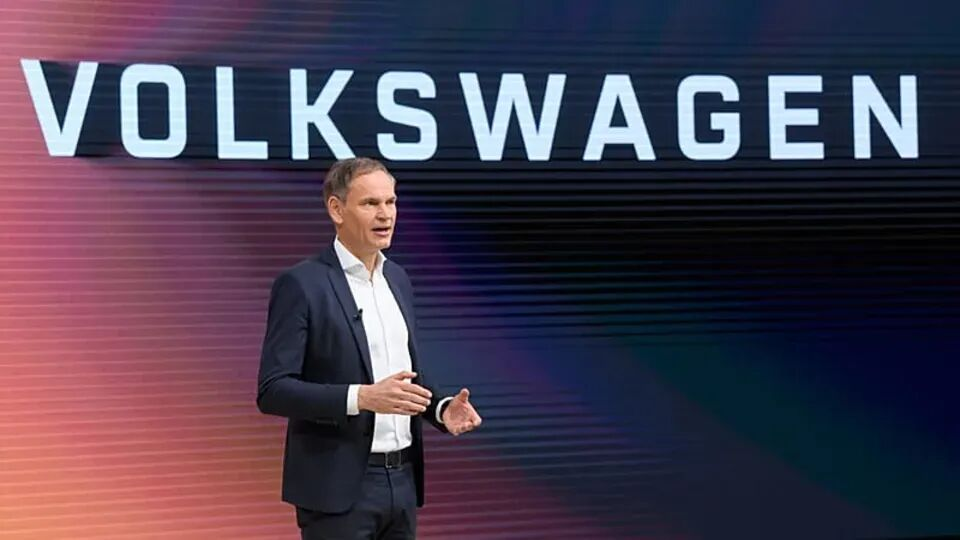
According to a report by Germany's Manager Magazin on the 26th, Volkswagen CEO Oliver Blume plans to cut up to 100,000 jobs globally over the next few years, doubling the previously planned target of 50,000 layoffs.
At the same time, three Volkswagen-branded factories in Germany—Hanover, Zwickau, and Emden—as well as Audi's factory in Neckarsulm, will also be closed.
Oliver Blume stated that about 28,000 employees have already left voluntarily, and factory costs at German production sites have dropped by more than 20% last year. In terms of production capacity, Volkswagen has reduced its global annual production target from 12 million vehicles to 9 million.
German media commented that Volkswagen's adjustment would be the largest organizational change in the group's 89-year history and possibly the biggest restructuring in the history of the automotive industry.
What we are seeing now is factory closures and layoffs, but given the scale of the group, selling a few brands is not unreasonable.
Two months ago, on April 24, Porsche officially announced that it had signed an agreement to sell all its shares in Bugatti, including direct and indirect holdings, for approximately 1 billion euros, or about 7 billion yuan. This marks the first time since Volkswagen acquired Bugatti in 1998 that the group has completely exited ownership of the top-tier supercar brand.
The next brands likely to be sold are Ducati and Lamb,orghini as previously rumored. Chinese manufacturers looking to go high-end might want to start researching, such as Zhang Xue Motorcycles and Dreame Technology.
Regardless, Volkswagen's most aggressive restructuring in 88 years proves that no one is immune to the tides of change.
Fall from Grace
Few remember that Volkswagen stood at the peak in 2019.
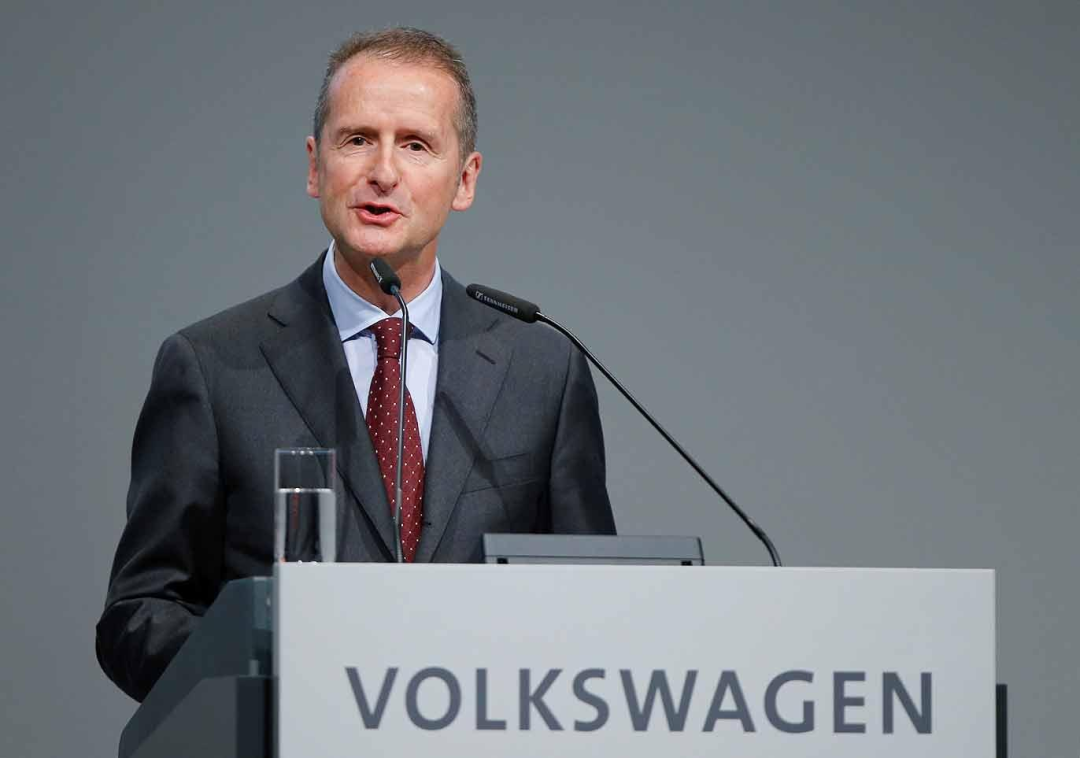
That year, it sold 10.97 million vehicles globally, surpassing Toyota to reclaim the title of the world's best-selling automaker after four years, with operating profits reaching a record 19.3 billion euros. At the time, Volkswagen CEO Herbert Diess confidently stated at the earnings report, “We will become the global leader in electrification within three years.”
Seven years have passed, and reality has dealt Volkswagen a harsh blow, with Diess leaving in disgrace.
The 2025 financial report shows that Volkswagen's operating profit has plummeted to 8.9 billion euros, half of the 2019 figure, with global sales of pure electric models reaching only 780,000 units, less than a third of Tesla's and even surpassed by BYD. More glaringly, Volkswagen's new energy market share in China dropped from 15% in 2021 to 6.8% in 2025, struggling in the electrification race.
Previously, to catch up in electrification, Volkswagen invested over 35 billion euros in the MEB pure electric platform and another 20 billion euros to establish software subsidiary CARIAD. However, CARIAD became a “money pit,” with losses reaching 3.2 billion euros in 2025. Its in-car system, plagued by frequent lag and missing features, was mocked by users as “a 400,000-yuan car with a 400-yuan tablet.”
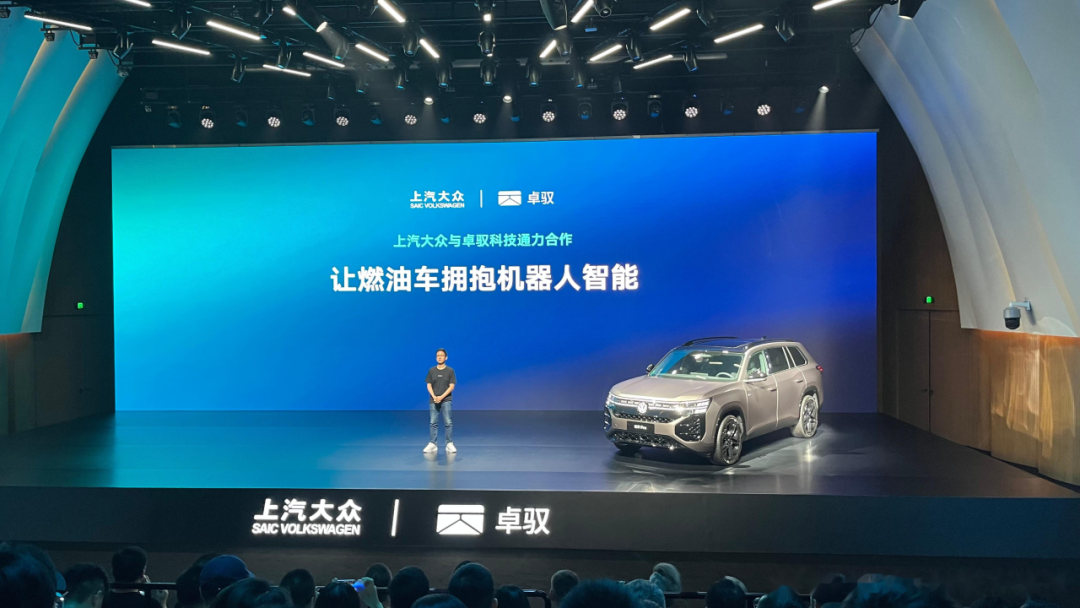
In the Chinese market, even Volkswagen Anhui still uses XPENG's system, while FAW-Volkswagen and SAIC-Volkswagen chose Zhuoyu (DJI)’s solutions for intelligent driving.
Hundreds of billions in investment seem to have gone to waste, playing no role, which also proves that the new wave of information technology revolution, represented by electrification and intelligence, can only take root in China.
On the other hand, the decline of the fuel-powered vehicle base has left Volkswagen struggling.
Volkswagen has long relied on fuel-powered vehicles for profit, especially in the Chinese market. However, in 2025, fuel-powered vehicle sales in China dropped by 28% year-on-year. To maintain market share, Volkswagen was forced to offer discounts, with the Lavida seeing terminal discounts of up to 40,000 yuan, and per-vehicle profit falling from 18,000 yuan in 2019 to 6,000 yuan.
The money earned from fuel-powered vehicles has never been enough to fill the bottomless pit of electrification.
For Volkswagen, this round of layoffs is far from simple.
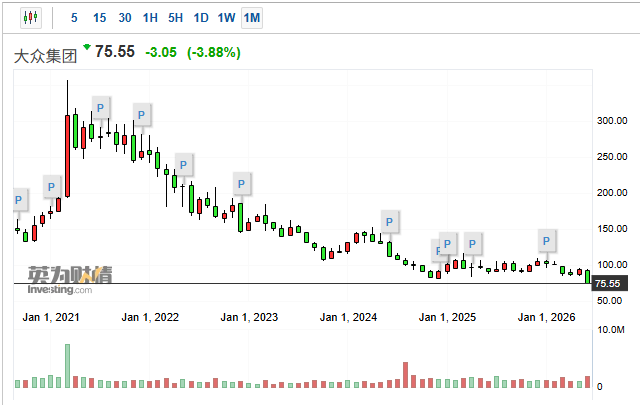
Immediately after the news broke, Volkswagen's stock price fell 3.4%, hitting a near-20-year low, reflecting deep investor concerns about the group's future prospects.
The last time Volkswagen's stock price was this low was during the 2008 financial crisis.
As a symbol of German industry, Volkswagen has a powerful labor union. In 2023, Volkswagen attempted to close the fuel-powered vehicle production line at its Emden factory, facing union resistance that led to a 12-day strike, resulting in direct losses exceeding 1.5 billion euros. Now, with 100,000 jobs to be cut and four factories to be closed, will the union let Volkswagen have its way?
In late April this year, Oliver Blume publicly stated that he was seeking alternative solutions for idle factories in Europe, including allowing Chinese partners to utilize idle capacity.
This statement was widely interpreted by foreign media as a signal that Volkswagen was opening its doors to Chinese automakers. Shortly after, on May 13, Cheng Xiaoguang, head of XPENG's Northeast Europe region, confirmed that XPENG was in talks with Volkswagen and other automakers about acquiring or leasing idle European factories.
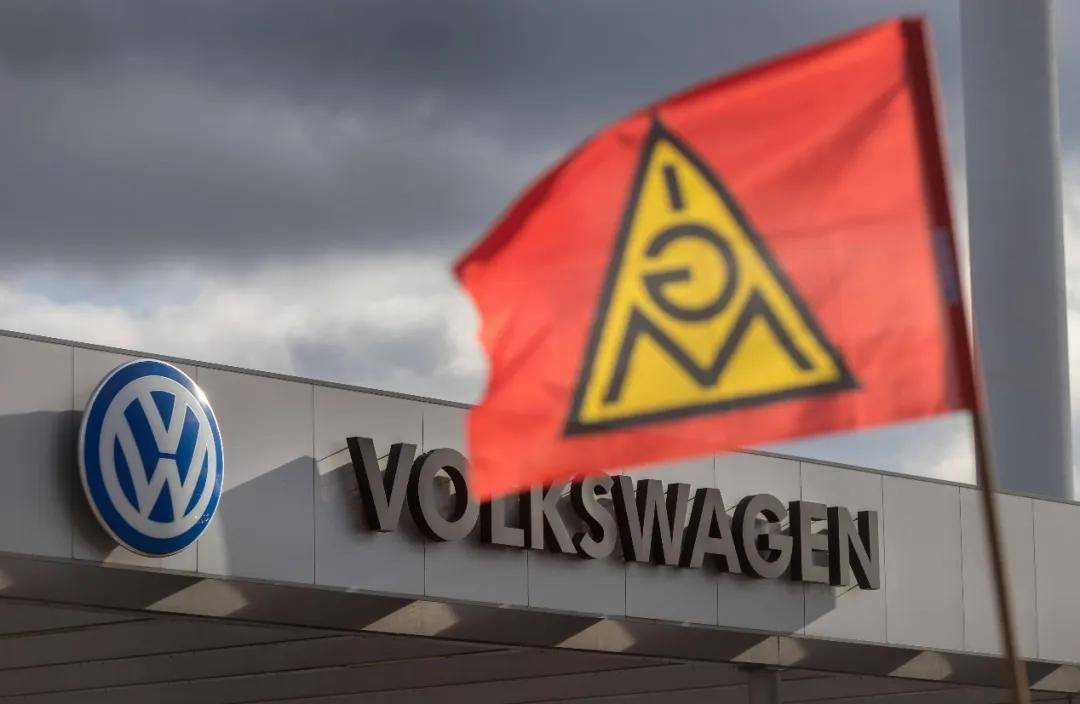
Once the news spread, the German media erupted. Would Volkswagen sell its factories to the Chinese? Could the union tolerate this? Sure enough, a week later, Blume closed the door on this option at an employee meeting.
However, after this even more aggressive round of layoffs and factory closures, leasing to Chinese companies might become an acceptable solution for the union.
As Lu Xun once said, in a dark room, if you suggest opening a window, others will disagree, but if you suggest tearing off the roof, they will agree to open the window.
Volkswagen's current situation is much the same.
Peach Blossoms Bloom at the Mountain Temple
Looking at Germany and even Europe as a whole, Volkswagen's layoff plan is not an isolated case but a microcosm of the global automotive industry's “major reshuffle.”
BMW plans to reduce its global workforce by up to 5% by the end of 2026, equivalent to about 7,700 jobs. Ford announced it would lay off 4,000 employees in Europe by 2027 and close part of its production line at its Cologne factory. Stellantis Group plans to cut 2,000 jobs in Italy and shift some fuel-powered vehicle production to China.
Bosch expects to cut 22,000 jobs by the end of 2030, ZF Friedrichshafen plans to reduce its German workforce by 11,000 to 14,000 by the end of 2028, and Continental plans to cut another 3,000 jobs by the end of 2026, mostly in R&D, with less than half of these positions in Germany.
Data from the European Association of Automotive Suppliers shows that from 2024 to 2025, the European automotive parts industry has announced a cumulative total of 104,000 layoffs, far exceeding the 53,700 layoffs during the worst of the pandemic in 2020-2021.
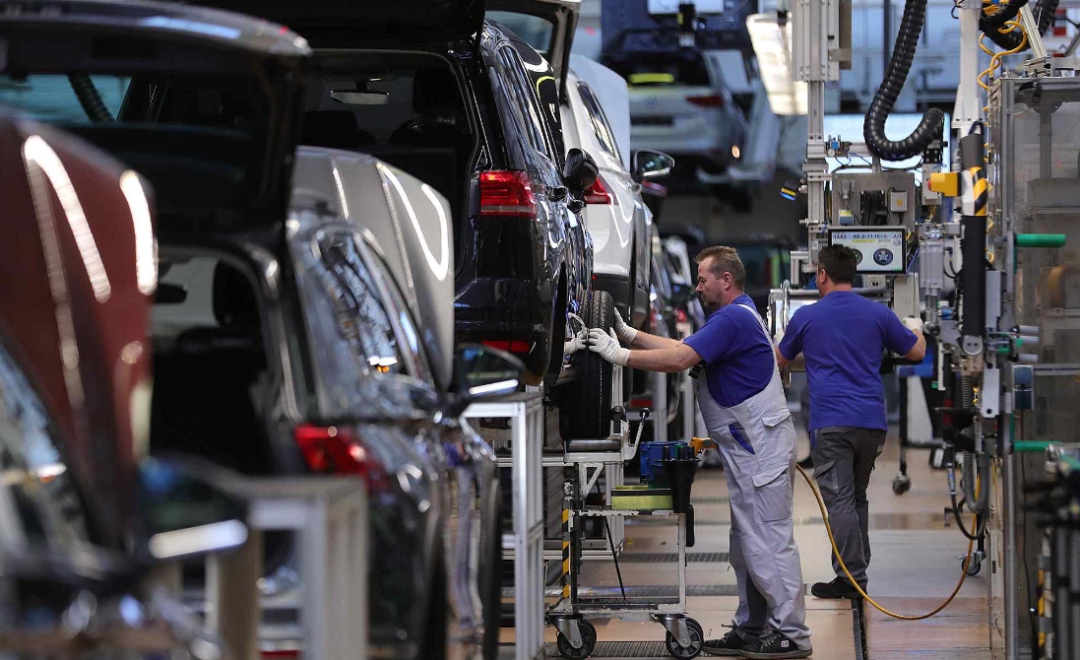
A statement released by the German Association of the Automotive Industry in May this year revealed that the employment crisis in Germany's automotive industry is more severe than expected.
By 2035, up to 225,000 jobs could be at risk, about 35,000 more than previously estimated in 2019. Of these 225,000 job gaps, 100,000 have already disappeared between 2019 and 2025.
In the era of fuel-powered vehicles, the core competitiveness lay in mechanical hardware such as engines and transmissions. Volkswagen dominated the market with technical barriers like its EA888 engine and DSG transmission. However, in the era of electrification, the core competitiveness has shifted to batteries, motors, electronic controls, and, more critically, software systems.
In these areas, traditional automakers have no advantage, with slow R&D progress and heavy reliance on procurement, keeping costs high. The transformation in production methods has also made traditional factories a burden.
Fuel-powered vehicles require tens of thousands of components, a complex supply chain, and massive assembly lines. Volkswagen has over 100 factories worldwide, which used to be a huge advantage for large-scale production.
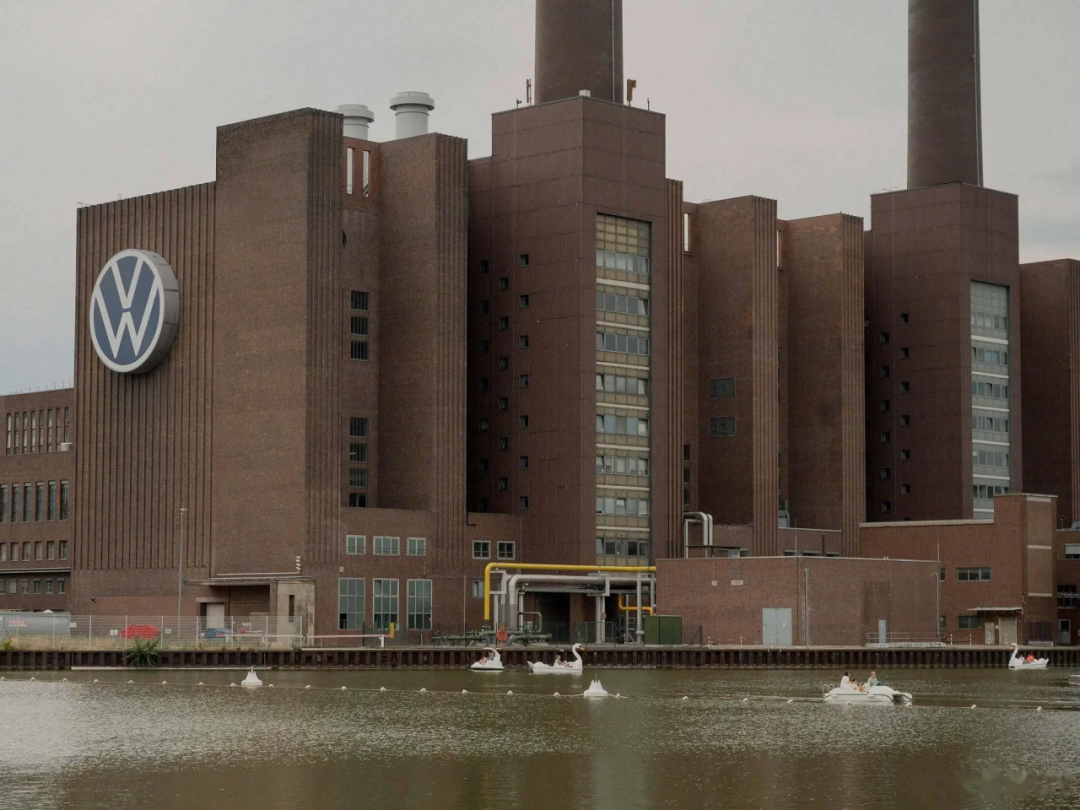
However, electric vehicles have 40% fewer components. For example, Tesla's Gigafactory achieves 95% automation with robots, with triple the production capacity of traditional factories and 70% lower labor costs. This means many of Volkswagen's existing factories and workers have become burdens. Under union pressure, laying them off is not easy.
In fact, the electrification and intelligent transformation of the automotive industry began years ago, but its impact on traditional giants has only truly shown its power this year.
In the past few years, signs of decline for joint ventures in the Chinese market were already visible, but limited by the difficulty of expanding globally, Chinese companies had little room to maneuver on the international stage. It wasn't until the past two years, as they gradually expanded overseas, that they began to truly encroach on the territory of traditional automakers.
In 2025, global automotive sales reached about 85 million units, the same as in 2019, but new energy vehicles accounted for 35%. This means the fuel-powered vehicle market shrinks by nearly 10 million units annually, while the growth in the new energy market is almost entirely captured by new forces like Tesla and BYD, as well as Chinese brands.
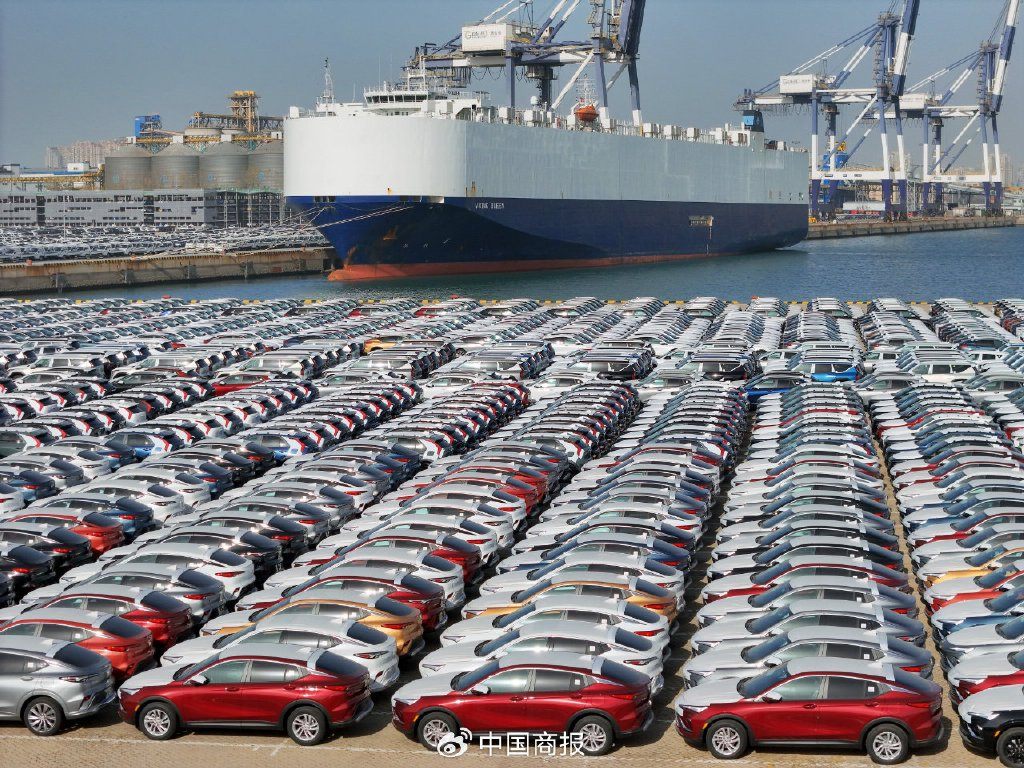
In 2025, Chinese automotive exports reached 12 million units, surpassing Japan for the first time to become the world's largest exporter, with new energy vehicles accounting for 70%. BYD is building factories in Europe, NIO has entered the German market, and Li Auto's extended-range models are in high demand in Southeast Asia.
While Volkswagen closes factories in Europe, Chinese automakers are accelerating their layout (layout) in Mexico, Hungary, and Thailand, filling the void left by traditional giants. This shift signifies that the global automotive industry's center of power is moving from Europe and the Americas to China.
A century ago, Volkswagen kicked off the era of mass automotive ownership with the Beetle. Today, it faces the painful decision to lay off 100,000 employees in a desperate attempt to survive the electrification era.
Can this epic restructuring succeed? No one can say for sure. But one thing is certain: when the tidal wave of change crashes in, even giants like Volkswagen cannot escape unscathed.
Note: Some images sourced from the internet. If infringement occurs, please contact for removal.
-END-

-
![]()
The Unstoppable Rise of 'Optical Progress and Copper Decline': Sunny Optical’s Strategic Vision for the Next Decade
-
![]()
AI + Going Global in the Second Half: No Intermission for Robot Vacuum Cleaners
-
![]()
The Suffering Endured in E-commerce, Walmart Doesn't Want to Repeat in AI
-
![]()
What Does the Doubling of New Energy Vehicle Exports Mean?
-
![]()
Ghosn: 'Only I Can Save Nissan'
-
![]()
Volkswagen Lays Off 100,000 Employees, The Elephant Sits Down
-
![]()
Expanding Production Capacity! Yutong Optics Acquires Approximately 1.5 Hectares of Industrial Land in Chang'an, Dongguan
-
![]()
Why Is Nokia Making a Comeback in the AI Era?