Pix Exclusive | Mercedes-Benz China Establishes GTM Department to Avoid Repeating CLA's Mistakes
 07/02 2026
 551
551
Contraction and Reconstruction Happen Simultaneously.
Original content by Autopix (ID: autopix)
Beyond layoffs and contractions, Mercedes-Benz is also attempting to integrate new approaches pioneered by Chinese automakers into its own system.
Autopix exclusively learned that Mercedes-Benz China's sales system recently adjusted its organizational structure, establishing a new department named "Go to Market" (GTM), which is currently recruiting internally.
GTM is a collaborative product process that addresses the disconnection between product definition, pricing, production scheduling, and channel conversion. Over the past few years, as Huawei's ecosystem entered the automotive circle, most Chinese automakers, including Li Auto, VOYAH, and Great Wall Motors, have been strengthening similar processes.
The emergence of this process within Mercedes-Benz holds different significance. For Mercedes-Benz China, which is in a period of adjustment, GTM functions more like an error-prevention mechanism, aligning product definition, market launch timing, and terminal conversion at an earlier stage to minimize layered disconnections after a product enters the market.
Such disconnections have already surfaced in Mercedes-Benz's latest round of new energy products.
01 Mercedes-Benz Playing Catch-Up
Unlike most Chinese automakers, the new GTM department at Beijing Mercedes-Benz Sales Service Co., Ltd. (hereinafter referred to as Mercedes-Benz Sales) is currently a third-tier department but will report directly to the top leader.
Autopix learned that the head of the new department is likely to be Wang Jiangchuan. Public information shows that he previously served as the Executive Assistant to the CEO of Beijing Mercedes-Benz Sales Service Co., Ltd., a strategic project coordination role close to the CEO's office.
The newly established GTM department reports directly to Li Desi (Daniel Lescow), President and CEO of Mercedes-Benz Sales, who took office in March this year, just a few months ago.
 ▍Li Desi
As of the publication of this article, Mercedes-Benz China has not responded to the above information.
Over the past year, Mercedes-Benz has undergone multiple rounds of personnel contractions in China, with cost reductions in sales, production, finance, and back-office operations. The latest round occurred in June this year, extending the contraction from the sales system to manufacturing and R&D.
The establishment of GTM at such a time indicates that how products enter the market is no longer just an issue for the marketing and sales departments but has been elevated to a strategic task.
Mercedes-Benz's troubles in China are no longer limited to a single model.
In 2025, it delivered approximately 550,000 vehicles to Chinese customers, a 19% year-on-year decline and the lowest since 2017. In the first quarter of 2026, deliveries further dropped to 111,600 units, a 27% year-on-year decline.
Mercedes-Benz China has designated 2026 as a "transition year," with sales targets adjusted downward to the range of 500,000 to 600,000 units. This is an acknowledgment of proactive contraction.
What unease s (worries) it even more is that its new energy products, expected to turn the situation around, have failed to deliver. The new CLA, launched in November last year, marked the debut of a new generation of electrified products in China. Compared to the nearly Total failure (complete failure) of the EQ series a few years ago, it addressed the shortcomings pointed out by the outside world one by one.
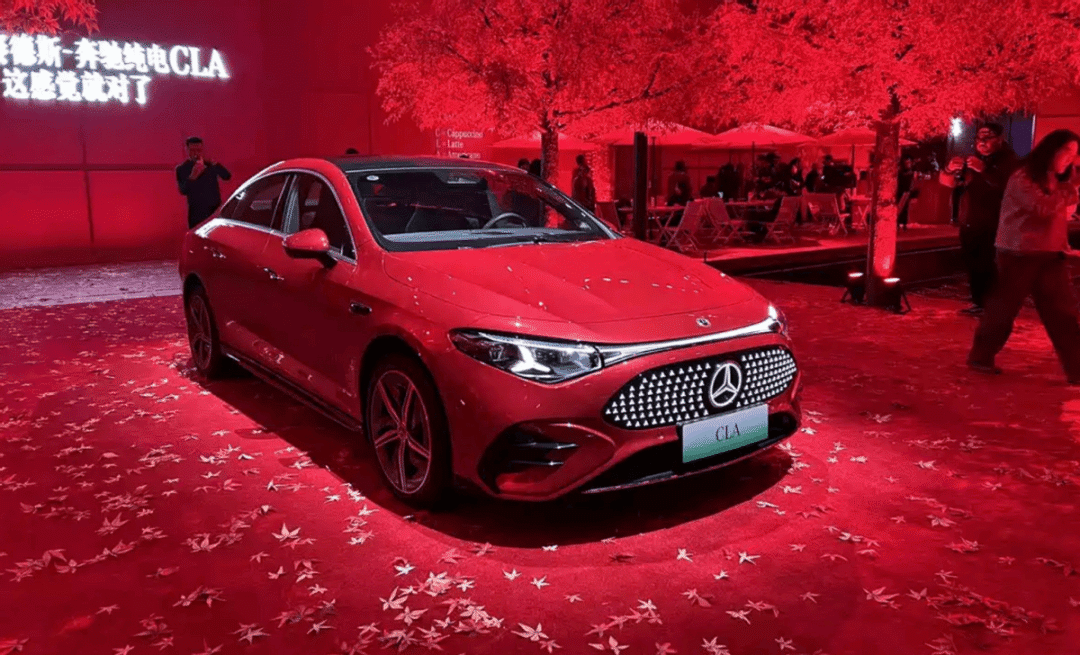
It is based on the new MMA architecture for entry-level/compact models, the first model on Mercedes-Benz's new "electric-first, compatible with both electric and combustion" platform, no longer an "electric conversion" like the EQC.
The CLA made some preliminary localization attempts. For example, the end-to-end intelligent driving system jointly developed by Mercedes-Benz and Momenta debuted here; the cabin integrated the Doubao large model; prices dropped to a starting point of 229,000 yuan, a historically low pricing level for Mercedes-Benz.
The checklist seemed complete, but the market's response was overly indifferent (lukewarm). According to the China Passenger Car Association, the new car sold 1,369 units in its debut month last year, dropped to 21 units in February this year, and 161 units in May.
The problems exposed by the CLA are not at the hardware technology level. After addressing platform, vehicle architecture, intelligence, and pricing, it still failed to create a compelling reason to buy, indicating that Mercedes-Benz's understanding of China's new energy market is still insufficient, and localization efforts are not deep enough.
The CLA's slogan in China is "Efficiency is the Hard Currency." This is a statement that engineers would agree with but is difficult for ordinary consumers to use to understand product positioning. It addressed hardware shortcomings but failed to complement system capabilities from user insights, product definition, pricing strategies, production scheduling, to channel conversion.
Today, the product strength of Chinese new energy vehicles is precisely the result of this entire end-to-end system's synergy.
02 The System Has Not Been Fully Opened
After the CLA, Mercedes-Benz placed heavier bets on the new GLC.
In early June this year, the all-new Mercedes-Benz electric GLC opened for pre-sale, entering the higher-tier MB.EA architecture than MMA, as the first product in the Core model line under the system, representing Mercedes-Benz's main product band for sales and profit cores.
If the CLA's failure could be explained as an entry-level product failing to penetrate China, the GLC has less room for buffer (buffer). It targets Mercedes-Benz's true sales and profit foundation.
This time, Mercedes-Benz went deeper. The domestically produced GLC no longer follows the logic of overseas products but extends the wheelbase to 3,027mm, offers a six-seater configuration for the first time, recalibrates the chassis for Chinese road conditions, and has a cabin dominated by a Chinese team.
But the GLC also placed a bigger bet. Its pre-sale starting price is 349,000 yuan, nearly 80,000 yuan more expensive than the Audi E7X, a competitor based on a joint development platform between SAIC and Audi. It also adopts a pricing discipline close to that of new forces, with "national unified pricing and order-based production."
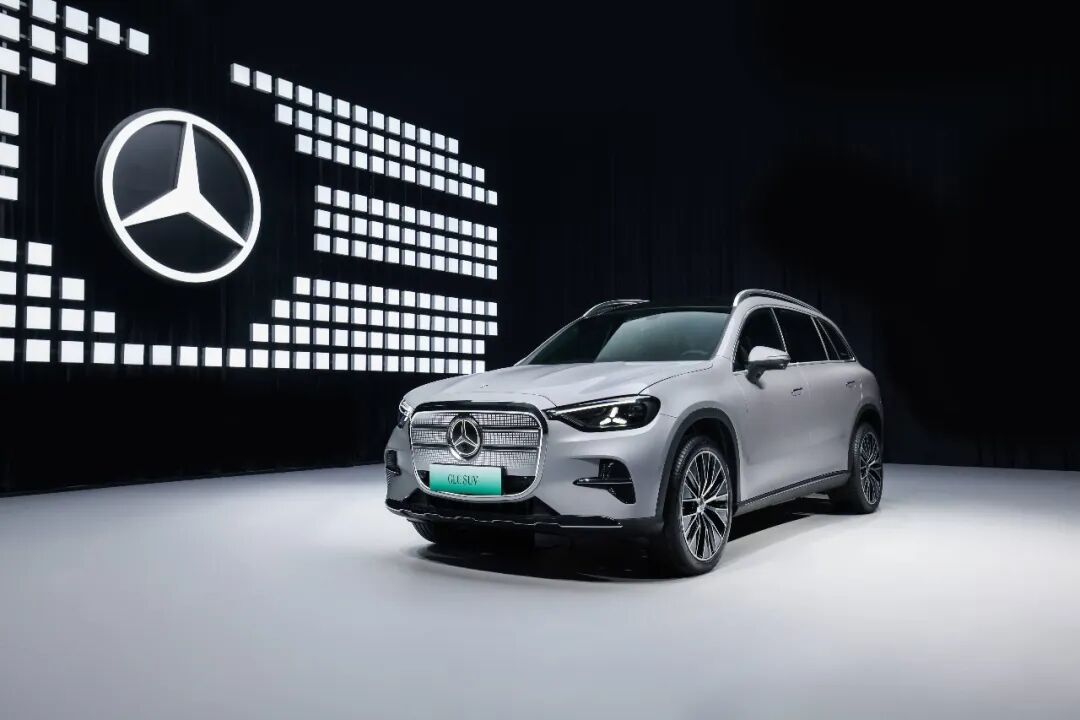
From the CLA to the GLC, the traces of local definition are deepening, advancing from technical catch-up to scenario catch-up. However, this still occurs within the framework of Mercedes-Benz's global models. The new GTM department emerges along this line, tasked with addressing the next layer of issues: how a deeply adapted vehicle can better enter the Chinese market.
The goal is clear, but what the new department can do may still be limited.
Globally, Mercedes-Benz has abandoned its goal of full electrification by 2030, shifting towards a long-term coexistence of electric and combustion vehicles. Mercedes-Benz CEO Ola Källenius plans to cut costs by 5 billion euros by 2027. He publicly stated that, except in China, pure electric vehicles temporarily have "no advantages" in terms of cost and usability, whether in Europe or the United States.
Mercedes-Benz is overall retreating on the pace of electrification, with China remaining one of the few exceptions where investment is retained.
Over the past year, Mercedes-Benz's contractions in China have had clear focal points. The sales service company plans to reduce its workforce from about 900 to under 600; Beijing Mercedes-Benz has seen significant turnover in production, logistics, and planning roles, with increased factory holidays. Both are directly linked to expectations of sales volume in the coming years.
R&D has not been handled in the same way. We learned that while Mercedes-Benz's R&D teams of about 2,000 people in Beijing and Shanghai were also included in last month's layoffs, they were not reduced as a single cost pool. Intelligent and software roles in Shanghai are even still recruiting.
In 2023, Mercedes-Benz delegated a batch of authorities to its Chinese R&D team. Intelligent driving, human-machine interaction, and cloud data packaging are now developed by the Chinese team, with engineers no longer needing approval from the German headquarters to invoke (invoke) related functions or introduce (introduce) local tech partners without headquarters code modifications.
After that, the highway pilot assist developed by the Chinese team took only 12 months from project initiation to vehicle implementation.
However, these authorizations have clear boundaries, stopping at the software and experience layers. Styling, platforms, and vehicle engineering are still defined by Germany. The MMA used by the CLA and the MB.EA used by the GLC are both global platforms, with China conducting deep adaptations, not product definitions.
The contraction in sales and production indicates a declining weight of China as a sales and manufacturing base for Mercedes-Benz; the retention of R&D, especially in intelligence, indicates an increasing weight of China as a source of technology and experience for Mercedes-Benz.
In other words, Mercedes-Benz has reserved a certain degree of independence for the Chinese market from the global market. However, this exception is not a special zone. While it is allowed to develop software faster, access local supply chains, and adapt products more widely, it has not yet been allowed to rewrite Mercedes-Benz's vehicle definitions.
GTM is caught between these two, tasked with using a compressed sales system to convert the intelligence, local scenarios, and new products supplemented by Chinese R&D into real orders.
This is the most practical significance of Mercedes-Benz China's new GTM department. It may not enable Mercedes-Benz to win big in China again, but at least it can ensure that failures like the next CLA are detected earlier and optimized faster.

This article is original content by Autopix (autopix) and may not be reproduced without authorization.
-
![]()
Is Baidu Now Fostering Its Own 'Yao Shunyu'?
-
![]()
NVIDIA Goes Wild! DeepSeek V4 Inference Costs Slashed by 80%
-
![]()
Preparing for the 6G Era: US Completely Shuts Down 2G Networks, China Unicom Initiates Gradual Decommissioning of WCDMA 3G Networks
-
![]()
Mid-year 2026 Sales Review: Auto Market Shifts from Scale Expansion to Systemic Capabilities for Long-term Positioning
-
![]()
From the ARD Protocol, the Turning Point for the Agent Industry Has Arrived
-
Pinduoduo's Strategic Leap in Xiong'an: Beyond Investment, a Pledge to Flourish
-
Liang Wenfeng Has No Desire to Become Another Sam Altman
-
![]()
Revenue Soars, Losses Mount in Billions, Sales Stumble: Avatr's Hong Kong IPO Bid Amid Breakthroughs and Anxieties