Mid-year 2026 Sales Review: Auto Market Shifts from Scale Expansion to Systemic Capabilities for Long-term Positioning
 07/02 2026
 399
399
On July 1, 2026, major domestic automakers released their June new vehicle delivery and sales figures, with the China Passenger Car Association (CPCA) concurrently releasing retail forecast data for narrowly defined passenger vehicles in June. Monthly domestic retail sales reached approximately 1.65 million units, up 9.3% from May. New energy vehicle retail sales hit 1.05 million units, maintaining a market penetration rate exceeding 60%. The market share of fuel-powered vehicles continues to shrink, highlighting the long-term trend of transitioning from fuel to electric vehicles.
June, as a critical period for achieving half-year performance targets, saw nearly all automakers initiate end-of-period promotions and ramp up production. Leading brands delivered impressive growth supported by complete industrial chains and diverse product portfolios. In contrast, mid-tier and niche brands struggled with weak growth and insufficient order conversion, leading to increased polarization within the industry.
▍New Energy Vehicles Take the Lead, Growth Resources Continue to Concentrate Among Top Players
Delivery data released by various automakers in June clearly shows that NEV models have become the mainstream in the domestic auto market, with fuel-powered vehicles retaining only a small, stable consumer base. Growth resources within the market are increasingly favoring leading companies with advantages in scale, technology, and distribution channels.
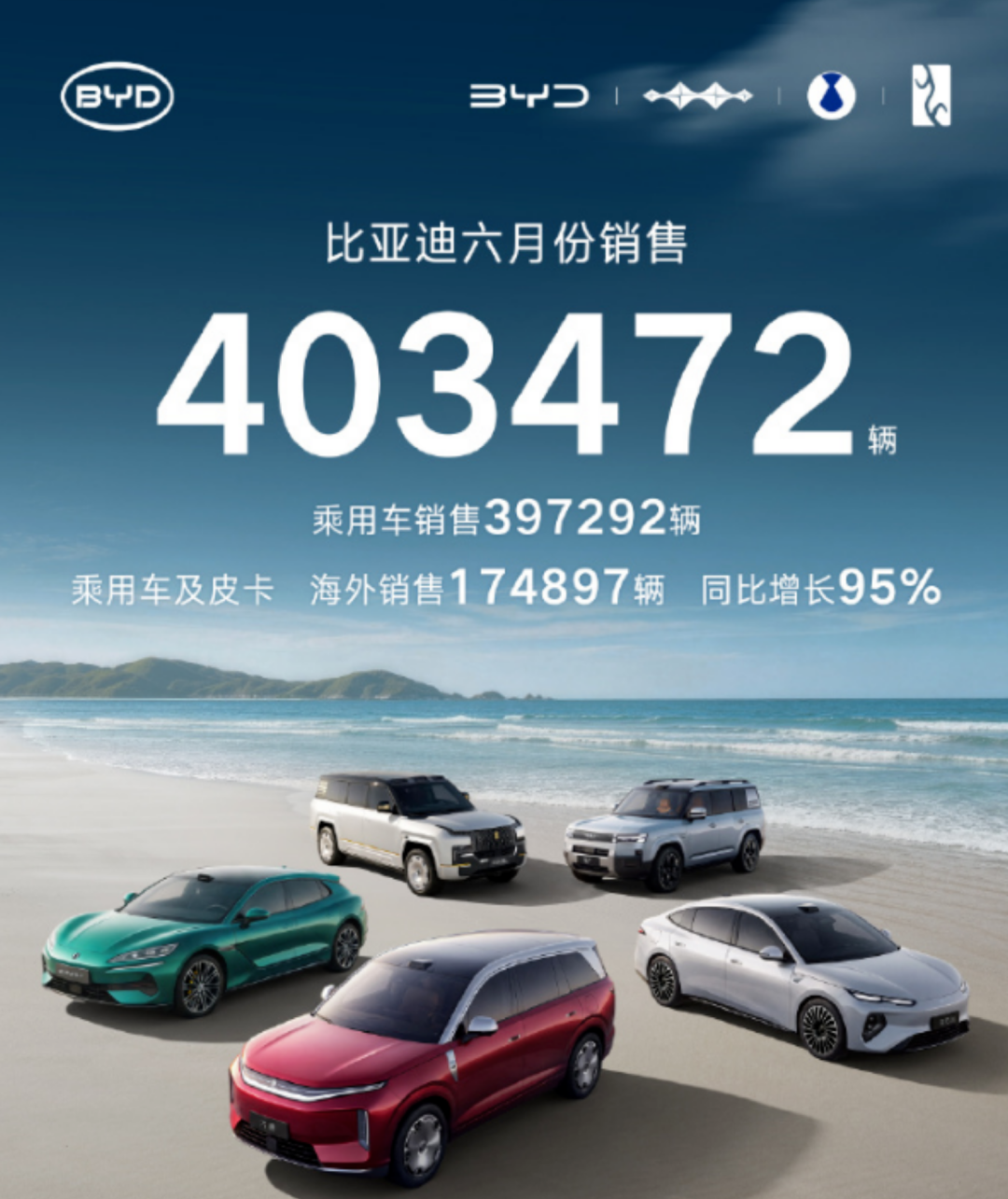
BYD sold a total of 403,472 units in June, maintaining its position as the industry leader in sales. Its Dynasty and Ocean series, as foundational high-volume product lines, contributed 340,863 units. Models under the Fangchengbao, Denza, and Yangwang brands cover the off-road, premium home-use, and ultra-luxury segments, respectively, achieving full price range coverage without significant sales weaknesses across the brand.
BYD's overseas sales exceeded 170,000 units in June, up 95% year-on-year. The overseas market has become a stable source of growth, with dual support from the domestic market and exports enabling the brand to maintain positive growth amidst a slight overall industry retail decline. This reflects the unique risk resistance capabilities of vertically integrated automakers.
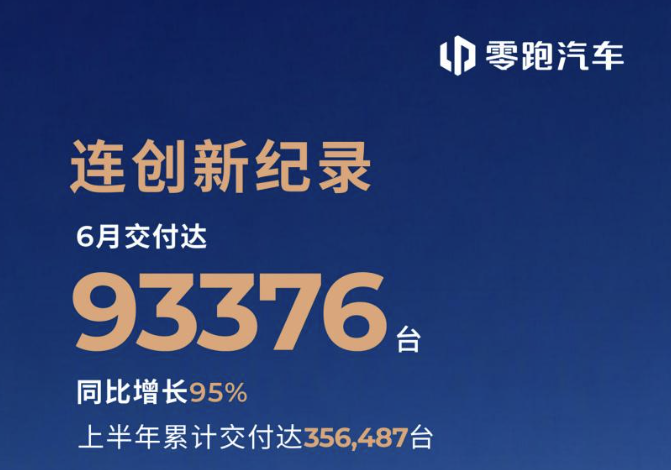
The sales stratification among new force brands was particularly evident in June. Leapmotor delivered 93,376 units globally, up 95% year-on-year, setting a new single-month delivery record. With over 350,000 units delivered in the first half of the year, Leapmotor became the only new force brand to exceed 90,000 units in monthly sales. Focused on cost-effective home-use models, the brand precisely meets Car purchase demand (car purchasing demands) in lower-tier markets (lower-tier markets). Its overseas export business contributed nearly 20% of sales, with synchronized efforts in both markets driving high growth.
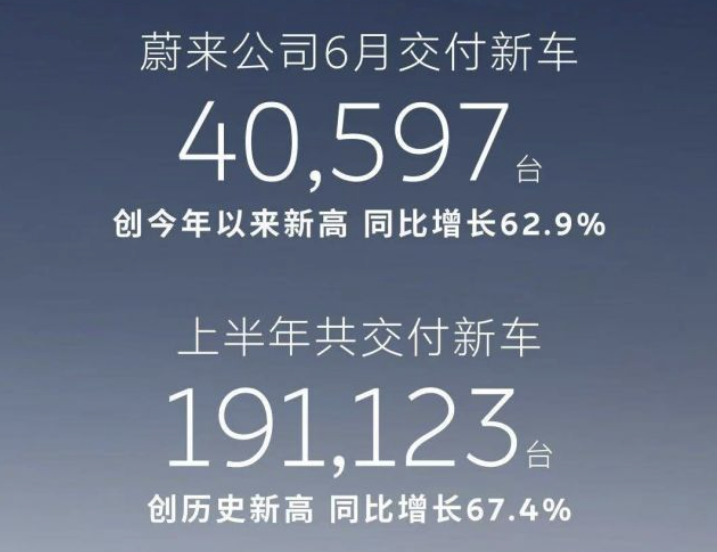
NIO and XPENG maintained stable monthly deliveries exceeding 40,000 units. NIO delivered 40,597 units in June, up 62.9% year-on-year, with its Lidao and Firefly sub-brands continuing to attract users across different price segments, reducing reliance on a single premium model. XPENG delivered 40,126 units, with over 100,000 units delivered in the second quarter. Its new MONA model, scheduled for launch in early July, is widely expected to further boost sales in the second half of the year.
HiMo (Hongmeng Intelligent Mobility) delivered a total of 50,624 units in June, up 9.7% month-on-month. The AITO brand delivered 30,199 units, with Huawei-enabled smart cockpits and intelligent driving systems serving as core selling points for family users. Xiaomi Automobile delivered over 30,000 units for the third consecutive month. Although official figures were not released, the stable monthly delivery volume confirms the brand's foothold in the 250,000-yuan-level pure electric sedan segment. Leveraging its offline stores and online traffic channels, Xiaomi quickly penetrates the young consumer market.
Li Auto delivered 30,895 units in June, with its extended-range six-seater models firmly holding the mid-to-high-end home-use market segment. The brand's cumulative deliveries exceeded 1.73 million units, maintaining an industry-leading user replacement and repurchase rate. However, constrained by its product line update pace, Li Auto's monthly growth lagged behind brands like Leapmotor and Zeekr.
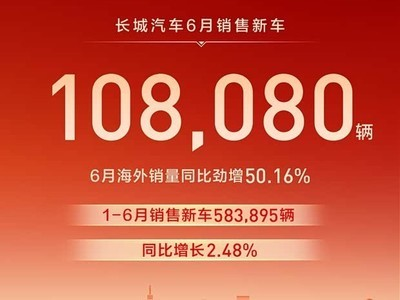
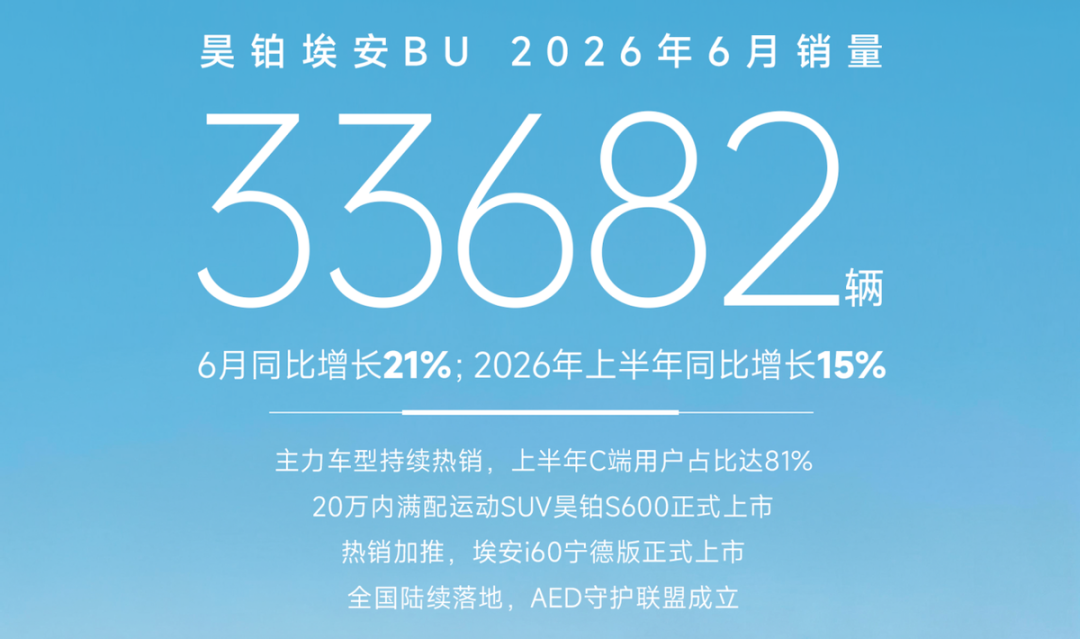
Traditional independent automakers showed uneven performance. Great Wall Motors sold a total of 108,080 units in June, down 2.36% year-on-year, as declining sales of Haval fuel-powered models dragged down overall performance. Although its Ora and Tank NEV sub-brands maintained stable volumes, they could not offset the decline in fuel-powered product lines. GAC Aion sold 33,682 units in June, up 21% year-on-year, with affordable pure electric home-use models maintaining stable demand in county-level markets, making it a resilient brand in the traditional automakers' NEV segment.
Additionally, Tesla China delivered 61,484 units in June, maintaining a stable production rhythm and relying on its mature Model 3 and Model Y models to sustain its share in the high-end pure electric market. Volkswagen Anhui delivered 2,423 units, up 120% year-on-year, but the overall base remained low, preventing it from achieving scale effects.
▍Shift from Scale Expansion to Comprehensive Strength and Profitability Competition
The negative impacts of the prolonged price war across the industry in the first half of 2026 were evident in June's delivery data. Competition logic has moved beyond merely comparing monthly sales volumes, with product technology, channel operations, overseas layout (global layout ), cost control, and profitability now collectively determining automakers' long-term viability. The sales growth disparities among automakers in June essentially reflect gaps in their comprehensive systemic capabilities.
Over the past two years, the industry widely adopted a "volume-at-the-expense-of-price" strategy, with most automakers boosting monthly deliveries through terminal price reductions and complimentary feature upgrades. While short-term data showed growth, this approach continuously compressed per-unit profit margins. An industry report released by AlixPartners on June 30 clearly stated that the three-year price war has entered a stage of diminishing marginal returns, with pure price reductions failing to stimulate new orders and instead intensifying consumer wait-and-see sentiment. The industry's competitive focus has officially shifted from sales rankings to financial profitability.
The cost advantages of leading vertically integrated automakers were fully evident in June. BYD's self-developed full industrial chain, covering batteries, motors, electronic control systems, and automotive-grade chips, buffers and hedges against cost pressures from upstream raw material price fluctuations. Even with terminal discounts on its models, the brand maintains stable profitability. Morgan Stanley estimates indicate that BYD's net profit for 2026 could exceed 38 billion yuan, with its complete industrial chain layout serving as the core defense against industry price competition.
Differences in overseas market layout (global layout ) directly drive growth disparities among automakers. Domestic auto exports rose 63% year-on-year in the first half of 2026, with overseas markets becoming the second growth engine for independent automakers. Industry projections suggest that total exports in the first half will approach 5 million units, with full-year overseas exports potentially reaching nearly 10 million units, setting a new record for domestic auto exports. Overseas markets provide stable growth, offsetting pressure from declining domestic retail sales. Most niche automakers focused solely on the domestic market lack this overseas growth buffer and face sustained pressure in domestic stock competition (existing market competition).
Combining the publicly released sales data of various automakers in June 2026 with market trends monitored by the CPCA and multiple consulting firms, the domestic passenger vehicle market has formed a stable structure dominated by NEVs, with fuel-powered vehicles continuously contracting. Market growth resources are concentrating among leading independent automakers, and industry polarization will continue to deepen. June, as a half-year closure point, saw short-term month-on-month sales rebounds driven by automakers' volume-chasing actions, but the overall domestic retail market remains in an adjustment phase.
Notably, nine departments including the Ministry of Commerce jointly issued the Notice on Several Measures to Cultivate and Expand Consumption in the Automotive Aftermarket, proposing 17 policy initiatives across six areas, including car modifications, RV camping, and auto racing, to stimulate vitality in the automotive aftermarket and foster new consumption formats and diverse scenarios.
In response, Cui Dongshu, Secretary-General of the National Passenger Car Market Information Joint Conference, stated on June 29 that these policy measures represent a long-term-oriented "traditional Chinese medicine" approach. While not as immediately impactful as short-term subsidies, their full effect, once realized, will inject sustained growth momentum into automotive consumption and even the broader national economy. The future Chinese auto market should not only enable consumers to "buy a good car" but also to "use and enjoy it well." This, he emphasized, is the true blue ocean of automotive consumption.
Layout 丨 Yang Shuo Image Sources: BYD, Leapmotor, NIO, Great Wall Motors, Aion, Qianku Network
-
![]()
Giants Enter the Arena One After Another: The Embodied AI Battle Commences
-
![]()
Is It More Profitable to Build 'Hands' for Robots Than 'Humans'?
-
![]()
Yunling Optoelectronics Accelerates Its Listing on the Beijing Stock Exchange: Secures 989 Million Yuan to Bolster Production of Computing Optoelectronic Chips
-
![]()
From Drill Bits to Optical Coatings: A 200-Billion-Yuan Behemoth Quietly Unveils a New Business Front!
-
![]()
New Energy Vehicle Growth Slows: Are 370 Million Existing Cars the Next Lucrative Market?
-
![]()
Is Baidu Now Fostering Its Own 'Yao Shunyu'?
-
![]()
NVIDIA Goes Wild! DeepSeek V4 Inference Costs Slashed by 80%
-
![]()
Preparing for the 6G Era: US Completely Shuts Down 2G Networks, China Unicom Initiates Gradual Decommissioning of WCDMA 3G Networks