Mercedes-Benz Advocates for Chinese Automobiles: Challenging U.S. 'Auto Exclusion of China'
 07/22 2026
 336
336
Lead-in
Introduction
If the righteous find support while the misguided stand alone, then the U.S.'s move to prompt Mercedes-Benz to advocate for Chinese automobiles raises the question: who will ultimately be left isolated?
The U.S. government has recently introduced legislation targeting Chinese investment, aiming to entirely exclude Chinese automobiles from the U.S. market.
This move has been widely dubbed the 'auto version of the Chinese Exclusion Act'—it disregards corporate governance principles, overlooks market contributions, and focuses solely on the nationality of shareholders.
Amid this wave of reverse globalization, the first to boldly say 'no' was not a Chinese automaker, but the German century-old luxury brand, Mercedes-Benz.
Rather than choosing silence to protect itself, Mercedes-Benz took the initiative to speak out in support of the Chinese automotive industry and for fairness and justice in the global supply chain.
Its message was unequivocal: the automotive industry is already deeply interconnected, and any crude 'exclusion of China' approach will ultimately harm all stakeholders.
'15% Threshold': Blatant 'Auto Exclusion of China'
The core provision of the bill is straightforward and overbearing: automakers with more than 15% ownership by Chinese entities are barred from selling connected vehicles in the U.S.
How does this fundamentally differ from the historical Chinese Exclusion Act targeting Chinese laborers? Both rely on nationality and ancestry to make presumptions of guilt.
Mercedes-Benz openly disclosed its ownership structure: BAIC holds approximately 9.98%, and Geely holds about 9.69%, totaling nearly 20%.
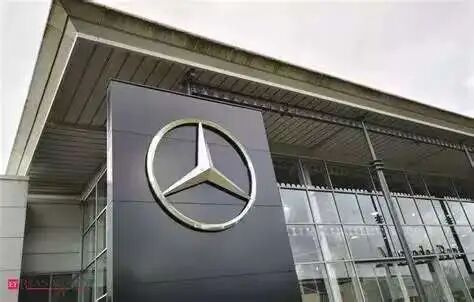
However, Mercedes-Benz emphasized that no single shareholder holds more than 10%, and no Chinese shareholder has a board seat or operational control.
From Mercedes-Benz's perspective, using simple ownership percentages to determine national security risks is neither scientific nor fair.
Even more absurdly, the bill sets a 25% threshold for parts and software suppliers, while imposing a 15% threshold on automakers—two discriminatory standards within the same supply chain.
Mercedes-Benz proactively called on Congress to either raise the automaker threshold to 25% or abandon numerical testing in favor of a comprehensive risk assessment.
This call, while seemingly seeking space for itself, is actually opening a door for all multinational automakers tied to Chinese capital—especially Chinese domestic brands.
Because once this 'exclusion of China' threshold is solidified, any future enterprise with technological or capital cooperation with China could face presumptions of guilt.
Mercedes-Benz's stance is clear: national security can be protected, but not under the guise of security to implement industrial racial segregation.
02 Mercedes-Benz Advocates for Chinese Automobiles
Mercedes-Benz's lobbying team has been highly active in Washington, but its demands extend beyond 'letting Mercedes-Benz off the hook.'
It repeatedly emphasized to lawmakers a key fact: over 11,000 U.S. employees rely on Mercedes-Benz factories for their livelihoods.
Its two factories in Alabama and South Carolina have produced over 5 million vehicles cumulatively, with a $4 billion investment expansion announced just this March.
Aren't these tangible 'U.S. interests' more persuasive than a mere ownership percentage?
Mercedes-Benz also pointed out that Volvo has already received an exemption, demonstrating the U.S. government's ability to conduct case-by-case assessments.
So why not institutionalize and transparentize this assessment mechanism, allowing all automakers to compete under fair rules?
Mercedes-Benz even stated bluntly: if markets are to be closed simply due to shareholder nationality, then automakers from Europe, Japan, and South Korea will all feel threatened.
Meanwhile, Chinese automakers are at the core of the global new energy supply chain—batteries, electric drives, software—everywhere is inseparable from China.
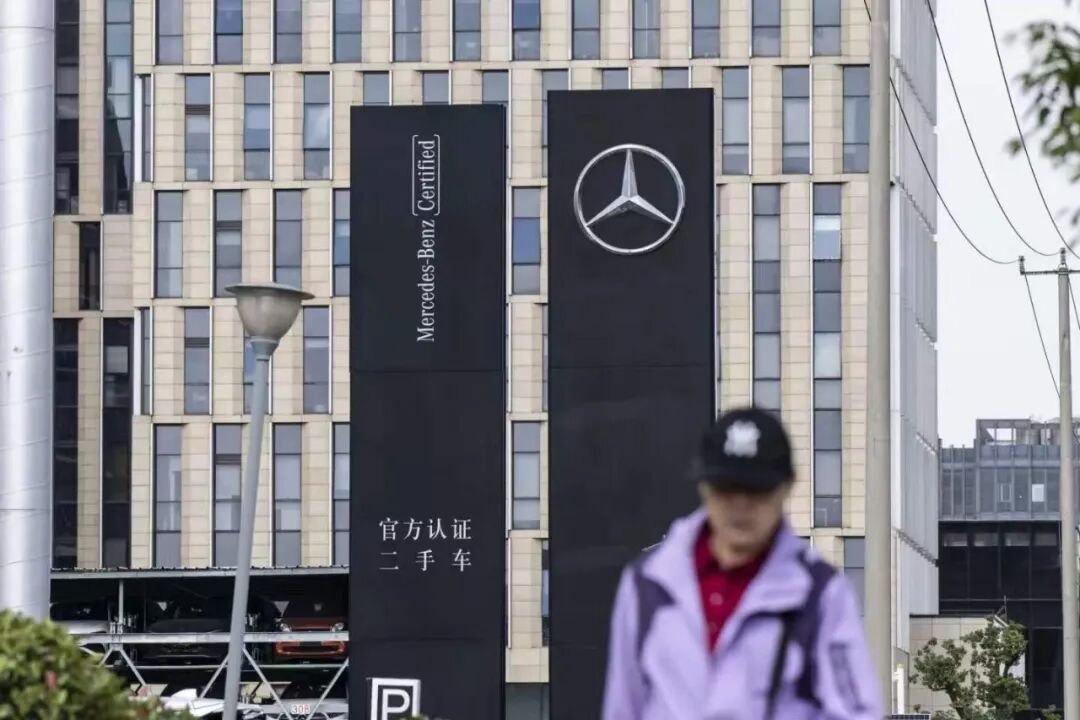
If Chinese automobiles are completely 'excluded,' European and U.S. automakers reliant on Chinese parts and technology will also suffer severe blows.
Mercedes-Benz's lobbying is essentially fighting for survival space for Chinese automobiles and for the interconnectedness of the entire industry.
It is telling Washington: Chinese automobiles are not enemies but an indispensable part of the global supply chain.
Discriminating against Chinese automobiles is discriminating against globalization itself.
03 2030 Deadline: The Last Window for Globalization's Call
If the bill passes, it will not take effect until 2030, providing a roughly three-and-a-half-year buffer period.
However, Mercedes-Benz warns that these three and a half years are not for 'decoupling' but for correcting the 'exclusion of China' mistake.
The U.S. market accounts for 23.4% of Mercedes-Benz's global revenue, making it the largest single market—a position that cannot be lost.
Meanwhile, the Chinese market is equally vital to Mercedes-Benz, with sales there still accounting for nearly 30% of its global total last year.
If the U.S. forcibly severs ties with Chinese capital, Mercedes-Benz will face the dilemma of 'choosing sides' between two major markets.
This is not just Mercedes-Benz's predicament but a nightmare for all globalized automakers.
Mercedes-Benz urges U.S. lawmakers to reconsider: dismantling the global supply chain will ultimately erode the competitiveness of U.S. domestic manufacturing.
Because China is not just a competitor but the world's largest parts supply base and a hub for new energy technology innovation.
Ignoring this reality will only drive up U.S. automotive manufacturing costs and harm consumer interests.
Mercedes-Benz's stance is not just for itself but for Chinese automobiles and the global automotive industry.
When the shadow of 'auto exclusion of China' looms large, the first to stand up is precisely the German giant once thought 'most likely to remain silent.'
It proves with actions: true globalized enterprises will not abandon principles for temporary self-preservation.
When Mercedes-Benz speaks out for Chinese automobiles, it is actually speaking for everyone—opposing the exclusion of China means opposing reverse globalization.
The outcome of this battle will determine the direction of the global automotive industry for the next decade.
And Mercedes-Benz has chosen to stand on the right side of history.
Editor-in-Charge: Shi Jie Editor: He Zengrong

THE END
-
![]()
Baidu Dazi's Ambitious Overtaking with 'Product-Centric' Upgrades
-
![]()
AI PC Is Becoming Obsolete! The Rise of AC: Do Agents Really Need Their Own Computer?
-
![]()
Times Are Changing: Domestic New Energy Vehicles Are Driving Traditional Luxury Brands to the Wall, Prompting BBA to Slash Prices En Masse for Survival
-
![]()
The Myth of Musk
-
![]()
Which Type of Talents Do Automakers Prefer to Promote: Science or Liberal Arts Graduates?
-
![]()
Why has OPPO's strategy been readjusted in less than three months?
-
![]()
New Models Falter: Over 700 New Cars in the First Half of the Year Struggle, Only 4 New Models Surpass 10,000 Units in Sales, Achieving Hot Sales | Mingjing Pro
-
![]()
22 Billion Yuan in Subsidies Rolled Out! 117,000 New Energy Heavy Trucks Sold in H1, Penetration Rate Tops 33%