The Battery Swap Dream of Mr. Pleasant Goat: Pursuing IPO Despite $198 Million in Losses
 07/22 2026
 533
533
No New Financing in Four Years
Author|Wang Lei
Editor|Qin Zhangyong
Do you know who created "Pleasant Goat and Big Big Wolf"?
Alpha Group, founded by Cai Dongqing in 1997, started with plastic toys and built China's most successful animation IP matrix. It went public in 2009 and is known as the "first animation toy stock."
In 2016, Cai did something unexpected—he ventured into battery swapping. Not as a hobby, but with real money. He co-founded Aulton New Energy with Zhang Jianping, a veteran in battery swap technology, diving into this capital-intensive sector where "every station built means a loss incurred."
A decade later, Aulton New Energy has submitted its second application to list on the Hong Kong Stock Exchange, this time aiming to be the "first battery swap stock."
The first attempt was in December 2025. The application was submitted, and after six months of waiting, it failed to pass the hearing. On July 19, Aulton submitted again, with CMB International remaining as the sponsor.
Will it pass this time?
To be honest, after reviewing the numbers in the prospectus, the question may not be "will it pass," but rather "what happens after it passes?"
01 Nearly $198 Million in Losses Over Three and a Half Years
It's widely known that the battery swap sector remains a capital-intensive "money pit." Thus, it's not surprising that larger scale equates to greater losses.
Judging from its second-submitted prospectus, this holds true.
First, let's look at core performance. From 2023 to 2025, Aulton New Energy's revenue was $1.63 billion, $1.3 billion, and $954 million, respectively, with year-over-year declines worsening each year—19.8% in 2024 and 26.9% in 2025. Over three years, revenue shrank by 41.4%.
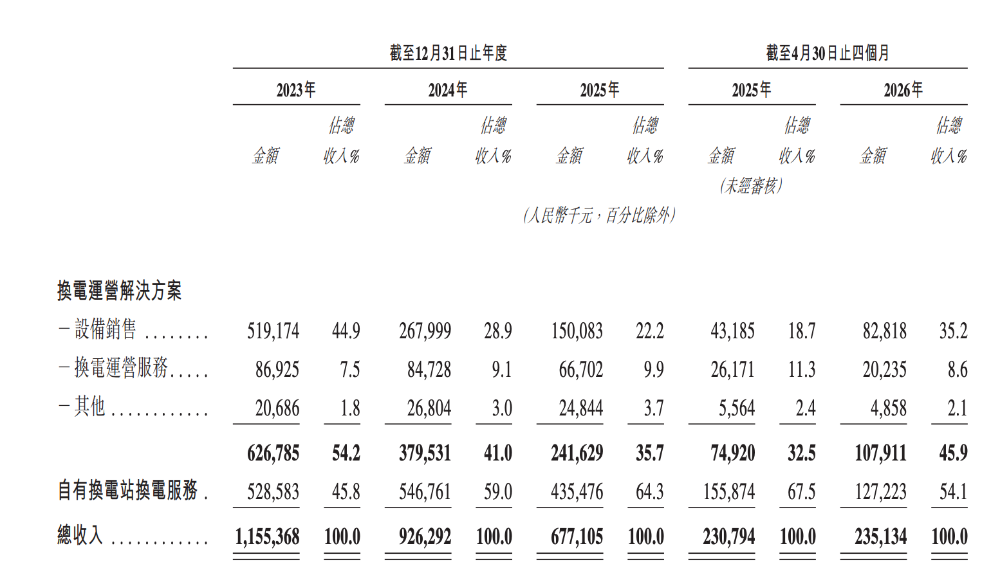
In particular, its former core business, battery swap equipment sales, has significantly declined, dropping from $732 million in 2023 to $212 million in 2025, a cumulative decline of over 70% in three years, with revenue share falling from 67% to 17%.
Even more glaring than the revenue decline is the gross margin. From 2023 to 2025, Aulton recorded gross losses of $56.2 million, $48.1 million, and $47.8 million, respectively, with gross margins of -3.4%, -3.7%, and -5.0%. Three years of negative and worsening gross margins inevitably led to losses.
Its net losses were $924 million in 2023, $591 million in 2024, and $433 million in 2025. Including the $12.9 million loss disclosed for the first four months of 2026, the company has accumulated $1.98 billion in losses over nearly three and a half years.
The net loss narrowed from $924 million to $433 million, seemingly improving, but this was largely due to the elimination of non-cash items after the termination of earnout clauses. In 2023, $397 million of the $924 million loss was due to changes in the book value of redeemable liabilities, with $171 million still present in 2024 and zero in 2025.
This means the significant reduction in losses was largely an accounting result of the disappearance of non-cash items after the termination of earnout clauses, not actual profitability, indicating no substantial improvement in Aulton New Energy's losses over three years.
Despite poor operating data, Aulton New Energy's industry position is not weak.
According to the prospectus, the 2025 market size for battery swap station operation services in China was approximately $26.1 billion, with Aulton ranking third with about $708 million in revenue. While the prospectus does not name the top two, they are It's not difficult to guess —NIO and CATL (Chocolate Swap).
However, it's worth noting that while the rankings are close, the top two companies achieved revenues of approximately $4.37 billion and $2.12 billion, respectively, showing a clear gap in scale.
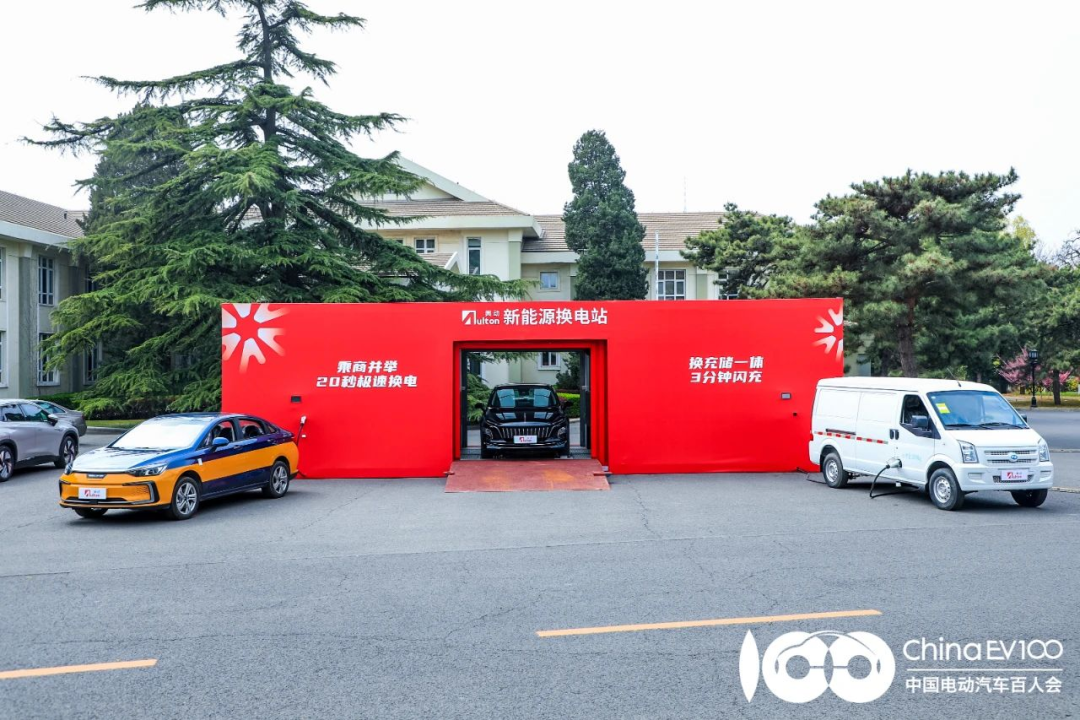
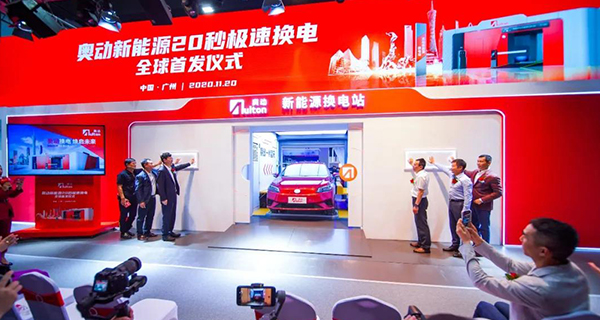
Aulton's advantage lies in its ability to perform a battery swap in just 20 seconds, the fastest in the industry, but speed has not translated to scale. According to data cited from China Insights Consultancy in the prospectus, the market size for battery swap station operation services in China expanded from $2.12 billion in 2020 to $26.1 billion in 2025, an 11-fold increase in five years, yet Aulton's revenue moved in the opposite direction during the same period.
However, a turning point appears in the latest prospectus. Unlike the first submission, the latest one includes operating data for the first four months of 2026:
In the first four months of 2026, Aulton's revenue was $332 million, showing only a slight year-over-year increase of 1.7%, but it finally recorded a gross profit of $581,000, reversing the $1.95 million gross loss in the same period last year, with a gross margin of 1.8% and positive operating cash flow of $153.4 million.
Although the net loss for the same period was still $12.9 million, both losses and cash flow showed marginal improvements, reflecting Aulton's transformation results as it began demonstrating its ability to create operating space through an asset-light structure after scaling back its self-operated network.
This may be why Aulton New Energy chose to submit its application again.
02 A Radical Transformation
When the same battery swap technology is applied to different asset structures, profitability can vary significantly. Thus, Aulton New Energy has begun intentionally pursuing another path—that of a battery swap service provider.
In terms of revenue structure, Aulton's income mainly comes from two sources: self-operated battery swap station services, accounting for 64% of revenue in 2025.
This involves building and operating its own stations, serving B-end battery swapping, which accounted for 64.3% of revenue in 2025. However, from 2023 to 2025, the gross margin was -16.2%, -20.1%, and -21.4%, respectively, indicating this as a major source of losses, with Aulton effectively subsidizing about 20% of the cost per swap.
The other segment is battery swap operation solutions, covering battery swap equipment sales and third-party station hosting (managed operation) services—selling battery swap stations to local urban investment and energy companies, and battery swap modules to automakers and battery manufacturers.
Additionally, Aulton can provide managed operation services for battery swap stations, with an operating service gross margin as high as 62% in 2025. For the first four months of this year, the gross margin for managed operation services was 58.4%, while equipment sales had a gross margin of 17.9%.
Which is more profitable? It's clear.
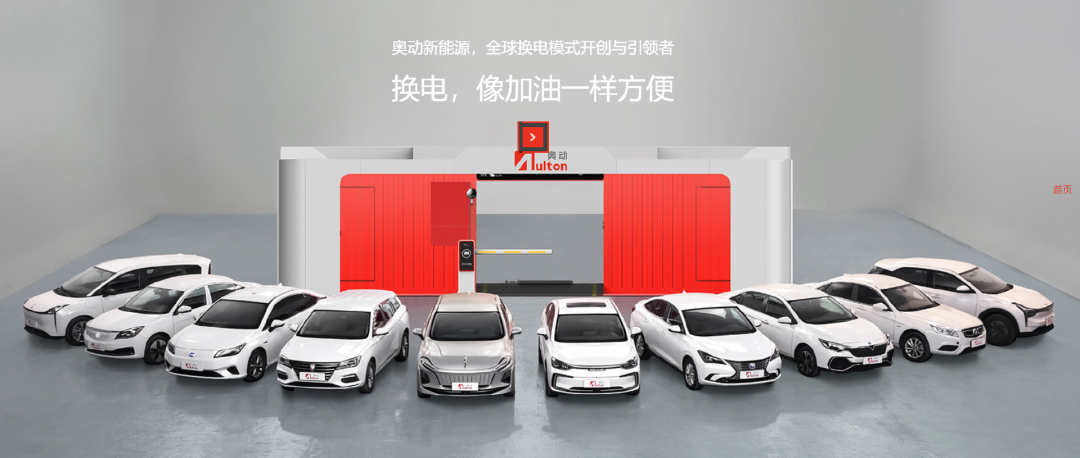
Moreover, Aulton New Energy has been intentionally scaling back its self-operated network. The prospectus shows that the number of self-owned battery swap stations decreased from 321 at the end of 2023 to 214 by the end of April 2026, while the number of third-party stations connected to its smart energy service platform increased from 231 to 317 during the same period, clearly indicating a strategic shift from capital-intensive to asset-light operations.
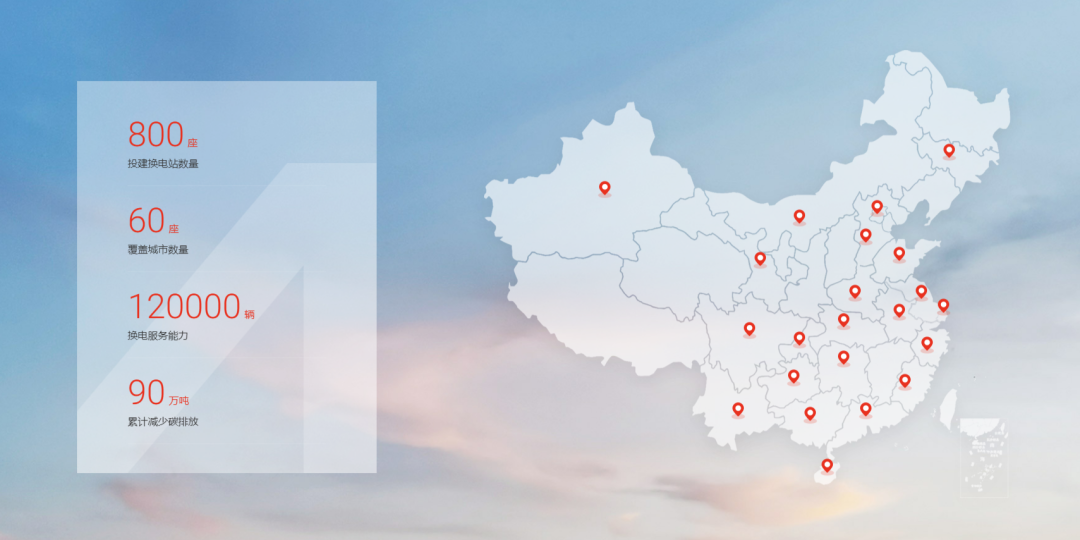
As of April 2026, Aulton New Energy's platform had 531 connected battery swap stations, comprising 214 self-owned, 79 managed, and 238 partnered stations, with over 140,000 registered vehicles and over 160,000 connected batteries, covering more than 60 cities and regions.
Under the self-operated model, Aulton bears the costs of battery swap equipment, site leasing, battery configuration, operation and maintenance, and depreciation. Even slight underutilization of stations can cause fixed costs to erode gross margins.
In contrast, the managed operation model shifts major asset investments to clients, with Aulton providing operation, system, and technical services. While revenue volume may be smaller, profit margins are significantly higher.
Although Aulton openly states in the prospectus's risk disclosures that it expects to remain unprofitable for the full year of 2026, as Māori contributions from equipment sales, operation services, and new application scenarios "will still not fully cover operating expenses,"
the signal conveyed by Aulton New Energy's second submission is clear: not only to use external financing to support business structure adjustments but also to secure a longer runway for its strategic transformation.
03 Why Is the Battery Swap Business So Challenging?
Behind the transformation lies a persistent issue inherent to the battery swap model.
First is the extremely high construction cost of battery swap stations, with rigid expenses like land leasing, power procurement, and equipment depreciation. Once a station is built, if vehicles don't come for swaps, it's just money burning away.
Even more critical is the rapid proliferation of 800V high-voltage ultra-fast charging.
Previously, the core selling point of battery swapping was "speed"—a 3-minute swap, ten times faster than charging. But now, ultra-fast chargers can reach 80% charge in 10-15 minutes, narrowing the time advantage enough that it's no longer a decisive factor for private car owners.
Ultra-fast charging is encroaching on the private car market, forcing battery swapping to retreat toward commercial vehicles.
Taxis and ride-hailing vehicles do need speed—commercial passenger vehicles average 14 swaps per week, compared to just 1.5 for private cars. However, commercial vehicles are highly price-sensitive, with swap fees dropping from $4.80 to $3.10, squeezing profit margins to near non-existence.
This is the crux of the problem: when targeting private cars, ultra-fast charging competes; when targeting commercial vehicles, price wars lead to losses.
From Aulton New Energy's model, it's essentially a "crossover" gamble.
Cai Dongqing shifted from animation toys to new energy battery swapping, investing billions over a decade, with revenue shrinking and stations opening only to close again. In the first four months of 2026, Aulton finally clung to a straw of positive gross margin, yet still expects to be unprofitable for the full year.
Currently, the battery swap sector still exists, and demand remains, but the money has run out.
Compared to rivals, CATL has batteries, NIO has cars—what does Aulton have? It has over 2,000 patents, 20-second swap technology, partnerships with 16 automakers, and 531 stations.
But will Hong Kong investors buy it?
Last year's failed submission already provided the market's answer.
Now, with the second submission, will the market give a different response?
-
![]()
Following the Explosive Success of Kimi k3, Moonshot AI is Reportedly in Final IPO Financing Discussions
-
![]()
Baidu Dazi's Ambitious Overtaking with 'Product-Centric' Upgrades
-
![]()
AI PC Is Becoming Obsolete! The Rise of AC: Do Agents Really Need Their Own Computer?
-
![]()
Times Are Changing: Domestic New Energy Vehicles Are Driving Traditional Luxury Brands to the Wall, Prompting BBA to Slash Prices En Masse for Survival
-
![]()
The Myth of Musk
-
![]()
Which Type of Talents Do Automakers Prefer to Promote: Science or Liberal Arts Graduates?
-
![]()
Why has OPPO's strategy been readjusted in less than three months?
-
![]()
New Models Falter: Over 700 New Cars in the First Half of the Year Struggle, Only 4 New Models Surpass 10,000 Units in Sales, Achieving Hot Sales | Mingjing Pro