When Smart Cars Go Awry, Don’t Just Point Fingers at Suppliers
 07/22 2026
 460
460

Suppliers Cut Corners, OEMs Pay the Price.
Original content from AutoPix (ID: autopix)
The chassis of the XPENG X9 was designed to be one of the smartest features of the vehicle.
It scans the road surface thousands of times per second, adjusts the suspension 200 times per second, and remembers previously encountered potholes via the cloud, pre-adjusting the suspension so that occupants hardly feel any bumps.
During the launch event, engineers proudly called it a "thinking chassis," allowing a large MPV over 5.3 meters long and weighing more than 2.5 tons to smoothly handle potholes.
This summer, some X9s were not halted by road potholes but by malfunctions in their air suspensions. Worse still, no one, including XPENG itself, could pinpoint exactly which component failed first.
01 The Malfunction Begins with a Single Part
In early July, amidst sweltering temperatures nearing 40 degrees Celsius in Chongqing, some XPENG X9s began to experience issues. First, the dashboard displayed an air suspension alarm, followed by a hissing sound from the chassis, and the vehicle's body visibly sank to one side. In severe cases, the wheels nearly touched the wheel arches within minutes, leaving a two-ton MPV immobilized by its own air suspension.
Similar incidents quickly emerged in owner groups and on social media. Some owners voiced their concerns through the 400 hotline and quality complaint platforms, demanding transparency on affected batches, the root cause of the malfunction, and proactive checks or replacements of at-risk components.
Initially, XPENG's customer service attributed the collapses to frequent adjustments of the air suspension in high temperatures, causing the compressor to overwork and trigger overheat protection, temporarily halting operation. Some vehicles could recover after parking and cooling down.
This explanation, while technical, overlooked a critical issue.
The air spring maintains the vehicle's height using compressed air sealed within the chamber, not through continuous compressor operation. The compressor only adds air to raise the vehicle, compensate for load, or replenish leaked air. Once the vehicle reaches the target height, the compressor stops, and the chamber passively supports the vehicle, much like a fully inflated tire that doesn't need constant air supply.
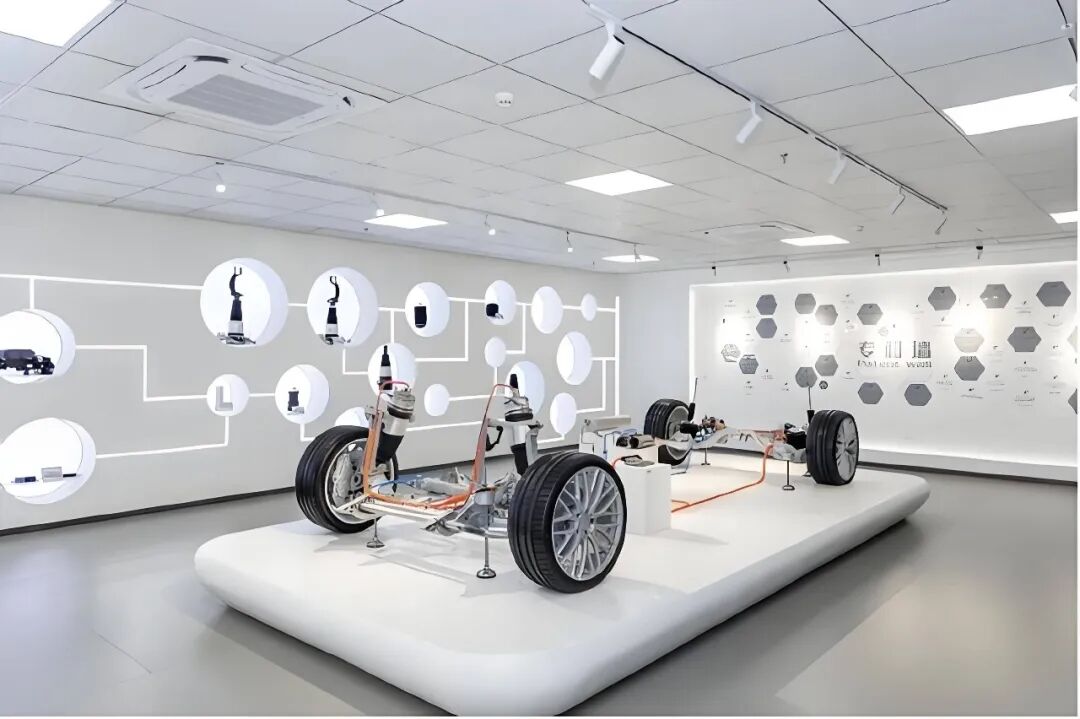
Therefore, if the compressor enters overheat protection, it doesn't cause the air already sealed in the chamber to disappear. In a well-sealed vehicle, a stopped compressor would at most prevent the vehicle from rising further but shouldn't cause it to collapse to the point where the tires touch the ground.
In other words, compressor overheating explains why the vehicle couldn't replenish air but not how the air was lost in the first place.
A few days later, faced with inquiries from the Economic Information Daily, XPENG's official customer service provided further details.
After investigation, it was found that variations in the parts supplier's production process led to slow air leaks in the air spring chambers of some vehicles used for extended periods in high-temperature environments. The shift from "compressor shutdown" to "slow air leak" confirmed that leaks were indeed occurring.
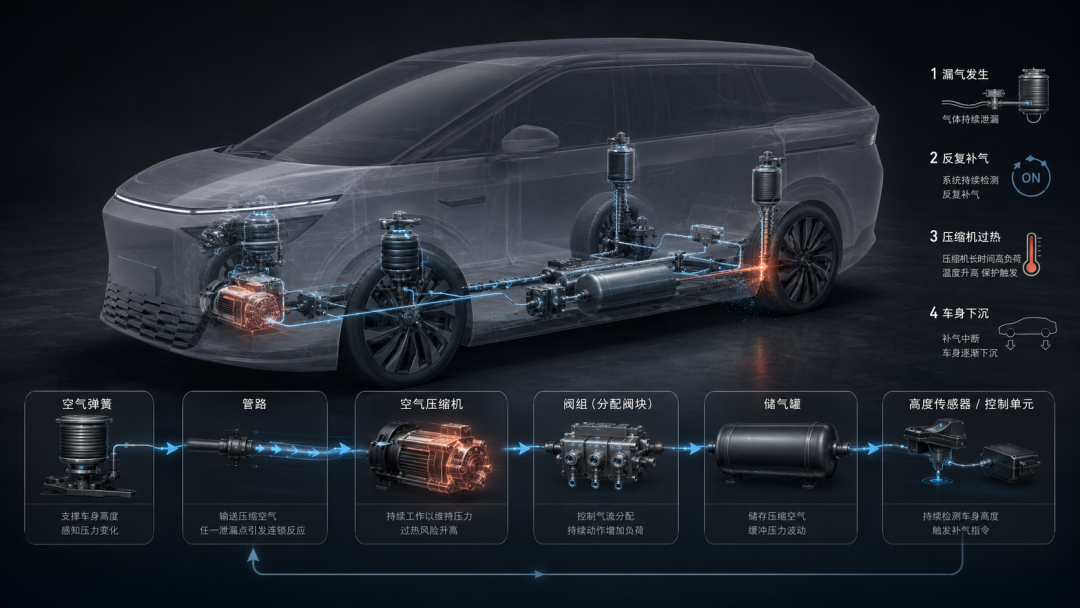
Combining the two explanations, we can infer a more complete chain of causation. A minor pressure loss occurred somewhere, the vehicle height sensor detected the sinking body, and the system repeatedly requested air replenishment, forcing the compressor to work at high frequency. The high temperatures in Chongqing made it difficult for the compressor to dissipate heat, eventually triggering overheating protection and completely losing its air replenishment capability. Meanwhile, the initial leak remained unaddressed, causing the vehicle to continue sinking.
If this chain is correct, compressor overheating wasn't the first failure but the second one caused by the air leak.
In fact, in air suspension maintenance experience, the compressor's overheating protection logic is designed to prevent it from burning out while trying to inflate a leaking airbag.
While a single faulty part may have been the culprit, what ultimately led to some users experiencing a "complete vehicle stall" could be the cascading effects of the entire system responding to the fault.
02 Responsibility Doesn't Stop at the Supplier
Once the air leak was acknowledged, blame quickly shifted to the air springs, particularly their chambers.
Some owners uncovered a clue: the X9's air springs were made by domestic supplier Baolong Technology.
Although the supplier has not been officially confirmed, it's not without context. Starting in 2023, XPENG explicitly included supply chain restructuring and cost reduction in its new round of operational adjustments. When announcing the SEPA (Smart Electric Platform Architecture), XPENG proposed reusing 80% of the architecture's components across models to achieve economies of scale and reduce costs.
At the same year's supplier conference, He Xiaopeng proposed addressing quality, cost, and supply assurance issues around the SEPA architecture by 2026 and having high-quality suppliers cover multiple or even most models. By the end of that year, XPENG had explicitly stated that as the "supply chain system continued to optimize," the effects of large-scale cost reductions were beginning to materialize. The domestic supply chain was a crucial part of this cost-cutting effort.
Over the past two years, domestic air suspension suppliers have rapidly risen, and plastic-welded air chambers have begun to be widely used in domestic dual-chamber air springs. They are lighter, cheaper, and easier to manufacture complex primary and secondary chambers and internal air passages, making them an important technological path for the rapid adoption of air suspensions.
Thus, when the X9 began experiencing concentrated air leaks, consumers easily connected the dots.
But this narrative soon faced pushback from another air suspension supplier, Konghui Technology.
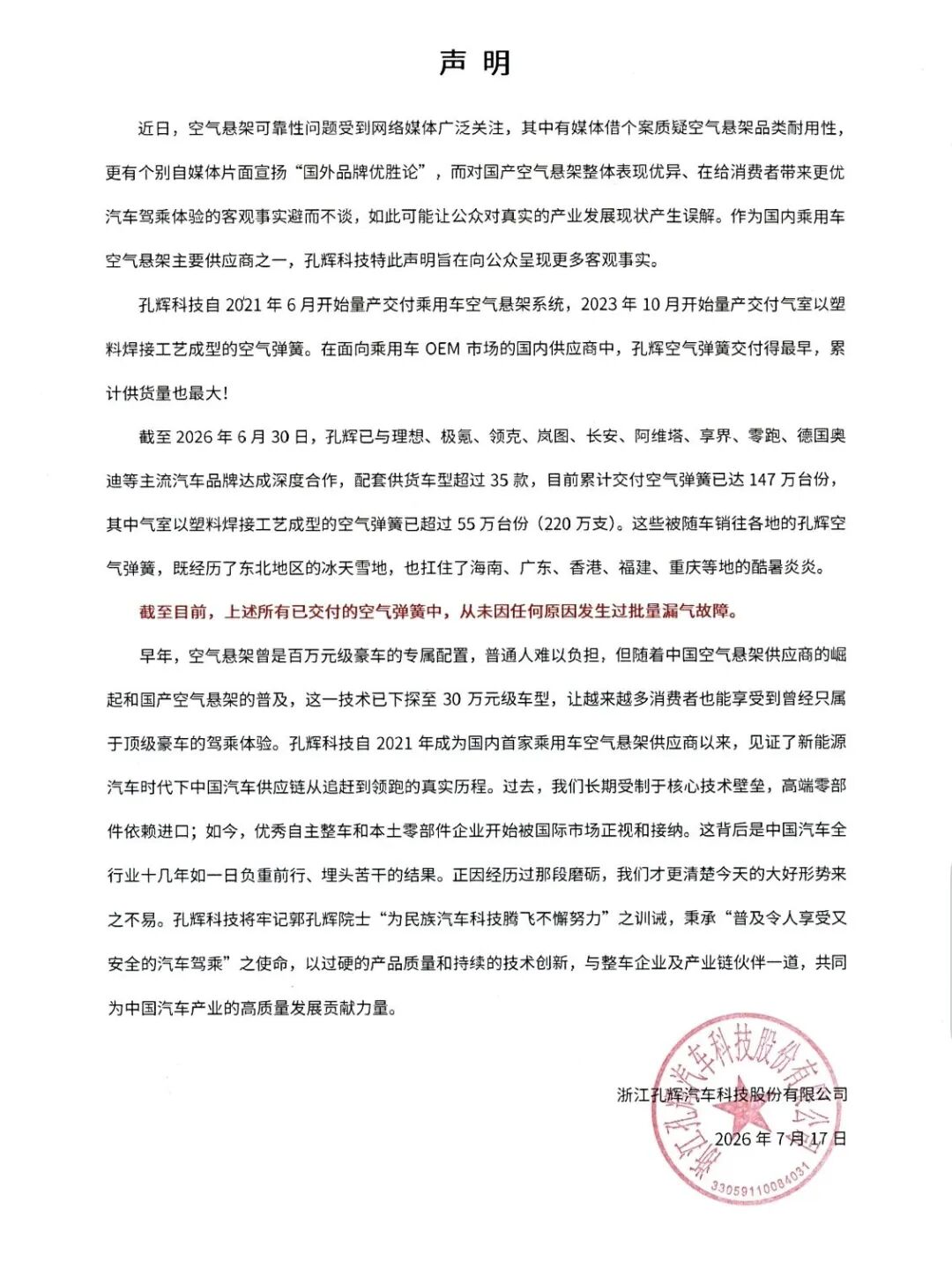
On July 17, Konghui issued a statement defending a process—the use of plastic welding to form air spring chambers. It claimed that this technology had delivered over 550,000 units, installed in vehicles operating in various climates from the severe cold of Northeast China to the sweltering heat of Hainan, Guangdong, and Chongqing, without any batch leaks occurring.
The statement listed a long string of co-branded (partner brands)—Li Auto, Zeekr, Lynk & Co, Changan, Avatr... but not XPENG.
In fact, whether the "process variations" mentioned by XPENG's official representative referred to the air spring chambers has not been confirmed.
The original response stated, "process variations in the parts supplier's production led to slow air leaks in the air spring chambers of some vehicles," attributing the process variations to the "parts supplier" without specifying which part.
"The air spring chambers may experience slow air leaks" does not directly equate to "the chambers themselves are leaking."
An air suspension is essentially a closed high-pressure air circuit. Air is generated by the compressor, distributed via the air reservoir system and valve blocks, and then enters each air spring through air pipes and connectors. Once the vehicle reaches the target height, the valves close, locking the pressure in the corresponding chambers.
If any position along this pressure boundary loses its seal, the result could be a gradual drop in pressure within the chambers and a sinking vehicle body.
Therefore, in professional air suspension maintenance, "vehicle sinking" never leads to checking only the air springs.
For example, in a guide we reviewed from ZF Friedrichshafen AG, a complete diagnostic scope includes the air springs, compressor and dryer, air pipes and valves, height sensors, and suspension control module. It specifically warns that seeing air leaks in the air springs or compressor failures should not lead to replacing only the visibly faulty parts, as compressor failures are often consequences of unresolved leaks or sensor abnormalities.
The fault list provided by air suspension supplier Arnott to maintenance personnel is even more direct: for a system experiencing pressure loss, the air springs, valve blocks, air pipes, and connectors must all be checked simultaneously. A compressor being continuously overworked often indicates leaks elsewhere in the system. Even a seemingly insignificant quick-connect fitting, if installed at the wrong depth or tightened improperly, can become a source of leaks.
This means the information truly lacking for the X9 is where the air is escaping.
Different failure modes could help further narrow down the leak source, but this requires diagnostic logs, pressure and vehicle height data from the faulty vehicles, and large-scale analysis of failed components. These are precisely the most missing parts in the currently available public information.
Notably, the latter category of issues points not just to a single supplier but to the vehicle's overall integration.
If most faulty vehicles sink on one side, the shared compressor is unlikely to be the cause, and suspicion naturally falls on the air springs, piping, or solenoid valves on that side. If the entire vehicle sinks slowly but recovers after cooling, the shared air supply unit, reservoir, and control strategy become more suspect.
But making such distinctions requires diagnostic data from the faulty vehicles and a large-scale investigation. These are precisely the explanations missing from XPENG's extended warranty plan.
XPENG did not ignore the issue. On July 15, it apologized in its official community and extended the warranty for the X9's front air suspension system—including the air spring assembly, air supply unit, solenoid valve box, and air reservoir—from the original 5 years or 120,000 kilometers to 8 years or 160,000 kilometers, transferable to subsequent owners in second-hand sales.
In the industry, air suspension warranties typically range from 3 to 5 years, so an 8-year warranty does exceed conventional practice. However, this solution is a post-facto cost coverage and does not answer which vehicles were at risk before the malfunction, where the leaks were, or whether proactive checks were necessary.
Thus, until the true leak sources and failure mechanisms are disclosed, the outside world can only continue to speculate. Plastic welding, domestic air suspensions, supplier cost-cutting, and even all models adopting similar solutions have been dragged into this controversy.
Suppliers can prove whether their parts are qualified, but only the OEM can explain what these parts went through before and after being installed in the X9.

This article is original content from AutoPix (autopix). Unauthorized reproduction is prohibited.
-
![]()
Following the Explosive Success of Kimi k3, Moonshot AI is Reportedly in Final IPO Financing Discussions
-
![]()
Baidu Dazi's Ambitious Overtaking with 'Product-Centric' Upgrades
-
![]()
AI PC Is Becoming Obsolete! The Rise of AC: Do Agents Really Need Their Own Computer?
-
![]()
Times Are Changing: Domestic New Energy Vehicles Are Driving Traditional Luxury Brands to the Wall, Prompting BBA to Slash Prices En Masse for Survival
-
![]()
The Myth of Musk
-
![]()
Which Type of Talents Do Automakers Prefer to Promote: Science or Liberal Arts Graduates?
-
![]()
Why has OPPO's strategy been readjusted in less than three months?
-
![]()
New Models Falter: Over 700 New Cars in the First Half of the Year Struggle, Only 4 New Models Surpass 10,000 Units in Sales, Achieving Hot Sales | Mingjing Pro