Xiaomi Shakes Up the Extended-Range Vehicle Market! Li Auto Fights Back with Proprietary Chips, While 'Budget Li Auto' Innovates to Stand Out
 08/04 2026
 560
560
Ultimately, the strength of a product, regardless of its price, is paramount.
Can 'Li Auto' and its 'Budget Version' withstand the challenge posed by Xiaomi Pengcheng's premium model, priced at 299,900 yuan?
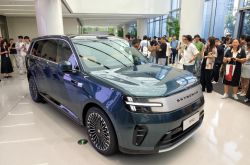
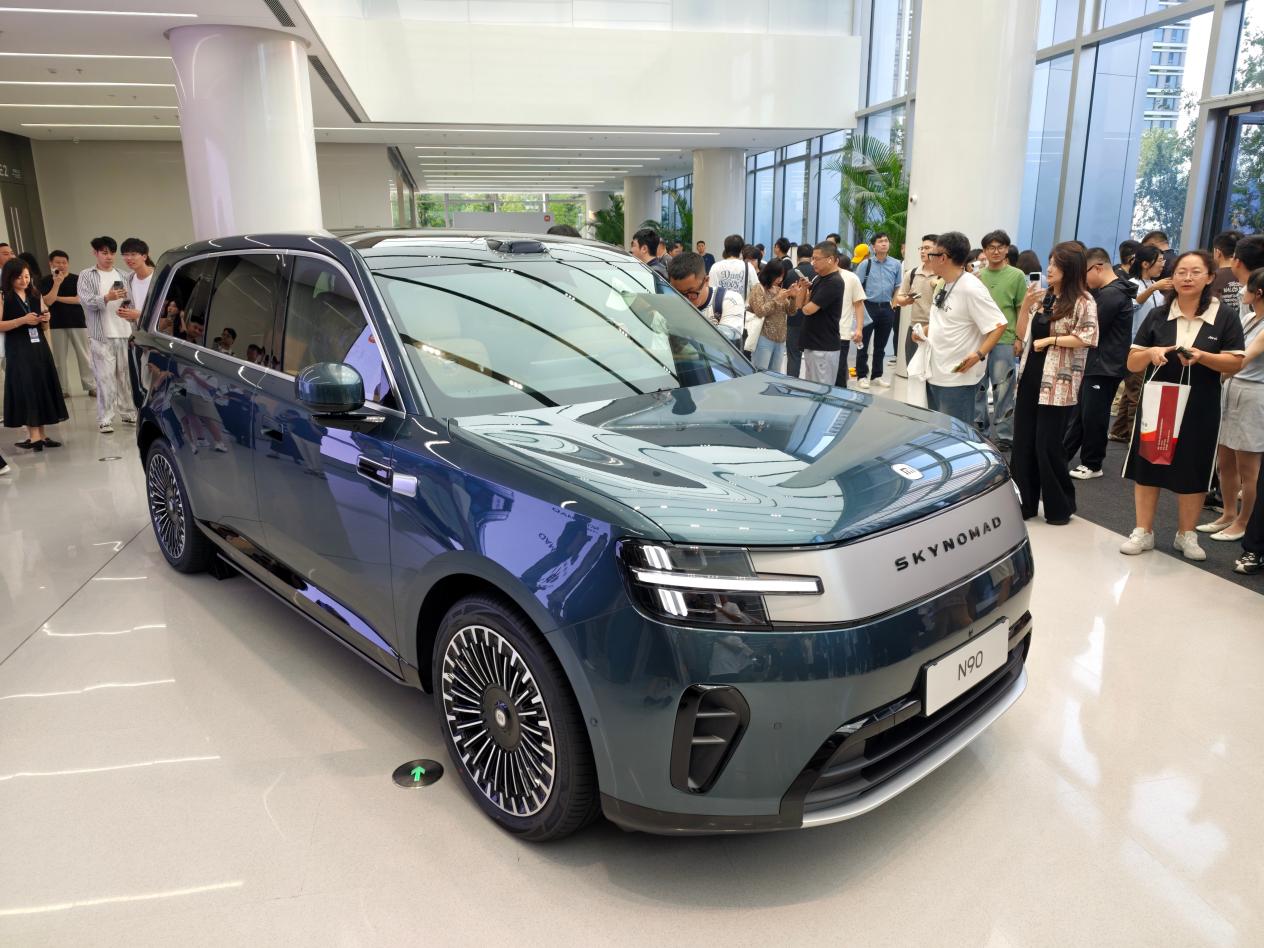
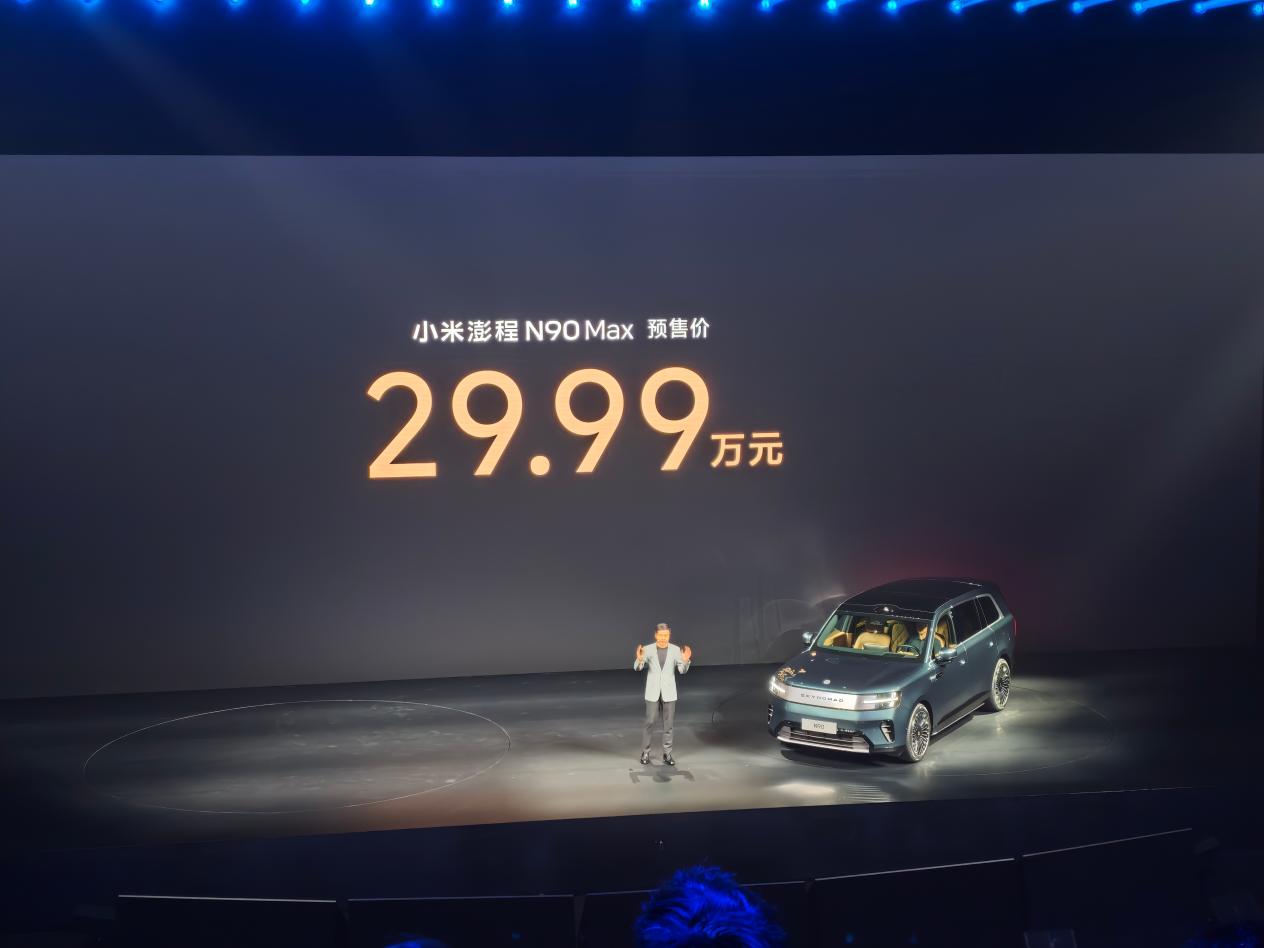
At the Xiaomi Pengcheng technology unveiling event on July 30th, the announcement of pre-sale prices for the N90 Max at 299,900 yuan and the N70 Max at 259,900 yuan sent shockwaves throughout the automotive industry.
(Image Source: Captured by Dianchetong)
Among those most impacted are large extended-range SUVs that prioritize space and comfort, notably the 'Li Auto' and its 'Budget Version'.
In the current landscape, with the steady rise in electric vehicle adoption and the overall contraction of the extended-range SUV market, how will Xiaomi Pengcheng's entry disrupt the status quo? What transformations lie ahead for this vehicle category?
Judging by the public response following Xiaomi Pengcheng's technology event, the pre-sale prices of the two models certainly exceeded consumer expectations.
After all, Xiaomi Automobile has established a premium brand image with its SU7 and YU7 series. Given the pricing strategy of these models, consumers naturally anticipated higher prices for the Pengcheng lineup.
Thus, when the N90 Max's price of 299,900 yuan flashed on the screen at the launch, the surprise it evoked was reminiscent of the iconic 1999 yuan price tag when the Xiaomi 1 first debuted.
(Image Source: Captured by Dianchetong)
Consequently, despite the Pengcheng N70 and N90 models utilizing a 400V platform, lacking rear-wheel steering, and sourcing batteries from suppliers like CALB, these perceived shortcomings were largely overshadowed by the pricing frenzy.
This frenzy is also mirrored in the data from offline stores.
According to the 72-hour frontline data report on Xiaomi Pengcheng N70/N90 by @Che Fans, following the pre-sale launch, Xiaomi Automobile stores witnessed an average of 130-150 new orders, a 300% surge in store visits, with 80% of customers drawn in by the Pengcheng models.
From a demographic perspective, Pengcheng's customers are predominantly males aged 40-43, primarily seeking trade-in options. These are users who own gasoline vehicles, are considering switching to new energy vehicles, and prioritize space, configuration, and price.
This demographic overlap significantly with users of family-oriented extended-range SUVs.
Regarding the models being compared, the choices are diverse, with the Li Auto L8, AITO M7/8, XPENG GX, and NIO ES8 each accounting for 10%, and 30% of users having no specific comparison model in mind.
In essence, a considerable number of users are weighing their options against popular extended-range SUVs, while some, previously unfamiliar with this segment, are placing orders based solely on Xiaomi's brand and Pengcheng's pricing.
This underscores a critical issue: Xiaomi Pengcheng is not only encroaching on the market share of 'Li Auto' and its 'Budget Version' but is also luring away potential customers of extended-range SUVs.
So, how should 'Li Auto' and its 'Budget Version' counter Xiaomi's aggressive advance?
This year's premium extended-range SUVs, whether from Li Auto or AITO, are undergoing significant technological overhauls.
It is these technological advancements and upgrades that have created a generational divide between these brands and Xiaomi Pengcheng, establishing a technological barrier to fend off Xiaomi's onslaught.
The most pivotal technological upgrade is undoubtedly the adoption of 800V architecture.
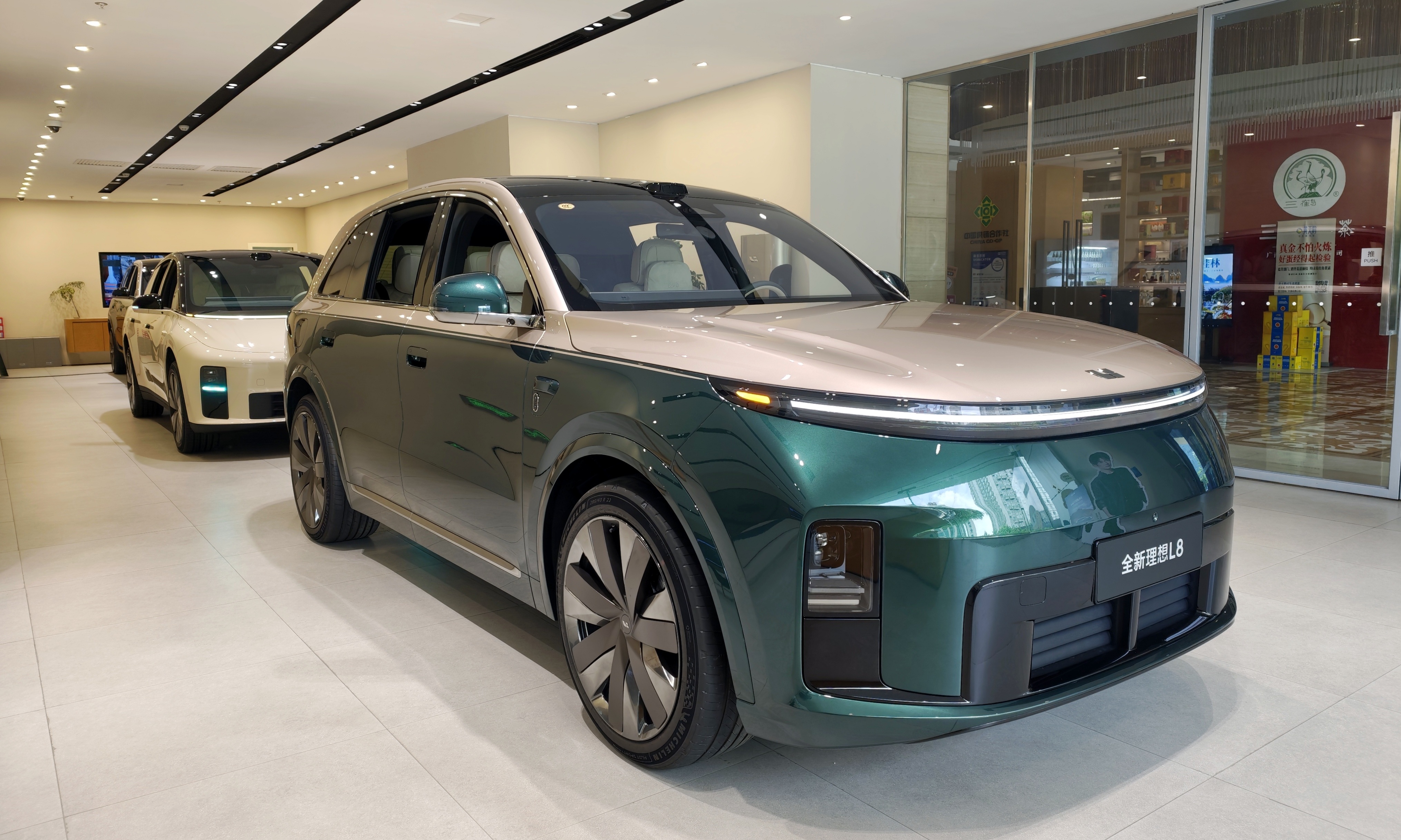
The newly launched Li Auto L9, Li Auto L8, and the updated AITO M9 extended-range versions all feature 800V architectures. Beyond faster charging, both brands have leveraged the 800V platform to enhance suspension intelligence.
Li Auto, for instance, has equipped the L9 Livis and L8 Livis with 800V fully active suspensions, comprising four 800V hydraulic pumps, dual-valve CDC shock absorbers, and air springs, capable of generating over 10,000N of single-wheel active support force.
(Image Source: Captured by Dianchetong)
Moreover, these models' 800V active suspensions have eliminated traditional anti-roll bars, enabling complete four-wheel independent decoupling, with suspension damping response as swift as 5 milliseconds, effectively mitigating road impacts while balancing comfort and handling.
The new AITO M9 also boasts a fully active suspension, with the Ultra version available as an option and the Ultimate Leading Extended version coming standard.
According to AITO's official description, this fully active suspension offers a maximum lifting force of 11,451N, a fastest response speed of 400mm/second, and a height adjustment range of 180mm. Coupled with the road preview system 2.0, it enables predictive road condition adjustments.
Beyond chassis upgrades, the enhancement of intelligent driving assistance is also a focal point.
Li Auto's new models are all equipped with self-developed Mach M100 chips, utilizing a 5nm automotive-grade process and delivering a single-chip computing power of 1280TOPS. The Livis versions of the L9 and L8 are equipped with two Mach M100 chips, while other models feature a single chip.
At the perceptual level, the Livis versions of the L9 and L8 are even outfitted with a perceptual hardware suite comprising one ATL-P high-performance lidar, three solid-state variable-focus lidars, and seven 8-megapixel cameras, significantly enhancing perceptual capabilities compared to previous models.
The new AITO M9, on the other hand, comes standard with a 6-lidar system, including one 896-line main lidar, four high-precision solid-state blind-spot-filling lidars, and one in-cabin lidar, markedly improving perceptual capabilities over the previous 4-lidar setup.
Additionally, the new AITO M9 has upgraded to Huawei's ADS 5 assisted driving system, equipped with the WEWA 2.0 world behavior model, enhancing its ability to navigate complex road conditions and predict risks.
Overall, whether it's Li Auto or AITO, the hardware upgrades of their flagship models have created a significant gap with Xiaomi Pengcheng. Even if Xiaomi Pengcheng's pricing falls within the 200,000-yuan range, it is unlikely to significantly impact the sales of these two brands' flagship models. Instead, models that have not undergone similar iterations may face some repercussions.
For the extended-range SUV segment, the models most vulnerable to Xiaomi Pengcheng's impact are the 200,000-yuan-class extended-range/plug-in hybrid SUVs with similar pricing.
For instance, models like the Leapmotor D19 and XPENG GX may be particularly susceptible. However, compared to Xiaomi Pengcheng, these models still possess unique selling points.
For example, the Leapmotor D19 extended-range version comes standard with 800V, four-wheel drive, lidar, and other configurations at a price range of 219,800-239,800 yuan. Even the 239,800 yuan version is equipped with an 80.3-kWh large battery, dual-chamber air suspension, power-absorbing doors, zero-gravity seats, and other features. Its overall price range is expected to be lower than that of the Xiaomi Pengcheng N90, and it offers configurations that Xiaomi Pengcheng lacks, enabling a more nuanced competition.
Although the XPENG GX's overall price range is higher than that of the Xiaomi Pengcheng N90, it is equipped with features such as a wire-controlled chassis and rear-wheel steering. Moreover, its intelligent driving assistance hardware is powered by dual Turin chips with a computing power of up to 2250TOPS, allowing it to compete with Xiaomi Pengcheng in terms of chassis and intelligent experience.
As for extended-range models primarily sold below the 200,000-yuan mark, pricing remains their key differentiator. Positioning themselves as a 'Budget Pengcheng' and capitalizing on the spillover traffic generated by Pengcheng could drive sales growth.
Overall, while Xiaomi Pengcheng's pricing is indeed eye-catching, in the fiercely competitive extended-range SUV segment, numerous brands' models can still compete with Xiaomi in terms of product strength.
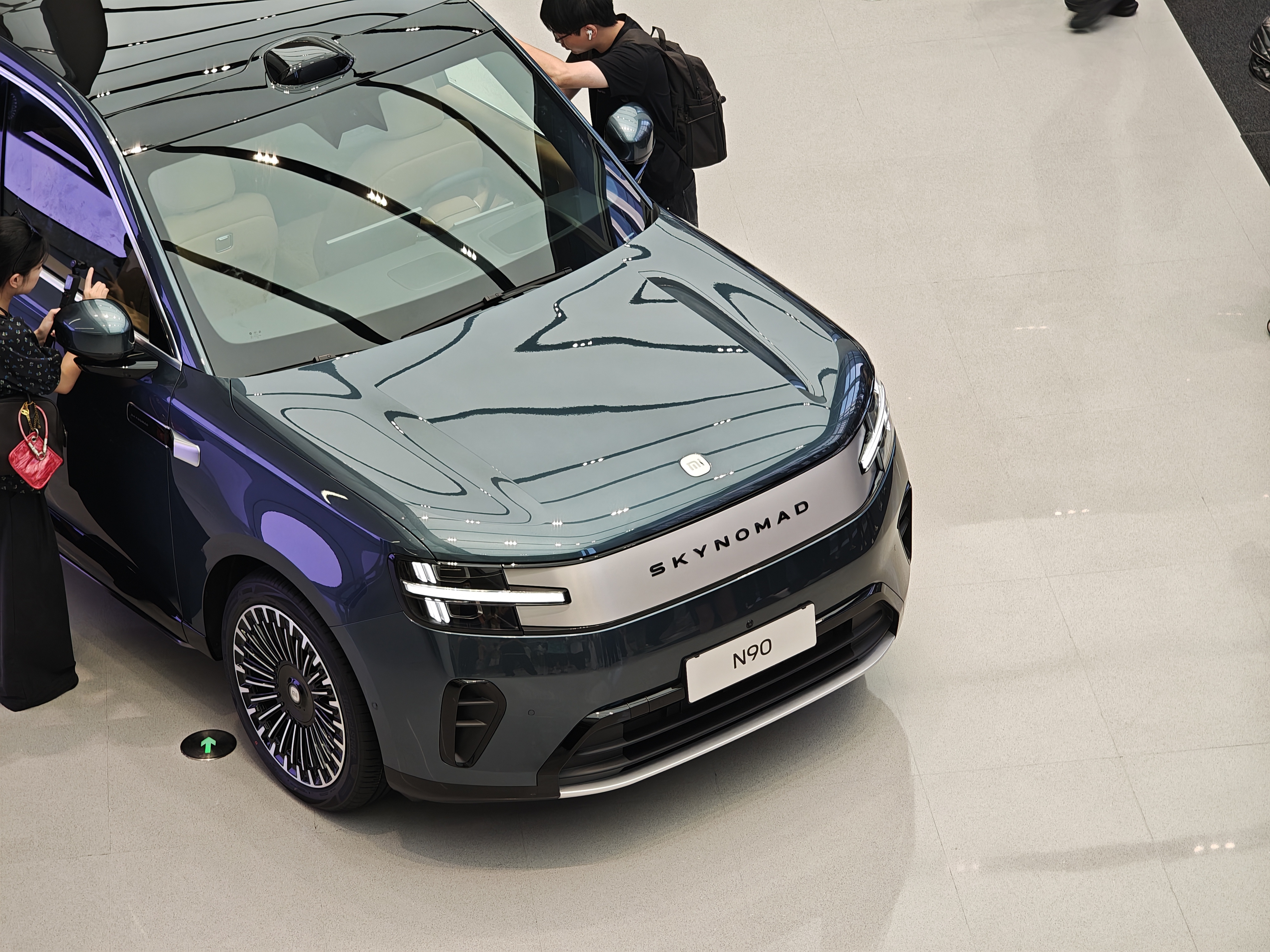
However, for the extended-range SUV segment, Xiaomi Pengcheng acts more like a disruptive force or a 'harvester' chasing after each model. It can invigorate the entire segment but will also 'cull' models that fail to keep pace with market trends and lack satisfactory product strength.
(Image Source: Captured by Dianchetong)
Therefore, the models that should be most concerned are not the 'Li Auto' or its 'Budget Version' but those products that are completely overlooked and lack competitiveness. Without changes, the prospect of being 'cull' may not be just idle talk.
The most AI-focused and hardcore ChinaJoy has just wrapped up.
This year's event theme was 'Exploring with AI.' Leitech MCN, dedicated to AI hard technology, dispatched a dedicated CJ exploration team to Shanghai for the first time, achieving results beyond expectations. In 2027, Leitech will increase its investment in ChinaJoy.
Meanwhile, the Leitech WRC (World Robot Conference) 2026 exploration team has been assembled, and the largest-scale and highest-specification IFA 2026 reporting team in history is in preparation. Stay tuned!
Xiaomi Pengcheng Li Auto AITO
Source: Leitech
The images in this article are from the 123RF royalty-free image library. Source: Leitech
-
![]()
Dividend Flow Reversing? XPENG, NIO, and ZEEKR in Tight Race in July! Harmony Intelligent Mobility Sees Monthly Decline
-
![]()
realme hasn’t faltered; it’s merely on a hiatus
-
![]()
Is the Launch Speed of New Cars Faster Than That of Mobile Phones? Why Are Vehicle Development Cycles Shorter in the Era of Intelligent Driving?
-
![]()
Qianwen Office Makes Its Debut! China's AI Titans Alibaba, Tencent, and ByteDance Vie for Supremacy in the Office AI Arena
-
![]()
Xiaomi Shakes Up the Extended-Range Vehicle Market! Li Auto Fights Back with Proprietary Chips, While 'Budget Li Auto' Innovates to Stand Out
-
![]()
Didi's Compliance Paradox: Why Can't the Strongest Platform Manage the 'Three Certificates'?
-
Financing and IPO: Is Ant Group a Financial Giant or a Pioneer in Cutting-Edge Tech?
-
![]()
Revenue Soars Twofold in Three Years! Optical Firm Reignites Bid for Hong Kong Stock Exchange Listing