Dividend Flow Reversing? XPENG, NIO, and ZEEKR in Tight Race in July! Harmony Intelligent Mobility Sees Monthly Decline
 08/04 2026
 348
348
Author | Guanchejun
Amidst a general market downturn, the share of new energy vehicles (NEVs) continues to climb, though the industry landscape is increasingly fragmented.
In July, the passenger vehicle market experienced a seasonal slump, with domestic narrowly defined passenger vehicle retail sales plummeting nearly 20% year-on-year. High temperatures, heavy rainfall, and a cautious consumer sentiment dampened overall market enthusiasm.
However, the NEV sector stood out, with industry penetration exceeding 64%, marking a historic high, while the market share of traditional fuel-powered vehicles continued to shrink.
On the flip side, despite the apparent prosperity in the NEV sector, significant internal differentiation has emerged. In Guanchejun's view, the development trajectories and operational pressures of various brands have diverged sharply. The era of relying on a single blockbuster product to secure a foothold has come to an end.
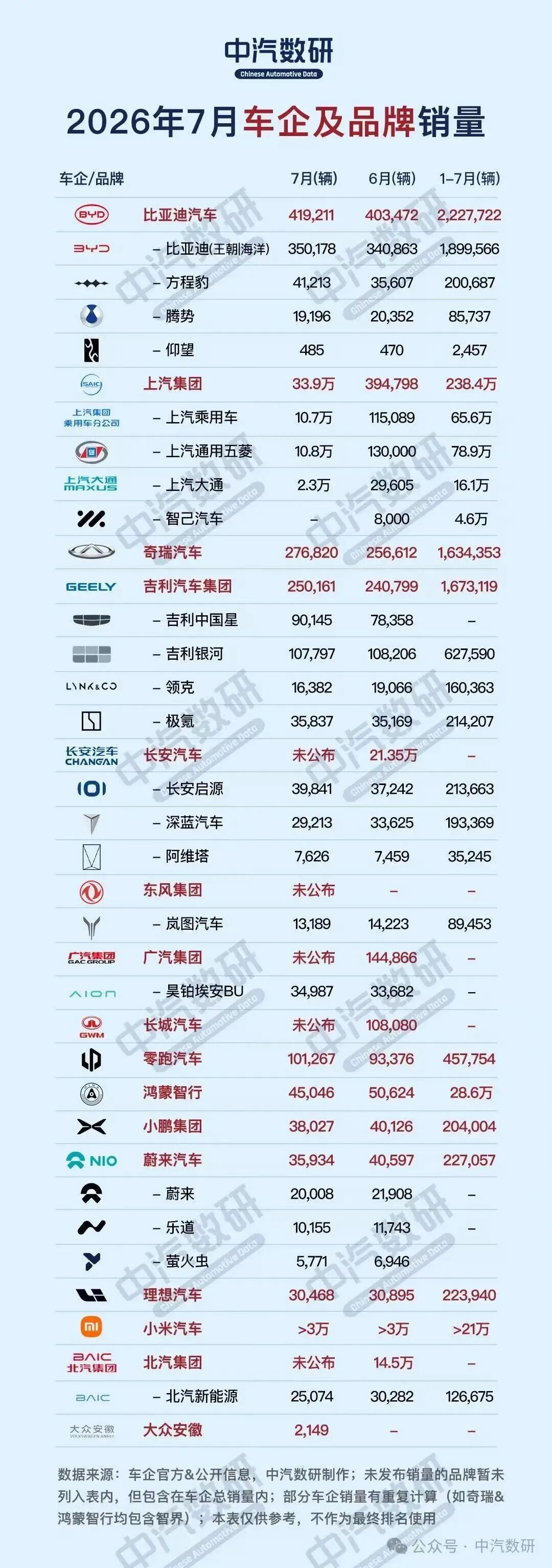
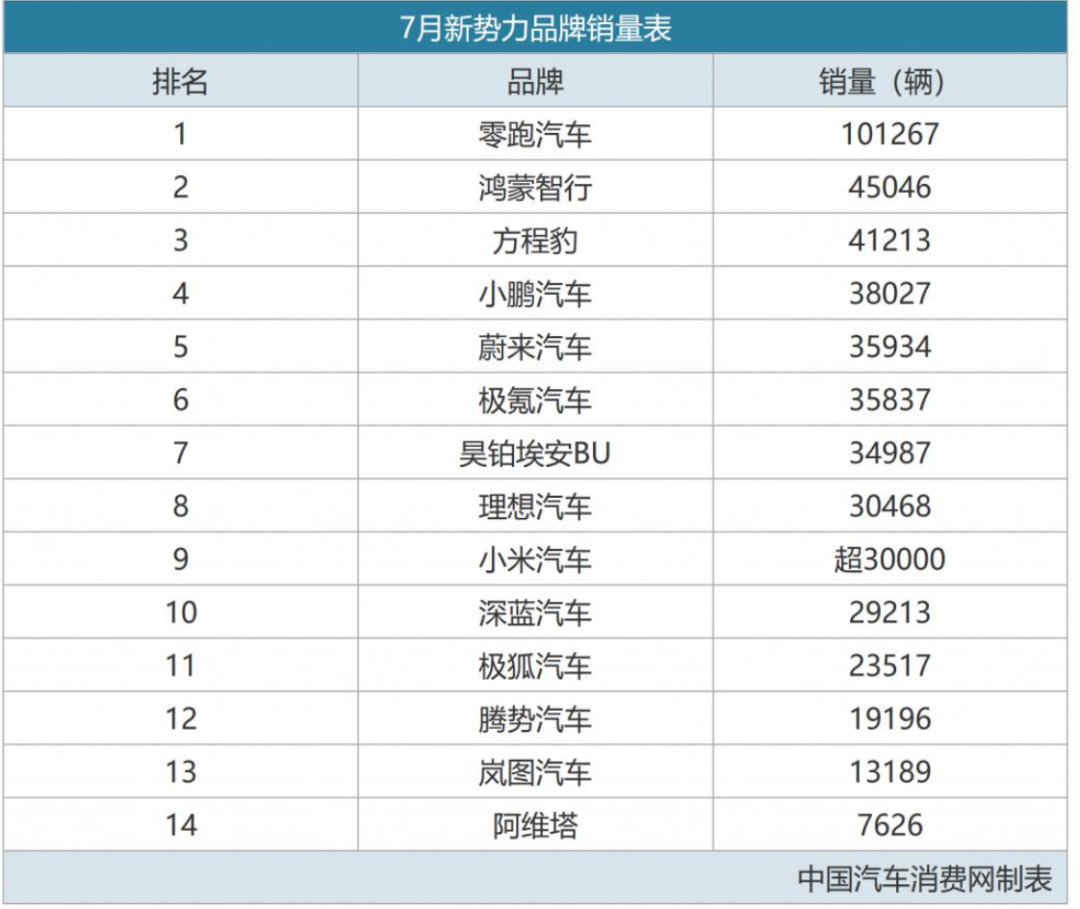
From a data standpoint, the most notable highlight in the new energy vehicle startup circle in July was Leapmotor's first-ever monthly delivery exceeding 100,000 units.
In just three months, Leapmotor successively surpassed sales milestones of 80,000, 90,000, and 100,000 units, leaving its competitors in the dust.
Concepts like full-domain self-research, platform-based component sharing, and in-house manufacturing of core parts may not be groundbreaking, but when monthly sales skyrocket from less than 1,000 units to 100,000 units, the bargaining power within the supply chain and the efficiency of mold amortization undergo a qualitative transformation.
However, given Leapmotor's annual target of 1 million units this year, and with only 45.8% achieved in the first seven months, Guanchejun calculated that an average of approximately 108,400 units per month would be needed in the remaining five months to meet the target, posing a considerable challenge.
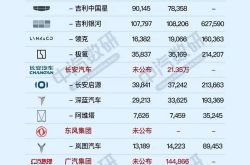
If Leapmotor is surging ahead, then Harmony Intelligent Mobility is facing the most uncomfortable "defensive battle." In July, it delivered 45,046 units, down 11% month-on-month and also year-on-year.
Guanchejun believes this highlights a typical multi-brand trap: channel traffic is finite, single-store output has its limits, and each sub-brand must vie for marketing resources and sales efforts.
When five brands enter the delivery phase simultaneously, the coordination costs far outweigh those of creating a single blockbuster product.
While Huawei's technological empowerment is not in question, the challenge of "how to make a multi-brand matrix produce a 1+1>2 effect" remains far from resolved.
Then there are the brands engaged in fierce competition: XPENG, NIO, ZEEKR, Li Auto, and Xiaomi, all clustered in the 30,000-38,000 unit range.
In July, Li Auto delivered 30,468 units, experiencing slight year-on-year and month-on-month declines, a trend that has persisted for three consecutive months.
This is not due to Li Auto's inactivity. The new generation L6 has been launched, and the L9 and L8 have been updated. However, the issue is that the "fridge, TV, and large sofa" combination, which Li Auto pioneered, has now become standard in all family SUVs, making it difficult to stand out.
Guanchejun believes that Li Auto's real test in the second half of the year lies not in its extended-range models but in whether its pure electric series can achieve distinct acceleration. Otherwise, the annual target of 487,600 units may seem elusive.
In July, XPENG delivered 38,027 units, a decline from June; NIO delivered a total of 35,934 units, with the NIO brand accounting for 20,000 units and Onvo only 10,155 units. This is completely inverted from Li Bin's initial vision of a 3:6:1 ratio (NIO:Onvo:Firefly).
Currently, Onvo is holding its ground but not gaining an advantage in the 200,000 yuan market segment, facing competition from Tesla, Xiaomi, Huawei-affiliated brands, and traditional automakers.
ZEEKR set a new record with 35,837 units delivered in July, with high-end models driving the volume. However, the increasingly dense product lineup within the Geely Group is testing ZEEKR's ability to maintain its "high-end" position.
Xiaomi continues to play word games with "over 30,000 units," while Lei Jun announced the Pengcheng extended-range series, preparing to transition from young, pure electric vehicles into the family market. However, with an annual target of 550,000 units, the delivery pressure in the second half of the year is visibly high.
Among traditional major manufacturers, differentiation is also evident.
In July, Seres sold 29,213 units globally, with a significant portion overseas, making it the most certain growth area. VOYAH remained stable above 10,000 units, continuing its push into the high-end MPV segment.
Avatr only sold 7,626 units, lower than the same period last year. Although it has the support of an L3 test license, Huawei's intelligent halo has not yet translated into large-scale orders. IM Motors sold 5,900 units, a more than 20% month-on-month decline, exposing channel issues.
In summary, when examining the July data as a whole, Guanchejun draws only one conclusion: while the penetration rate of new energy vehicles continues to rise, the benefits are no longer evenly distributed.
All charts and tables in this article, unless otherwise cited, are sourced from public disclosures across various channels. This is stated here for acknowledgment and thanks! The views expressed in this article are for reference only and do not constitute investment advice.
-
![]()
China Allocates 200 Billion Yuan in Subsidies to Bolster Car Purchases, Yet Auto Market Sees 20% Decline in First Half-Year
-
![]()
Old Cars’ Residual Value Plummets: What Are My Options for Upgrading?
-
![]()
Why Do ZQ-3 and LM-12A Continue to Compete After LM-10B’s Pioneering Success?
-
![]()
Dividend Flow Reversing? XPENG, NIO, and ZEEKR in Tight Race in July! Harmony Intelligent Mobility Sees Monthly Decline
-
![]()
realme hasn’t faltered; it’s merely on a hiatus
-
![]()
Is the Launch Speed of New Cars Faster Than That of Mobile Phones? Why Are Vehicle Development Cycles Shorter in the Era of Intelligent Driving?
-
![]()
Qianwen Office Makes Its Debut! China's AI Titans Alibaba, Tencent, and ByteDance Vie for Supremacy in the Office AI Arena
-
![]()
Xiaomi Shakes Up the Extended-Range Vehicle Market! Li Auto Fights Back with Proprietary Chips, While 'Budget Li Auto' Innovates to Stand Out