realme hasn’t faltered; it’s merely on a hiatus
 08/04 2026
 344
344
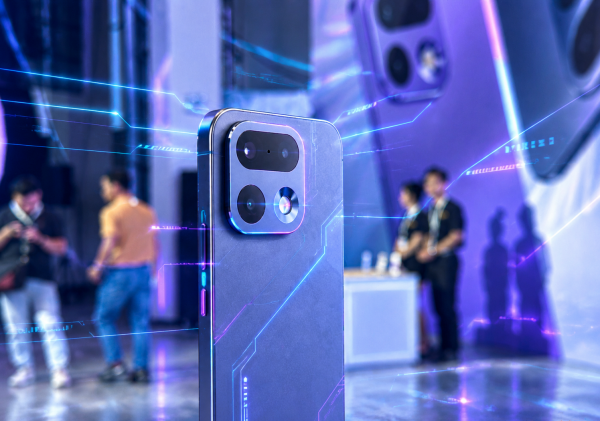
On July 16, 2026, Xu Qi, realme’s Vice President and President of the China Region, issued a farewell open letter announcing realme’s withdrawal from the Chinese mainland market.
His wording was nuanced: not an ‘exit,’ ‘strategic contraction,’ or ‘closure,’ but rather ‘pressing the pause button.’ Five days later, he posted a farewell video with the caption, “Long time no see, friends. Wishing you good morning, good afternoon, and good night!”—a nod to The Truman Show. In the video, he admitted, “The domestic market... is too tough.”
But Xu Qi wasn’t the one who actually pressed the button.
Three months earlier, OPPO’s internal structure had already undergone a quiet reshuffle. In April, OPPO merged OnePlus and realme into a “Sub-Brand Division,” with realme founder Li Bingzhong appointed as General Manager. It was he who decided that “realme would go overseas and OnePlus would stay home.”
Industry veteran MOMO believes that Liu Zuohu’s return to OPPO with OnePlus marked the beginning of OPPO’s internal resource consolidation: OnePlus began abandoning its high-end positioning, ceding that role to the Find X series, and started targeting Redmi’s territory. Thus, it was only a matter of time before realme’s ecological niche was supplanted.
Eight years ago, Li Bingzhong took a team from OPPO to establish realme. Eight years later, he was the one to “kick his own child out of the house.”
To grasp the absurdity of this situation, one must first understand realme’s global scale. From scratch, it took just 37 months to sell 100 million units worldwide—a milestone Apple reached in 44 months and Xiaomi in 41. Later, it hit 200 million and then 300 million units, consistently ranking among the top 10 global smartphone brands for six consecutive years, with operations spanning 61 countries and regions, and over 80% of its sales coming from overseas.
Yet domestically, by the end of 2025, its market share had dipped below 1%.
Under the same parent company and supply chain, 300 million units overseas versus less than 1% domestically. How did this gap emerge?
01 Born for Overseas Markets
In the summer of 2018, at Dameisha, Shenzhen.
Li Bingzhong, OPPO’s former Vice President, in his forties, had just submitted his resignation to OPPO CEO Chen Mingyong, determined to launch a new smartphone brand from scratch. Design Director Xiao Peng later recalled thinking he’d joined a pyramid scheme company at the time—because this group passionately set a goal of “20 million units in one year, 100 million units in three years.”
That brand was realme. Its first product launched not in China but in India.
This was no accident. While Li Bingzhong oversaw OPPO’s overseas business, he had a conversation with the Vice President of India’s largest e-commerce platform, Flipkart, who said: Indian young people need a smartphone brand dedicated to e-commerce—phones on the market were either cheap but low-quality or focused on offline sales, leaving a gap in between. Li Bingzhong saw an opportunity.
realme’s strategy was straightforward: offer the lowest prices with configurations unavailable at the same price point. This “leapfrog cost-effectiveness” became an instant hit among young consumers in Southeast Asia and India. At the time, India’s smartphone market was undergoing a massive shift from feature phones to smartphones, and users sensitive to price and eager for better specs were realme’s natural audience.
Among those who followed Li Bingzhong was Xu Qi, mentioned earlier. Born in 1989, a quasi-post-90s, he joined OPPO through campus recruitment at 21 and worked there for eight years, handling marketing for the Find and R series. At 29, he accepted Li Bingzhong’s invitation to join realme’s founding team. While expanding in Southeast Asia, he led a team of eight young people with an average age of 26, working from a local apartment, with plans covering entire glass walls.
The explosive growth came quickly. In 2021, realme’s global sales exceeded 60 million units, up 50% year-on-year, with a single-quarter peak of 15 million units and a staggering 135% year-on-year growth, propelling it to sixth place globally. The “100 million units in three years” goal set at the Dameisha meeting was achieved. What Xiao Peng thought was a pyramid scheme company had become a top-10 global brand.
Then, in 2019, realme decided to return to China. Its first domestic model, the realme X, featured design by MUJI designer Naoto Fukasawa, a rare pop-up camera, and an AMOLED screen at its price point, with a starting price of just 1,499 yuan.
On April 24 of that year, Li Bingzhong posted a long Weibo message titled “In Times of Great Change, We Leap Forward.” He wrote, “realme will bring new excitement to China’s fiercely competitive online smartphone market.”
In hindsight, this statement seems like a reverse prophecy.
Domestically, the numbers told a different story from the start. At its peak, realme sold about 10 million units domestically, a negligible fraction of China’s overall smartphone market. Sales then declined year by year—by the first three quarters of 2025, only 2.76 million units remained, with a full-year market share of less than 1%. Meanwhile, OPPO’s main brand held about 15% of the domestic market share during the same period.
This contrast is rare in the smartphone industry. Most global brands first establish themselves domestically before expanding overseas. realme’s path was nearly the opposite: it started in India, built scale and brand recognition in multiple overseas markets, and only then returned to China. Apple, Huawei, Xiaomi, OPPO, and Vivo have long dominated the vast majority of China’s domestic market share, leaving little room for latecomers.
A brand born for overseas markets was somewhat out of place when it returned home. But what truly crushed it was not a single competitor but a tightening net.
02 Besieged on All Sides
The sub-1,000 yuan price segment realme chose was precisely the most fiercely competitive domestically.
Redmi, Honor, and iQOO each had complete brand systems and channel networks supporting them, allowing them to engage in price wars at a loss. realme had no compelling reason for differentiation at this price point—same chip, same screen, same fast charging, so why choose you? It never provided a sufficiently persuasive answer.
Even more troublesome was that this issue did not come solely from external competitors.
In mid-2020, former OPPO Vice President Liu Zuohu returned to OPPO as Chief Product Officer, overseeing product lines for both OPPO and OnePlus. In June 2021, OnePlus officially fully integrated with OPPO, becoming an independent sub-brand under it. Starting in 2022, the OnePlus Ace series began moving downmarket—directly competing with realme’s GT Neo series: same-tier chips, same-spec memory, same-model sensors, same-level fast charging, with products from both brands nearly interchangeable.
Having two similarly positioned brands within the group meant doubling R&D and marketing expenses without increasing market share. Three brands (OPPO Reno, OnePlus Ace, realme GT/Neo) all targeted young users with moderate budgets who valued performance and fast charging—three R&D teams independently tuning motherboards, separate supply chain negotiations for chip procurement, and independent marketing investments in influencers. Most resources were exhausted in internal competition, diluting the share truly invested in core R&D.
In the mainstream 2,000-4,000 yuan price band, realme’s share was just 1.7%—while OPPO’s main brand held 26.2% and OnePlus 6.8% during the same period. realme had only over 500 offline stores domestically, while OPPO had over 30,000 after-sales service points nationwide.
In early 2026, realme released the Neo8—its last new model under independent domestic operations. Three months later, on April 25, the realme mall ceased shopping functions, retaining only order queries, with member benefits migrated to the OPPO mall. This decision to cut ties came very late.
But to be fair, even if realme had won the internal competition, it could not have overcome costs.
Over the past two years, the expansion of AI data centers far exceeded expectations, with significant memory production capacity diverted to high-bandwidth memory for AI, causing a shortage of storage chips for smartphones. According to TrendForce, in the first quarter of 2026, contract prices for smartphone DRAM memory rose 88-93% quarter-on-quarter, while NAND flash memory increased 55-60%. For a phone sold at 1,299 yuan, storage chips alone cost over 800 yuan—accounting for more than 65% of the total bill of materials in low-end models. CINNO Research data was even more direct: storage chip procurement costs nearly tripled year-on-year.
For flagship phones, this cost could be absorbed—by raising prices or passing it on to users through brand premium. But for a brand like realme, with “leapfrog cost-effectiveness” in its DNA, raising prices meant abandoning its core selling point, while not raising prices meant selling at a loss. By 2026, realme’s profit margins were severely squeezed.
The first two layers were “difficult to win,” and this layer was “winning would be pointless.”
And the cost knife had not finished falling.
In May 2026, the iPhone 17 series saw across-the-board price cuts, with the standard model starting at 4,499 yuan after national subsidies and trade-ins, and the Pro series dropping by 1,000 yuan. This price range, originally the main arena for Android’s cost-effective flagships, saw price inversions—users previously hesitating between mid-to-high-end Android models were directly poached. Meanwhile, low-price users—realme’s target demographic—began reconsidering when faced with price hikes on domestic models due to soaring costs.
With little room to maneuver, internal competition, cost pressures from below, and Apple pressing down from above—realme’s domestic position left almost no space for adjustment.
03 Where Does the Cost-Effectiveness Path Lead?
realme’s predicament is not unique to realme.
This year, nearly all brands fighting hardest in this price segment are declining. First-week sales of the Redmi Turbo 5 series were only 60% of the Turbo 4’s; Xiaomi subsequently lowered its full-year smartphone orders by over 20% in 2026. Honor’s shipments in the second quarter of 2026 fell out of the top five. iQOO’s domestic share dropped from 4.4% at the year’s start to 3.3%. OnePlus also fared poorly, falling from 3.0% to 2.5% during the same period. IDC data shows that in the first quarter of 2026, the sub-$200 entry-level market contracted by 13.9 percentage points year-on-year. This segment is shrinking faster than most expected.
Meanwhile, prolonged replacement cycles make overall market growth harder to rely on. CINNO Research data shows that the average replacement cycle in China has extended to 36 months, with smartphones quietly transforming from “fast-moving electronics” to “durable consumer goods.” Domestic smartphone annual sales have contracted from over 400 million units around 2015 to about 280 million units maintained long-term today.
With the total pie shrinking and head brands concentrating, the share left for mid-tier brands grows thinner.
What makes the cost-effectiveness approach even harder to sustain is the product pressure from the AI arms race. As flagships from all brands compete on on-device large models, AI summarization, real-time translation, and other features, the “good enough” product logic increasingly fails to impress consumers. High refresh rate screens, large memory, and fast charging—once “leapfrog” selling points—have become industry standards. The “high specs at low prices” approach that helped cost-effectiveness brands stand out now offers less surprise in a context of all-around feature competition.
Cost pressures are already visible in prices. In March 2026, mainstream brands like vivo and Honor adjusted prices, with mid-range models rising 300-500 yuan and flagships by over 1,000 yuan. Omdia predicts that the global average smartphone selling price will rise about 20% in 2026, reaching a historic high. The consumer expectation of “spending less for better devices” is being redefined by the entire industry.
Relying on scale for expansion and volume for profit—this logic worked in growth markets but grows narrower in saturated ones. realme’s decision to exit China is less a brand failure than a sober cost-benefit judgment: rather than continue to consume (xiao hao, ‘draining resources’) in an unwinnable market, it is better to concentrate resources where growth is still possible.
Epilogue
Looking back at the word “pause,” one realizes how precise realme’s choice was. It did not say “end,” nor did it promise a return—it simply stopped here for now.
realme still has a sufficiently large overseas market to cultivate, with young consumer markets in India, Southeast Asia, and Europe far from saturated. The “leapfrog cost-effectiveness” logic still works there. Pausing domestically is, in a sense, both a cost-cutting move and a refocusing.
However, if we return to the story’s beginning, we find an uncomfortable truth: realme was originally born for overseas markets. It started in India, grew in Southeast Asia and Europe, with over 80% of its 300 million global sales coming from overseas. When it “returned” to China in 2019, Li Bingzhong said it would “bring new excitement to the domestic market”—but perhaps this brand born for overseas markets was never meant to return home.
In MOMO’s view, if we look only at realme’s products, there is little wrong—they perfectly align with users’ love for cost-effectiveness. The problem lies in marketing: to say nothing of other issues, their own series and naming conventions are completely unmemorable to average consumers. Shortly before the official “pause,” they not only secured a Ricoh collaboration but also released products with customizable Deco designs—the team was still trying to struggle in the domestic market.
Clearly, internally, they no longer wanted to give this chance.
realme did not fail to anyone—it was simply the first to admit it.
-
![]()
China Allocates 200 Billion Yuan in Subsidies to Bolster Car Purchases, Yet Auto Market Sees 20% Decline in First Half-Year
-
![]()
Old Cars’ Residual Value Plummets: What Are My Options for Upgrading?
-
![]()
Why Do ZQ-3 and LM-12A Continue to Compete After LM-10B’s Pioneering Success?
-
![]()
Dividend Flow Reversing? XPENG, NIO, and ZEEKR in Tight Race in July! Harmony Intelligent Mobility Sees Monthly Decline
-
![]()
realme hasn’t faltered; it’s merely on a hiatus
-
![]()
Is the Launch Speed of New Cars Faster Than That of Mobile Phones? Why Are Vehicle Development Cycles Shorter in the Era of Intelligent Driving?
-
![]()
Qianwen Office Makes Its Debut! China's AI Titans Alibaba, Tencent, and ByteDance Vie for Supremacy in the Office AI Arena
-
![]()
Xiaomi Shakes Up the Extended-Range Vehicle Market! Li Auto Fights Back with Proprietary Chips, While 'Budget Li Auto' Innovates to Stand Out