Is the Launch Speed of New Cars Faster Than That of Mobile Phones? Why Are Vehicle Development Cycles Shorter in the Era of Intelligent Driving?
 08/04 2026
 450
450
Is the Launch Speed of New Cars Really Faster Than That of Mobile Phones Now?
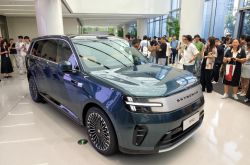
In the first half of 2026, the domestic passenger car market experienced a surge in new car launches. According to full-scale statistics from the DCD New Car Launch Database, approximately 630 new models were launched domestically from January to June, averaging over 3 models per day. Even when calculated based on the vehicle model range in the Bitauto Vehicle Model Library (excluding different configuration versions under the same model range), 576 new car models and 1,731 variants were launched in the first half, averaging over 3.3 models per day.
In comparison, data from the China Academy of Information and Communications Technology shows that a total of 185 new mobile phone models were launched domestically from January to June 2026, averaging about 1 model per day. This indicates that the automotive industry's launch speed has surpassed that of the consumer electronics industry, known for its rapid pace.
If new car launches are faster than those of mobile phones, how is the research and development (R&D) speed holding up? Especially after intelligent driving systems have become standard, has the R&D process become simpler or more complex? Today, let's discuss this topic.
01 What Stages Does a Car Go Through from Concept to Launch?
The complete R&D process for a new car model can be roughly divided into five stages: strategic planning, conceptual design, engineering development, testing and verification, and production preparation. A review point is set after each stage, and only projects that pass the review can proceed to the next stage.
During the strategic planning stage, automakers determine what type of car to develop by completing market analysis, competitor benchmarking, and user profiling to clarify the model's positioning, powertrain type, performance metrics, and cost boundaries. Once the project is officially approved, core suppliers are locked in to participate in early technical alignment.
The conceptual design stage addresses the question of what the car will look like. Designers select directions from numerous sketches, refine the styling using 3D digital modeling, and then create a 1:1 clay model to confirm the surface light and shadow effects and detail handling. Clay models typically undergo multiple rounds of review because once the project enters the engineering development stage, there is very limited room for styling adjustments. The styling design process, from initiation to finalization, usually takes about one to one and a half years.
The engineering development stage focuses on how to build the car. The body structure design must meet crash safety requirements, while the chassis and suspension systems must balance handling and comfort. Powertrain bench calibration is conducted simultaneously to ensure energy consumption and power output meet targets. Software and electrical/electronic architecture development also occur during this stage, with driving assistance systems, intelligent cockpits, and over-the-air (OTA) update capabilities finalized.
After the design of various subsystems is completed, prototypes evolve in maturity from A-samples to B-samples, C-samples, and finally D-samples for final verification before mass production parts are approved. Only after all designs are frozen and verified can the project proceed to the next stage.
Testing and verification is the most time-consuming stage. For a completely new model, the conventional safety verification cycle from design freeze to mass production delivery requires at least 18 to 24 months. The vehicle undergoes virtual simulation testing and global road testing, including high-temperature, high-altitude, and extreme cold tests. Tens of millions of kilometers of road testing and hundreds of crash simulations are completed during this stage. For example, GAC Group requires at least 18 months of verification (two winters and one summer) from project initiation to launch, with a conventional development cycle of 21 months.
If issues are found during verification, the engineering team must return to the design stage for modifications and then conduct another round of verification. Reliability verification testing after a parts-level design change requires at least 1 to 2 months, while system-level verification at the OEM level also takes 1 month. This cycle of verification, issue identification, modification, and re-verification is the fundamental reason for the extended duration of the testing and verification stage.
The production preparation stage involves tooling and mold development, production line debugging, and trial production. Only after confirming everything is ready can mass production begin.
This process represents standard practices accumulated over decades in the industry. However, in the era of intelligent electric vehicles, development cycles have been significantly compressed. Traditional internal combustion engine vehicles required 36 to 48 months, whereas mainstream new energy vehicle manufacturers have now reduced this to 18 to 24 months. With shortened cycles, the completeness of the verification process has become a valid concern.
02 The Arrival of Intelligent Driving Systems Has Made Verification Even More Complex
Testing and verification for traditional vehicles primarily focus on mechanical and powertrain systems, including chassis tuning, powertrain calibration, and durability testing. The addition of intelligent driving systems has introduced an extremely complex verification layer to this framework. The number of vehicle sensors, controllers, and actuators has surged, with software and hardware interfaces growing exponentially. Traditional R&D models relying on manual experience and sequential verification are approaching their efficiency limits.
For verifying autonomous driving algorithms, the industry generally follows a rough ratio: approximately 90% of the workload is completed in simulation environments, about 9% in closed-course testing, and around 1% in public road testing.
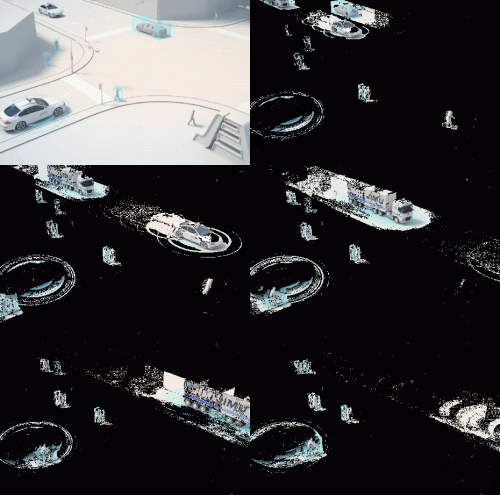
Simulation testing involves running countless extreme scenarios, such as electric bicycles suddenly appearing in urban traffic, obscured lane markings in heavy rain, or rural intersections without traffic lights. These scenarios are difficult to encounter on real roads but can be repeatedly tested in simulation environments.
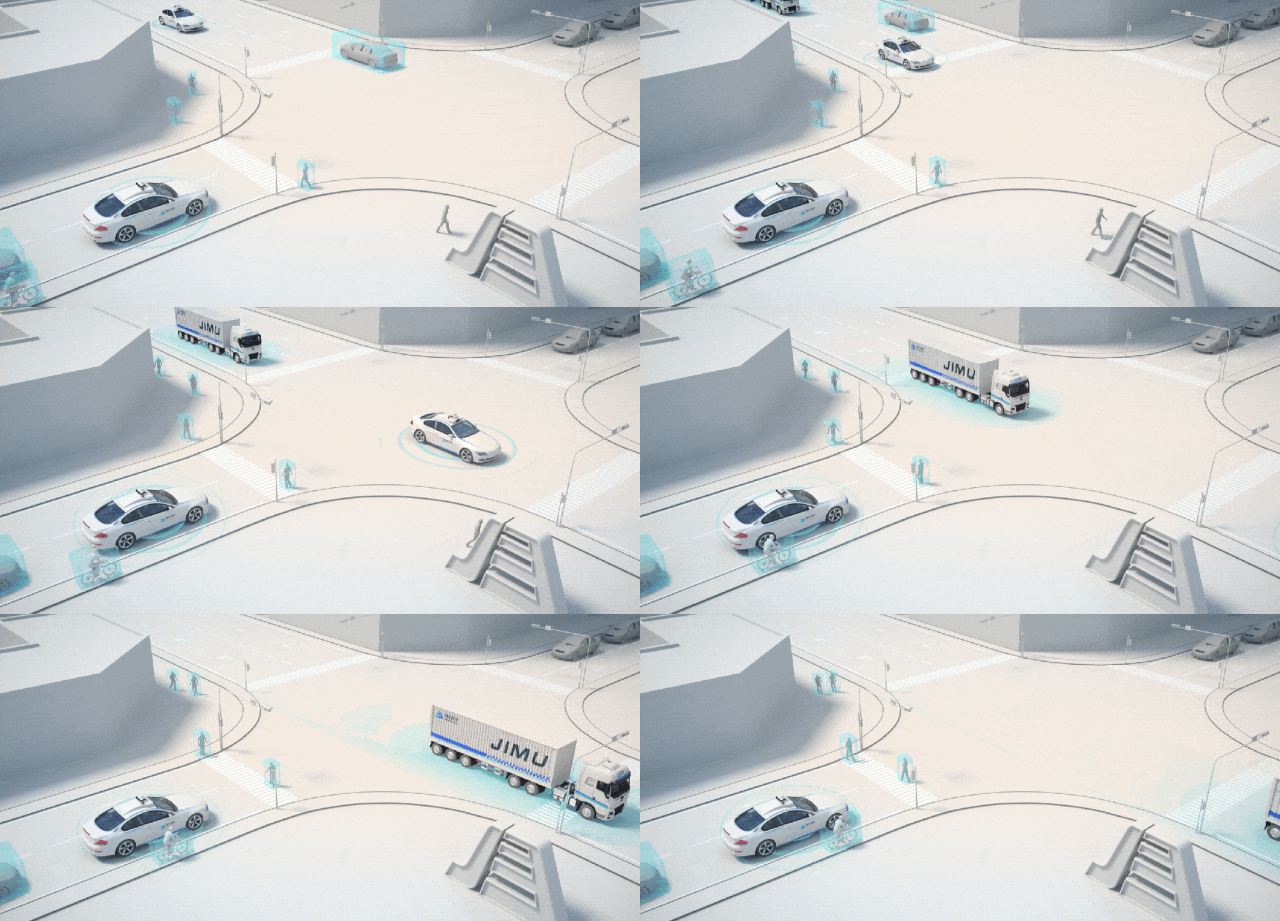
Image Source: Internet
Closed-course testing is primarily used to verify the physical consistency of simulation results, while public road testing is conducted for final compliance verification and regulatory filing.
In January 2026, the recommended national standard "Simulation Test Methods and Requirements for Autonomous Driving Functions of Intelligent Connected Vehicles" (GB/T 47025-2026) was officially implemented. This standard covers all aspects of simulation testing for autonomous driving functions, including test requirements, methods, overall pass criteria, and simulation credibility assessment.
The standard requires that sensor model errors compared to real vehicles must not exceed 5%, and the consistency of dynamic models with real vehicles must be no less than 95%. Simulation testing is no longer just an auxiliary R&D tool but has become a formal verification process that must meet certain credibility thresholds.
After simulation testing comes closed-course and public road testing. Volkswagen Group requires that every production model equipped with ADAS must complete over 300,000 kilometers of real-world road verification before launch, including 70% daytime driving, 30% nighttime driving, 50% urban roads, 30% highways, and 20% suburban roads. The verification process includes two rounds of summer and winter extreme environment testing.
Of course, some brands in the industry only conduct one round of extreme environment verification.
In June 2026, the Ministry of Industry and Information Technology (MIIT) released the first mandatory national standard for L2-level combined driving assistance, "Safety Requirements for Combined Driving Assistance Systems of Intelligent Connected Vehicles" (GB 47955-2026). This standard specifies safety requirements for pilot combined driving assistance systems, basic single-lane, and multi-lane combined driving assistance systems.
According to the standard, the industry must establish a three-tier verification mechanism combining simulation, closed-course, and real-world road testing. Algorithm iterations and OTA updates must be accompanied by complete simulation verification materials.
Additionally, mandatory standards for L3 and L4 levels are also in progress. In June 2026, MIIT published the draft mandatory national standard "Safety Requirements for Autonomous Driving Systems of Intelligent Connected Vehicles." This standard requires system safety levels to be no lower than those of qualified and attentive human drivers and establishes a three-dimensional safety documentation mechanism combining declarations, demonstrations, and evidence.
The implementation of these standards means that verification of intelligent driving systems is no longer optional for automakers but a mandatory requirement. A complete intelligent driving verification process, from simulation to closed-course and then to open roads, requires a time commitment no shorter than traditional durability testing.
03 Where Does the Compressed Time Come From?
Given that intelligent driving systems have added verification complexity, why has the development cycle been compressed from 55 months to 18 months? In reality, many automakers compress time in stages to accelerate new car launches.
The strategic planning and conceptual design stages can be accelerated through AI assistance and parallel engineering. In June 2026, Ivan Espinoza, President of Nissan Motor, announced that the company had compressed its new car development cycle from 55 months to 26 months. AI and digital tools have been widely applied in design, testing, and manufacturing stages, with some physical prototype testing replaced by computer simulations. Nissan stated that virtual simulation testing has replaced over 60% of real vehicle testing.
The engineering development stage can be compressed through platformization and modularization. However, the testing and verification stage offers limited room for compression. A vehicle must complete the required mileage in temperatures as low as -40°C and undergo sufficient cyclic testing in high-temperature and high-altitude environments—there are no shortcuts for these processes. While virtual simulation can replace some testing, it cannot replace all of it.
In January 2026, MIIT revised and released new market access review requirements, upgrading reliability testing from an internal corporate control to a national mandatory requirement. However, the compression of development cycles is putting these verification processes at risk of being rushed. Some R&D personnel revealed that complete vehicle control software (vehicle control software), which originally required four months of verification, can now be deployed in just two weeks; projects that originally required 200 tests might only undergo 30 tests in the end.
When a vehicle's development cycle is compressed to its limits, extreme environment road testing, durability verification, and other critical processes that should be thoroughly completed are easily omitted. This omission can lead to hidden dangers such as software defects, battery thermal runaway, and driving assistance system failures.
In June 2026, Li Shufu, Chairman of Geely Holding Group, publicly stated that while automotive R&D can be accelerated, trial and testing processes must not be reduced, and safety baselines cannot be compromised. His remarks point to the prevalent issue in the current industry: when everyone is competing on launch speed, the verification time that is cut may ultimately be paid for with user safety. MIIT's elevation of reliability testing to a mandatory requirement is, to some extent, a correction to the industry's overly rapid pace.
04 Launch Speed and Market Returns Have Severely Diverged
Full-scale statistics from the DCD New Car Launch Database show that approximately 630 new car models were launched domestically in the first half of 2026, covering minor annual facelifts, configuration derivatives, and limited-edition models. Including various new variants, the total number of new car SKUs in the market reached 3,780, averaging about six versions per model.
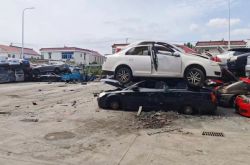
While the intensity of new car launches has reached a record high, market feedback has been unfavorable. Statistics from the China Passenger Car Association (CPCA) show that domestic passenger vehicle retail sales totaled 8.701 million units in the first half of the year, down 20.2% year-on-year. In terms of specific models, fewer than 30 models consistently sold over 10,000 units per month in the first half, while about 35% of new models sold fewer than 2,000 units per month. Some models sold as few as 36 units.
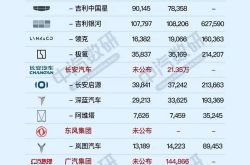
Additionally, industry profits continue to decline. Chen Shihua, Deputy Secretary-General of the China Association of Automobile Manufacturers, publicly stated in July 2026 that the profit margin of the automobile manufacturing industry was only 3.4% from January to May 2026, far below the national average of 5.56% for industrial enterprises above a certain scale. Data from the CPCA and the National Bureau of Statistics show that the profit margin in the vehicle manufacturing sector has dropped to 1.5%, a historical low, with total profits in vehicle manufacturing declining by 43% year-on-year. In the first quarter of this year, the industry's average profit per vehicle dropped to 14,000 yuan, down nearly 40% compared to the same period in 2025.
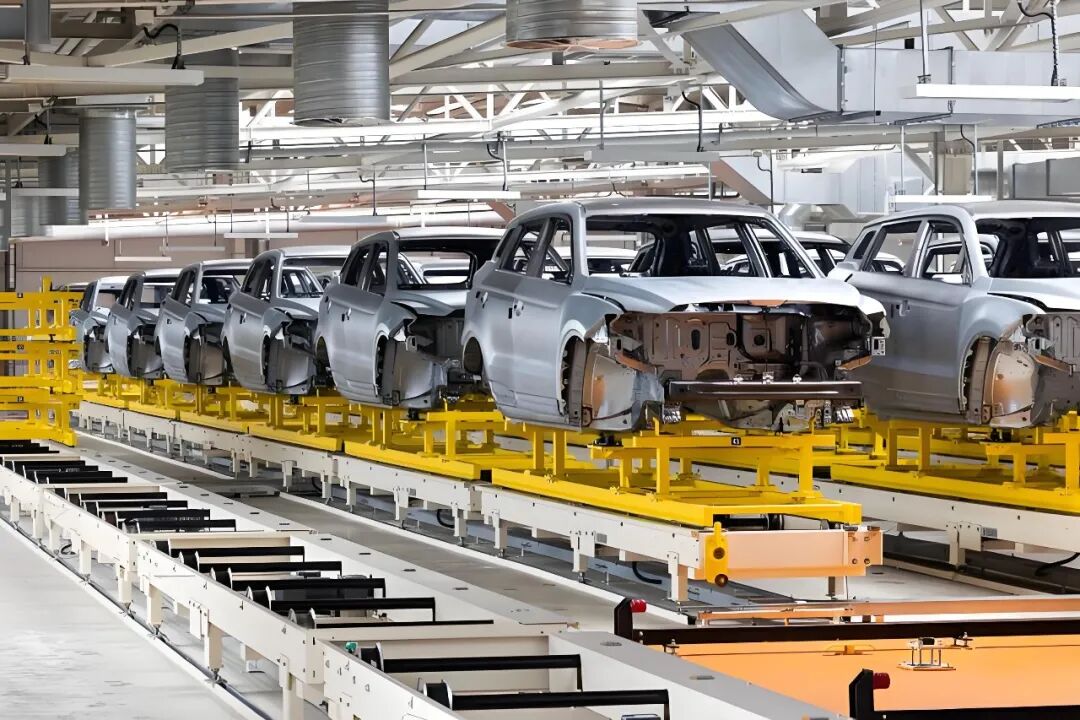
Image Source: Internet
With over 3 new car models launched per day on average, the market has seen a 20% decline in total volume and a profit margin dropping to 3.4%. Many new models have performed poorly in sales, failing to recover their initial investments and exacerbating losses across the industry.
The launch speed of new cars has surpassed that of mobile phones, clearly exceeding the capacity of traditional automotive R&D frameworks. Especially with intelligent driving systems becoming standard, verification processes should have become more complex. While digital tools and platform-based development can compress some of the cycle time, there must be limits to this compression.
For automotive R&D, no matter how useful new technologies may be, every necessary step in the process must still be taken.
#AutonomousDriving #AutomotiveR&D #ShorterAutomotiveDevelopmentCycles
-
![]()
China Allocates 200 Billion Yuan in Subsidies to Bolster Car Purchases, Yet Auto Market Sees 20% Decline in First Half-Year
-
![]()
Old Cars’ Residual Value Plummets: What Are My Options for Upgrading?
-
![]()
Why Do ZQ-3 and LM-12A Continue to Compete After LM-10B’s Pioneering Success?
-
![]()
Dividend Flow Reversing? XPENG, NIO, and ZEEKR in Tight Race in July! Harmony Intelligent Mobility Sees Monthly Decline
-
![]()
realme hasn’t faltered; it’s merely on a hiatus
-
![]()
Is the Launch Speed of New Cars Faster Than That of Mobile Phones? Why Are Vehicle Development Cycles Shorter in the Era of Intelligent Driving?
-
![]()
Qianwen Office Makes Its Debut! China's AI Titans Alibaba, Tencent, and ByteDance Vie for Supremacy in the Office AI Arena
-
![]()
Xiaomi Shakes Up the Extended-Range Vehicle Market! Li Auto Fights Back with Proprietary Chips, While 'Budget Li Auto' Innovates to Stand Out